



真正的個性化不是插入潛在客戶的名字。而是展示您已經進行了有意義的研究並了解他們的具體情況。本指南涵蓋了真正能提高回復率的個性化策略。
為什麼個性化對冷郵件很重要
數據很明確:個性化的冷郵件明顯優於通用郵件。
數據說話
- 個性化郵件獲得 2-3 倍的更高回復率
- 通用模板顯示回復率低於 1%
- 基於研究的個性化達到 5-10%+ 的回復率
- 時間投資: 每個潛在客戶 5-15 分鐘是值得的
1% 和 5% 回復率之間的差異並不小——這是您投資回報率的 5 倍提高。
為什麼有效
當有人收到一封引用有關其公司、最近公告或其角色的具體細節的郵件時,他們會認識到您已經進行了研究。這立即建立了信譽。
潛在客戶每天被 100+ 封郵件轟炸。個性化表明您不是在群發;您真正認為有合適的匹配。
4 個個性化級別
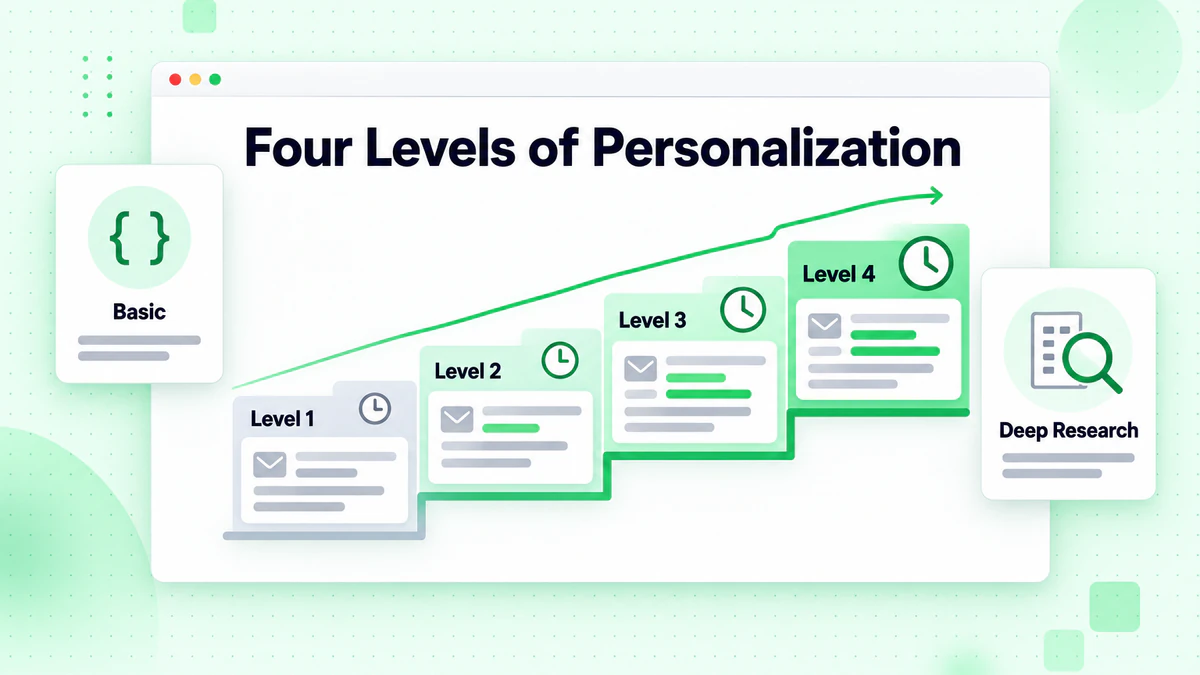
級別 1: 基本(最低標準)
每個潛在客戶的時間: 1-2 分鐘
插入:
- 名字
- 公司名稱
- 職位
- 行業
範例: "Hi Sarah, I noticed [Company] is in the [industry] space and you're the [job title]..."
回復率: 0.5-1%
最適合: 質量次要的大批量活動
級別 2: 標準(推薦)
每個潛在客戶的時間: 3-5 分鐘
包括:
- 具體的公司觀察
- 相關的觸發或最近的新聞
- 適合角色的語言
- 一條社會證明
範例: "Hi Sarah, saw that [Company] recently hired 10 new SDRs—congrats on the growth! Given your expansion, I thought this might be relevant..."
回復率: 2-4%
最適合: 大多數中端市場和企業冷活動
級別 3: 高級
每個潛在客戶的時間: 5-10 分鐘
添加:
- 引用他們的內容(文章、帖子等)
- 具體的業務指標洞察
- 提及共同聯繫人
- 量身定製的價值主張
範例: "Hi Sarah, your LinkedIn post about scaling SDR processes really resonated. Most teams struggle with [specific problem], which is exactly what we help with. I noticed [Company] recently [specific trigger], which seems like it could relate..."
回復率: 5-8%
最適合: 高價值賬戶、關鍵決策者
級別 4: 超個性化
每個潛在客戶的時間: 10-20 分鐘
- 定製視頻或個性化資產
- 對其情況的詳細分析
- 引用具體的公司挑戰
- 多渠道(郵件 + LinkedIn)
範例: "Hi Sarah, I recorded a quick 2-minute video walking through three specific ideas for [Company]'s [area]..."
回復率: 10%+
最適合: 最高價值交易、企業銷售
研究過程: 如何查找個性化細節
沒有研究就無法個性化。這是操作手冊:
步驟 1: LinkedIn 深度挖掘(2-3 分鐘)
在他們的個人資料上:
- 最近的工作變動(新重點領域的指標)
- 他們發布或參與的帖子
- 列出的技能(他們使用的技術)
- 推薦(同事重視他們的什麼)
在他們的公司頁面上:
- 最近的招聘(擴張領域)
- 領導層的帖子(公司方向)
- 更新部分(新聞和公告)
- 關注者(共同聯繫人?)
專業提示: 檢查他們最近是否更改了職位或公司。生活變化 = 可能對新解決方案的接受度。
步驟 2: 公司網站(2-3 分鐘)
- 關於頁面: 公司使命、價值觀、重點領域
- 博客: 他們投入時間教學的內容
- 新聞稿: 最近的融資、合作夥伴關係、產品發布
- 職位發布: 他們正在招聘什麼(增長信號)
- 領導團隊: 誰是決策者?
專業提示: 如果他們正在積極招聘某個角色,他們正在解決一個問題。這就是您的角度。
步驟 3: Google 新聞和行業新聞(1-2 分鐘)
- 最近的公司公告
- 行業動向(收購、擴張)
- 影響其行業的監管變化
- 其領域的技術採用趨勢
工具: Google Alerts、Crunchbase、TechCrunch、PitchBook
步驟 4: 他們的社交媒體(1-2 分鐘)
LinkedIn:
- 對帖子的評論(顯示對他們重要的內容)
- 他們撰寫的文章
- 參與模式(活躍與安靜)
Twitter/X:
- 他們討論的主題
- 他們關注的思想領袖
- 他們參與的行業討論
專業提示: 如果他們在社交媒體上很活躍,您可以引用具體的帖子或討論。
步驟 5: 技術堆棧(1 分鐘)
使用工具識別他們正在使用的技術:
範例個性化: "注意到您使用 [工具 A]——我們與之無縫集成..."
步驟 6: 驗證郵件質量
這很關鍵:不要對無效地址進行個性化。
在發送之前使用 BillionVerify 驗證每個潛在客戶的郵件。這確保:
- 您的個性化研究工作不會發送到垃圾郵件陷阱
- 您的域名聲譽保持清潔
- 您的送達率保持高位
個性化框架
框架 1: 基於問題
結構: "I noticed [Company] is in [industry] and likely dealing with [common problem]..."
為什麼有效: 顯示您了解他們的垂直領域
範例: "SaaS companies scaling from $5M to $50M ARR typically struggle with email verification quality—something we specialize in."
框架 2: 基於觸發
結構: "Saw that [Company] recently [trigger event]. Given this, you're probably focused on [related challenge]..."
為什麼有效: 將您的解決方案連接到他們正在積極開展的工作
範例: "Noticed you just hired a new VP of Sales. Usually this is the perfect time to implement list-cleaning processes because new leaders want to hit the ground running."
框架 3: 基於內容
結構: "Your recent [article/post] on [topic] mentioned [specific point]. I thought this might be relevant..."
為什麼有效: 證明真正的參與,而不是群發郵件
範例: "Your post about sales productivity really landed for me—especially your point on wasted prospecting time. That's exactly what we help fix."
框架 4: 共同聯繫人
結構: "[Person] mentioned you might be the right person to talk to about [topic]..."
為什麼有效: 溫暖介紹,即時信譽
範例: "Sarah mentioned you're rebuilding the sales process at [Company]. That's exactly the kind of situation where email verification becomes critical."
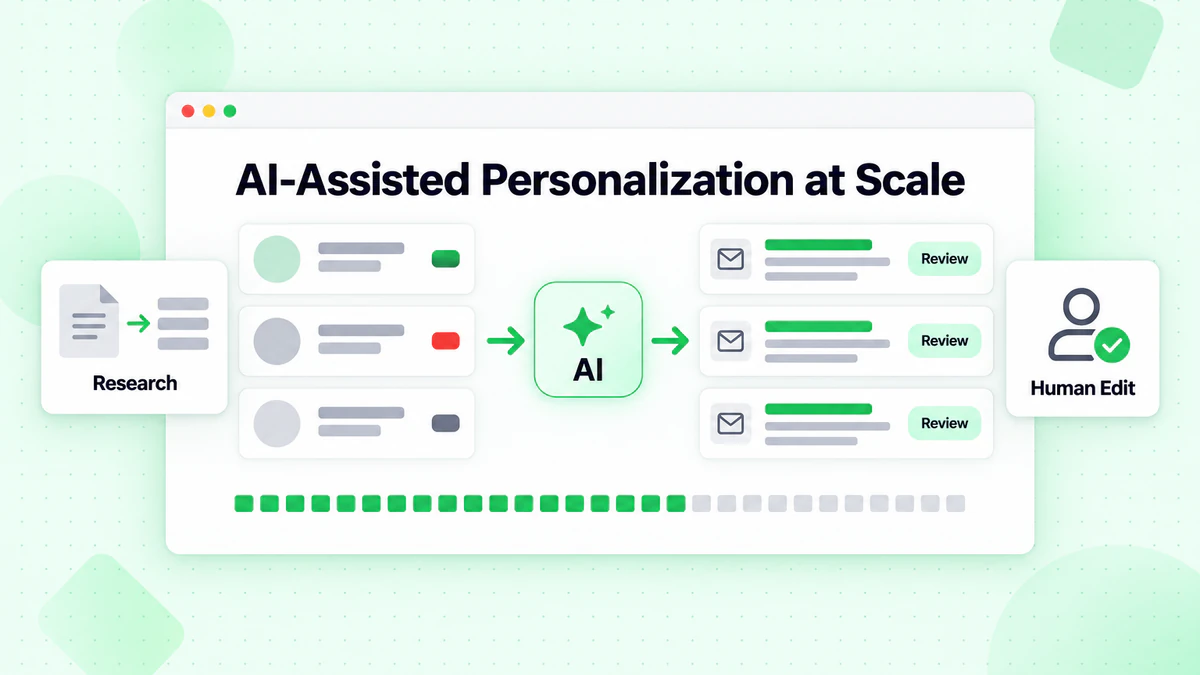
大規模的 AI 輔助個性化
AI 工具可以幫助擴展個性化而不會失去真實性。方法如下:
AI 做得好的事情
研究總結: AI 可以快速總結:
- 有關公司的最近新聞
- 潛在客戶的 LinkedIn 活動
- 與他們相關的行業趨勢
變量生成: AI 可以創建多個變體:
- 開場白
- 價值主張
- 針對其行業的具體範例
數據提取: 從以下內容提取關鍵信息:
- 公司網站
- LinkedIn 個人資料
- 新聞文章
AI 做得不好的事情
真實的個性化: AI 無法取代真正的研究洞察
人類判斷: 無法評估對這個特定人真正重要的內容
情商: 無法捕捉細微差別或關係動態
最佳實踐: AI + 人類
使用 AI 進行繁重的工作,然後添加人類判斷:
- AI 研究公司和潛在客戶
- AI 總結關鍵發現
- 您添加具體、真實的洞察
- AI 建議您的開場白的變體
- 您個性化最終版本
這種方法以 30% 的時間投資獲得 80% 的超個性化結果。
AI 輔助個性化工具
- ChatGPT/Claude: 總結研究、生成變體
- Lemlist: AI 主題行和郵件生成
- Hunter.io: 研究並建議個性化角度
- Clearbit: 自動豐富數據
- Dripify/RocketReach: 自動化研究和建議
常見的個性化錯誤
錯誤 1: 表面個性化
❌ "Hi [FirstName], I noticed you work at [Company]..."
這不是個性化。這是郵件合併。
✅ 更好: 引用有關其公司最近行動或其角色挑戰的具體內容。
錯誤 2: 通用個性化
❌ "Your LinkedIn post was great. I'd love to connect."
這可以發送給任何人。
✅ 更好: "Your post about scaling SDR teams mentioned the challenge of list quality. That's exactly what we solve."
錯誤 3: 過於個人的個性化
❌ "I noticed you live in Seattle and went to University of Washington. I went there too!"
如果沒有適當的上下文,可能會感覺令人毛骨悚然。
✅ 更好: "Saw you studied [field] at UW—that's the exact background that makes someone great at [relevant skill]."
錯誤 4: 不匹配的個性化
❌ 您研究他們的公司,但您的要求與您學到的內容不相關。
❌ 郵件: "Great work on expanding to Europe. We have a solution for [unrelated problem]."
您的研究應該為您的價值主張提供信息。
✅ 更好: 研究 → 洞察 → 相關解決方案
錯誤 5: 使用錯誤數據的個性化
❌ 對未經驗證或過時的郵件地址進行個性化
如果您的完美個性化被退回或命中垃圾郵件陷阱,那就浪費了。
✅ 更好: 在發送個性化推廣之前始終驗證郵件地址。
大規模個性化
一旦您為 50 個潛在客戶完成了個性化,如何擴展到 500 個?
策略 1: 分段然後個性化
不是為每個潛在客戶進行獨特的個性化,而是創建 3-5 個細分:
- 按公司規模: 中小企業與企業的不同挑戰
- 按行業: 為每個垂直領域定製您的角度
- 按觸發: 最近的融資、招聘、新聞
- 按角色: CEO 消息傳遞與 VP Engineering 不同
為每個細分創建一個個性化框架,然後在該框架內進行定製。
策略 2: 模板個性化
創建帶有可變插槽的模板:
"Hi [FirstName],
Saw that [Company] recently [trigger]. Given your focus on [area], I thought this might be relevant...
[Company]-specific example]: [Your company] helped [similar company] [specific result].
[Value prop specific to their challenge]"
關鍵: 每個變量都經過研究,而不是通用的。
策略 3: 利用數據工具
自動收集研究:
- Clearbit: 自動豐富潛在客戶數據
- Apollo: 自動同步公司信息
- Hunter: 驗證郵件 + 提供研究
- Slack 集成: 在您發送之前自動研究
這些工具可幫助您更快地收集研究數據,因此您可以大規模個性化。
策略 4: 分層努力方法
- 第 1 層(高價值賬戶): 10-15 分鐘研究,級別 4 個性化
- 第 2 層(中端市場): 5-10 分鐘研究,級別 3 個性化
- 第 3 層(批量播放): 3-5 分鐘研究,級別 2 個性化
根據交易規模分配努力。50 萬美元的交易值得比 5000 美元的交易更多的研究。
個性化 ROI 計算
範例: 每月 500 個潛在客戶活動的 SaaS 公司
| 級別 | 時間/潛在客戶 | 開啟率 | 回復率 | 成本/會議 |
|---|---|---|---|---|
| 級別 1(通用) | 1 分鐘 | 20% | 0.5% | $200+ |
| 級別 2(標準) | 5 分鐘 | 35% | 2% | $75 |
| 級別 3(高級) | 8 分鐘 | 45% | 4% | $38 |
| 級別 4(超) | 15 分鐘 | 55% | 8% | $19 |
對於 500 個潛在客戶:
- 級別 1: 8 小時勞動,25 次預訂會議
- 級別 2: 41 小時勞動,50 次預訂會議
- 級別 3: 67 小時勞動,100 次預訂會議
- 級別 4: 125 小時勞動,200 次預訂會議
級別 3 通常是最佳點——比級別 4 更好的投資回報率,比級別 1-2 好得多的結果。
個性化 + 送達率 = 成功
個性化只有在郵件到達收件箱時才有效。這是完整的公式:
- 驗證您的列表: 郵件驗證確保個性化郵件到達收件箱,而不是垃圾郵件
- 深入研究: 每個潛在客戶 5-10 分鐘的投資
- 真實個性化: 引用具體細節
- 以他們的需求為主導: 不是您的產品
- 保持簡潔: 個性化 ≠ 更長的郵件
- 測試和迭代: 什麼能引起您受眾的共鳴?
有關完整的冷郵件策略,個性化是一個支柱。域預熱、列表質量和跟進序列同樣重要。
個性化資源和工具
研究工具
- LinkedIn Sales Navigator: B2B 研究的最佳選擇
- Clearbit: 公司豐富
- BuiltWith: 技術堆棧檢測
- Crunchbase: 融資和公司新聞
- Apollo.io: 公司數據和郵件
個性化協助
- ChatGPT/Claude: 總結研究、建議角度
- Lemlist: AI 驅動的郵件建議
- HubSpot: 個性化令牌和框架
- Lemalist: A/B 測試個性化策略
驗證
- BillionVerify: 在個性化之前驗證郵件
- Hunter.io: 在一個平台中驗證 + 研究
- RocketReach: 驗證 + 聯繫信息
結論: 真正的個性化獲勝
通用的冷郵件已經死了。個性化現在是現代冷推廣的基本要求。
但個性化有一個範圍:
- 合併字段個性化(級別 1): 1-2% 回復率
- 標準個性化(級別 2): 2-4% 回復率
- 高級個性化(級別 3): 5-8% 回復率
- 超個性化(級別 4): 10%+
最成功的冷推廣在級別 2-3 運營——這是努力和投資回報率的最佳點。
您的下一步:
- 審核您當前的個性化: 您是在級別 1、2 還是 3?
- 實施研究流程: 使用上面的 6 步框架
- 發送前驗證: 使用 BillionVerify 確保送達率
- 測試個性化變量: 哪個級別和角度最適合您的受眾?
- 記錄有效的內容: 建立機構知識
有關冷郵件模板的更多信息,請參閱我們可以使用您的研究自定義的框架範例庫。
真正的個性化是工作。但這是 1% 回復率和 5%+ 回復率之間的區別。這是您冷郵件投資回報率的 5 倍提高。
使用 Instantly 或 Smartlead 的團隊,在每次活動前透過 BillionVerify 清洗名單,可顯著提升送達率。
在選擇驗證服務商之前,比較 BillionVerify 與 ZeroBounce 在準確率和速度方面的差異。