




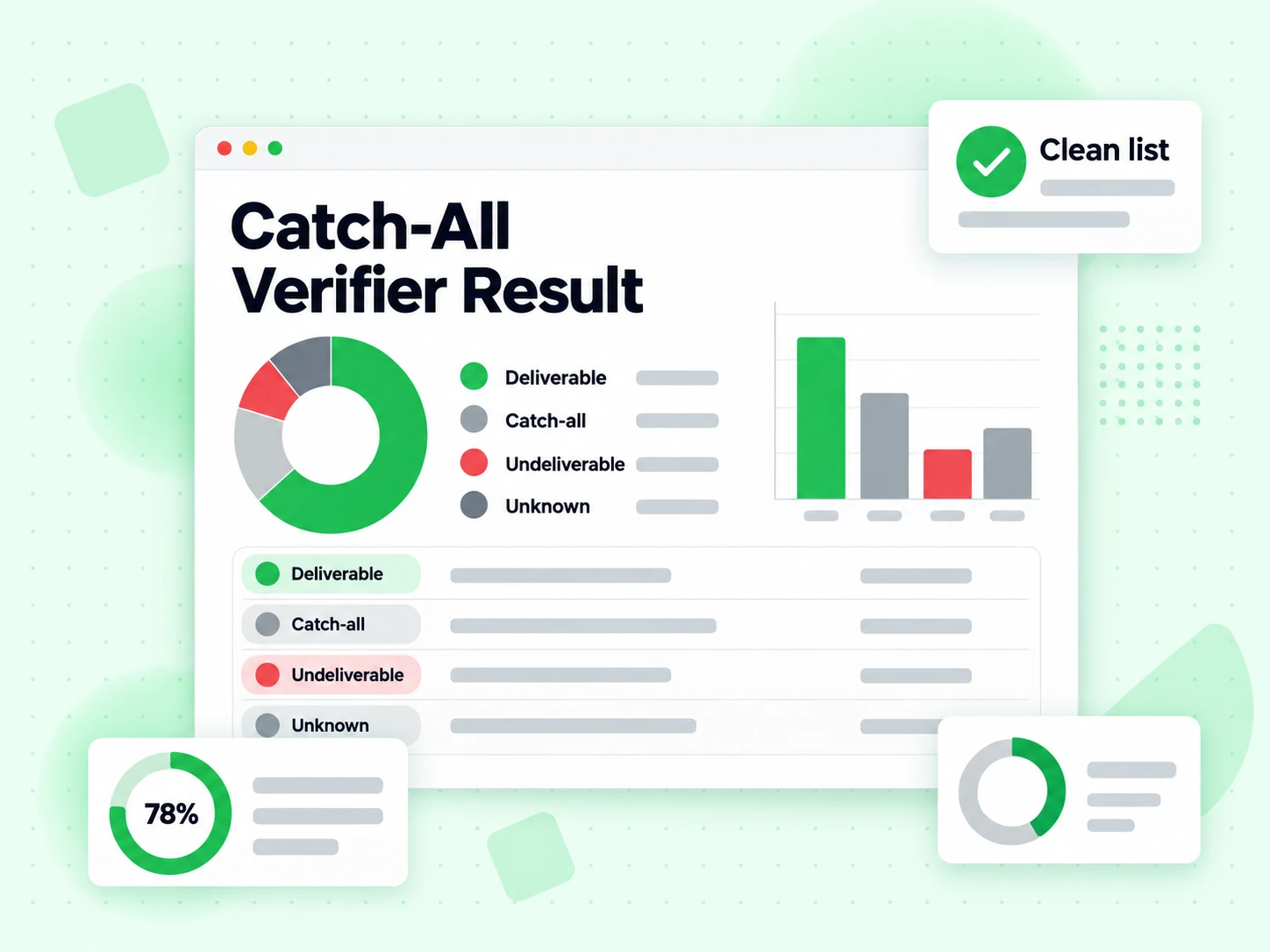
Identify accept-all mail servers that hide invalid addresses. Assess deliverability risk before you send and make informed campaign decisions.
A catch-all domain is configured to accept emails sent to any address, even ones that don't exist. This makes it impossible to verify whether a specific mailbox is real.
Standard verification can't distinguish real from fake addresses on catch-all domains. Sending blindly to these addresses can lead to:
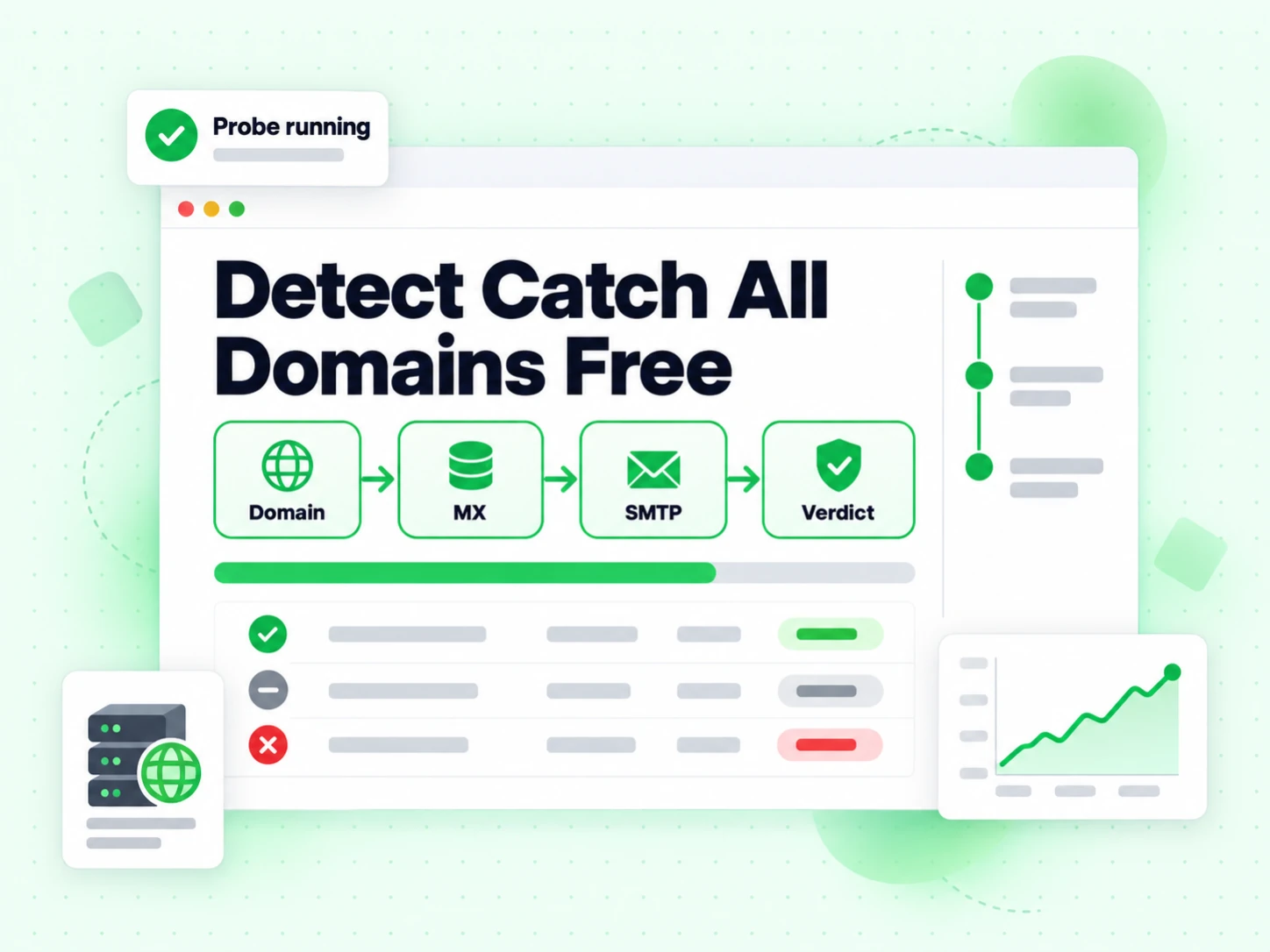
We check the domain's MX records and mail server configuration.
We probe the server with known-invalid random addresses.
We analyze how the server responds to invalid mailboxes.
Each domain gets a risk score based on its behavior.
Identify high-risk domains before they damage your bounce rate.
Make data-driven decisions about which addresses to keep.
Avoid spam traps and protect your sender score.
Segment your list by domain type before sending.
Prioritize verified contacts over risky catch-all addresses.
Block fake signups from catch-all domains.
Maintain clean data and stay compliant at scale.
Discover all our verification tools
A catch-all domain accepts emails sent to any address, even nonexistent ones. You can't tell which mailboxes are real, so sending to them carries a higher bounce risk.
We send SMTP probes to the domain's mail server and test how it responds to known-invalid addresses. If the server accepts everything, we flag it as catch-all. This method is 99% accurate and never sends actual emails to recipients.
It depends on your risk tolerance. Catch-all addresses carry 30-50% higher bounce risk. We recommend segmenting them into a separate list and monitoring performance closely before scaling sends.
Our catch-all detection achieves 99% accuracy using multiple SMTP verification methods. We distinguish true catch-all servers from temporary configurations to give you reliable results.
Yes. Upload a CSV to check millions of addresses at once. You can also use our real-time API for on-the-fly detection. Both methods process large lists quickly.
Identify catch-all servers, assess bounce risk, and improve deliverability before you hit send.