
📍 Introducing MapLeads: Turn Google Maps, Bing Maps & Apple Maps into your lead list.Try MapLeads

Email Verification

A real time email verification service that checks syntax, domain, MX records, and the mailbox itself over SMTP — in under two seconds. Free real time email verification on the free tier, with 600 credits a month plus 20 more each day you log in.

Email Verification

Check Every Address

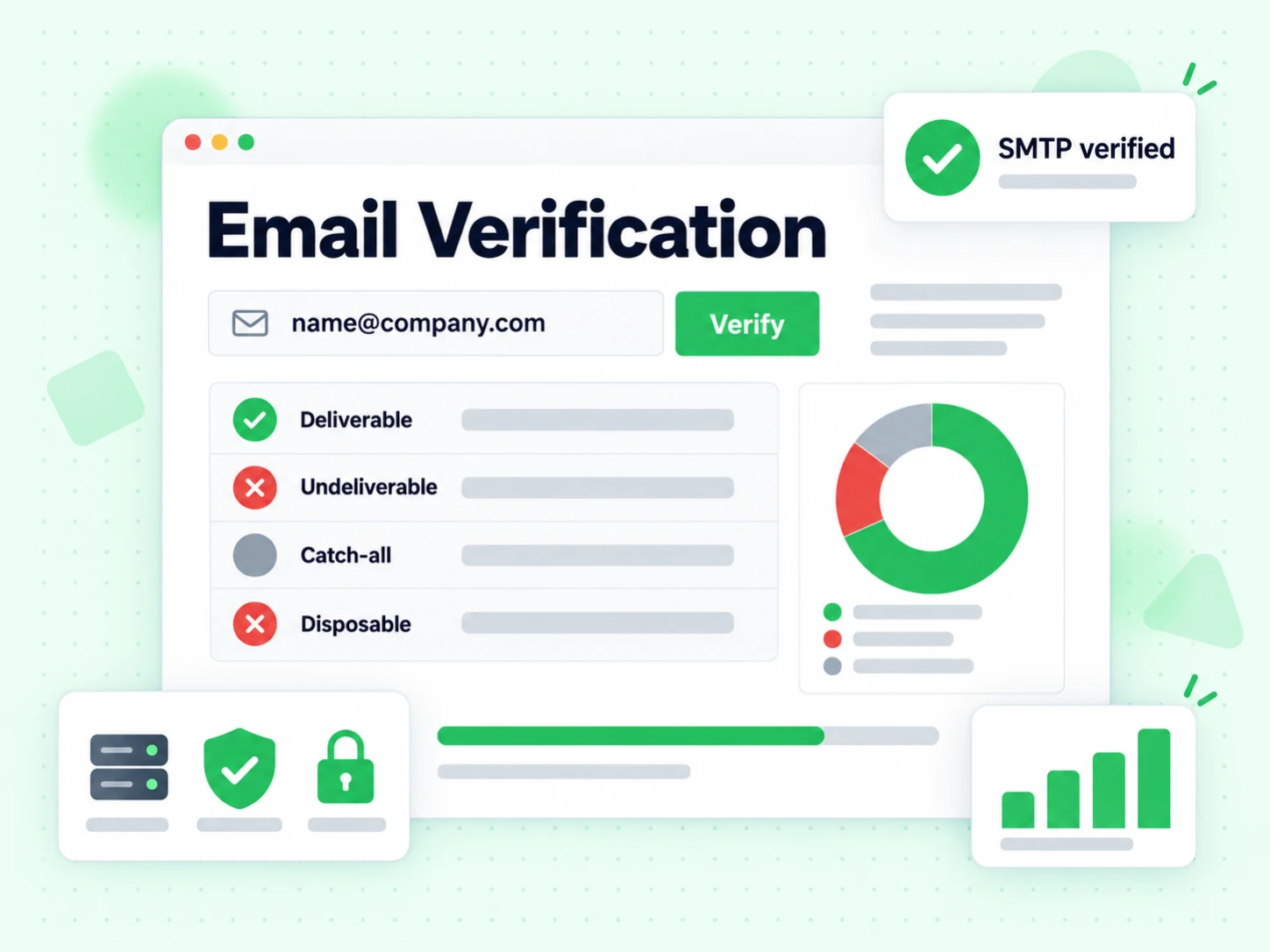
Validate one email before it enters a lead list, signup flow, or outbound workflow. The result shows status, SMTP verification, MX records, and reputation details in one product surface.

SMTP checkMX recordsDeliverability score
Get Started for Free
BillionVerify single email verification result showing valid status, deliverable flag, reputation score, and SMTP check details

How the email verification service works

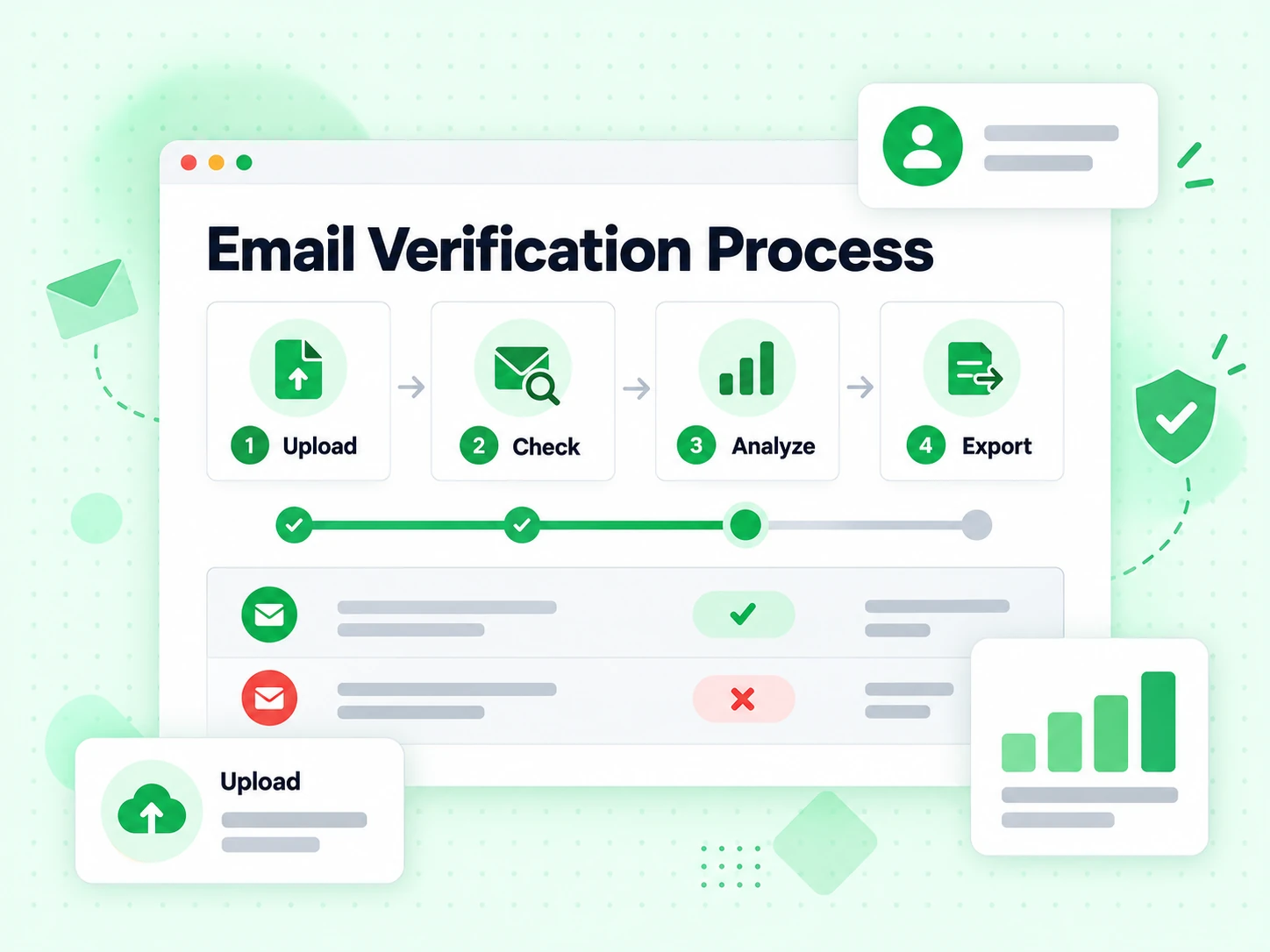
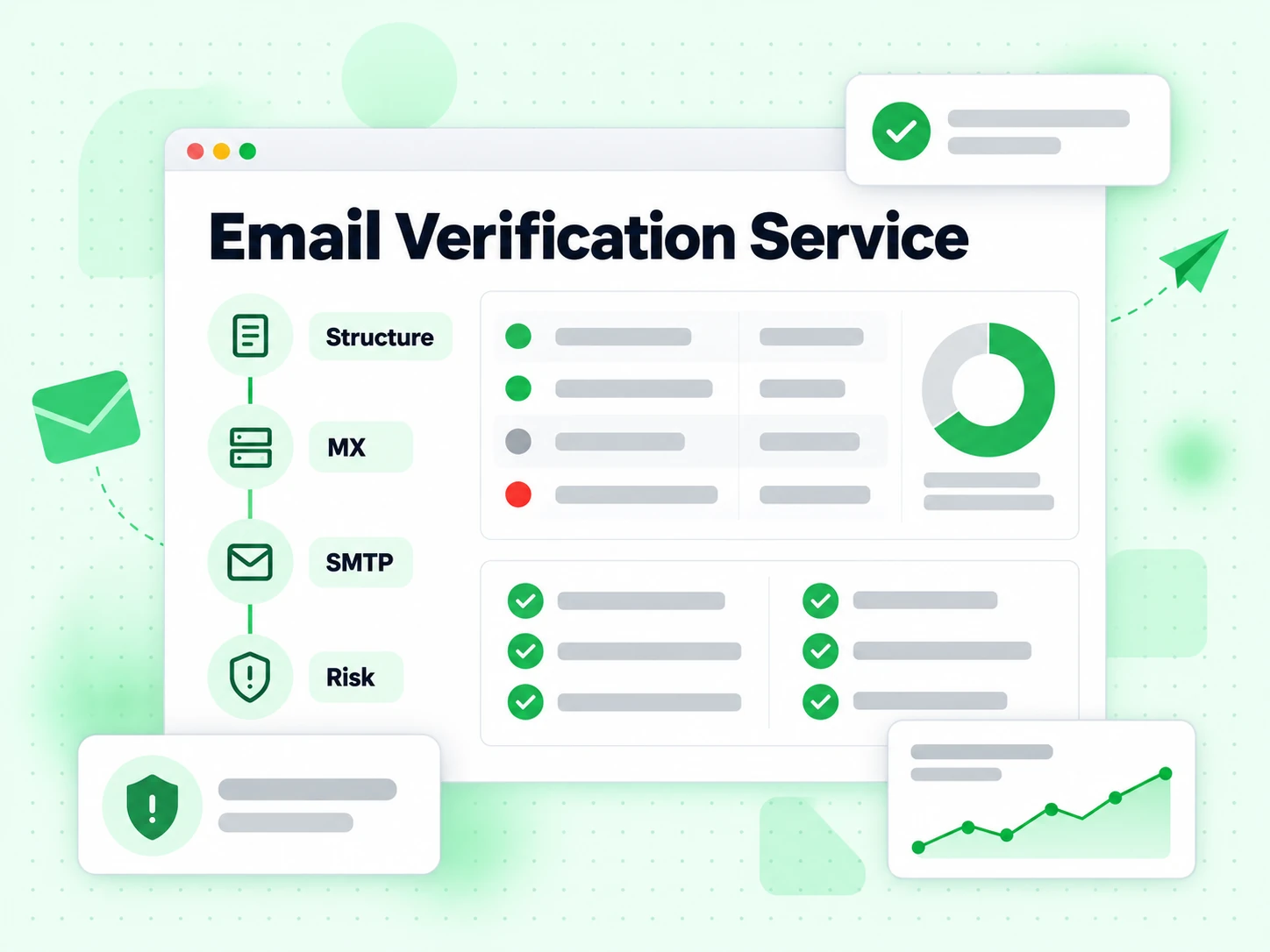
Four layers, in order. Real time email verification runs all four in under two seconds.

1

Syntax Check

Syntax and structure. Failures never reach the network, so the email verification service spends nothing on a typo.

2

Domain & MX Lookup

Domain and MX resolution. No mail route means no email verification result is possible beyond this point.

3

SMTP Handshake

The live SMTP mailbox probe. This is the layer that makes it an email verification service rather than a validator.

4

Mailbox Confirmation

Risk flags beside the verdict — disposable, role, catch-all, free webmail — so real time email verification answers two questions rather than blurring them into one.

Real time email verification API

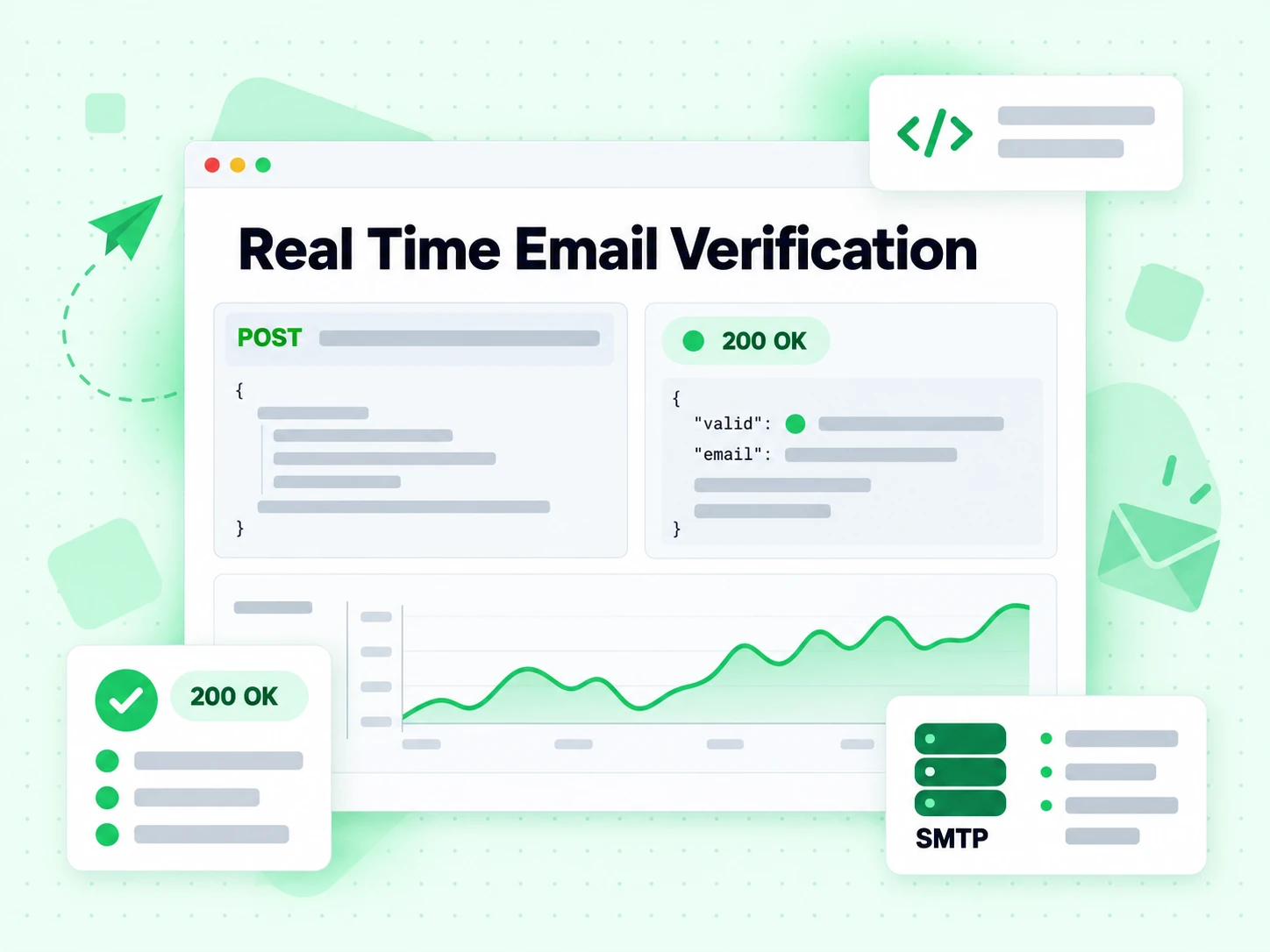
Real time email verification over HTTP

The same email verification service, called from your own code.

<200ms

Cached Latency

Previously seen addresses

1–3s

Full SMTP Check

Complete verification

99.9%

Accuracy

SMTP-level precision

99.99%

Uptime

Enterprise reliability

What it covers

What an email verification service actually does

An email verification service answers one question about each address: will a message sent there arrive? Everything else it reports exists to explain that answer or to qualify it.

Four layers, in order

Syntax, domain and MX, a live SMTP mailbox probe, then risk flags. Each layer of the email verification service removes one kind of uncertainty, and no earlier layer is allowed to claim what only a later one can prove.

A real time email verification pass runs all four in under two seconds, which is what makes it usable inside a signup form rather than only in a nightly job.

SMTP is the layer that earns the name

Format checks and DNS lookups describe the address; only an SMTP conversation describes the mailbox. An email verification service that stops before SMTP is a validator wearing a different label.

Nothing is delivered during the probe and the mailbox owner is never notified, which is why real time email verification can run on every signup without side effects.

Risk flags travel beside the verdict

Disposable providers, role accounts, catch-all domains, free personal webmail. An address can be perfectly deliverable and carry three of these, and the email verification service reports them separately rather than folding them into one score.

Keeping them apart is what lets your product apply its own policy instead of inheriting ours.

Inconclusive answers stay inconclusive

Greylisting and provider deferrals are normal. A free real time email verification result of unknown means the receiving server declined to commit, not that the address is bad.

An email verification service that rounds unknown up to deliverable is optimising its own accuracy number at your expense.

Reading results

What each verification status means

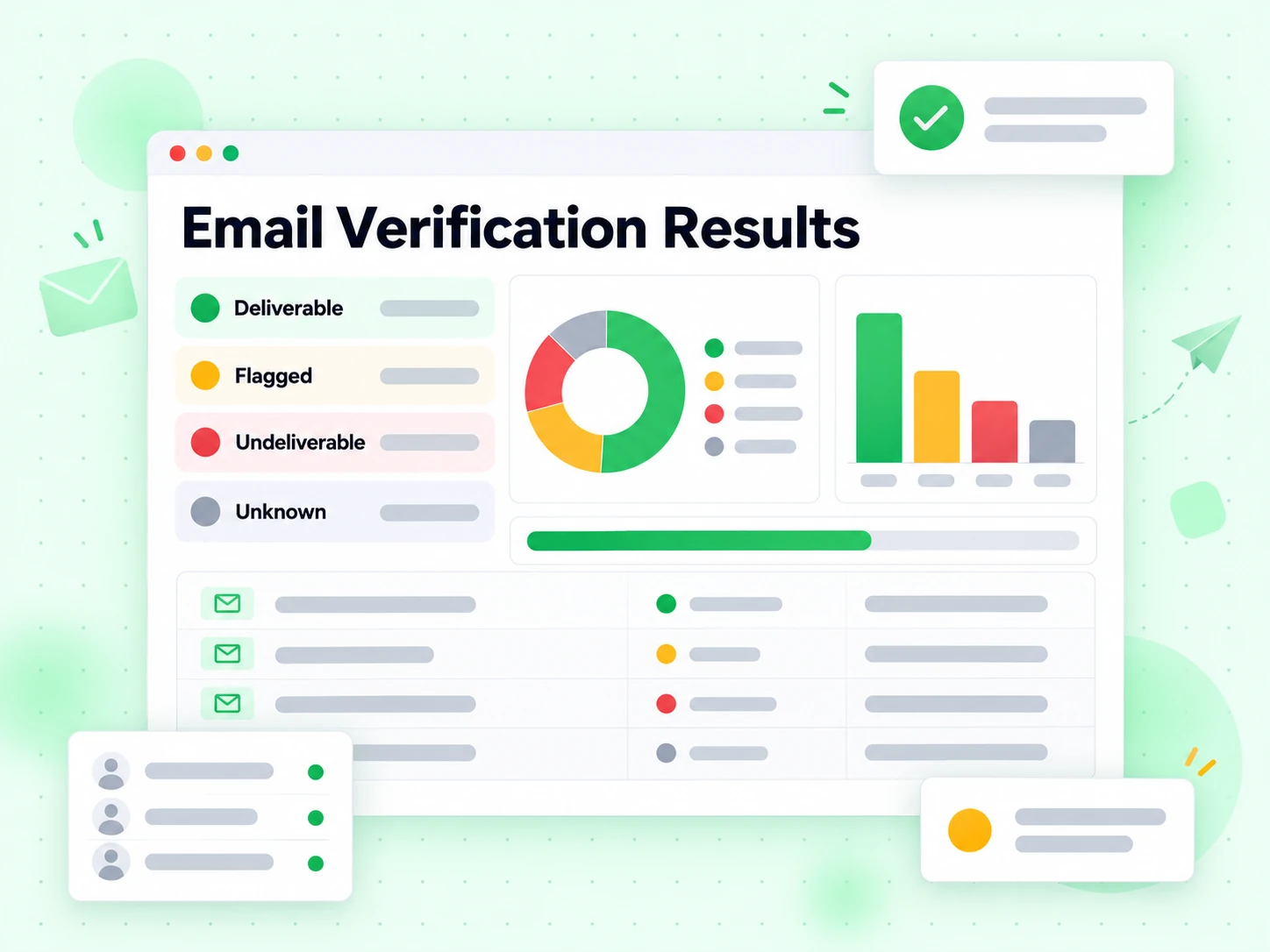
Four statuses, four different next actions.

Deliverable

The mailbox accepted the probe at the moment the email verification service ran. Send, subject to consent rules the service never evaluates.

It is a timestamped observation rather than a permanent property of the contact.

Undeliverable

A permanent failure. Suppress rather than delete, and keep the reason so the next import from the same source does not restore it.

This is the finding that protects sending reputation, and it is why real time email verification at signup beats cleaning later.

Risky

Deliverable with a flag. Whether a disposable inbox or a role address is acceptable depends entirely on why you collected it.

Encode that policy once, at the point where you call the email verification service.

Unknown

The provider deferred. Retry later rather than treating it as a pass or a fail.

Most unknowns resolve on a second pass, which is why a free real time email verification tier is useful for retries.

Where it runs

Three places an email verification service belongs

The same engine, three placements, and the earliest one is the cheapest.

  1. 1

    At signup

    Real time email verification inside the form catches a typo while the person who made it is still on the page. Nothing later in the pipeline can do that.

    Keep the call non-blocking past a short timeout; let the user through as unverified rather than failing the form.

  2. 2

    Before a campaign

    Lists decay. An email verification service run close to the send removes the addresses that would have hard bounced, before the ESP ever sees them.

    For a whole file, Bulk Email Verification applies the same email verification service to every row with deduplication and an export.

  3. 3

    Inside the systems that already move your data

    CRM sync jobs, enrichment workers, agent workflows. Adding the email verification service where records already flow costs almost nothing and stops the backlog rebuilding.

    Store status, flags, and a checked-at timestamp as separate fields so a later export cannot flatten them.

Limits

What an email verification service does not do

Three things outside every verification result.

It does not create consent

A deliverable address is not one you may email. Verification lowers bounce rate; permission lives in your own records.

No email verification service takes a position on consent, and one that claimed to would be wrong.

It does not guarantee inbox placement

SMTP acceptance describes the recipient path. Placement depends on sender reputation, authentication, content, and complaint history.

Real time email verification removes address-level failures and nothing else.

It cannot resolve catch-all domains

Catch-all domains accept every local part, so no probe isolates an individual mailbox. This is a protocol limit rather than a vendor one.

The email verification service reports the uncertainty instead of guessing, and any service that does otherwise is guessing on your behalf.

Related

The surfaces this service is exposed through

One engine, several entry points.

One address at a time

The Email Verifier runs the email verification service on one address, free and without signup.

Twenty full checks per IP per rolling day, with the same real time email verification behind them.

A whole file

The Email List Cleaning service applies it across a file and preserves the reason on every row.

Same engine as the real time email verification path; the difference is batch versus stream.

Inside your own code

The Email Verification API exposes the email verification service over HTTP for signup flows, CRM sync, and agents.

Free real time email verification credits cover a real integration spike before you commit.

Frequently Asked Questions

1. How accurate is the email verification service?

99.9%, because real time email verification asks the receiving server rather than inferring from format. Accuracy still depends on provider policy and catch-all domains, which is why the email verification service reports risk states instead of forcing a binary.

2. How fast is real time email verification?

Cached results return in under 200ms and a full SMTP check completes in one to three seconds. That is what makes real time email verification usable inside a signup form; bulk jobs run at 50,000 addresses per hour.

3. Is the email verification service secure?

All requests use HTTPS, and the email verification service does not build marketing lists from the addresses you check. Real time email verification results are returned and the input is discarded.

4. How much does verification reduce bounces?

It removes the addresses that would hard bounce, which is usually the whole address-level component. An email verification service cannot affect soft bounces or inbox placement — those depend on conditions at delivery time.

5. What does the email verification service cost?

$0.001 per verification on the Starter plan, scaling to $0.00035 at volume. Free real time email verification covers 600 credits a month plus 20 more each day you log in, with no credit card.

6. Is there a free tier?

Yes. Free real time email verification with 600 credits monthly plus a daily login bonus, and every feature of the paid email verification service included — syntax, domain, MX, SMTP, and all risk flags.

7. How do I verify a single address?

Use the Email Verifier for one address, or call the API for real time email verification inside your own flow. Both run the same email verification service and return identical fields.

8. What makes a good email verification service?

Reaching the mailbox over SMTP, reporting catch-all separately, and keeping unknown results honest. An email verification service that rounds unknown up to deliverable is optimising its own accuracy figure rather than your bounce rate.

Email Verification

Start with free real time email verification

600 credits a month plus 20 more each day you log in. The same email verification service on every surface — form, file, and API.

600 free credits monthly · 99.9% SMTP-level accuracy · No credit card required

99.9%
Accuracy
Real-time
API Speed
$0.00014
Per Email
600/mo
Free Forever