

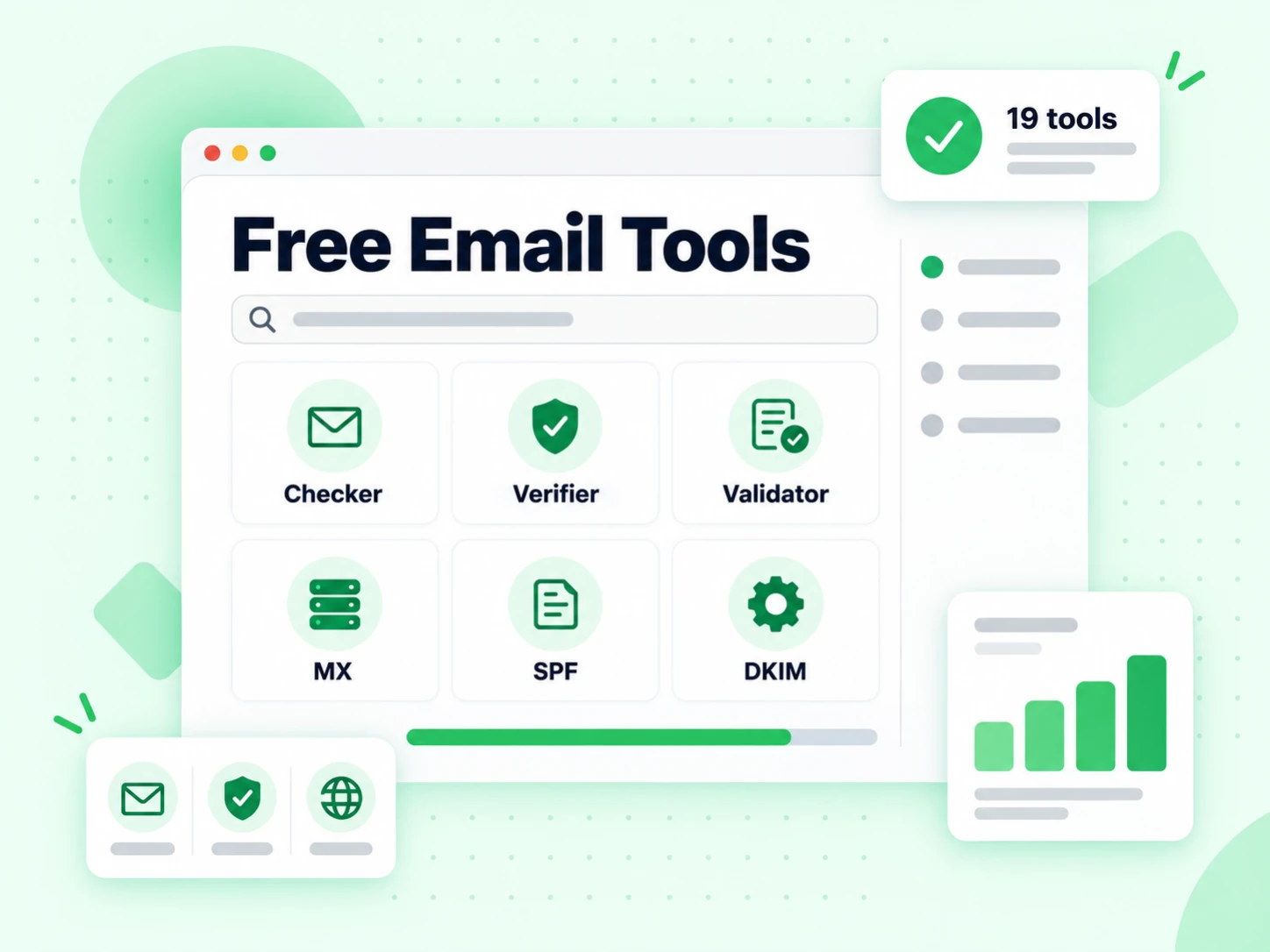
Free Email Tools
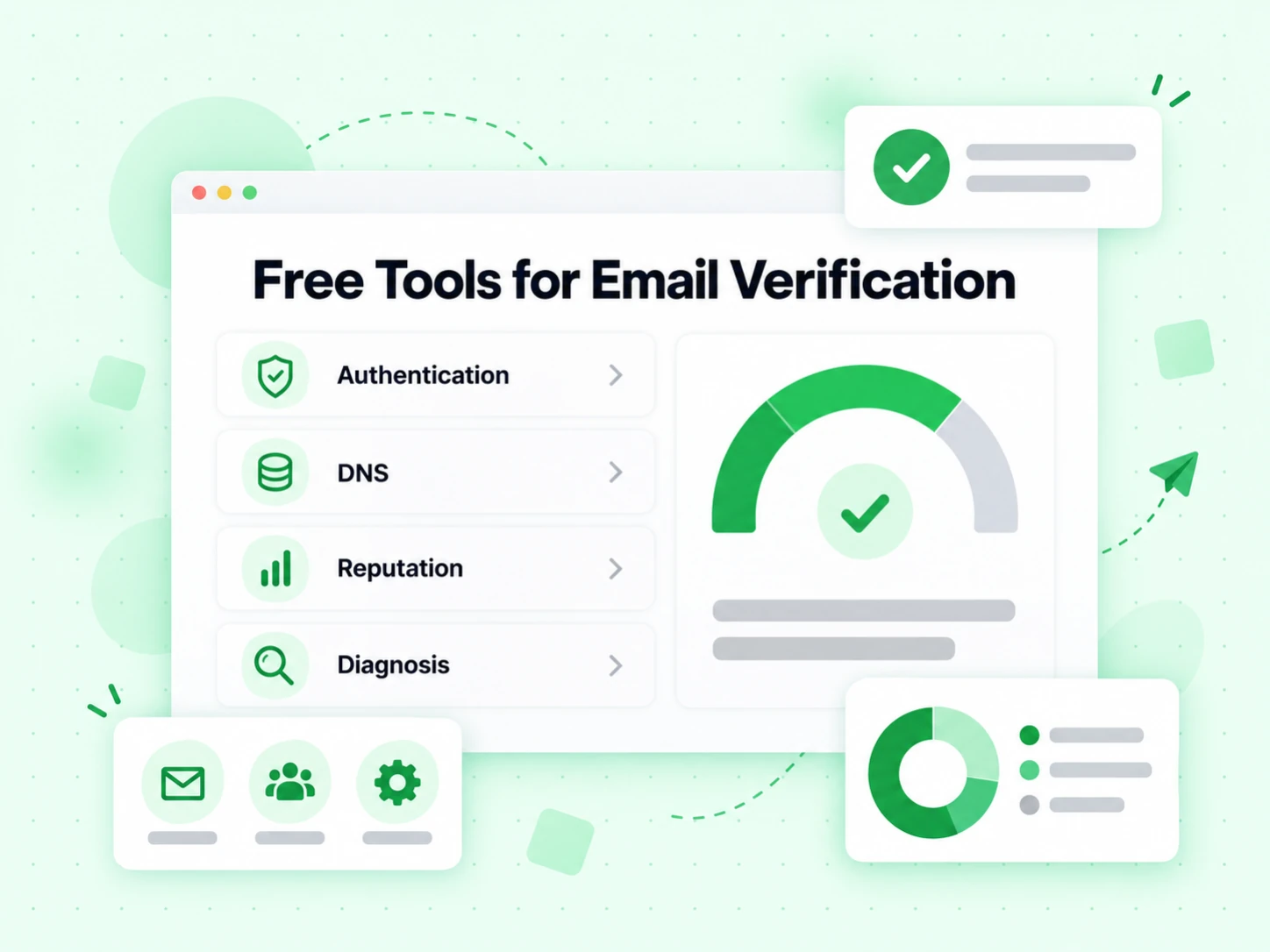
Three tool groups for mailbox checks, email workflow utilities, and DNS authentication. Pick the group that matches your task β most tools need no account.
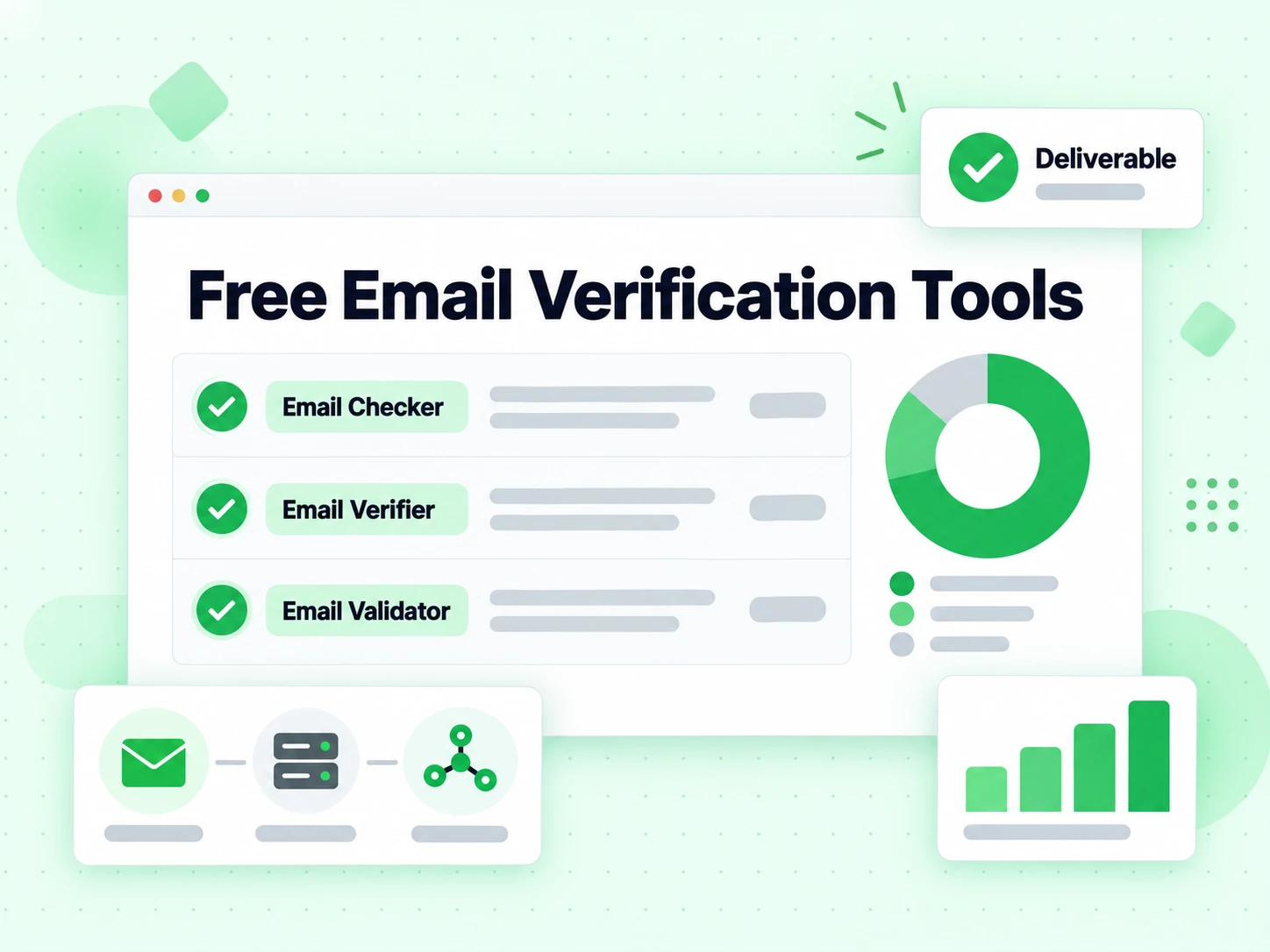
Email Verify Tools
Check whether an address exists, is free webmail, disposable, catch-all, or role-based β plus a WordPress plugin for form validation.
Email Checker
Interactive email check with the same verification depth as Email Verifier, optimized for checker search intent.
Free Email Checker
Detect free personal webmail providers (Gmail, Yahoo, Outlook, and more) β not a free-of-charge verification quota page.
Email Validator
Fast syntax and MX validation without an SMTP handshake. Use when you need a shallow format check.
Disposable Email Detection
Identify temporary and throwaway email domains commonly used to bypass signups.
Bounce Email Checker
Learn how bounce risk is detected and how invalid mailboxes hurt campaign metrics.
Catch-All Verifier
Understand catch-all domains that accept any local part and how verification treats them.
Role Account Detection
Flag role addresses like info@, support@, and sales@ that often underperform in outreach.
Email List Cleaning
Clean a short list in the browser with a free demo quota, then scale with bulk verification.
WordPress Email Verify Plugin
Validate emails on WordPress forms before submit β stop disposable and invalid addresses at the gate.
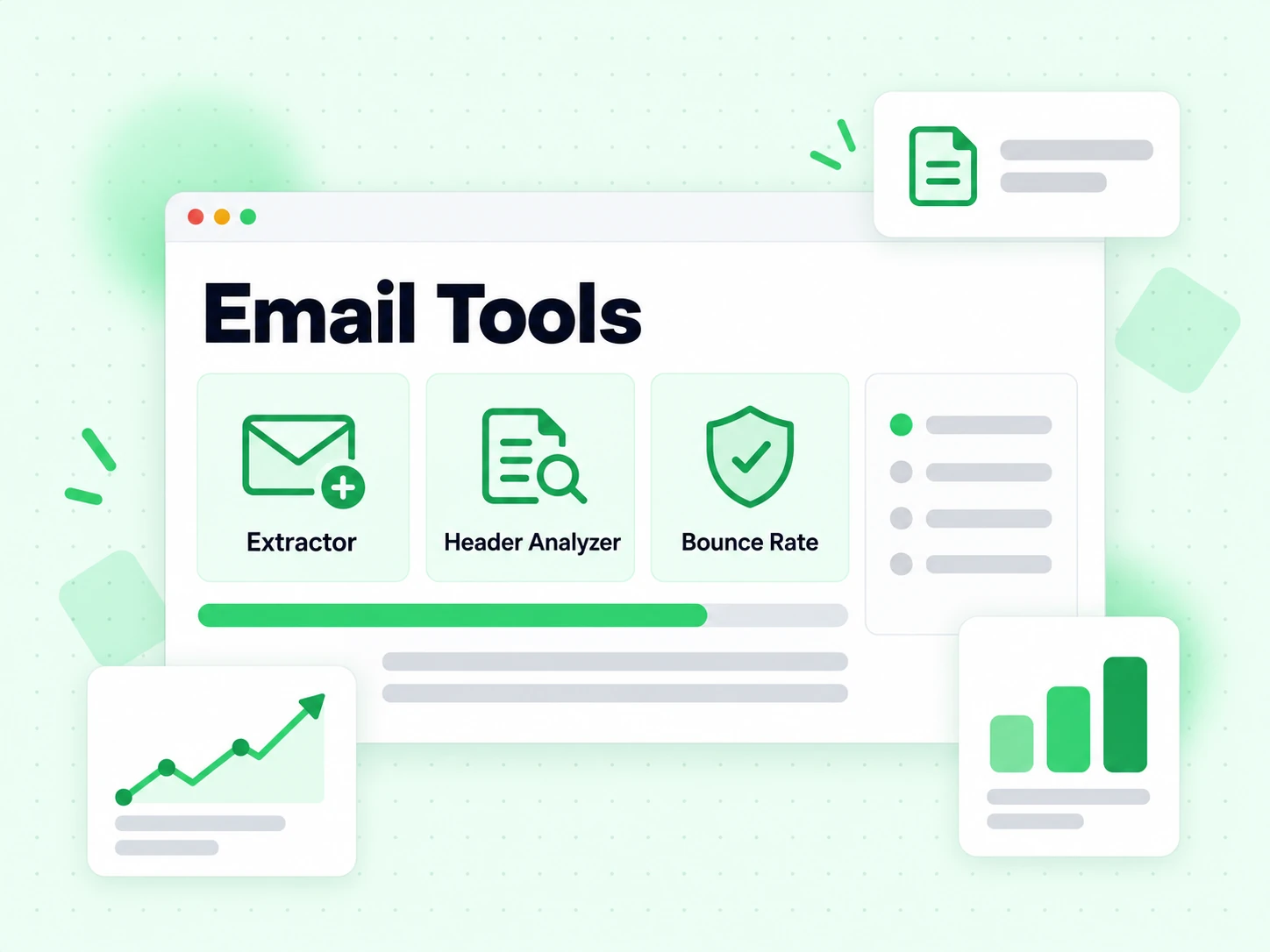
Email Tools
Utilities for extracting addresses, testing inbox placement, reading headers, and calculating bounce rate.
Email Extractor
Extract email addresses from any pasted text or page content. Copy a clean list for outreach or verification.
Email Deliverability Test
Send a test message and see how major providers place it β inbox, spam, or missing β with authentication detail.
Email Header Analyzer
Paste raw email headers to see SPF, DKIM, DMARC results, routing hops, delays, and authentication chain at a glance.
Email Bounce Rate Calculator
Enter your send volume and bounce count to calculate bounce rate and benchmark against industry thresholds.
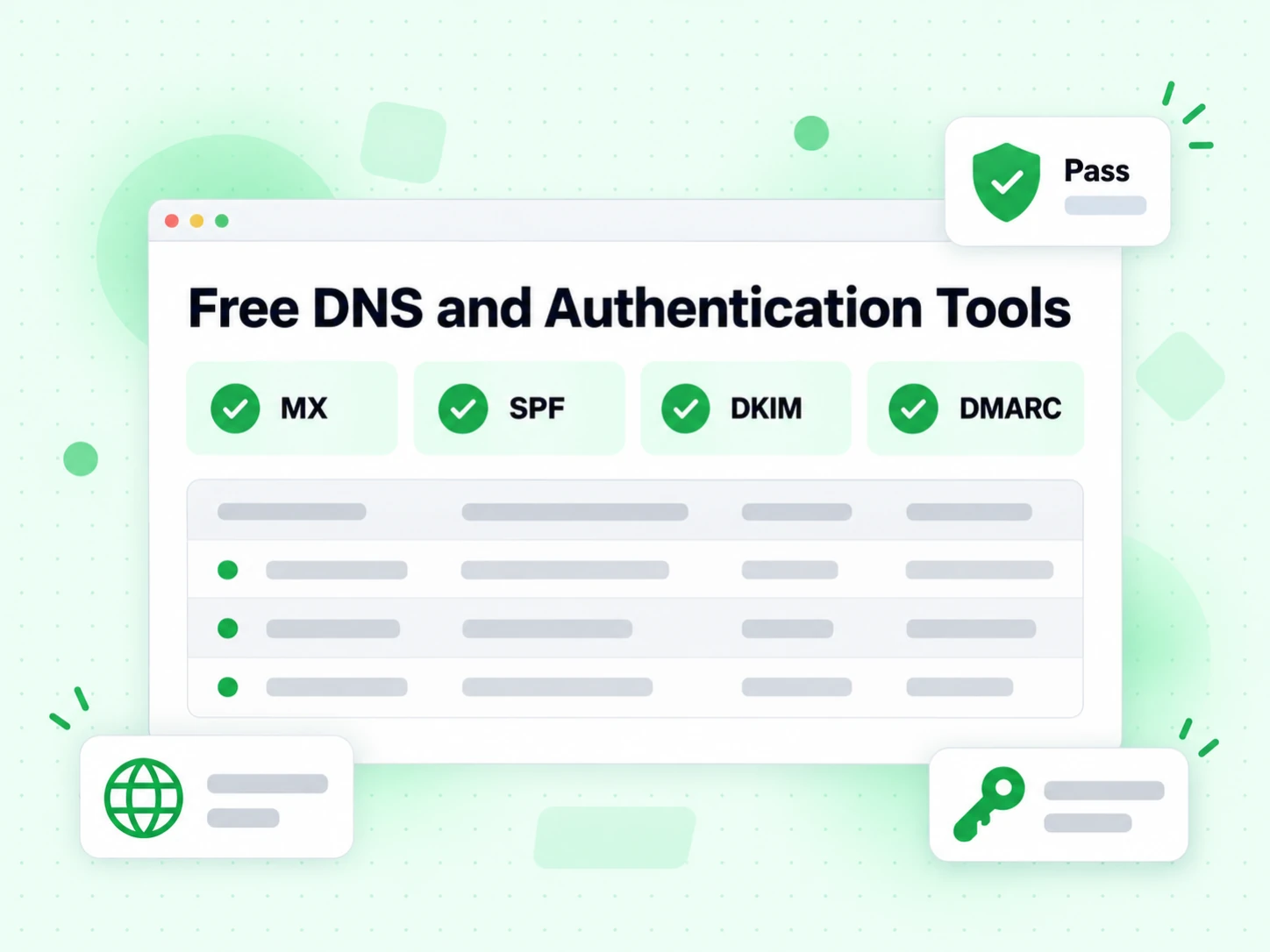
Free Tools
DNS and authentication helpers: generate or check SPF, DKIM, and DMARC, look up MX and WHOIS, and scan blacklists.
SPF Record Generator
Build a valid SPF TXT record for your domain. Add sending sources, set enforcement policy, and copy the finished record.
DKIM Record Generator
Generate a DKIM public key record to publish in your DNS. Choose key size and selector to match your mail server.
DMARC Policy Generator
Create a DMARC policy record with your preferred enforcement level, reporting addresses, and alignment settings.
MX Record Lookup
Query the MX records for any domain to see which mail servers accept incoming email and their priority order.
SPF Record Checker
Validate the SPF record published for any domain. See pass, fail, or configuration errors along with the raw record.
DKIM Record Checker
Look up the DKIM TXT record for a domain and selector to verify the public key is published and correctly formatted.
DMARC Record Checker
Check the DMARC policy record for any domain. See enforcement level, reporting addresses, and alignment settings.
DNS Record Checker
Query any DNS record type β A, AAAA, CNAME, TXT, MX, NS, SOA β for any domain from multiple global resolvers.
Email Blacklist Checker
Check if your IP address or domain appears on major email blacklists that affect inbox placement and sender reputation.
IP Reputation Checker
Look up the reputation score and blacklist status of any IP address to understand its impact on email deliverability.
WHOIS Lookup
Query WHOIS registration data for any domain. See registrar, registration date, expiry, nameservers, and status.
Why These Tools Matter Together
Mailbox quality, message diagnostics, and DNS authentication solve different layers of the same problem β bad lists, spam folder placement, and broken sending domains.
Authentication Prevents Spoofing
SPF, DKIM, and DMARC together prove that your email really came from you. Without all three configured correctly, receiving mail servers may reject or flag your messages as suspicious.
DNS Records Shape Deliverability
Mail servers check MX, PTR, TXT, and DMARC records before and during delivery. Misconfigured DNS is one of the most common reasons legitimate email lands in spam.
List Quality Protects Reputation
Invalid, disposable, and role addresses drive bounces and complaints. Verify and clean lists before large sends so sender reputation stays healthy.
Headers Tell the Full Story
Email headers contain the complete delivery chain β every hop, every authentication check, every delay. Analyzing them is the fastest way to diagnose why a specific message failed.
Who Uses These Tools
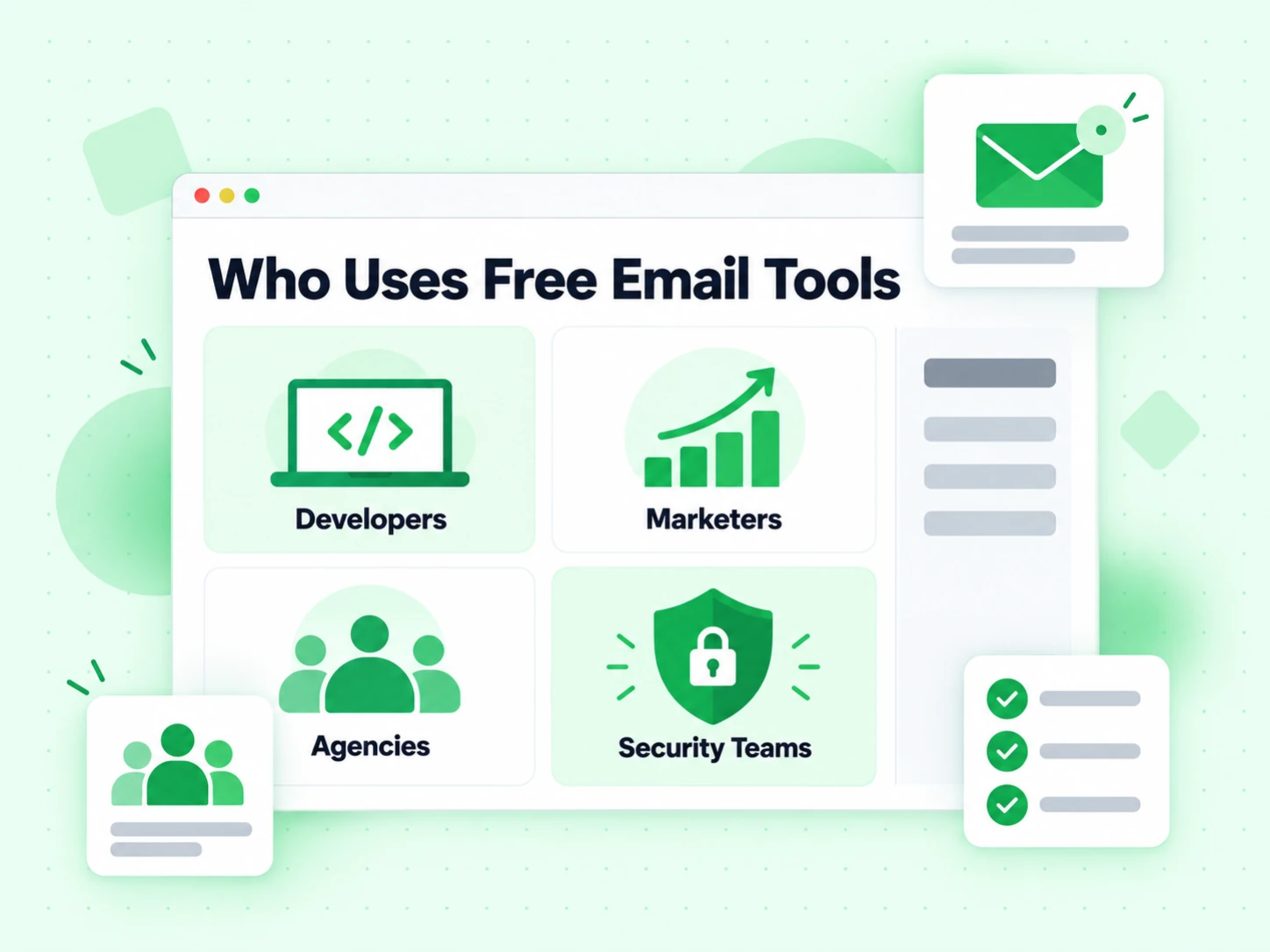
Useful for anyone who verifies addresses, runs campaigns, or manages email infrastructure.
Developers & System Administrators
Use SPF, DKIM, and DMARC generators when setting up a new domain. Use Free Tools to confirm records after DNS changes.
Email Marketers
Verify and clean lists with Email Verify Tools, extract addresses with Email Tools, and check blacklists before major campaigns.
Agencies & Consultants
Audit client lists and DNS during onboarding. The WHOIS lookup helps confirm domain ownership and registration details.
Security Teams
Check DMARC enforcement across managed domains and use the header analyzer to trace suspicious messages.
How These Tools Work
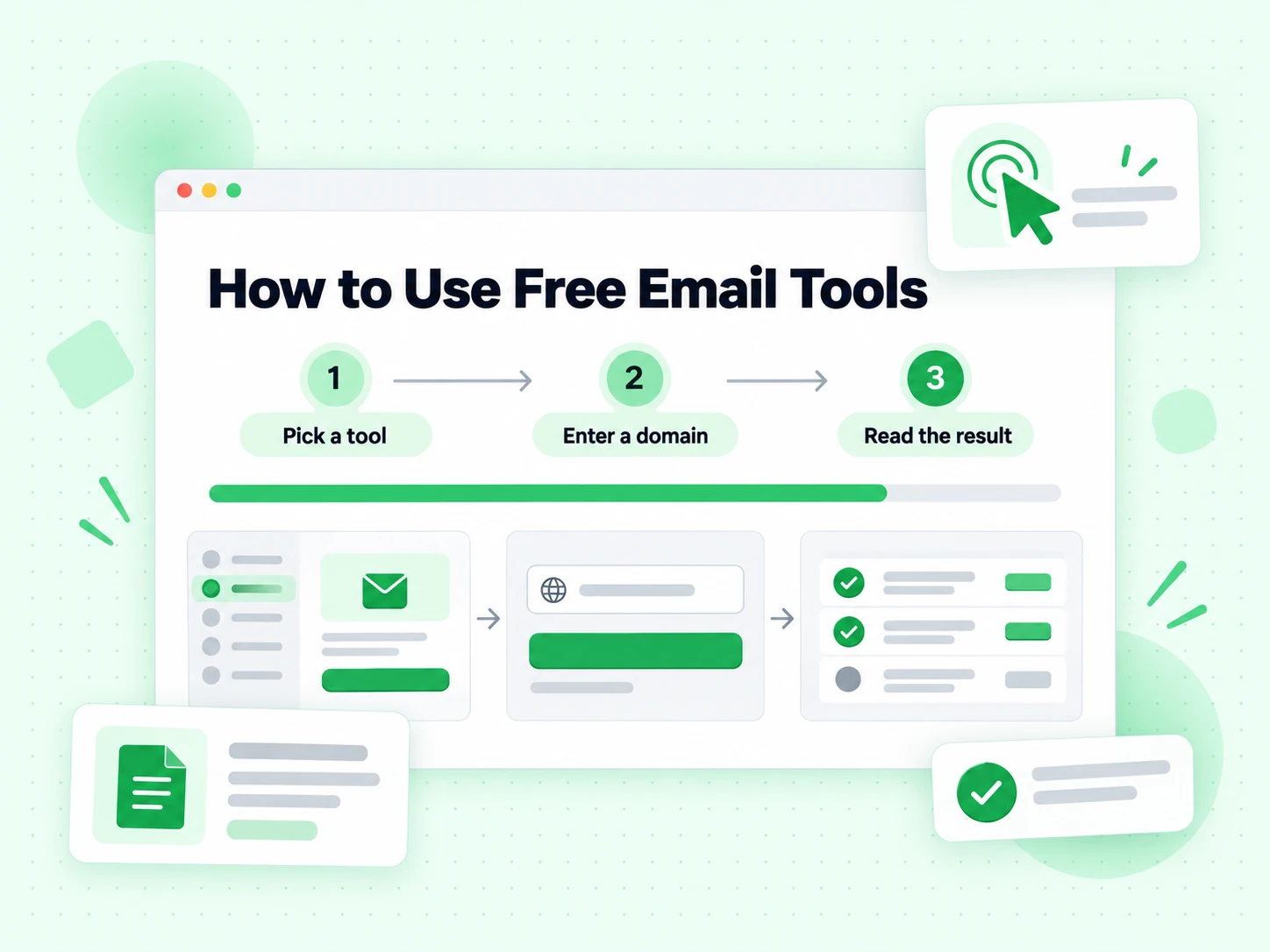
Pick a group, open a tool, and get results in the browser β verification APIs, DNS resolvers, or parsers depending on the task.
Pick a Group
Email Verify Tools for mailboxes, Email Tools for workflow utilities, Free Tools for DNS and reputation.
Enter an Address, Domain, or Payload
Tools accept emails, domains, IPs, pasted text, or raw headers depending on the task.
Review the Results
Results appear immediately with explanations so you know what to fix, copy, or clean next.
Frequently Asked Questions
1. What is the difference between the three tool groups?
Email Verify Tools check whether an email address is real, risky, free webmail, or list-clean ready. Email Tools help extract addresses, test inbox placement, analyze headers, and calculate bounce rate. Free Tools focus on DNS and authentication β SPF, DKIM, DMARC, MX, blacklist, and WHOIS.
2. Are these tools free to use?
Most tools on this page run without an account. Some Email Verify Tools (full SMTP and list-clean demos) use a fair-use quota per IP. For high-volume verification and API access, BillionVerify offers paid plans.
3. What is Free Email Checker?
Free Email Checker classifies free personal webmail providers such as Gmail and Yahoo. It is not a page about free-of-charge verification quotas β that meaning of free lives in demo limits on Email Verifier and list cleaning.
4. What is the difference between SPF, DKIM, and DMARC?
SPF specifies which mail servers may send for your domain. DKIM adds a cryptographic signature so receivers can detect tampering. DMARC tells receivers what to do when SPF or DKIM fail and where to send reports. All three work as a layered authentication system.
5. Why does my email land in spam even with SPF and DKIM?
Authentication alone does not guarantee inbox placement. Other causes include blacklist listings, weak DMARC policy, content issues, and low sender reputation. Use Free Tools for DNS/reputation and Email Tools for header and deliverability diagnosis.
6. When should I use the WordPress Email Verify Plugin?
Use it when WordPress forms should reject invalid or disposable addresses before they enter your CRM or list. It sits with Email Verify Tools because it validates mailboxes at signup time.
Need Verification at Scale?
Free tools are for checks and diagnosis. For production bulk cleaning and API verification, start free on BillionVerify.
Verify individual emails in real time Β· Clean bulk lists before every campaign Β· Integrate via REST API or native plugins Β· 99.9% accuracy with SMTP verification