



Using a subscriber's first name in an email is personalization's minimum viable effort. True email personalization goes far deeper—adapting content, timing, offers, and messaging to each subscriber's unique characteristics and behaviors. This guide explores advanced personalization strategies that transform generic emails into individually relevant experiences.
The Evolution of Email Personalization
Email personalization has evolved dramatically from its humble beginnings.
From Mail Merge to Intelligence
First Generation: Name insertion. "Dear John" replaced "Dear Customer."
Second Generation: Demographic personalization. Different content for different segments.
Third Generation: Behavioral personalization. Content based on actions and interactions.
Fourth Generation: Predictive personalization. Content based on anticipated needs and preferences.
Current State: AI-driven personalization that combines all approaches in real-time.
Why Personalization Matters More Than Ever
Subscribers expect personalized experiences. They receive hundreds of emails weekly and only engage with those that feel relevant.
Personalization Impact:
- Personalized emails deliver 6x higher transaction rates
- 74% of consumers feel frustrated when content isn't personalized
- Personalized subject lines increase open rates by 26%
- Emails with personalized content generate 5.7x more revenue
The Psychology Behind Personalization
Personalization works because it triggers fundamental psychological principles.
Recognition: People pay attention when they feel recognized as individuals.
Relevance: Content that matches current needs captures interest.
Reciprocity: Personal attention makes people want to reciprocate.
Trust: Demonstrating knowledge of preferences builds trust.
Types of Email Personalization
Multiple personalization dimensions work together to create relevant experiences.
Identity Personalization
The most basic form—using personal information in emails.
Basic Identity Elements:
- First name
- Last name
- Company name
- Job title
- Location
Best Practices for Identity Personalization:
Use Fallbacks: Always have default values for missing data.
Hi {first_name|there},
Don't Overuse: Including the name once or twice feels natural; five times feels creepy.
Verify Data Quality: Wrong names are worse than no names. Ensure your data is accurate.
Context Matters: "Hi Sarah" works in a newsletter; "Dear Ms. Johnson" fits formal communication.
Behavioral Personalization
Customize content based on subscriber actions and interactions.
Email Engagement Behavior:
Content Clicked: If they clicked on "productivity tips" last time, lead with productivity content next time.
Email Frequency Preference: Respect engagement patterns—heavy engagers can receive more; light engagers need space.
Time of Engagement: Note when they typically open and optimize send times accordingly.
Website Behavior:
Pages Viewed: Reference visited pages or recommend related content.
Products Browsed: Show items they looked at or similar products.
Content Downloaded: Build on topics they've shown interest in.
Search Queries: Address what they were looking for.
Purchase Behavior:
Products Bought: Recommend complementary items or replenishment.
Purchase Frequency: Timing emails to buying patterns.
Spending Level: Match offer value to typical purchase amount.
Category Preferences: Focus on preferred product categories.
Contextual Personalization
Adapt emails to the subscriber's current context.
Time-Based Context:
Time of Day: Morning emails might focus on daily planning; evening on relaxation.
Day of Week: Weekday content differs from weekend content.
Season: Seasonal relevance in content and offers.
Holidays: Regional and cultural holiday acknowledgment.
Location-Based Context:
Weather: Products and content relevant to current conditions.
Local Events: References to what's happening in their area.
Store Location: Direct to nearest physical location.
Regional Preferences: Content that reflects regional tastes.
Device-Based Context:
Device Type: Optimize content for mobile vs. desktop.
Email Client: Format for their specific client's capabilities.
Predictive Personalization
Use data patterns to anticipate subscriber needs.
Predictive Applications:
Next Purchase Prediction: Recommend products they're likely to buy based on patterns.
Churn Prediction: Proactively engage subscribers showing disengagement signals.
Optimal Send Time: Predict when each individual is most likely to engage.
Content Affinity: Predict which topics will interest them most.
Lifetime Value Prediction: Prioritize attention toward high-potential subscribers.
Advanced Personalization Strategies
Move beyond basics with these sophisticated approaches.
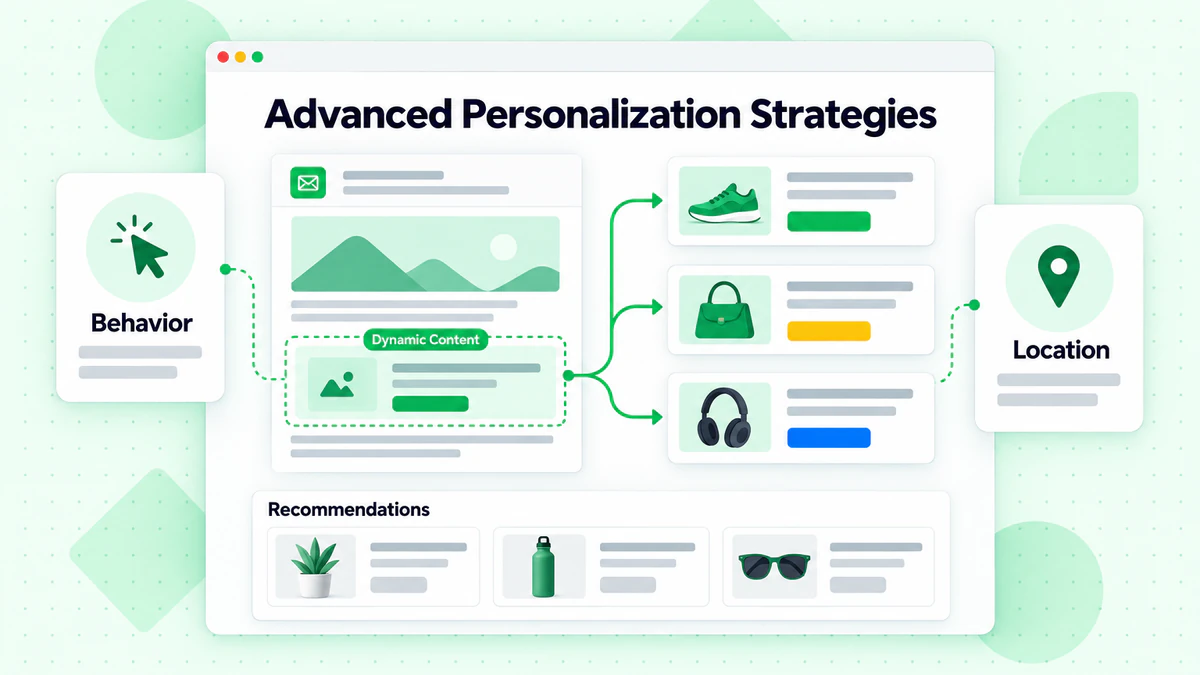
Dynamic Content Blocks
Display different content sections based on subscriber attributes.
How Dynamic Content Works: Same email template with conditional sections that change per recipient.
Example Structure:
[Header - Same for all]

[Hero Section]
IF industry = "SaaS" → Show SaaS case study
IF industry = "E-commerce" → Show E-commerce case study
IF industry = "Other" → Show general case study

[Body Content - Same for all]

[Product Recommendations]
Show 3 products from most-engaged category

[Footer - Same for all]
Dynamic Content Applications:
Product Recommendations: Show items based on browsing or purchase history.
Case Studies: Display examples from the subscriber's industry.
Testimonials: Feature reviews from similar customers.
Offers: Customize discounts or incentives by segment.
Images: Display lifestyle images matching demographics.
Personalized Subject Lines
Subject line personalization drives open rates.
Beyond Name Insertion:
Location-Based: "Seattle weather calls for [product]"
Behavior-Based: "Still thinking about [browsed item]?"
Interest-Based: "New [preferred category] arrivals"
Activity-Based: "You earned [loyalty points] this month"
Purchase History: "Time to restock your [previously purchased item]?"
Subject Line Personalization Best Practices:
- Keep personalized elements short
- Ensure fallbacks work naturally
- Test personalized vs. non-personalized versions
- Don't personalize every email—it loses impact
Send Time Personalization
Deliver emails when each subscriber is most likely to engage.
Individual Send Time Optimization:
Data-Driven Approach:
- Track when each subscriber typically opens emails
- Build individual engagement profiles
- Send at predicted optimal time
- Continuously refine based on new data
Implementation Considerations:
- Requires sufficient engagement history per subscriber
- May complicate campaign reporting
- Not all ESPs support individual send times
- Time zones add complexity
Alternative Approaches:
- Segment by timezone
- Group by engagement time patterns
- Use platform's send time optimization features
Triggered Personalization
Automate personalized messages based on specific actions.
High-Impact Trigger Types:
Welcome Series: Personalized based on signup source, stated interests, or lead magnet chosen.
Browse Abandonment: "Still interested in [viewed product]?" with personalized recommendations.
Cart Abandonment: Reminder with specific items, possibly with personalized incentive.
Post-Purchase: Thank you with relevant cross-sells and personalized usage tips.
Re-engagement: "We miss you, [name]" with content matching past interests.
Milestone Emails: Celebrate subscriber anniversaries, purchase milestones, or achievements.
Personalized Recommendations
Show products or content tailored to individual preferences.
Recommendation Strategies:
Collaborative Filtering: "Customers like you also bought..." Based on similar subscribers' behavior.
Content-Based: "Because you liked [item A], you might like [item B]..." Based on item attributes and past preferences.
Hybrid Approaches: Combine multiple signals for better accuracy.
Recommendation Email Types:
"Top Picks for You": Curated selection based on behavior.
"Back in Stock": Notify about previously viewed items now available.
"New Arrivals in Your Favorites": Fresh items in preferred categories.
"Complete the Look": Complementary items to recent purchases.
"You Might Have Missed": Relevant content they haven't seen.
Implementing Personalization
Turn strategy into execution with these implementation steps.
Step 1: Audit Your Data
You can only personalize based on data you have.
Data Inventory Questions:
- What subscriber attributes do we collect?
- What behavioral data do we track?
- Is our data accurate and complete?
- What data gaps limit desired personalization?
Common Data Sources:
- Email platform (engagement data)
- CRM (customer information)
- E-commerce platform (purchase data)
- Website analytics (browsing behavior)
- Preference surveys (stated preferences)
Step 2: Ensure Data Quality
Personalization with bad data is worse than no personalization.
Data Quality Actions:
Verify Email Addresses: Use email verification to ensure you're personalizing for real subscribers.
Clean and Standardize: Fix formatting issues, standardize fields.
Fill Gaps: Use progressive profiling to gather missing data.
Update Regularly: Remove outdated information, refresh stale data.
Validate Inputs: Prevent bad data from entering your system.
Step 3: Start Simple
Build personalization capabilities incrementally.
Beginner Personalization:
- First name in greeting
- Location-based content
- Purchase history references
Intermediate Personalization:
- Dynamic content blocks by segment
- Behavioral triggers
- Personalized subject lines
Advanced Personalization:
- Individual send time optimization
- Predictive product recommendations
- Real-time content personalization
Step 4: Test Everything
Personalization assumptions need validation.
What to Test:
Personalized vs. Non-Personalized: Does personalization actually improve results?
Level of Personalization: Does more always mean better?
Personalization Elements: Which elements have the most impact?
Personalization Accuracy: Are recommendations actually relevant?
Step 5: Measure and Optimize
Track personalization effectiveness continuously.
Personalization Metrics:
Engagement Lift: How much do personalized emails outperform generic ones?
Recommendation Performance: Click rates on recommended items.
Revenue Impact: Additional revenue attributable to personalization.
Customer Satisfaction: Feedback on email relevance.
Personalization Technology
Tools that enable advanced personalization.
Email Service Provider Features
Most modern ESPs offer built-in personalization capabilities.
Standard Features:
- Merge tags for personal data
- Conditional content blocks
- Basic segmentation
- Engagement-based triggers
Advanced Features:
- AI-powered recommendations
- Predictive send time optimization
- Dynamic content APIs
- Real-time personalization
Additional Personalization Tools
Customer Data Platforms (CDPs): Unify data from multiple sources for comprehensive personalization.
Recommendation Engines: Generate personalized product or content suggestions.
Testing Platforms: A/B test personalization approaches at scale.
Data Enrichment Services: Fill in missing subscriber information.
Integration Requirements
Effective personalization requires connected systems.
Key Integrations:
- Email platform ↔ CRM
- Email platform ↔ E-commerce
- Email platform ↔ Website analytics
- Email platform ↔ Product catalog
Personalization Best Practices
Guidelines for effective, ethical personalization.
Balance Personalization and Privacy
Personalization shouldn't feel invasive.
Privacy-Respecting Personalization:
Use First-Party Data: Focus on data subscribers provided or generated through direct interactions.
Be Transparent: Let subscribers know how you use their data.
Provide Control: Offer preference centers and easy opt-outs.
Avoid Creepy: Don't reveal you know more than seems natural.
Example of Creepy: "We noticed you spent 3 hours on our pricing page yesterday at 11:47 PM."
Example of Helpful: "Here's more information about the plan you were researching."
Handle Missing Data Gracefully
Not all subscribers have complete data.
Fallback Strategies:
Default Values: Generic placeholders when data is missing.
Hi {first_name|there},
Hide Empty Elements: Don't show personalized sections if data is unavailable.
Use Available Data: If you don't have name, personalize on something you do have.
Collect Missing Data: Use progressive profiling to fill gaps over time.
Maintain Consistency
Personalization should feel natural, not jarring.
Consistency Guidelines:
Cross-Channel: Personalization should align with website, ads, and other touchpoints.
Over Time: References should build on previous communications.
Within Email: Personalized elements should work together cohesively.
Test Before Scaling
Validate personalization before full deployment.
Testing Checklist:
- Verify fallbacks work correctly
- Check edge cases (special characters, long names)
- Test on different email clients
- Confirm data is pulling correctly
- Review for unintended combinations
Personalization Mistakes to Avoid
Learn from common personalization failures.
Over-Personalization
The Problem: So much personalization that emails feel robotic or surveillance-like.
Example: "Hi John from Seattle! We noticed you browsed blue shoes at 3 PM yesterday on your iPhone. Here are more blue shoes since you're a size 10 who typically shops on Tuesdays!"
The Fix: Personalize key elements that add value; keep the overall tone human.
Wrong Personalization
The Problem: Incorrect data creates embarrassing or offensive personalization.
Example: Using outdated purchase data to recommend baby products to someone who had a miscarriage.
The Fix:
- Verify data accuracy
- Be cautious with sensitive categories
- Provide preference controls
- Regular data auditing
Personalization Without Value
The Problem: Adding personalization that doesn't improve the experience.
Example: Using someone's name five times in a three-paragraph email.
The Fix: Every personalization element should serve a purpose—relevance, convenience, or connection.
Ignoring Deliverability
The Problem: Personalized emails that never reach the inbox can't create value.
The Fix:
- Verify email addresses before personalizing
- Maintain sender reputation
- Monitor deliverability metrics
- Use BillionVerify to ensure clean lists
Static Personalization
The Problem: Using outdated data that no longer reflects subscriber reality.
Example: Recommending products from a category they abandoned months ago.
The Fix: Use recent behavioral data; set expiration on preference data; refresh regularly.
Measuring Personalization Success
Track these metrics to evaluate personalization effectiveness.
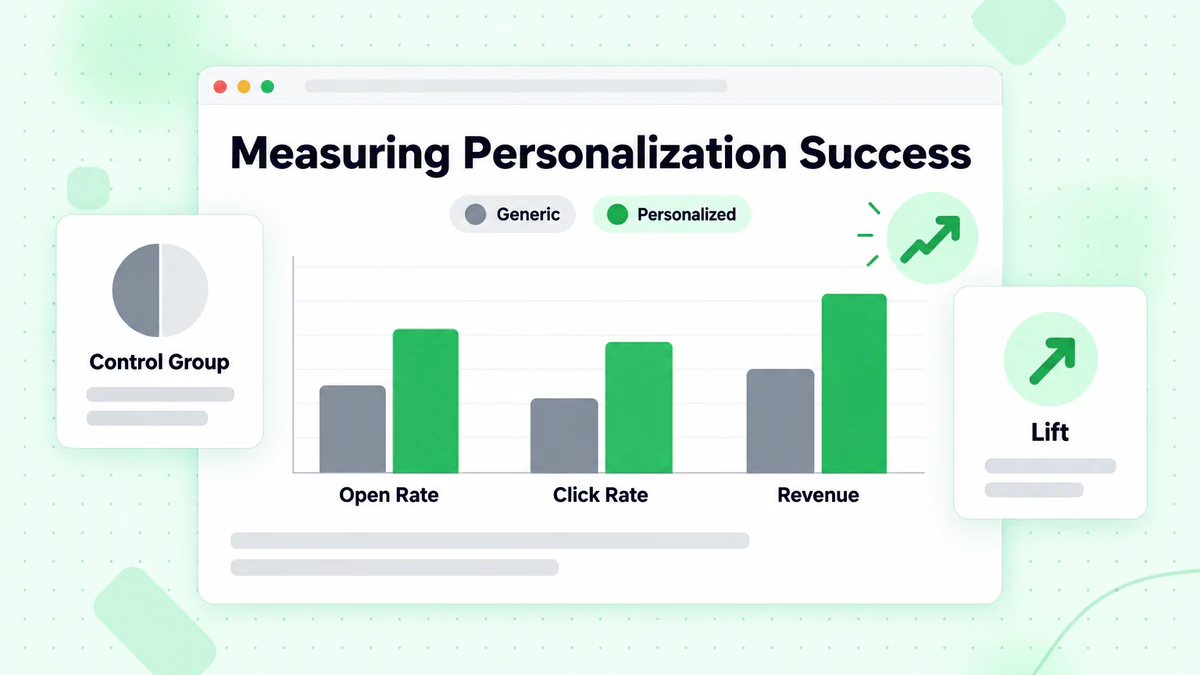
Performance Metrics
Engagement Metrics:
- Open rate lift (personalized vs. generic)
- Click rate improvement
- Time spent reading emails
- Reply rates
Conversion Metrics:
- Conversion rate by personalization level
- Revenue per email
- Average order value
- Recommendation click-through and conversion
Relationship Metrics:
- Unsubscribe rates (should decrease with relevance)
- Spam complaints
- Customer satisfaction scores
- Lifetime value changes
Testing Framework
A/B Test Structure:
- Control: Non-personalized version
- Variant A: Basic personalization (name, location)
- Variant B: Advanced personalization (behavior, recommendations)
Measure:
- Primary metric (conversions, revenue)
- Secondary metrics (opens, clicks)
- Negative indicators (unsubscribes, complaints)
ROI Calculation
Personalization ROI Formula:
ROI = ((Revenue with personalization - Revenue without) - Cost of personalization) / Cost of personalization
Cost Components:
- Technology costs
- Data management
- Content creation
- Testing and optimization time
Future of Email Personalization
Where personalization is heading.
AI-Powered Personalization
Current Applications:
- Subject line optimization
- Send time prediction
- Product recommendations
- Content generation
Emerging Applications:
- Real-time content assembly
- Predictive customer journeys
- Automated copywriting personalization
- Visual content personalization
Privacy-First Personalization
Shifting Landscape:
- Third-party cookies declining
- Privacy regulations increasing
- Consumer awareness growing
- First-party data becoming essential
Adaptation Strategies:
- Invest in first-party data collection
- Transparent value exchange for data
- Privacy-preserving personalization techniques
- Zero-party data (explicitly shared preferences)
Hyper-Personalization
One-to-One Scale:
- Individual content assembly in real-time
- Micro-moment targeting
- Cross-channel journey personalization
- Predictive next-best-action
Getting Started with Personalization
Ready to implement? Follow this action plan.
This Week
- Audit current personalization: What are you doing now?
- Inventory your data: What personalization is possible with current data?
- Verify data quality: Clean your list with email verification
This Month
- Implement basic personalization: Name, location, simple dynamic content
- Set up behavioral triggers: Welcome, abandoned cart, post-purchase
- Test personalized subject lines: Compare against non-personalized
This Quarter
- Add dynamic content blocks: Segment-based content variations
- Implement product recommendations: Based on browse and purchase history
- Test send time personalization: Optimize for individual engagement patterns
Ongoing
- Expand personalization sophistication: More signals, more customization
- Continuous testing: Validate every assumption
- Measure and optimize: Track ROI and refine approaches
- Maintain data quality: Regular verification and cleaning
Conclusion
Email personalization transforms mass communication into individual conversations. By leveraging subscriber data—from basic demographics to sophisticated behavioral patterns—you can deliver emails that feel personally crafted for each recipient.
Remember these key principles:
- Start with quality data: Verify email addresses and maintain data accuracy
- Add value, not complexity: Every personalization element should improve the experience
- Respect privacy: Be helpful, not creepy
- Test everything: Validate assumptions with data
- Progress incrementally: Build capabilities over time
The goal of personalization isn't to impress subscribers with your data prowess—it's to make their lives easier by delivering relevant, timely, valuable content. When done well, personalization feels less like marketing and more like service.
Ready to personalize your emails to verified, engaged subscribers? Start with BillionVerify to ensure your personalization reaches real people.