



Choosing the right email list hygiene methods is critical for enterprise marketers. Common email list problems like invalid addresses and spam traps significantly impact deliverability. This article guides you through criteria and solutions to fix these issues, helping you maintain clean lists that drive better engagement and protect your sender reputation.
Key takeaways
| Point | Details |
|---|---|
| Common email list issues | Invalid syntax, spam traps, role-based, disposable addresses, and data decay harm deliverability. |
| Multi-layer verification | Combining verification methods with regular cleaning boosts list quality and campaign results. |
| Selection criteria | Choose methods based on scale, accuracy needs, and integration with marketing tools. |
| Ongoing hygiene | Regular list maintenance avoids blacklisting and improves campaign ROI. |
| Balance verification types | Bulk and real-time methods each offer unique cost and precision advantages. |
How to choose the right email list hygiene approach
Accuracy and scalability are top priorities for enterprise hygiene solutions. Your verification platform must handle millions of addresses monthly while maintaining precision above 99%. Integration with CRM and marketing platforms ensures seamless workflows and updated lists without manual data transfers.
Cost varies widely across verification methods. Bulk verification reduces per-email costs but may sacrifice immediacy for transactional needs. Real-time verification offers immediate accuracy for user registrations and transactional emails, though at higher per-verification pricing. The enterprise email verification strategies you select should align with campaign types and budget constraints.
Tradeoffs exist between batch and real-time verification methods:
- Bulk processing excels for scheduled campaigns and list imports
- Real-time validation protects against bad signups instantly
- Multi-layer approaches combine syntax, domain, and mailbox checks
- API integration enables automated workflows across marketing stacks
- Hybrid strategies balance cost efficiency with precision needs
Pro Tip: Start with bulk verification to clean existing lists, then add real-time validation to prevent future contamination at entry points.
Invalid emails: causes and solutions
Invalid emails arise from syntax errors and obsolete addresses. Typos during signup, abandoned email accounts, and domain changes create addresses that cannot receive mail. They inflate bounce rates, risking blacklisting and blocking conversions before campaigns even start.

Verification tools detect and remove invalid addresses through syntax and mailbox validation. Syntax checks identify malformed addresses instantly, while mailbox verification confirms the recipient exists on the mail server. Real-time validation prevents bad addresses from entering the list at signup or import. Regular cleaning reduces campaign costs by lowering wasted sends.
The impact is measurable. Invalid emails cause 8-10% bounce rates that harm deliverability and sender reputation. Each bounce signals to ISPs that your list quality is poor, gradually reducing inbox placement for all future sends.
Address these issues systematically:
- Implement double opt-in to confirm address validity at signup
- Run syntax validation before accepting new contacts
- Verify mailbox existence for all list additions
- Schedule quarterly cleaning cycles for existing databases
- Monitor bounce rates and investigate spikes immediately
Pro Tip: Separate hard bounces from soft bounces in your analytics to identify chronic invalid addresses versus temporary delivery issues.
Spam traps: hidden threats to your list
Spam traps are special email addresses used to catch spammers and reduce abuse. ISPs and blacklist operators plant these addresses across the web to identify senders with poor list hygiene. Even small numbers cause blacklisting and deliverability collapse across your entire sending infrastructure.
Detection requires layered verification methods identifying risk addresses. Pristine spam traps are email addresses created solely to catch spammers, never used for legitimate signups. Recycled spam traps are abandoned addresses reactivated after dormancy periods. Both types destroy sender reputation instantly upon contact.
The stakes are high. Spam traps make up less than 2% of email lists but cause immediate blacklisting. A single send to known spam traps can land your domain on major blacklists, blocking delivery to millions of inboxes overnight.
Avoid these threats through proactive measures:
- Never purchase or rent email lists from third parties
- Remove contacts who have not engaged in 12+ months
- Verify list sources and acquisition methods regularly
- Use multi-layer verification to identify trap patterns
- Monitor blacklist status and remedy listings immediately
Regular list cleaning can reduce spam trap risk by 30% while improving overall engagement metrics and protecting long-term sender reputation.
Role-based addresses: friend or foe?
Role-based addresses like info@, sales@, and support@ comprise a sizable portion of B2B lists. Multiple people typically monitor these shared inboxes, making individual engagement tracking impossible. They generally have lower engagement and can skew campaign metrics, creating false impressions of list performance.
Omitting or cautiously targeting these addresses improves list quality. Role-based contacts rarely convert at individual recipient rates because they lack personal ownership. However, excluding them entirely may miss legitimate business contacts in smaller organizations where decision makers use shared addresses.
The data reveals significant impact. Role-based addresses make up 15-20% of B2B lists, lowering engagement rates by 5-15%. This dilution affects your overall campaign performance metrics and can trigger spam filters when engagement drops too low.
Balance their inclusion strategically:
- Segment role-based addresses separately for targeted campaigns
- Adjust engagement expectations and success metrics accordingly
- Use verification platforms to identify and categorize these contacts
- Test campaign performance with and without role-based recipients
- Consider business context when deciding inclusion or exclusion
Disposable emails: risks and remediation
Disposable emails are temporary addresses used to avoid long-term contact. Users create them through services like Guerrilla Mail or TempMail to access gated content without commitment. They inflate list sizes artificially, leading to wasted send costs and distorted analytics.
Bounces increase drastically when disposable emails are included. These addresses expire quickly, often within hours or days of creation. By the time you send campaigns, most disposable addresses no longer exist, generating hard bounces that damage sender reputation.
The financial impact is substantial. Disposable addresses can inflate lists by up to 25% and cause bounce rates as high as 40%. Every send to these addresses wastes money while providing zero engagement or conversion opportunity.
Verification solutions specifically identify and filter disposable domains:
- Maintain updated databases of known disposable providers
- Block disposable signups in real-time at form submission
- Remove disposable addresses during bulk verification cycles
- Monitor for new disposable services entering the market
- Track the percentage of disposables to assess list health
Data decay and stale contacts: the silent killer
Email lists lose about 22.5% accuracy annually due to data decay. People change jobs, abandon personal accounts, and switch providers constantly. Most bounces come from stale or invalid contacts that were once legitimate but have since expired.
Ongoing cleaning cycles reduce deliverability risk and spam trap hits. As addresses age and become abandoned, ISPs may convert them to recycled spam traps. Regular verification catches these transitions before they damage your reputation.
The research is clear. Annual data decay hits about 22.5%, with 70% of bounces from outdated contacts. Ignoring this natural degradation guarantees declining performance and increasing costs over time.
Combat decay through systematic maintenance:
- Schedule quarterly verification for all active contacts
- Remove or suppress contacts inactive for 12+ months
- Re-engage dormant subscribers before permanent removal
- Update contact information when bounce notifications indicate changes
- Automate workflows to flag and handle decaying segments
Catch-all domains: what you need to know
Catch-all domains accept all emails sent to their domain, masking invalid addresses. The mail server responds positively to verification queries regardless of whether specific mailboxes exist. They reduce the precision of bulk verification methods by creating false positives in validation results.
Verification must include special handling or additional checks. Standard verification techniques cannot definitively confirm mailbox existence on catch-all domains. Blindly trusting catch-all results leads to inaccurate deliverability predictions and continued sending to non-existent addresses.
The accuracy impact is significant. Catch-all domains cause 15-25% inaccurate verification results affecting campaign metrics. This uncertainty forces marketers to choose between accepting risk or excluding potentially valid addresses.
Combining verification methods mitigates these challenges:
- Flag catch-all addresses for special monitoring and segmentation
- Apply engagement-based filtering to catch-all contacts over time
- Use historical delivery data to assess catch-all domain reliability
- Consider excluding catch-all domains from critical campaigns
- Test send to catch-all addresses in small batches first
| Domain Type | Verification Accuracy | Recommended Action |
|---|---|---|
| Standard | 99%+ | Verify and send confidently |
| Catch-all | 75-85% | Flag, segment, monitor engagement |
| Disposable | 100% detection | Block or remove immediately |
| Role-based | 99%+ identification | Segment separately, adjust expectations |
Advanced solutions: verification methods compared
Bulk verification is cost-efficient for large volumes but slower and less accurate for immediate validation. Upload your entire list, wait for processing, then download cleaned results. This approach works best for scheduled campaigns where timing flexibility exists and per-email cost matters most.
Real-time verification offers instant accuracy best for transactional emails but at higher cost. API calls validate each address at the moment of entry, preventing bad data from entering your systems. The per-verification price increases but the protection against future problems justifies the investment for critical touchpoints.
Multi-layer verification combines syntax, mailbox, domain, and risk checks for highest accuracy. This comprehensive approach examines addresses from multiple angles, catching issues single-method verification misses. Multi-layer is recommended for complex enterprise campaigns requiring thorough analysis and maximum deliverability assurance.
The technology delivers results. Multi-layer verification achieves 99.9% accuracy, balancing cost and speed for enterprise needs. This precision level minimizes both false positives and false negatives, protecting list quality without excessive contact removal.
Tradeoffs include speed, price, precision, and integration capabilities:
- Bulk processing handles millions of addresses affordably
- Real-time validation protects signup forms and transactional flows
- Multi-layer methods provide enterprise-grade accuracy and risk assessment
- API integration enables automation across marketing technology stacks
- Hybrid approaches combine methods based on contact source and value
| Method | Speed | Cost per Email | Accuracy | Best Use Case |
|---|---|---|---|---|
| Bulk | Hours to days | $0.003-$0.008 | 95-98% | Scheduled campaigns, list imports |
| Real-time | Milliseconds | $0.01-$0.02 | 98-99% | Signup forms, transactional emails |
| Multi-layer | Minutes to hours | $0.005-$0.015 | 99.9% | Enterprise campaigns, critical sends |
Pro Tip: Use real-time vs bulk email validation comparison tools to calculate your optimal verification mix based on contact volume and campaign calendar.
Impact on deliverability and sender reputation
Blacklisting from spam traps or bounces reduces delivery sharply. Once your sending domain or IP appears on major blacklists, ISPs block or filter your emails automatically. Recovery requires list cleaning, reputation repair, and sometimes changing sending infrastructure entirely.
Poor list hygiene leads to lower engagement and increased campaign costs. Every send to invalid addresses wastes money while generating negative signals. ISPs monitor engagement rates, using low interaction as a spam indicator that reduces inbox placement for all recipients.
Verification prevents reputational damage by filtering risky addresses before sending. Proactive cleaning removes threats before they trigger blacklists or spam filters. Maintaining sender reputation ensures higher open and conversion rates across all campaigns, creating a virtuous cycle of improving performance.
The consequences are severe. Blacklisting causes delivery drops of 20-30%, while spam traps trigger immediate listing risks. These problems compound over time, making recovery increasingly difficult and expensive.
Investing in hygiene is directly linked to overall marketing success:
- Clean lists deliver 15-25% higher open rates than contaminated lists
- Reduced bounce rates protect sender reputation and inbox placement
- Lower sending costs come from eliminating wasted messages
- Better engagement signals improve future deliverability continuously
- Increased ROI results from reaching real, interested recipients
Maintaining sender reputation ensures higher open and conversion rates while protecting long-term email marketing viability and campaign ROI across all channels.
Implementation strategies: verification and integration
Select solutions offering API and bulk processing for better automation. Your verification platform must integrate seamlessly with existing marketing technology. API access enables real-time validation at entry points while bulk processing handles periodic list cleaning efficiently.
Integrate verification directly into CRM and marketing platforms to update lists dynamically. Automation eliminates manual file transfers and ensures consistent data quality. Verification integration can improve ROI by 15-25% and streamline workflows via API and bulk processing.
Automate workflows for continuous hygiene without manual overhead:
- Connect verification APIs to signup forms and lead capture tools
- Schedule automated bulk verification cycles quarterly or monthly
- Trigger verification when importing contacts from external sources
- Sync verification results back to CRM for unified contact records
- Create alerts for unusual bounce rates or validation failure patterns
Use verification data to segment and prioritize contacts. Verification results provide rich metadata beyond simple valid/invalid classifications. Segment by risk level, email type, or domain characteristics to tailor messaging and sending strategies appropriately.
Monitor ROI improvements as hygiene stabilizes list quality. Track deliverability metrics, engagement rates, and conversion performance over time. Compare periods before and after implementing verification to quantify the business impact and justify continued investment.
Implementation strategies: regular list cleaning
Schedule periodic verification cycles aligned with campaign calendars. Plan cleaning activities during campaign planning phases, not immediately before critical sends. This timing ensures clean lists are ready when needed without last-minute scrambling.
Establish a systematic cleaning routine:
- Run full list verification every three to six months minimum
- Verify all new contacts before adding to active marketing lists
- Re-verify contacts showing engagement decline or delivery issues
- Remove or suppress unengaged contacts after 12 months of inactivity
- Monitor verification metrics to identify emerging list quality problems
Use pre-send verification checkpoints to catch errors before dispatch. Create approval workflows requiring verification confirmation before large campaigns launch. This final check catches contacts that decayed since the last cleaning cycle.
Monitor hygiene metrics like bounce rates, open rates, and complaint ratios. Track these indicators over time to assess list health trends. Increasing bounces or declining engagement signal the need for immediate verification and cleaning.
Adjust frequency based on list size, decay rate, and campaign risk tolerance. High-volume senders with frequent campaigns need more aggressive cleaning schedules. Lower-volume lists with stable audiences can extend verification intervals while maintaining quality.
Regular cleaning reduces spam trap risk by 30% and supports better hygiene metrics. Employ automation for alerts and triggered cleaning actions based on threshold violations or performance degradation.
Summary and situational recommendations
Invalid emails, spam traps, role-based, disposable, data decay, and catch-all domains require specific handling. Each problem type demands tailored verification approaches and management strategies. Understanding these distinctions enables more precise list maintenance and better resource allocation.
Bulk, real-time, and multi-layer verification serve different enterprise use cases. Match verification methods to contact sources, campaign timing, and accuracy requirements. Cost versus accuracy tradeoffs guide optimal strategy selection for different marketing scenarios.
| Problem Type | Impact Level | Solution Method | Recommended Verification |
|---|---|---|---|
| Invalid emails | High | Syntax and mailbox validation | Real-time at entry + quarterly bulk |
| Spam traps | Critical | Multi-layer risk detection | Multi-layer with engagement monitoring |
| Role-based | Medium | Identification and segmentation | Bulk verification with categorization |
| Disposable | High | Domain blacklist filtering | Real-time blocking at signup |
| Data decay | High | Regular re-verification cycles | Quarterly bulk + engagement tracking |
| Catch-all | Medium | Special handling and monitoring | Multi-layer with engagement validation |
Situational advice for different scenarios:
- Large scheduled campaigns: Bulk verification offers cost-effective cleaning weeks before send dates
- Transactional emails: Real-time validation prevents delivery failures on critical messages
- Highest accuracy needs: Multi-layer verification provides enterprise-grade precision for important campaigns
- New contact acquisition: Real-time blocking stops bad addresses at entry points
- List maintenance: Quarterly bulk cleaning manages natural decay and emerging risks
Improve your email list health with BillionVerify
Now that you know how to tackle common email list problems, see how BillionVerify can help. Our AI-first email verification platform offers scalable, accurate solutions tailored for enterprises managing millions of contacts monthly.
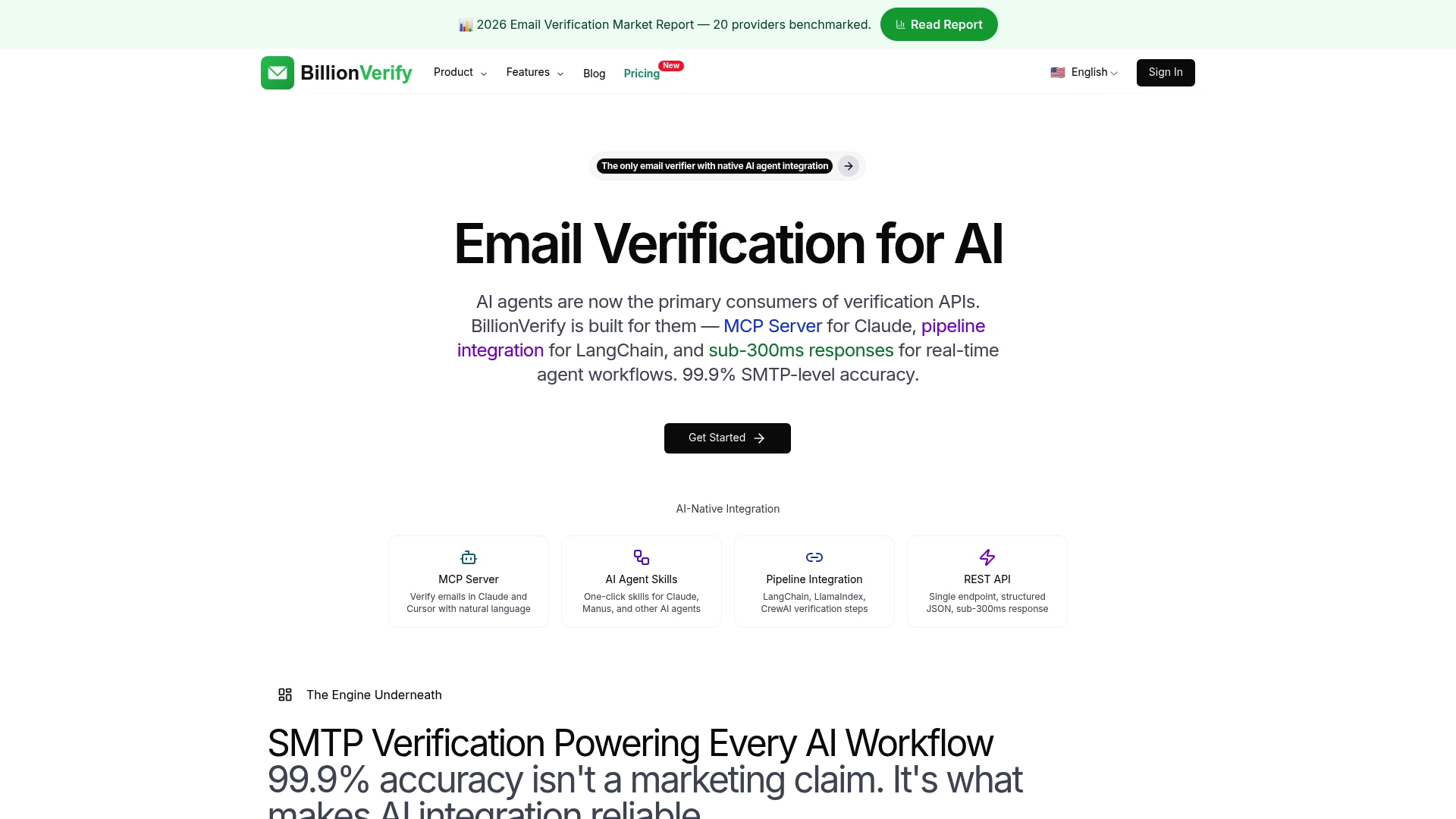
Integrate seamlessly with CRMs and marketing platforms for streamlined email list hygiene without workflow disruption. Choose from bulk, real-time, or multi-layer verification solutions based on your specific campaign needs and accuracy requirements. Enhance deliverability, reduce bounces, and protect sender reputation with enterprise-grade verification technology. Explore our detailed guides on real-time vs bulk email validation to optimize your email marketing strategy and maximize campaign ROI today.
Frequently asked questions
What are the most common problems found in email lists?
Invalid addresses, spam traps, role-based and disposable emails, data decay, and catch-all domains are common problems. Each impacts deliverability and engagement differently, requiring specific verification and management strategies. Spam traps cause immediate blacklisting while data decay gradually increases bounce rates over time.
How often should enterprise marketers clean their email lists?
Regular cleaning every three to six months is advisable depending on list size and campaign frequency. High-volume senders with frequent campaigns need quarterly verification while smaller lists can extend to semi-annual cycles. Ongoing automation improves hygiene and reduces risk of decay-related bounces between manual cleaning cycles.
What verification methods best suit high-volume marketing campaigns?
Bulk email verification offers cost-effective processing ideal for high-volume marketing lists. It reduces per-email costs significantly while handling millions of addresses in single uploads. However, it is less precise than real-time or multi-layer methods for immediate validation needs at critical entry points.
How do spam traps end up on email lists?
Spam traps enter lists through purchased contacts, web scraping, or data decay converting abandoned addresses. Pristine traps are planted by ISPs specifically to catch poor list practices. Recycled traps are legitimate addresses that became dormant and were reactivated as monitoring tools after extended inactivity periods.
Can verification completely eliminate bounce rates?
Verification dramatically reduces but cannot completely eliminate bounce rates. Temporary server issues, sudden mailbox closures, and catch-all domain uncertainties create unavoidable delivery failures. However, verification typically reduces bounce rates from 8-10% down to under 2%, protecting sender reputation and improving campaign performance significantly.