



The email marketing tools landscape has evolved dramatically, with hundreds of platforms competing for your attention. From all-in-one marketing suites to specialized point solutions, understanding this ecosystem is crucial for building an effective email marketing stack. This comprehensive guide maps the entire landscape, helping you identify the right tools for your specific needs and budget.
Understanding the Email Marketing Tools Ecosystem
Before diving into specific tools, understand how the ecosystem is structured and where different solutions fit.
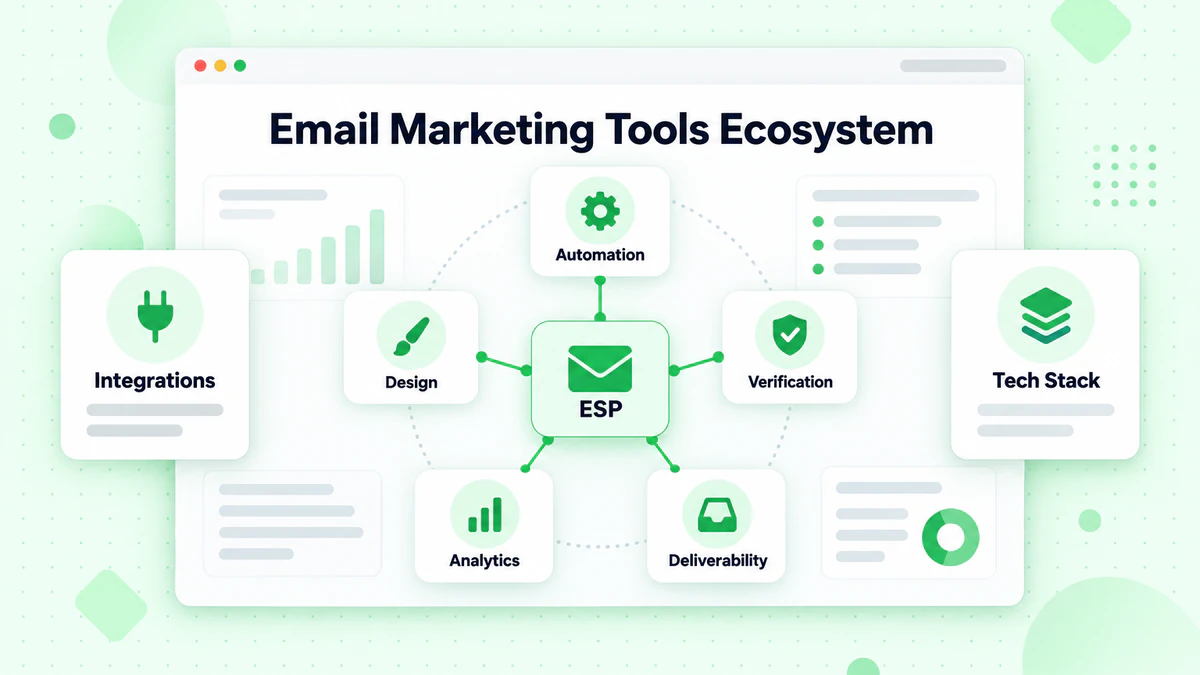
The Email Marketing Technology Stack
A complete email marketing stack typically includes:
Core Platform (ESP): The central hub for creating, sending, and tracking emails. This is where most email marketing activity happens.
Data Quality Tools: Email verification services and list cleaning tools that ensure your data is accurate and deliverable.
Integration Layer: Connections to CRM, e-commerce, analytics, and other business systems.
Specialized Tools: Point solutions for specific functions like template design, deliverability monitoring, or A/B testing.
Categories of Email Marketing Tools
All-in-One Marketing Platforms:
- Complete marketing suites (HubSpot, ActiveCampaign)
- Best for: Companies wanting unified marketing operations
Pure-Play ESPs:
- Focused email sending platforms (Mailchimp, SendGrid)
- Best for: Organizations prioritizing email-specific features
E-commerce Email Platforms:
- Platforms built for online retail (Klaviyo, Drip)
- Best for: E-commerce businesses with specific needs
Transactional Email Services:
- Developer-focused sending infrastructure (SendGrid, Mailgun)
- Best for: Applications requiring programmatic email
Email Verification Services:
- List cleaning and validation tools (BillionVerify)
- Best for: All email marketers focused on deliverability
Specialized Point Solutions:
- Design, testing, analytics, or deliverability tools
- Best for: Augmenting core platform capabilities
Email Service Providers (ESPs)
The heart of any email marketing operation is the ESP. Here's how major providers compare.
Enterprise ESPs
Salesforce Marketing Cloud:
- Strengths: Deep CRM integration, enterprise scalability, AI capabilities
- Weaknesses: Complex implementation, high cost, steep learning curve
- Best for: Large enterprises with Salesforce CRM
- Pricing: $1,250+/month
Adobe Campaign:
- Strengths: Cross-channel orchestration, Adobe ecosystem integration
- Weaknesses: Implementation complexity, expensive
- Best for: Large enterprises in Adobe ecosystem
- Pricing: Custom enterprise pricing
Oracle Eloqua:
- Strengths: B2B lead scoring, sales alignment, robust automation
- Weaknesses: Complex setup, high cost
- Best for: Large B2B organizations
- Pricing: $2,000+/month
Mid-Market ESPs
HubSpot:
- Strengths: All-in-one platform, excellent UX, free CRM
- Weaknesses: Can get expensive at scale, some feature limitations
- Best for: Growing B2B companies wanting unified platform
- Pricing: Free - $3,600+/month
For detailed analysis, see our HubSpot email marketing review.
ActiveCampaign:
- Strengths: Powerful automation, CRM integration, good value
- Weaknesses: Interface can be overwhelming, reporting limitations
- Best for: Small-to-mid businesses prioritizing automation
- Pricing: $29 - $259+/month
See our complete ActiveCampaign review.
Mailchimp:
- Strengths: User-friendly, strong brand, broad integrations
- Weaknesses: Automation less sophisticated, pricing increased significantly
- Best for: Small businesses and marketers
- Pricing: Free - $350+/month
SMB ESPs
ConvertKit:
- Strengths: Creator-focused, simple automation, good deliverability
- Weaknesses: Limited design options, basic analytics
- Best for: Creators, bloggers, course sellers
- Pricing: Free - $59+/month
Compare options in our ConvertKit vs Mailchimp guide.
Brevo (Sendinblue):
- Strengths: Affordable, transactional + marketing, SMS included
- Weaknesses: Limited automation, fewer integrations
- Best for: Budget-conscious small businesses
- Pricing: Free - $65+/month
Read our Brevo review for details.
MailerLite:
- Strengths: Affordable, clean interface, good deliverability
- Weaknesses: Limited advanced features
- Best for: Small businesses, startups
- Pricing: Free - $19+/month
E-commerce ESPs
Klaviyo:
- Strengths: Deep e-commerce integration, powerful segmentation, predictive analytics
- Weaknesses: Expensive at scale, learning curve
- Best for: Shopify and e-commerce stores
- Pricing: Free - $60+/month (scales with contacts)
See our comprehensive Klaviyo review.
Drip:
- Strengths: E-commerce automation, visual workflow builder
- Weaknesses: Less mature than Klaviyo, smaller ecosystem
- Best for: Growing e-commerce brands
- Pricing: $39+/month
Omnisend:
- Strengths: E-commerce focus, omnichannel (SMS, push), good value
- Weaknesses: Less sophisticated than Klaviyo
- Best for: E-commerce on a budget
- Pricing: Free - $59+/month
Transactional Email Providers
SendGrid:
- Strengths: Reliable delivery, developer-friendly, marketing + transactional
- Weaknesses: Marketing features less robust than pure ESPs
- Best for: Developers needing both transactional and marketing
- Pricing: Free - $89.95+/month
Compare in our Mailchimp vs SendGrid guide.
Mailgun:
- Strengths: Developer-first, powerful API, email validation included
- Weaknesses: Limited marketing features, not for non-technical users
- Best for: Developers and technical teams
- Pricing: $35+/month
Amazon SES:
- Strengths: Extremely cheap, AWS integration, high volume capable
- Weaknesses: No UI, requires technical expertise
- Best for: High-volume senders with technical resources
- Pricing: $0.10 per 1,000 emails
Postmark:
- Strengths: Excellent deliverability, fast delivery, great support
- Weaknesses: Transactional only, no marketing features
- Best for: Applications prioritizing deliverability
- Pricing: $15+/month
Marketing Automation Platforms
For organizations needing sophisticated automation beyond basic email.
Enterprise Marketing Automation
Marketo (Adobe):
- Features: Lead scoring, account-based marketing, sales alignment
- Best for: Large B2B organizations
- Pricing: $895+/month
Pardot (Salesforce):
- Features: B2B automation, Salesforce integration, lead management
- Best for: B2B companies using Salesforce
- Pricing: $1,250+/month
Mid-Market Automation
ActiveCampaign:
- Features: Visual automation builder, CRM, site tracking
- Best for: SMBs wanting powerful automation
- Pricing: $29+/month
Autopilot:
- Features: Visual journey builder, multi-channel, simple interface
- Best for: Marketing teams wanting easy automation
- Pricing: $49+/month
E-commerce Automation
Klaviyo:
- Features: E-commerce flows, predictive analytics, segmentation
- Best for: Shopify and e-commerce
- Pricing: Free - $60+/month
Drip:
- Features: Visual workflows, e-commerce integrations, lead scoring
- Best for: E-commerce brands
- Pricing: $39+/month
For comprehensive automation tool comparison, see our email automation tools guide.
Email Verification Tools
List quality directly impacts deliverability and campaign performance. Email verification is essential.
Why Verification Matters
Deliverability Protection: High bounce rates damage sender reputation and can get you blocklisted.
Cost Savings: Why pay to store and send to invalid addresses?
Performance Improvement: Clean lists show higher engagement rates.
Compliance Support: Accurate data supports GDPR compliance.
Verification Tool Categories
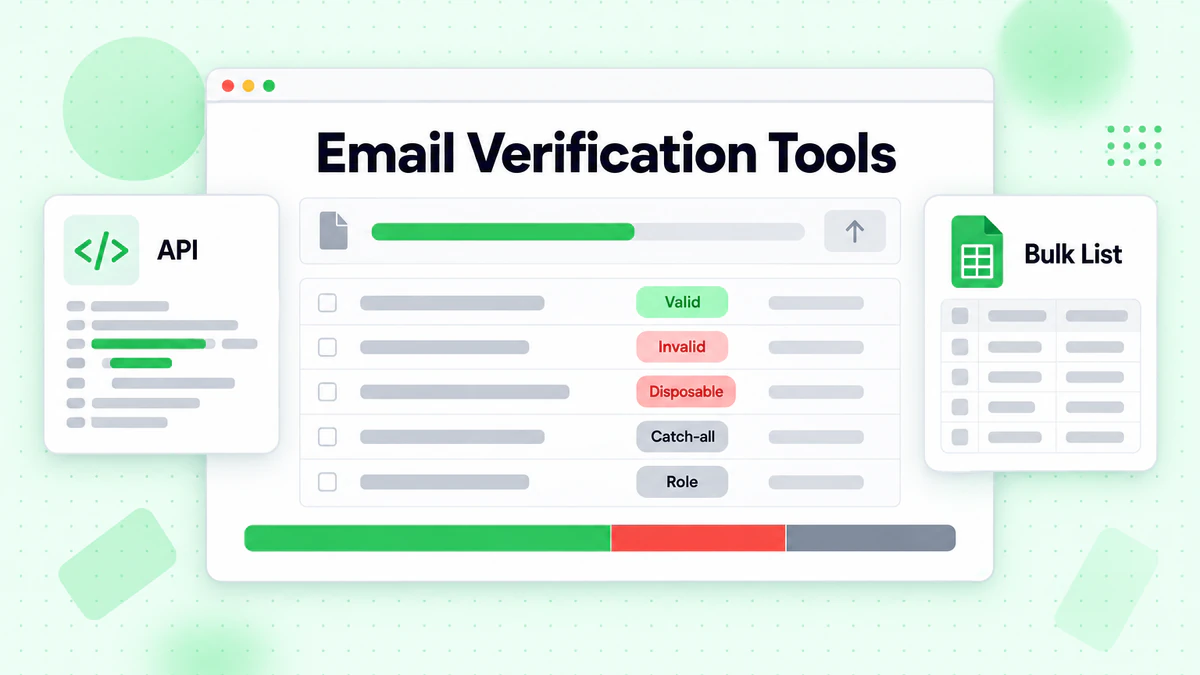
Real-Time Verification APIs: Verify at the point of collection to prevent bad data entry.
Bulk Verification Services: Clean existing lists before campaigns with bulk email verification.
ESP Integrations: Some verification services integrate directly with ESPs.
BillionVerify Features
BillionVerify offers comprehensive verification:
- Syntax Validation: Catch typos and formatting errors
- Domain Verification: Confirm MX records and domain validity
- Mailbox Verification: Check if specific addresses exist
- Disposable Detection: Identify temporary email addresses
- Catch-All Detection: Flag accept-all domains
- Role Account Identification: Spot generic addresses
Integration Options:
- Real-time API verification
- Bulk list processing
- Major ESP integrations
- Zapier connectivity
Email Design and Template Tools
Creating compelling emails requires the right design tools.
Email Template Builders
Stripo:
- Features: Drag-and-drop, AMP email support, export to ESPs
- Best for: Teams creating templates for multiple ESPs
- Pricing: Free - $125+/month
Bee Free:
- Features: Mobile-responsive, easy to use, embeddable
- Best for: Simple, professional template creation
- Pricing: Free - $25+/month
Unlayer:
- Features: Embeddable editor, template library
- Best for: SaaS adding email editing to products
- Pricing: $99+/month
Email Testing Tools
Litmus:
- Features: Email previews across 90+ clients, analytics, collaboration
- Best for: Teams prioritizing rendering consistency
- Pricing: $99 - $199+/month
Email on Acid:
- Features: Email previews, spam testing, accessibility checks
- Best for: Quality assurance before sending
- Pricing: $99 - $599+/month
Mailtrap:
- Features: Email sandbox, HTML check, spam analysis
- Best for: Developers testing email functionality
- Pricing: Free - $99+/month
Deliverability Tools
Monitor and improve your email deliverability with specialized tools.
Inbox Placement Testing
GlockApps:
- Features: Inbox placement, spam filter testing, IP monitoring
- Best for: Monitoring deliverability across providers
- Pricing: $99 - $299+/month
Mailgun InboxReady:
- Features: Seed testing, spam analysis, reputation monitoring
- Best for: Proactive deliverability management
- Pricing: Contact for pricing
Reputation Monitoring
Sender Score (Validity):
- Features: IP reputation scoring, benchmark data
- Best for: Understanding sender reputation
- Pricing: Free basic, paid advanced
Google Postmaster Tools:
- Features: Gmail deliverability data, spam rate, authentication
- Best for: Gmail deliverability insights
- Pricing: Free
Microsoft SNDS:
- Features: Microsoft/Outlook deliverability data
- Best for: Microsoft deliverability insights
- Pricing: Free
Email Authentication
Proper authentication improves deliverability. Most ESPs handle this, but you may need:
DMARC Analyzer Tools:
- dmarcian
- Valimail
- Postmark DMARC
Analytics and Reporting Tools
Go beyond basic ESP analytics with specialized tools.
Email Analytics
Litmus Analytics:
- Features: Email engagement tracking, read time, device/client data
- Best for: Deep email engagement insights
- Pricing: Included with Litmus
Seventh Sense (for HubSpot/Marketo):
- Features: Send time optimization, engagement prediction
- Best for: AI-powered send optimization
- Pricing: Custom
Attribution and Revenue Tracking
Northbeam:
- Features: Multi-touch attribution, cross-channel insights
- Best for: E-commerce revenue attribution
- Pricing: Custom
Triple Whale (E-commerce):
- Features: Attribution, LTV, customer journey
- Best for: Shopify stores
- Pricing: $79+/month
Integration and Automation
Connect your email tools with the rest of your stack.
Integration Platforms
Zapier:
- Features: 5,000+ app connections, no-code automation
- Best for: Simple integrations without development
- Pricing: Free - $599+/month
Make (Integromat):
- Features: Complex workflows, visual builder, more powerful than Zapier
- Best for: Sophisticated automation needs
- Pricing: Free - $29+/month
Segment:
- Features: Customer data platform, unified data collection
- Best for: Enterprise data management
- Pricing: Free - custom
CRM Integrations
Most ESPs offer native CRM integrations:
- Salesforce
- HubSpot CRM
- Pipedrive
- Zoho CRM
E-commerce Integrations
Key platforms to connect:
- Shopify
- WooCommerce
- BigCommerce
- Magento
Choosing the Right Tool Stack
Building the right email marketing stack depends on your specific situation.
By Business Type
B2B SaaS:
- Primary ESP: HubSpot or ActiveCampaign
- Verification: BillionVerify
- Automation: Built into ESP
- Analytics: Built-in + Google Analytics
E-commerce:
- Primary ESP: Klaviyo or Omnisend
- Verification: BillionVerify
- Automation: Built into ESP
- Analytics: Northbeam or Triple Whale
Creator/Media:
- Primary ESP: ConvertKit or Substack
- Verification: BillionVerify
- Analytics: Built-in
Enterprise:
- Primary ESP: Salesforce Marketing Cloud or Adobe Campaign
- Verification: BillionVerify
- Deliverability: GlockApps
- Analytics: Custom BI tools
By Budget
Bootstrapped ($0-100/month):
- ESP: Mailchimp Free, MailerLite Free, or Brevo Free
- Verification: BillionVerify pay-per-use
- Design: Bee Free or Stripo free tier
Growing ($100-500/month):
- ESP: ActiveCampaign, ConvertKit, or Klaviyo
- Verification: BillionVerify
- Testing: Email on Acid or Litmus basic
Scaling ($500-2,000/month):
- ESP: HubSpot, ActiveCampaign, or Klaviyo
- Verification: BillionVerify
- Testing: Litmus
- Deliverability: GlockApps
Enterprise ($2,000+/month):
- ESP: Salesforce, Adobe, or Marketo
- Full tool stack with dedicated resources
For free options, see our free email marketing tools guide.
By Technical Capability
Non-Technical:
- Focus on user-friendly platforms (Mailchimp, ConvertKit)
- Use Zapier for integrations
- Choose tools with good support
Semi-Technical:
- Platforms with API access (ActiveCampaign, Klaviyo)
- Mix of native and Zapier integrations
- Basic automation building
Technical Team:
- Developer-first tools (SendGrid, Mailgun)
- Custom integrations via API
- Advanced automation and data management
Implementation Best Practices
Follow these practices when building your email marketing stack.
Start with Core Needs
Begin with ESP: Choose your central email platform first. Everything else connects to it.
Add Verification Early: Implement email verification from the start to build clean lists.
Integrate Gradually: Add tools as needs emerge, not all at once.
Data Quality First
Verify on Entry: Use real-time verification at signup to prevent bad data.
Regular List Cleaning: Run bulk verification quarterly or before major campaigns.
Maintain Hygiene: Follow email list hygiene best practices.
Monitor and Optimize
Track Key Metrics: Monitor open rates, click rates, bounces, and conversions.
Watch Deliverability: Use Google Postmaster Tools and sender reputation monitors.
A/B Test Continuously: Test subject lines, content, timing, and frequency.
2025 Email Tool Trends
Stay ahead of emerging trends in email marketing technology.
AI-Powered Features
Content Generation: AI writing assistance built into ESPs (Mailchimp, HubSpot).
Send Time Optimization: Machine learning predicting optimal send times.
Subject Line Optimization: AI-powered subject line suggestions and testing.
Privacy-First Tooling
Apple Mail Privacy Protection: Tools adapting to reduced open rate reliability.
Consent Management: Better consent and preference center tools.
Data Minimization: Tools helping collect only necessary data.
Integration Evolution
Composable CDP: Modular customer data platforms replacing monolithic solutions.
API-First Everything: More tools offering robust APIs for custom integration.
Native Integrations: Direct connections between major platforms without middleware.
Automation Sophistication
Cross-Channel Orchestration: Email + SMS + push + social in unified flows.
Behavioral Triggers: More sophisticated real-time response to user actions.
Predictive Journeys: AI-designed customer journeys based on behavior patterns.
Conclusion
The email marketing tools landscape offers solutions for every need and budget. Success comes from building a cohesive stack centered on a solid ESP, supported by data quality tools like email verification, and augmented by specialized solutions where needed.
Key Takeaways:
Start with ESP Choice: Your email service provider is the foundation. Choose based on your specific needs—B2B vs. e-commerce, technical vs. non-technical, budget constraints.
Prioritize Data Quality: Email verification isn't optional. Clean data powers everything else.
Integrate Thoughtfully: Connect tools that genuinely improve workflows. Avoid integration for integration's sake.
Match Tools to Capability: Choose tools your team can actually use effectively.
Budget for Growth: Select platforms that can grow with you to avoid painful migrations.
Monitor Continuously: Deliverability and performance require ongoing attention.
Stay Current: The landscape evolves rapidly. Review your stack annually.
Whether you're just starting with a free Mailchimp account or managing enterprise campaigns with Salesforce Marketing Cloud, the right combination of tools—anchored by quality data through BillionVerify—will power your email marketing success.
For detailed reviews of specific platforms, explore: