



Bounce rates can drain marketing budgets before campaigns even start. For digital marketing managers at mid-sized e-commerce companies, verifying user registration emails is more than a technical step. Strong verification prevents bad addresses from entering your system and safeguards sender reputation, ensuring your emails land in inboxes rather than spam folders. Learn how input validation and modern verification techniques can transform your deliverability and protect your bottom line.
Key Takeaways
| Point | Details |
|---|---|
| Email Verification is Essential | Verifying email addresses during user registration prevents issues such as fraud, inaccurate data, and poor deliverability. |
| Real-Time Verification Improves User Experience | Implementing real-time checks allows users to correct their email addresses instantly, reducing sign-up errors and abandonment. |
| Regulatory Compliance is Crucial | Email verification meets federal guidelines and prevents fraud, ensuring that your platform adheres to legal requirements and protects user data. |
| Enhanced Data Quality Reflects on ROI | Clean email lists from verification lead to improved open rates, lower bounce rates, and ultimately better marketing ROI. |
Defining Email Verification for User Registration
Email verification for user registration is the process of confirming that an email address provided during sign-up is valid, active, and belongs to the person registering. It goes far beyond a simple format check.
Think of it as a three-layer security gate. The first layer checks syntax—does the address follow basic email rules? The second layer confirms the domain exists and accepts mail. The third layer verifies the address is genuinely functional.
What Email Verification Actually Does
When someone creates an account on your e-commerce platform, they provide an email address. Verification immediately confirms several critical details:
- The address follows proper email formatting standards
- The domain name is legitimate and actively receiving messages
- The mailbox exists and isn't a temporary or disposable account
- The address hasn't been flagged as a spam trap or blacklisted
Input validation serves as the first checkpoint. Proper input validation techniques ensure that only properly formed data enters your system, preventing malformed addresses from causing downstream problems.
Beyond syntax checking, verification also protects against fraud. NIST guidelines on user identity verification emphasize that confirming email ownership prevents fraudulent registrations and maintains system integrity during the registration lifecycle.
Why This Matters for Your Bottom Line
You're not verifying emails just for cleanliness. Bad email data directly damages revenue:
- Undeliverable addresses inflate bounce rates and tank sender reputation
- Spam traps and role-based addresses flag your domain to ISPs
- Fake registrations skew customer data and waste marketing budget
- Blacklisted domains get filtered before campaigns ever reach inboxes
Mid-sized e-commerce companies typically see 20-40% of registration emails contain issues—typos, disposable addresses, or inactive domains. That's not negligible.
How It Differs from Other Email Checks
Email verification is more rigorous than simple list cleaning. Understanding how email verification works shows the difference between basic format validation and comprehensive accuracy assessment.
When you verify at registration:
- You catch problems immediately, before bad data enters your CRM
- You prevent users from mistyping their own address (confusing them later)
- You avoid seeding your list with fake sign-ups or bot registrations
This differs from list hygiene applied months later. You're stopping problems at the source.
The Registration Moment Matters Most
Registration is the ideal time for verification because it happens once, instantly. Users expect a quick sign-up process, so real-time verification fits naturally into the workflow.
Delaying verification until after sign-up creates friction. Users forget passwords for addresses that don't work. They never receive confirmation emails. They bounce from your platform frustrated before making a purchase.
Proactive verification at registration also prevents the accumulation of bad data, keeping your sender reputation clean from day one.
Pro tip: Implement real-time verification during registration so users immediately know if they've mistyped their address, reducing sign-up errors and future delivery failures.
How Verification Works in Modern Platforms
Modern email verification doesn't operate in isolation. It's integrated into registration workflows, identity systems, and backend infrastructure to confirm addresses in real-time as users sign up.
The verification process happens in milliseconds. When a user enters their email and clicks "Sign up," your platform immediately checks the address through multiple validation layers before the account is created.
The Multi-Layer Verification Process
Verification follows a structured sequence. Each layer confirms something different:
- Syntax validation checks if the address follows proper email format (username@domain.com)
- Domain verification confirms the domain exists and has mail servers configured
- Mailbox verification checks if the specific address is active and accepting mail
- Risk assessment flags disposable accounts, spam traps, or blacklisted domains
This layered approach catches issues before bad data contaminates your database. Most verification platforms complete all checks within 500 milliseconds.
How Modern Platforms Integrate Verification
Integration happens at the API level. Your registration form connects to a verification service via API connection, which validates addresses before your database records them.
Modern platforms now leverage verifiable digital credentials using cryptographic validation. This approach provides stronger proof of identity ownership and reduces reliance on static email checks alone.
When a user registers:
- The email address is captured and immediately sent to the verification API
- The API performs syntax, domain, and mailbox checks
- Results return with a status: valid, invalid, risky, or unknown
- Only verified addresses proceed to account creation
Advanced Verification in 2026
The latest verification methods go beyond simple email checks. Digital Credentials API technology enables websites to request encrypted, cryptographically-signed identity proofs directly from user devices.
This modernization means:
- Reduced fraud through cryptographic validation
- Streamlined onboarding with encrypted verification
- Enhanced privacy by limiting static identifier exposure
- Faster identity proofing during registration
Modern verification combines traditional email validation with cryptographic identity confirmation, significantly reducing fraudulent registrations while maintaining user privacy.
Platforms that adopt these methods see dramatic improvements in data quality and security posture.
Here's how modern email verification methods compare:
| Method | Verification Approach | User Experience | Security Impact |
|---|---|---|---|
| Basic Syntax Check | Checks email format only | Fast, minimal friction | Low, often insufficient |
| Domain Validation | Confirms domain and MX record | Seamless, transparent | Moderate, stops typos |
| Mailbox-Level Check | Verifies mailbox exists and is active | Instant feedback | High, blocks fake emails |
| Digital Credential API | Uses cryptographic proof from devices | Streamlined onboarding | Very high, fraud-resistant |
Speed and User Experience
Verification must happen instantly. Users expect sign-up to complete in seconds, not minutes. Real-time verification maintains this experience while protecting your data.
Delayed verification creates friction—users bounce, abandon carts, and never return. Instant confirmation at registration keeps onboarding smooth while filtering bad data at the source.
Pro tip: Implement real-time verification with immediate user feedback so registrants know instantly if their email is valid, reducing sign-up abandonment and improving conversion rates.
Impact on Deliverability and Marketing ROI
Email verification at registration directly determines whether your marketing campaigns reach inboxes or disappear into spam folders. This isn't a minor technical detail—it's the difference between profitable campaigns and wasted budget.
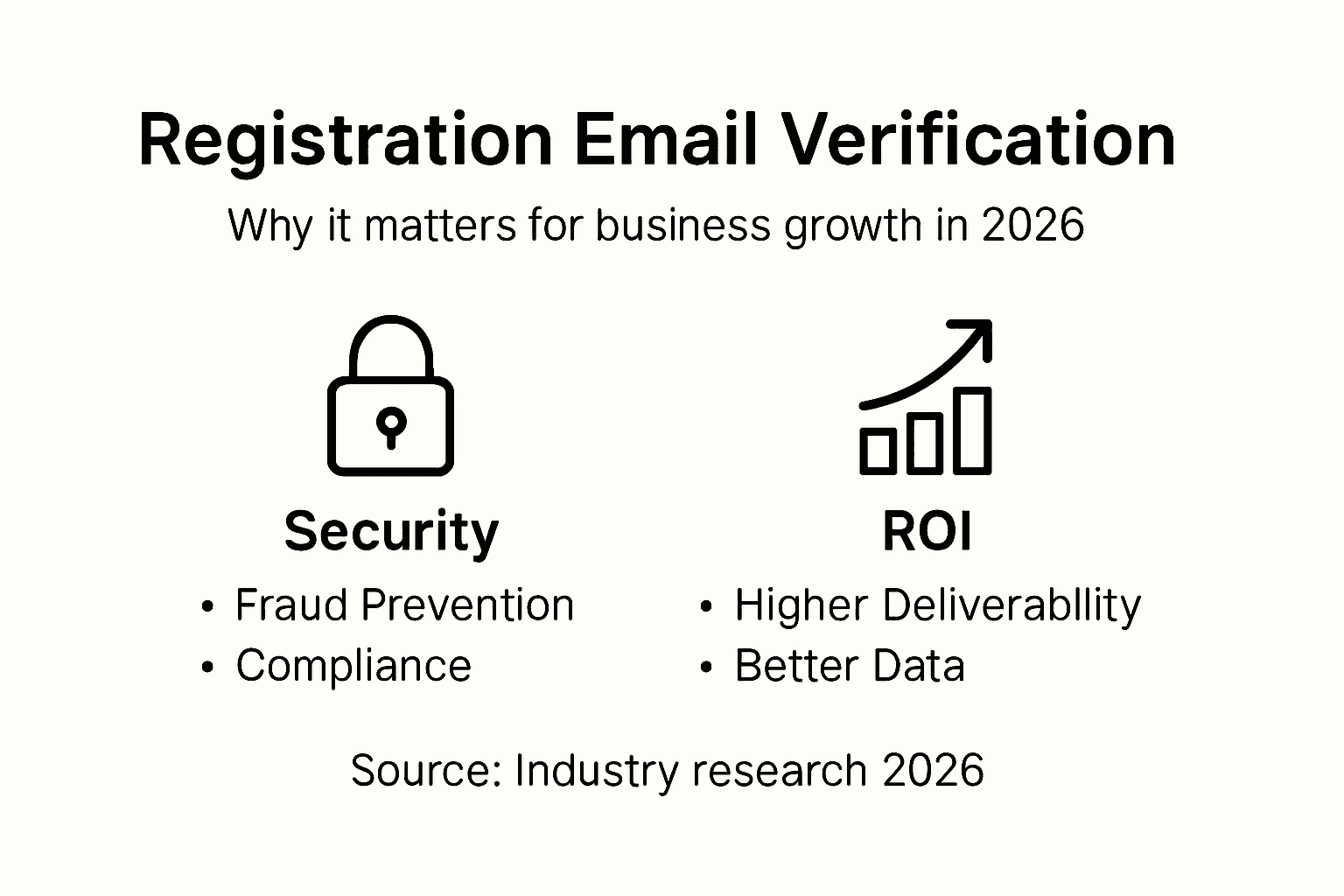
When you verify emails during sign-up, you're protecting your sender reputation before it takes damage. Bad addresses never make it into your database, so they never trigger bounces that ISPs count against you.
The Deliverability Chain Reaction
Here's how verified registration data flows through your marketing engine:
- Clean registration emails prevent hard bounces on your first campaign
- Lower bounce rates signal sender health to ISPs like Gmail and Outlook
- ISPs route more of your emails to inboxes instead of spam folders
- Higher inbox placement increases open and click-through rates
- Better engagement metrics improve your sender reputation further
This creates a positive feedback loop. One verified registration at a time builds sender credibility that compounds over months.
Direct Impact on Campaign Performance
Email deliverability directly affects marketing ROI by determining whether messages reach inboxes. Campaigns sent to unverified lists face higher bounce rates, spam folder placement, and lower engagement.
Consider the math. A mid-sized e-commerce company sending 500,000 weekly emails with unverified data might see:
- 8-12% bounce rate (40,000-60,000 bounces)
- 15-20% reduction in inbox placement from ISP filtering
- 30-40% lower open rates compared to clean lists
Verifying registration emails reduces that bounce rate to under 2%, preserving sender reputation and maximizing campaign reach.
Sender Reputation and ISP Trust
Maintaining sender reputation requires verified email lists and proper authentication protocols like SPF, DKIM, and DMARC. Bounces and complaints damage trust with Internet Service Providers.
When ISPs see:
- High bounce rates from invalid addresses
- Spam complaints from fake or inactive accounts
- Patterns of sending to catch-all domains or spam traps
They throttle your mail volume, delay delivery, or filter you entirely. Recovery takes months.
Verified registration emails prevent the bounce-and-complaint cycle that destroys sender reputation with ISPs, ensuring your entire email program remains healthy.
Quantifiable ROI Improvements
Companies that verify registration emails typically see:
- 25-35% improvement in email open rates
- 40-50% reduction in bounce-related deliverability issues
- 15-25% increase in click-through rates
- 20-30% lower cost per conversion on email campaigns
These gains compound. Clean data from day one means lower acquisition costs, higher customer lifetime value, and better ROI on every campaign you send.
Below is a summary of ROI improvements from implementing email verification:
| Metric Improved | Without Verification | With Verification | Typical Improvement |
|---|---|---|---|
| Email Bounce Rate | 8-12% | Under 2% | 6-10 percentage points |
| Inbox Placement | 15-20% filtered | Over 95% inbox delivery | 15-20 percentage points |
| Open Rate | 20-30% | 25-40% | 5-10 percentage points |
| Cost Per Conversion | Highest | Reduced significantly | 20-30% cost decrease |
Pro tip: Track your sender reputation score monthly through ISP feedback loops and correlate improvements to registration verification rates to quantify ROI directly.
Fraud Prevention and Compliance Requirements
Email verification at registration isn't optional anymore—it's a legal and security requirement. Regulators, industry standards, and fraud prevention best practices all demand that you verify user identities before they access your platform.
Fake registrations, bot accounts, and fraudulent sign-ups cost e-commerce companies billions annually. Verification stops this problem before it starts.
The Fraud Problem at Registration
Without verification, your registration system becomes a playground for fraudsters:
- Bot networks create thousands of fake accounts automatically
- Stolen email addresses lead to account takeover and chargebacks
- Fraudsters test credit card numbers using disposable account creation
- Bad actors use your platform for money laundering or identity theft
- Compromised accounts damage your brand reputation and customer trust
Each unverified registration increases your fraud exposure and liability.
Authentication and Security Standards
Email authentication protocols like SPF, DKIM, and DMARC prevent spoofing and phishing during user registration. These protocols ensure only legitimate emails reach users and that registration confirmations aren't intercepted by attackers.
Federal guidelines require implementing these controls to prevent fraud. Compliance isn't just recommended—it's mandated for organizations handling sensitive user data.
Identity Verification Standards
NIST guidelines require verifying identity claims during registration, including confirming that email addresses belong to the applicant. This prevents account creation with stolen or unauthorized addresses.
Proper identity proofing means:
- Confirming the email address is active and monitored by the applicant
- Preventing duplicate registrations using the same address
- Detecting compromised or previously fraudulent addresses
- Documenting verification for compliance audits
Verifying registration emails during sign-up meets federal identity authentication standards while preventing fraud at the source—it's both a compliance requirement and a security best practice.
Compliance and Legal Liability
Multiple regulations require verified registration data:
- CAN-SPAM Act mandates accurate registration information for marketing compliance
- GDPR requires explicit consent from verified account owners before sending emails
- State privacy laws demand proof that users authorized their own registrations
- Payment Card Industry standards require fraud prevention during account creation
Skipping verification creates regulatory risk and potential fines.
Preventing Account Takeover
Verification stops attackers from hijacking legitimate customers' accounts. When verification confirms email ownership at registration, it prevents attackers from creating accounts using stolen email addresses.
This protects:
- Customer account security and data
- Your platform reputation and trust
- Chargeback liability from fraudulent transactions
- Legal exposure from data breaches
Pro tip: Implement email verification combined with authentication protocols and maintain audit logs of all verifications for compliance documentation during regulatory reviews.
Common Pitfalls and Best Practice Solutions
Most e-commerce companies implement verification poorly. They skip critical steps, overcomplicate the user experience, or rely on outdated methods that miss fraud. Understanding what goes wrong helps you avoid costly mistakes.
The good news: best practice solutions exist and are proven to work at scale.
Verification Pitfalls That Cost You Money
Common mistakes damage both security and user experience:
- Implementing weak input validation that accepts malformed addresses
- Skipping domain verification, only checking syntax
- Failing to detect disposable email providers or spam traps
- Creating friction that causes sign-up abandonment
- Using manual verification processes that don't scale
- Neglecting to update verification against new fraud patterns
Each mistake reduces data quality and increases downstream problems.
The User Experience Problem
Many verification systems frustrate users without improving security. Effective verification design prioritizes user-centric, intuitive interfaces that reduce errors and increase compliance.
Bad design looks like:
- Confusing error messages that don't explain what went wrong
- Requiring multiple verification attempts for typos
- Unclear instructions that leave users guessing
- Inaccessible interfaces that exclude users with disabilities
- Slow verification that stalls sign-up flow
Good design guides users through verification smoothly while maintaining security.
Best Practice: Robust Verification Framework
Cybersecurity best practices recommend strong input validation, clean email lists, and automated verification technologies to reduce errors and improve security outcomes.
Implement this sequence:
- Real-time syntax validation with immediate user feedback
- Domain verification confirming MX records exist
- Mailbox-level checking for active addresses
- Risk assessment flagging disposable, spam trap, and blacklisted addresses
- Continuous list maintenance removing degraded addresses
Best practice verification combines automated detection, user-friendly design, and continuous monitoring—creating security without friction.
Scaling Verification Without Breaking Sign-Up
The biggest pitfall: making verification so strict that legitimate users can't register. Balance security with accessibility.
Solution: implement tiered verification. Allow all addresses to register, but flag risky ones for additional steps like confirming a phone number or clicking a confirmation link.
This approach:
- Maximizes sign-up completion rates
- Catches fraud without creating friction
- Collects additional identity data for risky accounts
- Maintains clean data without rejecting legitimate customers
Continuous Improvement and Monitoring
Verification isn't a one-time setup. Continuously monitor bounce rates, complaint rates, and fraud patterns to identify degradation.
Implement automated systems that:
- Track verification accuracy and catch false positives
- Flag new fraud patterns and disposable providers
- Update verification rules based on real-world results
- Measure impact on sign-up conversion and fraud rates
Pro tip: A/B test your verification flow to find the right balance between security and user experience, measuring both completion rates and downstream fraud metrics.
Secure Your Registrations with BillionVerify's Advanced Email Verification
The challenges highlighted in "Why Verify User Registration Emails Matters in 2026" reveal how critical it is to confirm email authenticity at the moment of user sign-up. Issues like fake or disposable addresses, bounce rates, and fraud not only hurt your sender reputation but also reduce marketing ROI and expose your platform to compliance risks. BillionVerify addresses these pain points with its enterprise-grade solution that performs real-time multi-layer email verification to detect risky domains, spam traps, and inactive mailboxes immediately during registration.
Protect your e-commerce or SaaS business with BillionVerify's precise validation tools that seamlessly integrate with your workflow through API and bulk processing options. Start enhancing email deliverability, preventing fraud, and improving your conversion rates now. Discover how to maintain a clean, verified user base today by visiting BillionVerify and learn more about email verification's powerful impact on your bottom line.
Frequently Asked Questions
What is email verification for user registration?
Email verification for user registration is the process of confirming that an email address provided during sign-up is valid, active, and owned by the person registering. It ensures that the address is correctly formatted, the domain exists, and the mailbox is functioning.
Why is email verification important for e-commerce platforms?
Email verification is crucial for e-commerce platforms because it helps prevent fake registrations, reduces bounce rates, and protects the sender's reputation. This directly impacts marketing effectiveness and ROI by ensuring emails reach intended recipients.
How does email verification differ from basic email checks?
Unlike basic email checks, which only confirm format, email verification includes multiple layers of validation: syntax check, domain verification, mailbox existence, and risk assessments. This comprehensive approach prevents bad data from entering your database at the registration point.
What impact does email verification have on marketing campaign success?
Email verification improves marketing campaign success by increasing deliverability rates. Verified emails lead to lower bounce rates, higher open and click-through rates, and overall better engagement, which enhances the sender reputation and increases return on investment.