



Most email marketers underestimate how a bounce rate above 2% can damage sender reputation and trigger ISP blocks. Unverified emails create a chain reaction that kills deliverability, lands messages in spam folders, and erodes revenue potential. This guide explains the hidden dangers of unverified addresses and shows you practical ways to protect your campaigns, maintain strong deliverability, and safeguard your marketing ROI.
Key takeaways
| Point | Details |
|---|---|
| Bounce rate thresholds matter | Exceeding 2-3% bounce rates signals poor list hygiene to ISPs and triggers filtering penalties. |
| Unverified emails create cascading failures | A single bad list can sabotage entire campaigns through reduced deliverability and blacklisting. |
| Verification protects revenue | Poor email validation directly reduces campaign ROI by lowering inbox placement rates. |
| Multiple verification methods exist | Syntax checks, domain validation, and mailbox verification each offer different levels of protection. |
| Proactive hygiene prevents problems | Regular list cleaning and automated removal rules keep bounce rates low and sender reputation strong. |
Understanding the impact of unverified emails on your campaigns
Unverified emails pose a serious threat to your sender reputation and campaign performance. When you send to invalid addresses, bounce rates above 2-3% immediately alert ISPs that something is wrong with your list management practices. ISPs monitor sender behavior constantly, tracking bounce rates, spam complaints, and engagement metrics to determine whether your emails deserve inbox placement.
Exceeding these thresholds triggers algorithmic penalties that affect all your future sends. ISPs start filtering your messages more aggressively, routing them to spam folders or blocking them entirely. This filtering happens silently, so you might not realize your deliverability has tanked until campaign metrics plummet.
The consequences compound quickly:
- Email blocking at the server level before messages reach inboxes
- Automatic spam folder placement that kills open rates
- Domain and IP blacklisting that affects all sending infrastructure
- Decreased user engagement from recipients who never see your content
- Higher customer acquisition costs from wasted sends
Your sender reputation takes months to rebuild once damaged. Understanding how email verification works helps you prevent these problems before they start. ISPs use sophisticated algorithms to evaluate sender quality, and poor list hygiene sends clear signals that you don't respect recipient inboxes or maintain proper email collection practices.
"ISPs view high bounce rates as evidence of spam-like behavior or purchased lists, even when neither is true. Clean verification prevents this misinterpretation."
The cost extends beyond deliverability metrics. Each bounced email wastes sending infrastructure, inflates campaign costs, and skews performance analytics. You lose visibility into true campaign effectiveness when bounce noise drowns out genuine engagement signals.
The domino effect: how unverified emails sabotage revenue and campaigns
Poor list hygiene creates a cascading failure across your entire email program, not just isolated campaigns. One send to an unverified list damages your sender reputation, which then affects deliverability for every subsequent campaign. This domino effect explains why email marketers who ignore verification see progressively worse results over time.
The chain reaction unfolds in predictable stages:
- Invalid addresses generate hard bounces that signal poor data quality
- ISPs downgrade your sender score based on bounce patterns
- Future emails face stricter filtering regardless of list quality
- Lower inbox placement reduces campaign revenue and engagement
- Decreased engagement further damages sender reputation
- The cycle repeats and intensifies with each send
E-commerce and SaaS marketers face unique risks from this domino effect. Your revenue depends on timely promotional emails reaching engaged subscribers. When verification failures land product launches or renewal reminders in spam folders, you lose sales opportunities that never return. Cart abandonment emails that miss inboxes cost you direct revenue, while onboarding sequences that fail to deliver increase customer churn.
The financial impact extends beyond individual campaigns. Poor deliverability forces you to send more emails to achieve the same revenue targets, increasing infrastructure costs and subscriber fatigue. You burn through your most engaged subscribers faster when they receive duplicate sends or excessive frequency to compensate for low inbox rates.
"A single unverified campaign can reduce deliverability by 30-40% for weeks afterward, creating revenue losses that far exceed the cost of proper verification."
Pro Tip: Audit your email lists quarterly to catch verification issues before they trigger the domino effect. Set up automated alerts when bounce rates exceed 1.5% on any campaign, giving you time to pause sends and clean your list before ISPs apply permanent penalties.
The strategic damage outlasts the tactical problems. Rebuilding sender reputation requires months of perfect sending behavior, during which your entire marketing program operates at reduced effectiveness. This recovery period costs you market share and customer lifetime value that competitors capture while you fix preventable verification problems. Smart marketers invest in improving email marketing ROI through proactive verification rather than reactive reputation repair.
Comparing email verification methods to prevent unverified email risks
Multiple verification techniques exist to protect your campaigns from invalid addresses. Each method offers different levels of protection and accuracy. Understanding these options helps you build a verification strategy that matches your risk tolerance and budget.
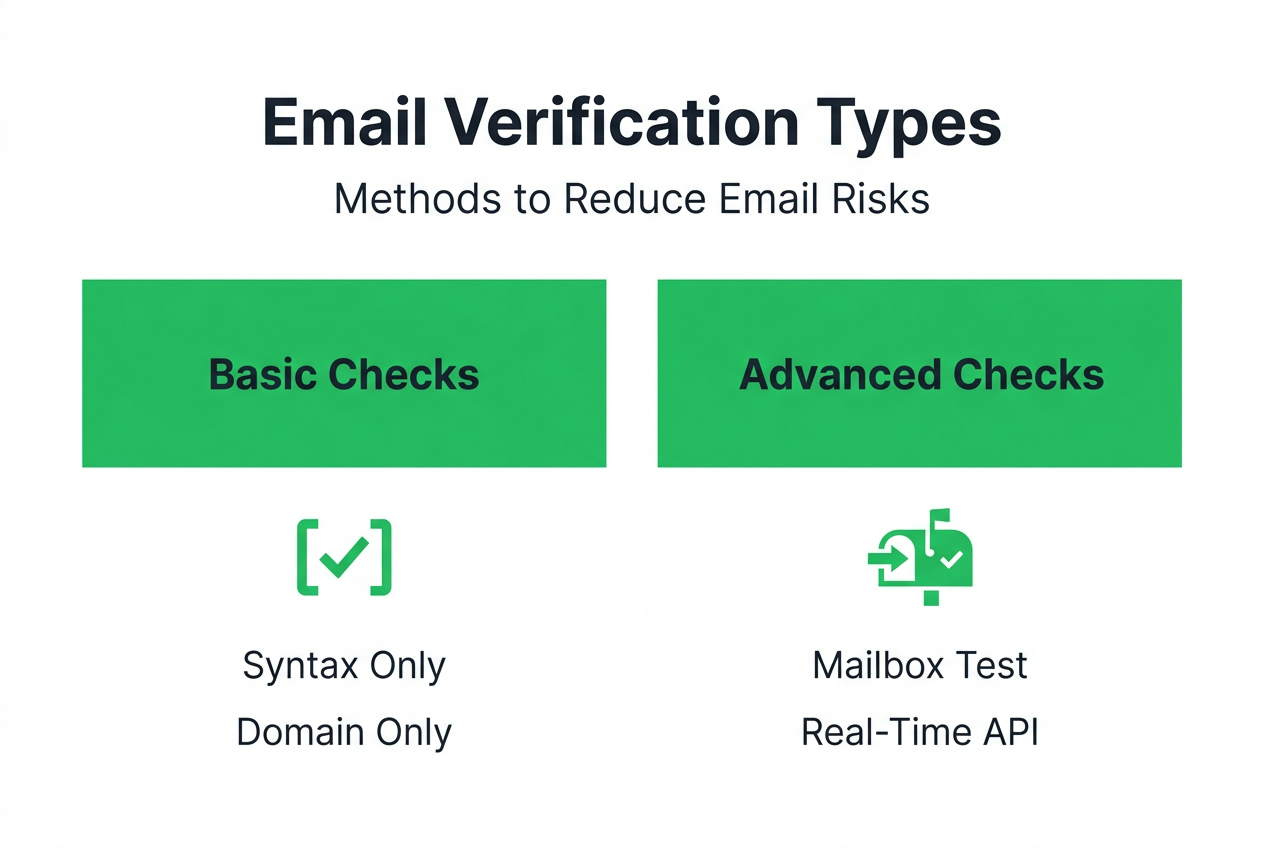
Syntax validation checks email format for proper structure and catches obvious typos. Domain validation confirms the domain exists and accepts email. Mailbox verification pings the actual email server to verify the specific address exists. Spam trap detection identifies known honeypot addresses that damage sender reputation. Disposable email detection flags temporary addresses that hurt engagement metrics.

| Method | Effectiveness | Pros | Cons |
|---|---|---|---|
| Syntax Check | 60-70% | Fast, inexpensive, catches obvious errors | Misses valid-looking invalid addresses |
| Domain Validation | 75-85% | Verifies receiving server exists | Can't confirm specific mailbox |
| Mailbox Verification | 95-98% | Confirms exact address validity | Slower, some servers block verification |
| Spam Trap Detection | 90-95% | Prevents reputation damage | Requires updated trap databases |
| Disposable Detection | 85-90% | Improves engagement quality | Some legitimate users prefer disposable emails |
Implementing robust verification requires a strategic approach:
- Verify emails at collection point using real-time API validation
- Run bulk verification on existing lists before major campaigns
- Implement progressive verification that combines multiple methods
- Set up automated re-verification for addresses older than 90 days
- Monitor verification results to identify collection source quality issues
- Remove addresses that fail multiple verification attempts
Essential email verification methods work best in combination. Syntax checks provide a fast first filter, while mailbox verification confirms deliverability for high-value sends. Your email validation process should match verification rigor to campaign importance and subscriber value.
"Combining syntax, domain, and mailbox verification catches 98% of invalid addresses while maintaining fast processing speeds for real-time collection scenarios."
Pro Tip: Integrate verification into your email collection forms to prevent bad data from entering your system. Real-time validation at signup costs less than cleaning lists later and provides immediate user feedback to correct typos before they become permanent records.
The revenue impact of comprehensive verification justifies the investment. Higher deliverability rates translate directly to more conversions and lower customer acquisition costs. Preventing just one blacklisting incident pays for years of verification services.
Best practices for maintaining email list hygiene and safeguarding deliverability
Ongoing list hygiene protects the investment you make in initial verification. Email addresses decay naturally as people change jobs, abandon accounts, or let domains expire. Maintaining clean lists requires consistent practices that prevent verification issues from accumulating.
Implement these hygiene practices to sustain deliverability:
- Verify new addresses within 24 hours of collection
- Re-verify entire list every 90-180 days depending on churn rate
- Suppress unengaged subscribers who haven't opened in 6+ months
- Remove hard bounces immediately after detection
- Monitor soft bounces and remove after 3 consecutive failures
- Flag and investigate sudden bounce rate spikes
- Segment lists by verification status and engagement level
- Test deliverability to seed addresses before major sends
Monitoring deliverability metrics helps you catch problems early. Track bounce rates, spam complaint rates, and inbox placement percentages across campaigns. Set up alerts when any metric exceeds normal ranges. This early warning system lets you pause sends and investigate before ISPs apply lasting penalties.
Staying under bounce rate thresholds requires proactive cleaning rather than reactive fixes. Don't wait for ISPs to penalize you before addressing list quality issues. Regular verification maintenance costs less than reputation recovery and keeps your sender score consistently strong.
Pro Tip: Set automated suppression rules that remove addresses based on verification results and engagement patterns. For example, automatically suppress any address that hard bounces, fails verification twice, or shows zero engagement for 180 days. These rules maintain list quality without manual intervention.
The connection between hygiene and sender reputation is direct and measurable. Clean lists generate higher engagement rates, which signal to ISPs that recipients value your emails. This positive feedback loop improves deliverability over time, while poor hygiene creates a negative spiral. Following email verification best practices and maintaining consistent email hygiene protects your long-term marketing effectiveness and revenue potential.
Protect your email campaigns with advanced verification tools
Mitigating unverified email risks requires technology that scales with your sending volume and integrates seamlessly into your workflows. BillionVerify provides AI-powered email verification that reduces bounce rates and protects sender reputation through multi-layer validation.
The platform detects disposable emails, spam traps, role-based addresses, and risky domains that threaten deliverability. E-commerce and SaaS marketers rely on these capabilities to verify millions of addresses monthly while maintaining campaign performance. Real-time API integration lets you validate emails at collection, while bulk processing cleans existing lists efficiently. Explore AI-first email verification to safeguard your campaigns and maximize marketing ROI.
Frequently asked questions about the risk of unverified emails
What is considered a high bounce rate and why does it matter?
Bounce rates above 2-3% signal serious list quality problems to ISPs and trigger filtering penalties. ISPs interpret high bounces as evidence of poor data practices or spam-like behavior, which damages your sender reputation and reduces inbox placement for all future campaigns.
How often should I verify my email list to avoid risks?
Verify new addresses immediately at collection and re-verify your entire list every 90-180 days. Email addresses decay naturally as domains expire and users abandon accounts, so regular verification prevents accumulated invalid addresses from damaging deliverability.
Can unverified emails cause my domain to be blacklisted?
Yes, sending to unverified addresses increases spam trap hits and bounce rates, both of which can trigger blacklist inclusion. Once blacklisted, your domain faces severe deliverability problems across all ISPs until you complete removal requests and rebuild sender reputation.
What is the domino effect and how can I avoid it?
The domino effect occurs when one bad send damages your sender reputation, causing ISPs to filter all subsequent emails more aggressively regardless of list quality. Avoid it by verifying lists before every campaign and maintaining bounce rates below 2% consistently.
Are all email verification services equally effective?
No, verification accuracy varies significantly based on the methods used and database quality. Services using only syntax checks catch 60-70% of invalid addresses, while comprehensive solutions combining mailbox verification, spam trap detection, and disposable email filtering achieve 95-98% accuracy.
Why do invalid emails hurt revenue beyond just wasted sends?
Invalid addresses damage sender reputation, which reduces inbox placement for all campaigns and decreases overall marketing effectiveness. Lower deliverability means fewer customers see your offers, directly reducing conversion rates and customer lifetime value across your entire email program.