



TL;DR:
- Sender reputation significantly impacts inbox placement and campaign ROI.
- Key factors include complaint rates, bounce rates, authentication, and engagement metrics.
- Ongoing list hygiene and authentication are essential for maintaining a strong reputation.
Even a perfectly written email with a compelling subject line and flawless design can land in the spam folder if your sender reputation isn't in good standing. Mailbox providers make inbox placement decisions in milliseconds, and your reputation score is the single most influential signal they use. For email marketers and business leaders at e-commerce and SaaS companies, understanding what shapes that score isn't optional. It's the foundation of every campaign you run. This article breaks down the core sender reputation factors, explains how ISPs score them, and gives you a clear action plan to protect and improve your standing.
Key Takeaways
| Point | Details |
|---|---|
| Reputation impacts inboxing | Sender reputation is the main factor that determines if your emails land in the inbox or spam. |
| Consistency is crucial | Maintaining regular sending patterns and authentication ensures ongoing sender trust. |
| List hygiene matters most | Regularly cleaning your list prevents bounces, complaints, and damaged sender reputation. |
| Best practices boost results | Monitoring feedback and engagement metrics lets you adapt and safeguard your email’s effectiveness. |
What is email sender reputation and why does it matter?
Email sender reputation is the trust score that internet service providers (ISPs) and mailbox providers assign to your sending domain and IP address. Think of it as a credit score for your email program. Every time you send a message, providers analyze signals from your sending history to decide whether your emails belong in the inbox or the spam folder.
The factors that feed into this score include your complaint rate, bounce rate, sending volume patterns, and whether you've implemented proper authentication. Providers like Google, Microsoft, and Yahoo! each run their own scoring models, but they all share a common goal: protect their users from unwanted or harmful mail.
Sender reputation is a key driver of deliverability and overall campaign ROI. A weak score doesn't just reduce inbox placement; it erodes brand trust and suppresses revenue at scale.
Here's why this matters beyond the technical layer:
- Inbox placement rates drop sharply when reputation scores fall below acceptable thresholds
- Revenue impact is direct: emails that don't reach the inbox generate zero engagement and zero conversions
- Brand perception suffers when customers never receive your messages or find them in spam
- Blacklisting risk increases as reputation degrades, making recovery slow and costly
Understanding email address reputation at both the domain and IP level is essential. Your email deliverability guide should treat reputation management as a continuous operational priority, not a one-time setup task.
The top factors that shape your sender reputation
List hygiene, bounce rates, complaint rates, and authentication are the primary drivers of sender reputation. Knowing which levers you control makes it easier to prioritize your efforts and build a sustainable sending program.
Complaint and spam report rate. When recipients mark your email as spam, mailbox providers record that signal. A complaint rate above 0.1% starts to damage your reputation. Above 0.3%, you risk significant deliverability problems across major providers.
Bounce rate (hard and soft). Hard bounces occur when an email address doesn't exist. Soft bounces are temporary failures. High hard bounce rates signal poor list quality and erode trust quickly. Keep your hard bounce rate below 2% as a baseline target.
List hygiene. Sending to outdated, invalid, or risky addresses inflates bounce and complaint rates. Regular list cleaning removes dead weight and keeps your sending pool healthy. Explore effective email list management practices to stay ahead of list decay.
Email authentication (SPF, DKIM, DMARC). These three protocols verify that your emails are legitimate and haven't been tampered with. Providers heavily favor authenticated senders when making inbox placement decisions.
Sending volume consistency. Sudden spikes in volume look suspicious. A gradual, consistent sending cadence signals to ISPs that you're a legitimate operation, not a spammer warming up for a blast.
Engagement metrics. Opens, clicks, and even unsubscribes tell providers how recipients feel about your mail. Strong engagement reinforces positive reputation signals. Build an improved email deliverability workflow that prioritizes audience relevance.
Pro Tip: Monitor your complaint rate through Google Postmaster Tools and Microsoft SNDS. These free platforms show you exactly how major providers view your sending reputation in near real time. Review email marketing best practices to keep engagement metrics strong.
How mailbox providers evaluate and score sender reputation
Different providers weigh aspects of sender reputation, such as content and infrastructure, differently. Understanding how each major platform approaches scoring helps you tailor your strategy accordingly.
Google, Microsoft, and Yahoo! all use proprietary algorithms, but they share core evaluation criteria. Google Postmaster Tools scores domain reputation on a four-tier scale: Bad, Low, Medium, and High. Microsoft's Smart Network Data Services (SNDS) provides IP-level data including complaint rates and spam trap hits. Yahoo! uses its own internal scoring but participates in feedback loop programs that give senders visibility into complaint data.
Feedback loops (FBLs) are mechanisms that allow senders to receive notifications when recipients mark their mail as spam. Registering for FBLs with major providers gives you actionable complaint data to act on quickly.
Here's a simplified scoring rubric showing how common factors map to their typical weight in provider evaluations:
| Reputation factor | Microsoft | Yahoo! | Typical weight | |
|---|---|---|---|---|
| Complaint rate | High | High | High | Very high |
| Bounce rate | Medium | High | Medium | High |
| Authentication (SPF/DKIM/DMARC) | High | High | High | Very high |
| Engagement metrics | High | Medium | Medium | High |
| Sending consistency | Medium | Medium | Low | Medium |
| List hygiene signals | Medium | High | Medium | High |
A strong sender reputation can improve inbox placement rates by up to 40%, making it one of the highest-leverage investments in your email program. Explore email address reputation mechanics further to understand how domain age and IP history also factor into these evaluations.
Best practices for improving and protecting sender reputation
Ongoing monitoring and regular list cleaning are essential for maintaining high sender reputation. Beyond those fundamentals, a structured set of practices keeps your program on solid ground.
- Verify and clean your list regularly. Use a dedicated verification platform to remove invalid, disposable, role-based, and catch-all addresses before every major campaign. This directly reduces bounce and complaint rates. Start with solid email list hygiene practices as your baseline.
- Implement authentication fully. SPF, DKIM, and DMARC aren't optional in 2026. Google and Yahoo! now require them for bulk senders. Review email authentication protocol tips to ensure your records are correctly configured.
- Monitor key metrics and feedback loops. Set up alerts for complaint rate spikes, bounce rate increases, and sudden drops in open rates. These are early warning signals that your reputation is under pressure.
- Warm up new sending domains. Never launch a new domain at full volume. Start with a small, highly engaged segment and scale gradually over four to eight weeks. This builds a positive sending history before volume increases.
- Segment your audience strategically. Sending to your most engaged subscribers first improves engagement signals and reduces complaint risk. Reserve broader sends for segments with demonstrated interest. A well-structured deliverability workflow makes segmentation systematic rather than ad hoc.
Pro Tip: Run a reputation audit every quarter using tools like MXToolbox, Sender Score by Validity, and Google Postmaster Tools. Cross-reference the data to spot patterns that individual tools might miss.
Comparison of sender reputation factors and their relative impact
Bounce rates, complaint rates, and authentication have the greatest effect on sender reputation, but every factor in your sending program contributes to the overall picture. Here's a side-by-side comparison to help you prioritize your efforts.

| Reputation factor | Impact level | Primary risk if neglected | Recommended action |
|---|---|---|---|
| Complaint rate | High | Blacklisting, inbox filtering | Monitor FBLs, improve segmentation |
| Hard bounce rate | High | Domain/IP reputation damage | Verify lists before sending |
| Email authentication | High | Phishing flags, spam folder placement | Implement SPF, DKIM, DMARC |
| Engagement metrics | High | Reduced inbox placement over time | Segment and personalize content |
| List hygiene | High | Inflated bounces and complaints | Clean lists quarterly or more often |
| Sending consistency | Medium | Spam flags on volume spikes | Maintain a regular sending cadence |
| Domain age and history | Medium | Lower trust scores for new domains | Warm up new domains gradually |
Key takeaways from this comparison:
- Complaint rate and hard bounce rate are the fastest paths to reputation damage. Address them first.
- Authentication is non-negotiable. Without SPF, DKIM, and DMARC, even a clean list won't protect you.
- Engagement signals compound over time. Consistently relevant content builds reputation gradually but durably.
- Sending consistency is often overlooked but matters most during domain warm-up and after periods of inactivity.
Review your list hygiene practices against this table and identify which factors represent your biggest current exposure.
Why sender reputation is the ultimate competitive edge in email marketing
Most email marketers spend the majority of their time optimizing subject lines, refining copy, and A/B testing send times. Those efforts matter, but they operate on top of a foundation that many teams never fully address: sender reputation. The uncomfortable truth is that no amount of creative optimization can compensate for a damaged reputation. Your best-performing email template is worthless if it lands in spam.
What separates leading email programs from average ones isn't just better content. It's the discipline to treat reputation as a long-term strategic asset. Teams that invest consistently in list hygiene, authentication, and engagement quality build a compounding advantage. Their emails reach inboxes reliably, their metrics improve steadily, and their deliverability and ROI grow in tandem.
The mindset shift worth making is this: reputation management isn't a technical task you hand off to IT. It's a core marketing function that directly determines the ceiling of your campaign performance. Organizations that internalize this view stop chasing short-term volume and start building the kind of sending history that earns sustained inbox access.
Take your sender reputation further with BillionVerify
Protecting your sender reputation requires more than good intentions. It requires the right tools operating consistently behind every campaign you send.
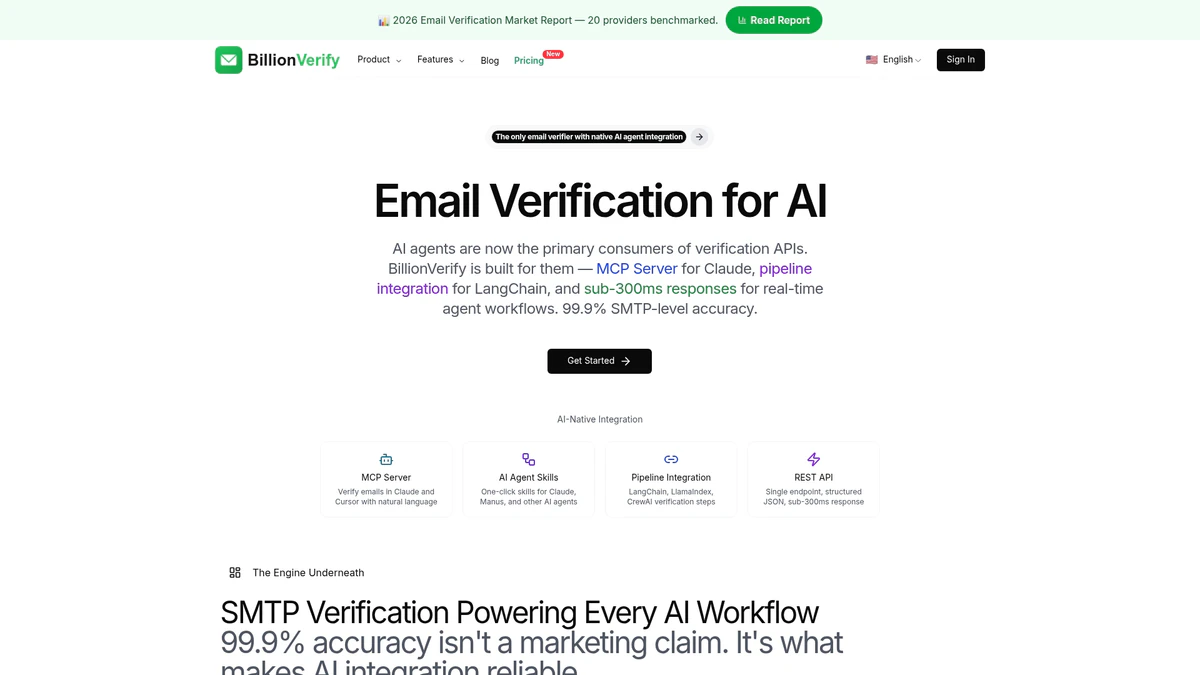
BillionVerify is an AI-first email verification platform built for e-commerce and SaaS teams that need reliable, scalable list hygiene at enterprise volume. Its multi-layer verification detects invalid addresses, spam traps, disposable emails, role-based accounts, and risky domains before they damage your reputation. Real-time API integration means every new contact is validated at the point of entry, and bulk processing handles your existing lists efficiently. Whether you're preparing for a major campaign or working to keep your list clean on an ongoing basis, BillionVerify gives you the infrastructure to protect your sender reputation and maximize inbox placement.
Frequently asked questions
What is an acceptable email sender reputation score?
A score above 80 on a 100-point scale is generally considered strong and safe from most spam filters. Scores below 70 indicate meaningful risk to inbox placement.
How often should I clean my email list to protect reputation?
Clean your list at least quarterly; high-volume senders should clean more frequently, ideally before every major campaign send.
How do authentication protocols affect sender reputation?
SPF, DKIM, and DMARC validate your sending identity, increasing trust with mailbox providers and reducing the likelihood of your emails being flagged as spam or phishing.
Does sending frequency impact my sender reputation?
Yes. Erratic or infrequent sending can trigger spam filters and lower your reputation score. A consistent, predictable sending cadence signals legitimacy to ISPs and supports long-term deliverability.