



High inbox placement is no longer just about volume—quality and engagement signal success for Canadian, American, British, and European e-commerce senders in 2026. With stricter compliance laws and tighter Internet Service Provider (ISP) filters, email marketing managers face real risks when neglecting ongoing email list hygiene. This guide breaks through outdated myths, clarifies core practices, and reveals how maintaining a clean, permission-based list safeguards sender reputation and protects your email marketing investments worldwide.
Key Takeaways
| Point | Details |
|---|---|
| Email List Hygiene is Essential | Regularly cleaning and maintaining your email list protects sender reputation and improves campaign deliverability. |
| Ongoing List Maintenance Required | Continuous monitoring and validation of email lists prevent degradation and maintain quality over time. |
| Avoid Common Myths | Larger lists do not guarantee better performance; engaged, clean lists are crucial for successful email campaigns. |
| Cost of Neglect is High | Failing to maintain list hygiene leads to financial losses, increased bounce rates, and potential blacklisting from ISPs. |
Defining Email List Hygiene and Common Myths
Email list hygiene is the practice of regularly cleaning, validating, and maintaining your email database to remove invalid addresses, inactive subscribers, and risky contacts. This ongoing process protects your sender reputation and ensures your campaigns actually reach inboxes.
Unlike a one-time cleanup, true list hygiene operates as a continuous system that identifies and removes problem addresses before they damage deliverability. Email list hygiene practices involve screening for bounces, spam traps, duplicates, typos, and disengaged subscribers to maintain optimal list health.
Your email reputation depends on maintaining a clean, permission-based list of engaged subscribers who actually want to hear from you. Neglecting this responsibility puts your entire sending infrastructure at risk.
Core Components of List Hygiene
Effective list hygiene focuses on several key areas:
- Bounce removal eliminates hard bounces (permanent delivery failures) and monitors soft bounces (temporary issues)
- Spam trap detection identifies addresses used by ISPs to catch senders with poor list practices
- Duplicate elimination removes multiple entries of the same email to prevent sending redundant messages
- Engagement monitoring segments inactive subscribers who haven't opened or clicked in months
- Typo correction flags obvious misspellings that indicate data entry errors or fake signups
- Role-based filtering removes generic addresses like info@, support@, or admin@ that rarely convert
Clean lists perform better across every metric—higher open rates, lower bounce rates, and stronger sender reputation scores that ISPs track constantly.
The Myths Holding You Back
Many e-commerce businesses operate under false assumptions about list hygiene that actually hurt their results.
Myth 1: Larger lists always generate better results. A bloated list filled with invalid or unengaged addresses tanks your engagement metrics, which ISPs use to filter your messages into spam. Size means nothing without quality.
Myth 2: Basic bounce removal is enough. Removing hard bounces covers only a fraction of the problem. You still have spam traps, inactive users, typos, and role-based addresses slowly poisoning your sender reputation.
Myth 3: You only need to clean your list occasionally. List degradation happens continuously as subscribers become inactive, address formats change, and spam traps accumulate. Without automated hygiene, your list loses 5-10% quality annually.
Myth 4: List hygiene costs too much. Preventive maintenance through verification costs far less than recovering from blacklisting, paying higher bounce penalties, or losing email channel access entirely.
The real cost comes from inaction. Protecting sender reputation requires ongoing, systematic attention to list quality, not periodic interventions.
Here's a comparison of myths versus realities in email list hygiene:
| Common Myth | Reality | Consequence of Belief |
|---|---|---|
| Bigger lists always win | Engaged, clean lists win | Higher spam, lost engagement |
| Bounce removal is enough | Multiple factors impact deliverability | Persistent hidden risks |
| Occasional cleaning works | Ongoing hygiene required | Accelerating list decay |
| Hygiene is too expensive | Prevention is cheaper than recovery | Financial loss, blacklisting |
Pro tip: Start by segmenting your list by engagement level—separate your active subscribers from those inactive for 90+ days, then apply different list hygiene rules to each segment based on their sending frequency and subscriber behavior patterns.
Core Processes and Innovations in 2026
List hygiene in 2026 operates with precision that would have seemed impossible five years ago. The combination of advanced automation, artificial intelligence, and strategic integration into overall marketing operations transforms how businesses protect sender reputation.

Modern email verification now happens at multiple checkpoints—when subscribers sign up, periodically throughout their lifecycle, and before every send. This layered approach catches problems early and prevents them from damaging your sender score with ISPs.
Advanced Verification Technologies
Sophisticated verification services now employ multi-layer detection methods that go far beyond checking whether an address format is valid. Real-time SMTP verification confirms the mailbox actually exists on the receiving server.
Key processes include:
- Real-time API verification validates addresses at signup before they enter your system
- Bulk verification screens existing lists against comprehensive databases and validation protocols
- Spam trap identification detects honeypot addresses that ISPs use to monitor sender behavior
- Catch-all filtering recognizes servers that accept any address, preventing false positives that look valid but rarely deliver
- Role-based filtering removes generic addresses that rarely engage with marketing content
These technologies reduce bounce rates by 60-80%, directly protecting the sender reputation metrics that ISPs monitor constantly.
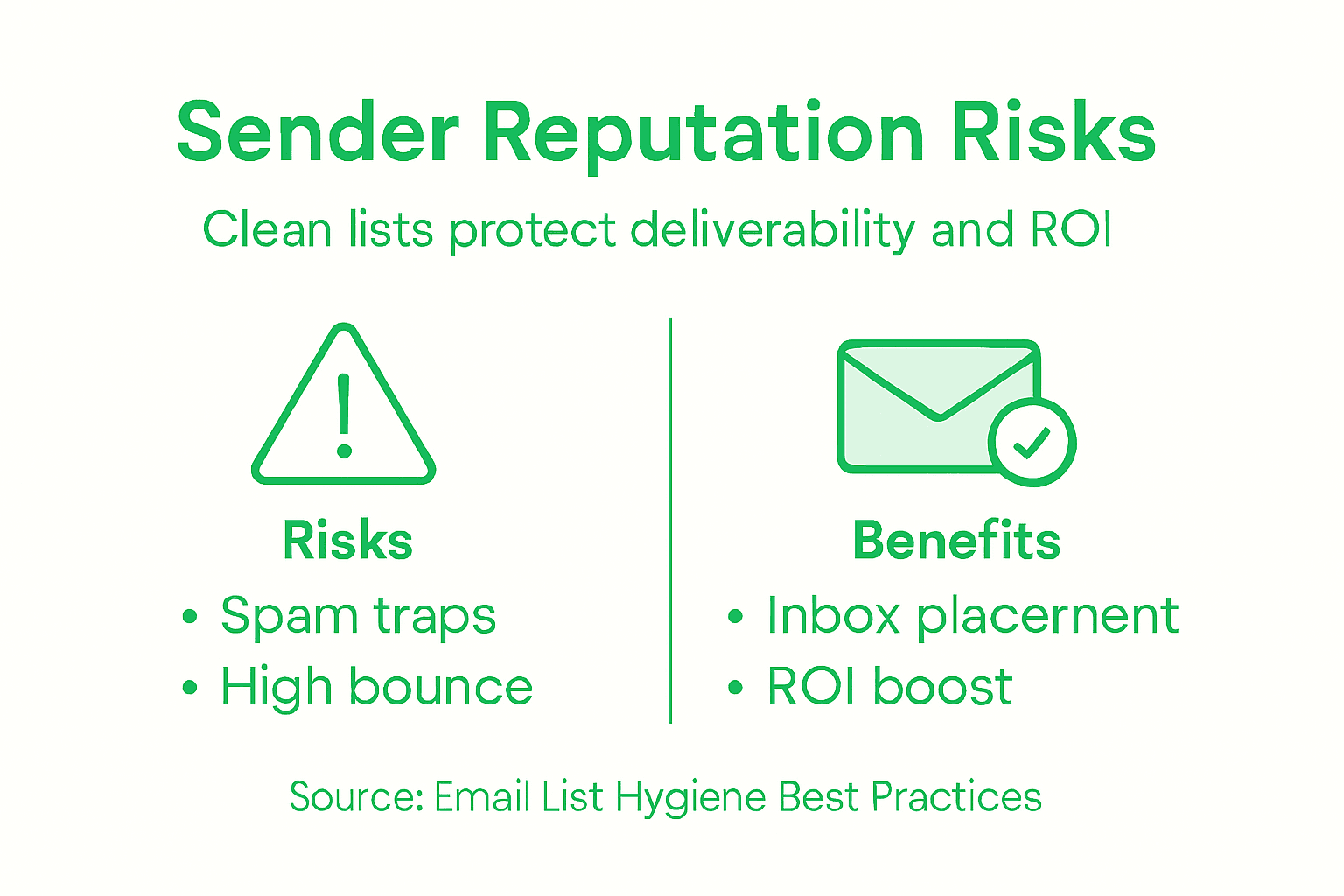
AI-Driven Re-engagement and Consent Strategy
Automated systems now identify inactive subscribers and trigger targeted re-engagement campaigns automatically. Rather than letting dormant addresses decay your metrics, AI segments users by engagement level and applies appropriate sending strategies.
Double opt-in verification ensures genuine consent while building trust with ISPs. This process requires subscribers to confirm their email address through a verification link, eliminating typos and fraudulent signups that harm deliverability.
Strategic list hygiene is no longer just a technical process—it directly impacts marketing ROI and determines whether your sender reputation survives competitive inbox battles.
Integration Into Overall Marketing Operations
The biggest innovation in 2026 is treating list hygiene as part of your core marketing strategy, not an afterthought. Organizations now build hygiene workflows directly into campaign creation, subscriber management, and compliance processes.
This means:
- Hygiene checks occur automatically before sends
- Compliance requirements are built into data collection
- Re-engagement campaigns trigger based on engagement thresholds
- Reporting shows hygiene impact on ROI and deliverability
Businesses that integrate hygiene into their operations see measurable improvements in open rates, click-through rates, and overall sender reputation scores within 30-60 days.
Pro tip: Implement automated re-engagement workflows that target subscribers inactive for 6+ months, offering them an easy way to confirm their interest before removing them—this approach recovers valuable subscribers while protecting sender reputation.
Impact on Deliverability, ROI, and Compliance
Clean email lists directly determine whether your messages reach inboxes or spam folders. In 2026, ISPs prioritize sender reputation based on engagement metrics from actual subscribers, not volume of addresses on your list.
Email deliverability depends heavily on sender reputation fueled by recipient engagement rather than raw send volume. A focused list of engaged subscribers improves inbox placement dramatically while weak lists damage your ability to reach anyone.
Deliverability Impact
List hygiene directly affects the metrics ISPs monitor to decide your fate:
- Bounce rates spike without validation, signaling to ISPs that you don't maintain list quality
- Spam complaints increase when inactive subscribers mark emails as unwanted
- Engagement rates tank on bloated lists filled with uninterested addresses
- Sender reputation scores suffer from accumulated delivery failures
Businesses that implement rigorous list hygiene see 25-40% improvements in inbox placement within the first 90 days. That translates directly to more opens, more clicks, and more conversions.
Clean lists create a positive feedback loop—better delivery rates lead to better engagement metrics, which improve your sender reputation further.
ROI and Revenue Protection
List hygiene isn't just about inbox placement. It protects the actual revenue generated by email campaigns.
When your list contains invalid addresses, spam traps, and disengaged subscribers, you waste marketing budget on sends that never arrive or never convert. Removing these addresses redirects your send budget toward subscribers who actually open messages and make purchases.
Mid-sized e-commerce brands reduce marketing spend waste by 30-50% after cleaning their lists, meaning the same budget produces measurable revenue increases. You're not spending more—you're spending smarter.
Compliance and Regulatory Risk
Compliance has tightened significantly. Modern regulations require strict consent management, rapid unsubscribe processing, and robust authentication protocols like SPF, DKIM, and DMARC.
List hygiene supports compliance through:
- Maintaining accurate consent records for permission-based sending
- Processing unsubscribe requests immediately
- Validating email addresses to prevent spam complaints from typos or fake signups
- Removing addresses that trigger spam trap detection
Neglecting list hygiene increases regulatory risk. High bounce rates and spam complaints invite ISP and regulatory scrutiny that could result in blacklisting or legal penalties far more expensive than preventive maintenance.
Below is a summary of how list hygiene drives measurable business outcomes:
| Focus Area | Hygiene Benefit | Business Impact |
|---|---|---|
| Deliverability | Improved inbox placement | More opens and clicks |
| ROI | Higher campaign efficiency | Less budget waste, more revenue |
| Compliance | Fewer regulatory risks | Avoid legal penalties |
| Brand Trust | Fewer spam complaints | Stronger customer relationships |
Pro tip: Conduct quarterly compliance audits where you verify that all authentication protocols (SPF, DKIM, DMARC) are properly configured and that your unsubscribe processes respond within 24 hours—this prevents costly regulatory issues before they develop.
Major Risks and Financial Costs of Neglect
Neglecting list hygiene doesn't just hurt your metrics. It creates cascading financial damage that compounds across quarters and years. The costs are real, measurable, and often irreversible without significant investment to recover.
Unclean lists cause irreversible damage to sender reputation through spam traps, high bounce rates, and user complaints that accumulate faster than you can fix them. Once your sender reputation crashes, recovery takes months of work and sustained high engagement to rebuild trust with ISPs.
Direct Financial Losses
The most obvious cost is lost revenue from poor deliverability:
- Reduced inbox placement means 20-40% fewer opens simply because messages land in spam instead of inboxes
- Wasted send budget on invalid addresses produces zero conversions while consuming your monthly send allocation
- Increased customer acquisition costs because existing subscribers don't receive campaigns, forcing reliance on paid channels
- Lower average order value when engaged customers never see promotional campaigns
For a mid-sized e-commerce business sending 2 million emails monthly with a 2% conversion rate, poor list quality can cost $15,000-$40,000 in lost monthly revenue. Over a year, that's $180,000-$480,000 in preventable losses.
Sender reputation damage from unclean lists creates a financial drain that persists long after the initial problem is discovered.
Reputation Recovery and Blacklisting Costs
Once ISPs identify your sending pattern as problematic, the financial impact accelerates. IP addresses get blacklisted, requiring new infrastructure investment. Reputation recovery demands ongoing compliance monitoring and potentially hiring specialists.
Blacklisting consequences include:
- Complete loss of inbox access for weeks or months
- Need to rebuild sending reputation with new IP addresses
- Migration costs and infrastructure changes
- Potential legal penalties from regulatory bodies
- Consulting fees for reputation recovery specialists
Recovering from a serious blacklist incident costs $10,000-$50,000 and destroys business momentum during the recovery period.
Cascading Channel Damage
Poor email reputation damages your credibility beyond email marketing. ISP complaints and bounce data affect your overall domain reputation, potentially impacting SMS deliverability, push notifications, and paid ad account standing.
Brands lose access to multiple communication channels when sender reputation collapses, forcing expensive rebuilds across the entire marketing stack.
Brand Reputation and Customer Trust
Unsubscribers who receive unwanted emails from unclean lists file spam complaints, damaging not just deliverability but customer perception. These intangible brand reputation costs accumulate as unhappy customers share negative experiences online.
Pro tip: Implement monthly monitoring of your spam complaint rate and bounce metrics—if either exceeds ISP thresholds, immediately audit your list segments and pause sending to the lowest-engagement cohorts before reputation damage becomes irreversible.
Best Practices for Ongoing List Maintenance
List hygiene works only when it becomes part of your routine marketing operations, not a one-time event you schedule quarterly. The best-performing teams integrate validation and cleaning directly into their workflows so quality maintenance happens automatically.
Think of list maintenance like equipment servicing—regular upkeep prevents catastrophic failures. Automated validation tools minimize invalid data collection at signup, catching problems before they enter your database, which is far cheaper than cleaning infected lists later.
Automate at the Point of Entry
The most effective teams validate addresses in real-time as subscribers sign up. This prevents bad data from entering your system initially, eliminating the need for intensive cleanup later.
Automation best practices include:
- Real-time API verification checks addresses instantly during signup
- Double opt-in confirmation requires subscribers to verify their email address
- GDPR-compliant consent capture documents permission for every address
- Typo detection and correction suggests fixes for common misspellings
- Duplicate prevention blocks multiple signups from the same address
Businesses implementing real-time validation see bounce rates drop by 60-70% immediately because invalid addresses never reach your sending list.
Preventing bad data entry upfront costs far less than removing it after it damages sender reputation.
Establish Regular Cleaning Cycles
Even with validation at signup, existing lists degrade naturally. Subscribers become inactive, addresses go stale, and spam traps accumulate. Schedule quarterly or semi-annual cleaning cycles to maintain list health.
Each cycle should screen for bounce history, engagement metrics, and spam trap indicators. Remove addresses that haven't engaged in 12 months and separate inactive segments for targeted re-engagement campaigns before final removal.
Monitor Health Indicators Continuously
You can't manage what you don't measure. Track key metrics to spot problems early:
- Bounce rate should stay below 3% for healthy lists
- Spam complaint rate must remain under 0.1% to avoid ISP penalties
- Engagement rate indicates whether subscribers actually open messages
- List growth rate shows whether new subscribers are replacing lost ones
Set up monthly reporting dashboards that alert you immediately when metrics exceed safe thresholds. Early detection prevents small problems from becoming reputation disasters.
Build Subscriber Re-engagement Programs
Don't immediately remove inactive subscribers. Create targeted re-engagement campaigns that win them back before deletion. Offer incentives for reconfirming interest or provide fresh, compelling content to reignite engagement.
Successful re-engagement programs recover 10-25% of inactive subscribers, preserving list size while eliminating truly unengaged addresses that hurt sender reputation.
Pro tip: Create an automated workflow that flags inactive subscribers after 6 months of zero engagement, triggers a 2-email re-engagement sequence with compelling offers over 2 weeks, then removes non-responders to protect your sender reputation—this balance maximizes recovery while eliminating reputation risks.
Elevate Your Email List Hygiene with BillionVerify for 2026 Success
Maintaining a clean, engaged email list is more critical than ever to protect your sender reputation and maximize deliverability. The challenges outlined in the article, such as spam trap identification, role-based address filtering, and real-time validation, directly impact your campaign ROI and compliance efforts. BillionVerify offers advanced email verification solutions designed to address these pain points through precision multi-layer detection technologies and seamless integration with over 20 top marketing platforms.
Ensure you never compromise sender reputation or waste your marketing budget on invalid or risky contacts. Experience how BillionVerify’s bulk verification, real-time API verification, and AI-powered hygiene tools reduce bounce rates and boost engagement rates by verifying your list continuously. Visit BillionVerify today to start transforming your email campaigns with industry-leading accuracy and automation. Don’t let outdated list hygiene practices hold you back from email marketing excellence in 2026 and beyond.
Frequently Asked Questions
What is email list hygiene?
Email list hygiene is the practice of regularly cleaning and validating your email database to remove invalid addresses, inactive subscribers, and risky contacts. This ensures your campaigns reach inboxes and protects your sender reputation.
Why is maintaining a clean email list important for sender reputation?
A clean email list improves engagement metrics, reduces bounce rates, and helps maintain a strong sender reputation with ISPs. This allows your emails to avoid being marked as spam, thereby increasing deliverability.
How often should I perform email list hygiene?
List hygiene should be an ongoing process. Regular cleaning cycles should be established, ideally quarterly or semi-annually, to monitor list health and remove inactive subscribers, bounces, and other problematic addresses.
What technologies can help improve email list hygiene in 2026?
Modern email list hygiene tools use advanced technologies such as real-time API verification, bulk verification, and AI-driven re-engagement strategies to effectively clean email lists, improve deliverability, and automate the hygiene process.