



Marketing professionals in e-commerce and SaaS face many email marketing errors that hurt results. Prioritizing mistakes by impact helps maximize deliverability, engagement, and revenue. This article teaches how to evaluate and avoid common pitfalls for better campaign success in 2026 and beyond.
Key takeaways
| Point | Details |
|---|---|
| List verification errors | Avoiding verification and hygiene mistakes reduces bounce rates by up to 30% and protects sender reputation. |
| Segmentation impact | Proper segmentation and personalization can boost revenue by 36% and sales by 88%. |
| Technical setup failures | Missing SPF/DKIM/DMARC authentication reduces inbox placement by 20%. |
| Content and automation | Poor content design and automation misuse lead to lower engagement and a 44% unsubscribe rate. |
| Lifecycle flows advantage | Lifecycle email flows outperform one-off campaigns with up to 50% higher conversions. |
Selection criteria: how to evaluate email marketing missteps
Understanding which email marketing mistakes to tackle first requires a strategic framework. You need clear evaluation criteria to prioritize errors that hurt your campaigns most.
Impact on deliverability and sender reputation is critical to avoid blacklisting. Your sender score determines whether emails reach the inbox or spam folder. Technical failures and list hygiene issues directly threaten this foundation.
Effect on engagement metrics like open and click rates influences ROI. When subscribers ignore your emails, your marketing investment generates zero return. Tracking these metrics reveals which mistakes cost you the most attention and action.
Revenue impact determines the financial urgency of fixing mistakes. Some errors directly reduce conversions and sales, while others gradually erode profitability. Calculate the cost of each mistake to prioritize your fixes.
Scalability and automation risks matter for growing e-commerce and SaaS businesses. Mistakes that compound as your list grows become exponentially more expensive. Address these issues early before they become systemic problems.
Segmentation and personalization are crucial for relevance and conversion. Generic messaging wastes opportunities to connect with subscribers on a personal level. Evaluate how well your current approach delivers tailored experiences.
Consider these evaluation factors together:
- Immediate deliverability threats require urgent attention
- Revenue-impacting mistakes justify resource investment
- Automation errors scale with list growth
- Engagement issues signal deeper strategic problems
- Technical failures demand immediate remediation
Pro Tip: Create a scoring matrix that weights each mistake by deliverability impact (40%), revenue effect (30%), engagement loss (20%), and scalability risk (10%). This framework helps you allocate resources to the highest-priority fixes first.
List verification and hygiene mistakes
Neglecting list verification and cleaning reduces deliverability and sender reputation faster than any other mistake. High bounce rates up to 30% come from invalid or disposable emails that should never enter your system.
Spam traps and catch-all domains threaten sender reputation and can cause blacklisting. These addresses exist specifically to identify poor list hygiene practices. Major email providers monitor spam trap hits closely when calculating sender scores.
Invalid emails accumulate through various channels. Web forms without validation let users enter fake addresses. Purchased lists often contain outdated contacts. Over time, legitimate addresses become inactive or abandoned.
Use real-time email validation tools and bulk processing for ongoing list hygiene. Real-time verification catches errors at the point of entry, preventing bad data from entering your system. Bulk processing cleans existing lists systematically.
Integrate verification tools with marketing platforms for seamless cleaning. API connections enable automatic validation across your entire tech stack. This integration ensures consistent data quality without manual intervention.
Regular cleaning maintains bounce rates below 2% and improves ROI. Industry benchmarks show that bounce rates above 2% signal serious list quality problems. Keeping your list clean protects your sender reputation and maximizes campaign effectiveness.
Implement these list hygiene best practices:
- Verify all new subscribers immediately at signup
- Run quarterly bulk verification on your entire list
- Remove hard bounces instantly after campaigns
- Monitor soft bounce patterns for potential problems
- Suppress role-based and disposable email addresses
- Re-engage inactive subscribers before removal
Pro Tip: Set up automated workflows that flag addresses with multiple soft bounces for manual review. This catches deliverability issues before they become hard bounces and protects your sender score.
Segmentation and personalization errors
Generic emails cause lower opens, clicks, and conversions, harming ROI. Sending the same message to your entire list ignores the diversity of subscriber needs and interests. This approach wastes your most valuable asset: subscriber attention.
Correct segmentation uses behavior and lifecycle data to tailor offers. Track purchase history, browsing patterns, email engagement, and demographic information. Combine these signals to create meaningful audience segments.
Proper segmentation drives 36% revenue uplift by delivering relevant offers to receptive audiences. When subscribers receive messages aligned with their interests and stage, they respond. This relevance translates directly to increased sales and customer lifetime value.
Personalization goes beyond first name insertion to dynamic content and timing. Use behavioral triggers to send emails when subscribers are most likely to engage. Customize product recommendations based on browsing and purchase history.
88% of marketers affirm personalization boosts sales, underscoring its importance for campaign success. This consensus reflects measurable improvements in conversion rates across industries. Personalized experiences drive loyalty and repeat purchases.
Examples include abandoned cart triggers and personalized product recommendations. Cart abandonment emails recover 10 to 30% of lost sales by reminding shoppers to complete purchases. Product recommendations based on past behavior increase average order value significantly.
Implement segmentation strategies effectively:
- Segment by purchase frequency and recency
- Create lifecycle stage cohorts
- Group subscribers by product interest
- Segment based on email engagement level
- Use geographic and demographic data
- Build predictive segments using AI
Dynamic content blocks let you personalize within a single email template. Show different product recommendations, offers, or messaging based on subscriber attributes. This approach scales personalization without creating dozens of separate campaigns.
Technical and deliverability mistakes
SPF, DKIM, and DMARC records authenticate your sending domain. These technical standards prove to receiving servers that your emails are legitimate. Without proper authentication, your messages face higher spam filtering rates.
Missing or misconfigured SPF, DKIM, and DMARC authentication leads to emails landing in spam folders, severely hurting deliverability. Email providers increasingly require these records for inbox placement. Misconfigurations can cause up to a 20% drop in inbox placement rates.
Technical errors increase spam filtering and decrease engagement. When emails land in spam folders, subscribers never see your content. This creates a negative feedback loop that further damages your sender reputation.
Regularly monitor authentication status and adjust as needed. DNS records can break during server migrations or configuration changes. Set up alerts to notify you immediately when authentication fails.
Maintaining a strong sender reputation prevents blacklisting and ensures deliverability. Reputation scores combine technical factors, engagement rates, and complaint rates. Protect your reputation by addressing technical issues promptly.
Address these common technical mistakes:
- Set up SPF records to authorize sending servers
- Configure DKIM signatures to verify message integrity
- Implement DMARC policies to specify handling instructions
- Use consistent From addresses and domains
- Maintain proper DNS records and monitor changes
- Test email authentication before scaling campaigns
Most email service providers offer tools to verify your authentication setup. Use these diagnostic tools regularly to catch problems early. Fix authentication issues before they accumulate into serious deliverability problems.
Content and design mistakes
Over 60% of emails are opened on mobile devices, making responsive design critical. Your email must render correctly on screens of all sizes. Mobile users abandon emails that require zooming or horizontal scrolling.
Use 1 to 3 clear CTAs per email to optimize clicks and conversions. Too many calls to action confuse subscribers and reduce response rates. Focus each email on a single primary objective with supporting secondary actions.
Broken links and typographical errors substantially reduce trust and increase spam folder placement risk. Quality issues signal unprofessionalism to subscribers and spam filters alike. Test every link before sending campaigns.
Typo-free, concise copy builds subscriber trust and authority. Edit ruthlessly to remove unnecessary words and clarify your message. Professional writing reflects well on your brand and increases credibility.
Design for clarity, accessibility, and speed to maximize engagement. Use sufficient color contrast for readability. Structure content with clear headings and white space. Optimize images to load quickly on slow connections.
Avoid these content quality mistakes:
- Cluttered layouts that overwhelm readers
- Tiny fonts that strain mobile users
- Image-only emails that fail to load
- Vague or weak subject lines
- Missing alt text for accessibility
- Slow-loading graphics and animations
Pro Tip: Preview your emails on at least three devices before sending. Check rendering on iOS and Android phones plus desktop clients. This simple step catches design breaks that hurt engagement.
Consistent branding across emails reinforces recognition and trust. Use your brand colors, fonts, and voice in every message. This consistency helps subscribers instantly recognize your emails in crowded inboxes.
Automation and frequency mistakes
Over-emailing is the top reason 44% of subscribers unsubscribe from marketing lists. Sending too frequently fatigues your audience and triggers spam complaints. Finding the right frequency balance is crucial for retention.
Test campaigns extensively on small segments before full automation deployment. Testing before automating can triple activation rates compared to deploying untested sequences. Small-scale validation catches errors before they reach your entire list.
Avoid automating sequences without validation and optimization. Automated emails run continuously, multiplying any mistakes in content or targeting. A single error can damage thousands of subscriber relationships.
Balance email frequency to maintain engagement without fatigue. Monitor unsubscribe rates and engagement metrics to find your optimal cadence. Different audience segments may prefer different frequencies.
Follow best timing practices tailored to audience behavior for retention. Analyze when your subscribers typically open and click emails. Schedule sends to match these patterns for maximum visibility.
Implement frequency management strategies:
- Start with conservative frequency and increase gradually
- Monitor engagement trends as you adjust cadence
- Offer frequency preferences in subscription centers
- Segment high-engagement subscribers for more frequent sends
- Suppress recently contacted addresses in broadcast campaigns
- Set maximum email caps per subscriber per week
- Test different send times for different segments
Automation testing should include trigger accuracy, content personalization, and timing logic. Send test sequences to internal addresses and verify each step executes correctly. Check that dynamic content populates accurately for different subscriber attributes.
Create feedback loops to optimize automated sequences continuously. Track conversion rates, unsubscribe patterns, and engagement metrics for each automated email. Adjust content, timing, and targeting based on performance data.
Lifecycle flows vs one-off campaigns
Lifecycle flows trigger emails based on user behavior and lifecycle stage. These automated sequences respond to specific actions like signups, purchases, or inactivity. Timing and relevance make lifecycle emails highly effective.
Lifecycle flows improve conversions by up to 50% compared to generic one-off campaigns. This dramatic improvement comes from sending the right message at the right time. Behavioral triggers ensure relevance that broadcast emails cannot match.
One-off campaigns are less scalable and limit engagement opportunities. Broadcast emails require manual creation and scheduling for each send. This approach cannot respond dynamically to individual subscriber behavior.
Examples include onboarding, renewal, and upsell sequences. Welcome series introduce new subscribers to your brand and products. Renewal reminders prevent subscription lapses. Upsell flows recommend complementary products based on purchase history.
Personalized lifecycle campaigns enhance retention and generate recurring revenue. Automated nurture sequences keep subscribers engaged over time. This sustained engagement builds relationships that drive long-term customer value.
| Feature | Lifecycle Flows | One-Off Campaigns |
|---|---|---|
| Trigger mechanism | Behavioral and time-based automation | Manual scheduling |
| Personalization depth | Dynamic based on user data | Static segmentation |
| Scalability | Fully automated at scale | Requires manual effort |
| Conversion rates | Up to 50% higher | Baseline performance |
| Best use case | Ongoing engagement and retention | Promotions and announcements |
| Setup complexity | Higher initial investment | Lower setup time |
| Long-term ROI | Compounds over time | Limited to send date |
Implement lifecycle email flows for maximum campaign efficiency. Start with essential sequences like welcome series and cart abandonment. Expand to more sophisticated flows as you gather behavioral data.
Combine lifecycle automation with strategic one-off campaigns. Use automated flows for predictable customer journey touchpoints. Reserve broadcast campaigns for time-sensitive announcements and promotions.
Summary comparison table of common mistakes and solutions
This consolidated reference helps you quickly identify mistakes and implement solutions tailored to your business model.
| Mistake Category | Impact | Best Practice Solution | Recommended Tools |
|---|---|---|---|
| List verification neglect | 30% bounce rates, blacklisting risk | Real-time and bulk email verification | Email validation APIs, verification platforms |
| Poor segmentation | 36% lost revenue opportunity | Behavioral and lifecycle segmentation | CRM integration, analytics platforms |
| Missing authentication | 20% inbox placement drop | Configure SPF/DKIM/DMARC | DNS management, authentication checkers |
| Mobile design failures | 60%+ engagement loss | Responsive templates, testing | Email design tools, device preview |
| Over-emailing | 44% unsubscribe rate | Frequency optimization, preference centers | Automation platforms, engagement tracking |
| Generic one-off campaigns | 50% conversion gap | Lifecycle flow automation | Marketing automation, trigger systems |
| Broken links and typos | Trust erosion, spam placement | Quality assurance testing | Link checkers, proofreading tools |
| Weak CTAs | Low click-through rates | 1 to 3 clear action buttons | A/B testing platforms, design systems |
SaaS companies should prioritize lifecycle flows and technical authentication to support subscription models. E-commerce businesses benefit most from cart abandonment automation and product recommendation personalization.
Use this table to audit your current email program. Identify which mistakes affect your campaigns most severely. Allocate resources to fixes that deliver the highest ROI for your specific business model.
Improve your email marketing with BillionVerify
Avoiding these common mistakes requires reliable email verification and list hygiene tools. BillionVerify offers AI-first real-time and bulk email verification to reduce bounce rates and protect your sender reputation.
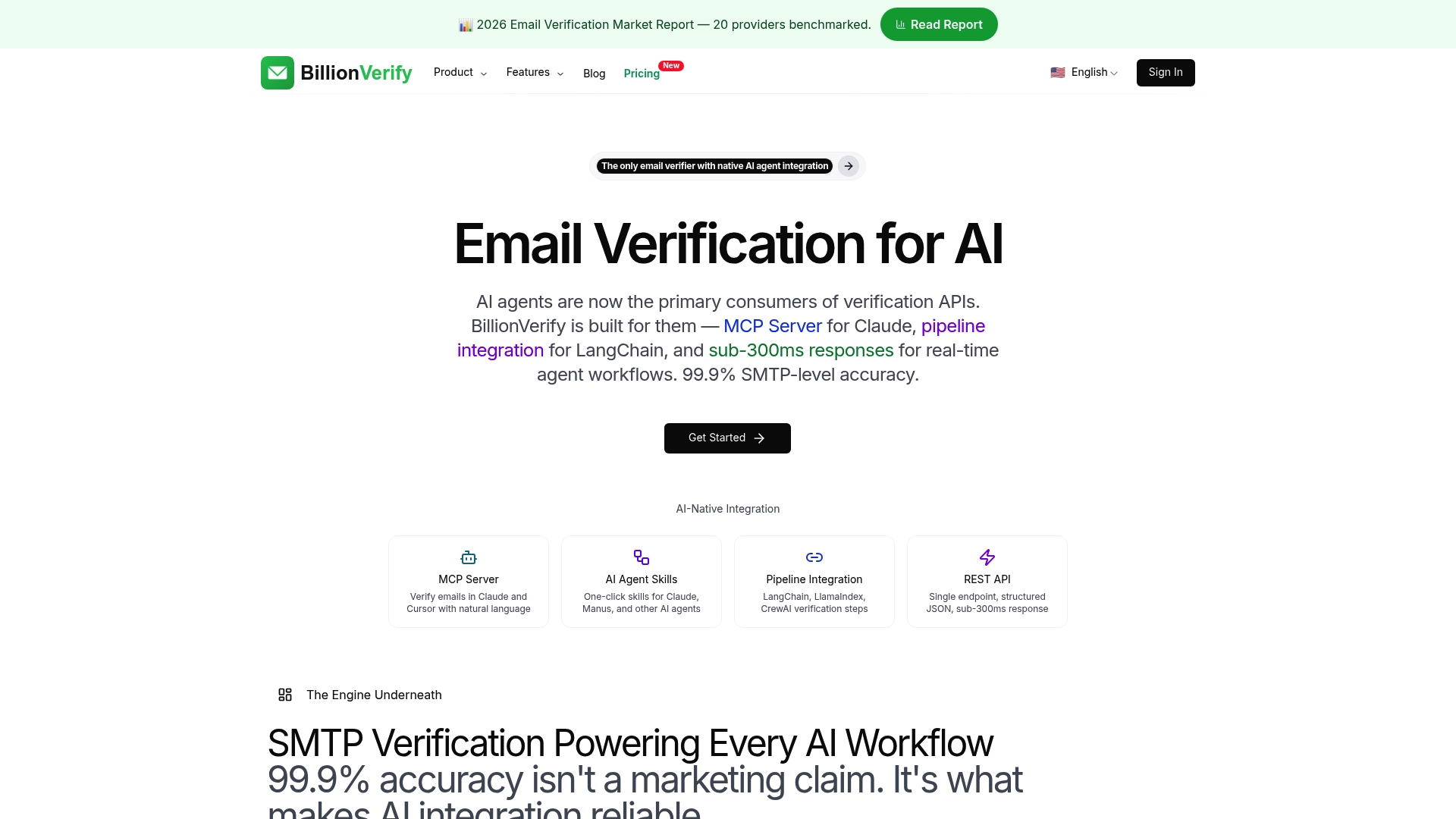
Integrate easily with major marketing platforms to maintain list hygiene automatically. Our multi-layer verification technology detects disposable emails, spam traps, role-based addresses, and catch-all domains with enterprise-grade accuracy. This precision prevents the deliverability mistakes that cost you revenue.
Use proven email list hygiene tips from BillionVerify to boost inbox placement and campaign ROI. Our platform processes millions of verifications monthly for e-commerce and SaaS companies. Get started today to protect your sender reputation and increase conversions with reliable email validation.
Frequently asked questions
Why is email list verification crucial for deliverability?
Email list verification removes invalid, disposable, and spam trap addresses that cause bounces and blacklisting. Clean lists maintain sender reputation and ensure your messages reach subscriber inboxes consistently. Verification reduces bounce rates by up to 30% while protecting your domain authority.
How often should I clean and verify my email list?
Verify all new subscribers immediately at the point of signup to prevent bad data entry. Run bulk verification on your entire list quarterly to catch addresses that have become invalid over time. Additional verification before major campaigns protects your sender reputation during high-volume sends.
What are the most effective ways to segment my audience?
Segment by purchase behavior, email engagement level, lifecycle stage, and product interest for maximum relevance. Combine demographic data with behavioral signals to create highly targeted groups. Use predictive segmentation based on AI analysis of historical patterns to identify high-value opportunities.
How can I prevent technical errors in email sending?
Configure SPF, DKIM, and DMARC authentication records properly and monitor them continuously. Test email rendering across multiple devices and clients before sending campaigns. Set up alerts to notify you immediately when authentication fails or bounce rates spike.
What is the optimal email send frequency to reduce unsubscribes?
Optimal frequency varies by audience and industry, but start conservatively and increase based on engagement data. Monitor unsubscribe rates and engagement metrics as you adjust cadence. Offer frequency preferences in your subscription center so subscribers can choose their preferred email volume.