



Holiday and seasonal campaigns drive a disproportionate share of annual revenue for most businesses. Getting these campaigns right can define your year's success. This comprehensive guide covers planning, execution, and optimization for every major seasonal opportunity.
The Power of Seasonal Email Marketing
Understanding why timing matters.
Seasonal Revenue Impact
The Numbers:
- Holiday season (Nov-Dec) drives 20-30% of annual retail revenue
- Black Friday/Cyber Monday alone can represent 10%+ of yearly sales
- Valentine's Day, Mother's Day, and other holidays drive significant spikes
Email's Role: Email remains the highest-converting channel for holiday promotions, outperforming social media and paid ads.
Why Seasonal Emails Work
Psychological Factors:
- Built-in urgency (holidays end)
- Cultural expectation of deals
- Gift-giving motivation
- Celebration mindset
Practical Factors:
- Clear deadlines
- Easy segmentation
- Proven templates
- Predictable patterns
The Seasonal Marketing Calendar
Major Opportunities:
| Month | Holiday/Event | Type |
|---|---|---|
| January | New Year, Sales | Fresh start, clearance |
| February | Valentine's Day | Gifting, romance |
| March | St. Patrick's Day | Fun, seasonal |
| April | Easter, Tax Day | Spring, financial |
| May | Mother's Day, Memorial Day | Gifting, summer start |
| June | Father's Day, Summer | Gifting, seasonal |
| July | Independence Day | Summer, patriotic |
| August | Back to School | Preparation |
| September | Labor Day, Fall | Transition |
| October | Halloween | Costume, candy, fun |
| November | Black Friday, Thanksgiving | Major sales |
| December | Christmas, Hanukkah, NYE | Peak gifting |
Planning Your Seasonal Calendar
Building a year-round strategy.
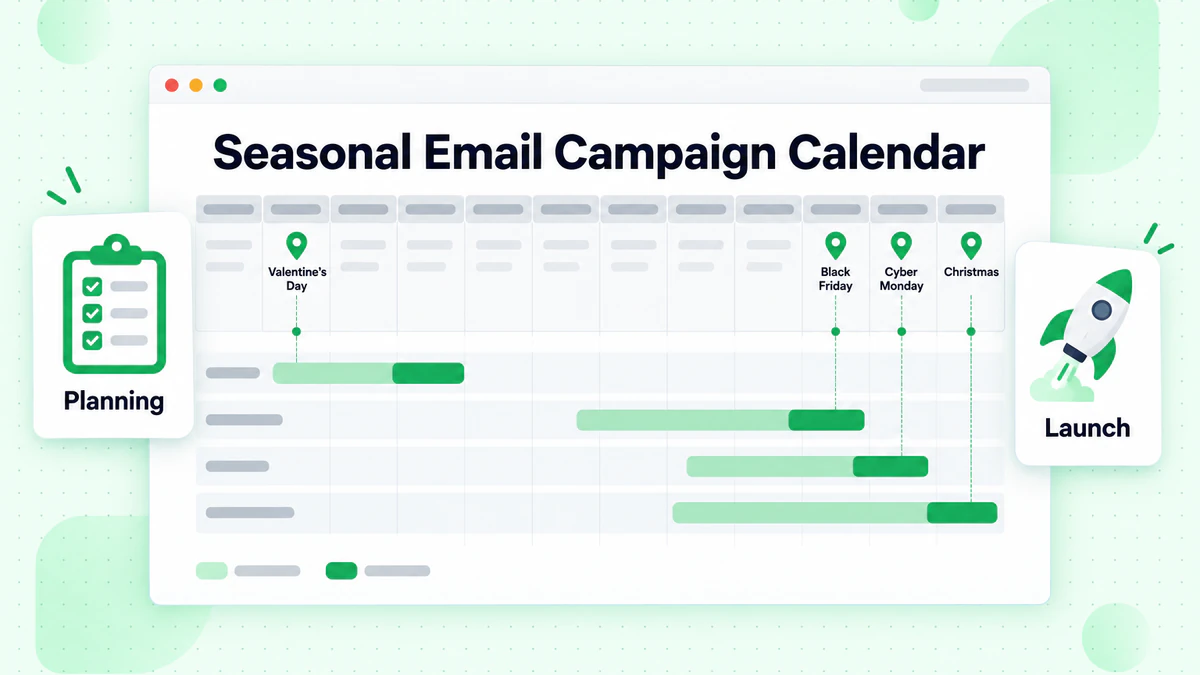
Annual Planning
When to Plan: Plan your entire year's seasonal campaigns in Q4 of the previous year.
What to Include:
- Which holidays to participate in
- Campaign goals for each
- Rough budget allocation
- Content needs
- Team responsibilities
Choosing Your Holidays
Consider:
Relevance to Your Business: Does this holiday connect to your products/services?
- Flower shop: Valentine's Day, Mother's Day ✓
- B2B Software: These may not apply ✗
Audience Fit: Does your audience celebrate/care?
- International audience: US-only holidays less relevant
- Religious holidays: Consider audience demographics
Competition Level: How crowded is the inbox?
- Black Friday: Extremely competitive
- Lesser holidays: Less competition
ROI Potential: Can you generate meaningful returns?
- Consider past performance
- Estimate effort vs. reward
Creating a Campaign Timeline
Reverse Planning: Start from the holiday and work backward.
Example: Black Friday Campaign:
Black Friday: November 29

T-8 weeks: Strategy and planning
T-6 weeks: Creative development
T-4 weeks: Email copy and design
T-3 weeks: Segment preparation
T-2 weeks: Testing and QA
T-1 week: Final setup and scheduling
T-3 days: Early access emails
T-1 day: Reminder emails
Day of: Main campaign + flash sales
Day after: Extended sale (Cyber Monday)
+1 week: Last chance, end of sale
Major Holiday Campaign Strategies
Detailed approaches for key holidays.
Black Friday / Cyber Monday
The Biggest Email Week of the Year
Campaign Structure:
Pre-Black Friday (2 weeks before):
- Teaser emails building anticipation
- Early access for VIPs
- Preview of deals
- Wishlist reminders
Black Friday Week:
- Monday: Week preview
- Wednesday: Last chance to prepare
- Thursday (Thanksgiving): Early bird deals
- Friday: Main event (multiple emails)
- Saturday-Sunday: Weekend deals
- Monday: Cyber Monday
Post-BFCM:
- Extended cyber week
- Last chance messaging
- Shipping deadline reminders
Best Practices:
- Start earlier each year (competition is fierce)
- Offer genuine discounts
- Clear subject lines with savings
- Multiple emails on peak days
- Segment by engagement and purchase history
- Have backup plans for technical issues
Subject Line Examples:
- "🖤 Black Friday: 50% Off Everything"
- "EARLY ACCESS: Your Black Friday deals are live"
- "⏰ 3 hours left: Don't miss 40% off"
- "Extended! Cyber Monday deals through Wednesday"
Christmas / Holiday Season
Gift-Giving Focus
Campaign Phases:
Early December (Week 1-2):
- Gift guides by recipient
- Gift finder tools
- Early shipping deadlines
Mid-December (Week 2-3):
- Urgency around shipping cutoffs
- "Guaranteed delivery by Christmas"
- Last-minute gift ideas
Late December (Week 4):
- Digital gift cards (last minute)
- Post-Christmas sales preview
- Year-end appreciation
Content Ideas:
- Gift guides: "Gifts for Dad," "Gifts Under $50"
- Stocking stuffers
- Experience gifts
- Self-gifting angles
- Corporate/client gifts
Key Dates to Highlight:
- Free shipping cutoff
- Standard shipping cutoff
- Express shipping cutoff
- Digital delivery only
Valentine's Day
Romance and Gifting
Timing:
- Start campaigns 2-3 weeks before
- Peak: Week of Valentine's Day
- Last minute: February 12-14
Segmentation:
- Gift buyers (for partners)
- Self-care (treat yourself)
- Galentine's (friend gifts)
- Anti-Valentine's (embrace it)
Campaign Ideas:
- Gift guides by relationship stage
- "Don't forget Valentine's Day" reminders
- Last-minute gifts and delivery
- Experience gifts
- Self-love promotions
Subject Lines:
- "💕 Valentine's gifts they'll actually love"
- "Forgot Valentine's Day? We've got you"
- "Skip flowers: Gift ideas that last"
Mother's Day / Father's Day
Thoughtful Gifting
Timing:
- Start 3-4 weeks before
- Intensify 1 week before
- Last-minute push
Campaign Approach:
- Emotional messaging
- Gift suggestions
- Personalization options
- Delivery reminders
Sensitivity Note: These holidays can be difficult for some. Consider:
- Option to opt out of Mother's/Father's Day emails
- Sensitive messaging acknowledging all situations
- Alternative framing (gratitude, celebration)
Opt-Out Example: "We understand these holidays can be hard. Click here to skip our Mother's Day emails."
Back to School
Preparation Season
Timing:
- July-August (varies by region)
- College students: Later August
- Teachers: Throughout August
Segments:
- Parents of K-12
- College students
- Teachers and educators
- Homeschool families
Campaign Ideas:
- Supply lists by grade
- Dorm essentials
- Teacher appreciation
- Organization tips
- Tech and gadgets
Halloween
Fun and Festive
Timing:
- October campaigns
- Peak: Week before Halloween
Approach:
- Playful, themed content
- Costume ideas
- Party supplies
- Candy and treats
- Spooky discounts
Creative Opportunities:
- Themed email designs
- Halloween-specific subject lines
- Mystery offers ("Trick or Treat")
- Costume/recipe content
Creating Seasonal Email Content
Crafting compelling holiday campaigns.
Subject Lines That Stand Out
Holiday Subject Line Formulas:
Urgency + Holiday:
- "Last chance for Christmas delivery"
- "Black Friday ends at midnight"
Discount + Holiday:
- "30% off—Our Valentine's gift to you"
- "Halloween Sale: Everything 25% off"
Gift Guide:
- "Gift ideas for the person who has everything"
- "What to get Mom this Mother's Day"
Emotional:
- "Make this Christmas memorable"
- "Thank you for an amazing year"
Emoji Usage: Emojis work well for holidays:
- 🎄 Christmas
- 💕 Valentine's
- 🎃 Halloween
- 🖤 Black Friday
- 🎁 Any gift-giving occasion
Holiday Email Design
Design Elements:
Seasonal Colors:
- Christmas: Red, green, gold
- Halloween: Orange, black, purple
- Valentine's: Pink, red, white
- Black Friday: Black, gold
- Summer: Bright, beach colors
Imagery:
- Holiday-specific photography
- Themed graphics
- Gift-wrapped products
- Seasonal backgrounds
Keep Brand Consistency: Adapt for the season while maintaining brand recognition.
Gift Guide Emails
Structure:
Subject: Gift Guide: Gifts for [Recipient]

Hero: [Lifestyle image of gift-giving]

Intro: Finding the perfect gift for [recipient]
       doesn't have to be hard.

Section 1: Under $25
[3-4 products with images and prices]

Section 2: $25-50
[3-4 products]

Section 3: $50-100
[3-4 products]

Section 4: Splurge-Worthy
[2-3 premium options]

CTA: Shop All [Recipient] Gifts
Countdown and Urgency
Countdown Elements:
- Days until holiday
- Hours left in sale
- Shipping deadline approaching
Implementation:
- Dynamic countdown timers
- Time-sensitive subject lines
- "X hours left" messaging
Example Sequence:
Day 1: "Sale starts now!"
Day 2: "Don't miss out"
Day 3: "48 hours left"
Day 4: "24 hours left"
Day 5: "Hours left—final reminder"
Day 5 (evening): "Last chance: Ends at midnight"
Seasonal Email Sequences
Multi-email campaign structures.
Pre-Holiday Teaser Sequence
Purpose: Build anticipation
Email 1 (2 weeks out):
- Hint at upcoming sale
- "Mark your calendar"
- Save the date
Email 2 (1 week out):
- Preview deals or themes
- VIP early access offer
- "Get on the list"
Email 3 (2-3 days out):
- Specific preview
- Countdown begins
- "Tomorrow!"
Holiday Sale Sequence
Purpose: Maximize sales during event
Email 1: Launch announcement Email 2: Highlight specific deals Email 3: Mid-sale reminder Email 4: Category focus Email 5: Best sellers Email 6: Last chance
Timing Considerations:
- Major holidays: Multiple emails per day acceptable
- Segment by engagement
- Non-openers get different timing
Post-Holiday Sequence
Purpose: Extend value, prepare for next
Immediate:
- Thank you messages
- Review requests
- Delivery updates
Week After:
- New Year clearance
- "Missed our sale?" extended offer
- Self-purchase messaging
Longer Term:
- Product education
- Loyalty building
- Prep for next holiday
Segmentation for Seasonal Campaigns
Targeting the right audiences.
Purchase History Segments
VIP/High Spenders:
- Early access to sales
- Exclusive offers
- Higher discount thresholds
- Personalized recommendations
Previous Holiday Buyers:
- "You bought X last year—here's what's new"
- Reminder based on past purchases
- Similar product suggestions
Non-Purchasers:
- Stronger incentives
- Different messaging angles
- Overcome objections
Engagement Segments
Highly Engaged:
- Can handle higher frequency
- Appreciate exclusive content
- Respond to subtle messaging
Moderately Engaged:
- Standard campaign cadence
- Clear value propositions
- Strong subject lines
Low Engagement:
- Reduce frequency
- Best-offer-only emails
- Win-back messaging
Behavioral Segments
Browser Not Buyer:
- Cart reminders
- Price drop alerts
- "Still interested?"
Gift Buyers:
- Gift guide emphasis
- Wrapping options
- Shipping deadlines
Self-Purchasers:
- "Treat yourself"
- Self-care angle
- Personal favorites
Deliverability During Peak Seasons
Ensuring emails arrive using proven deliverability strategies.
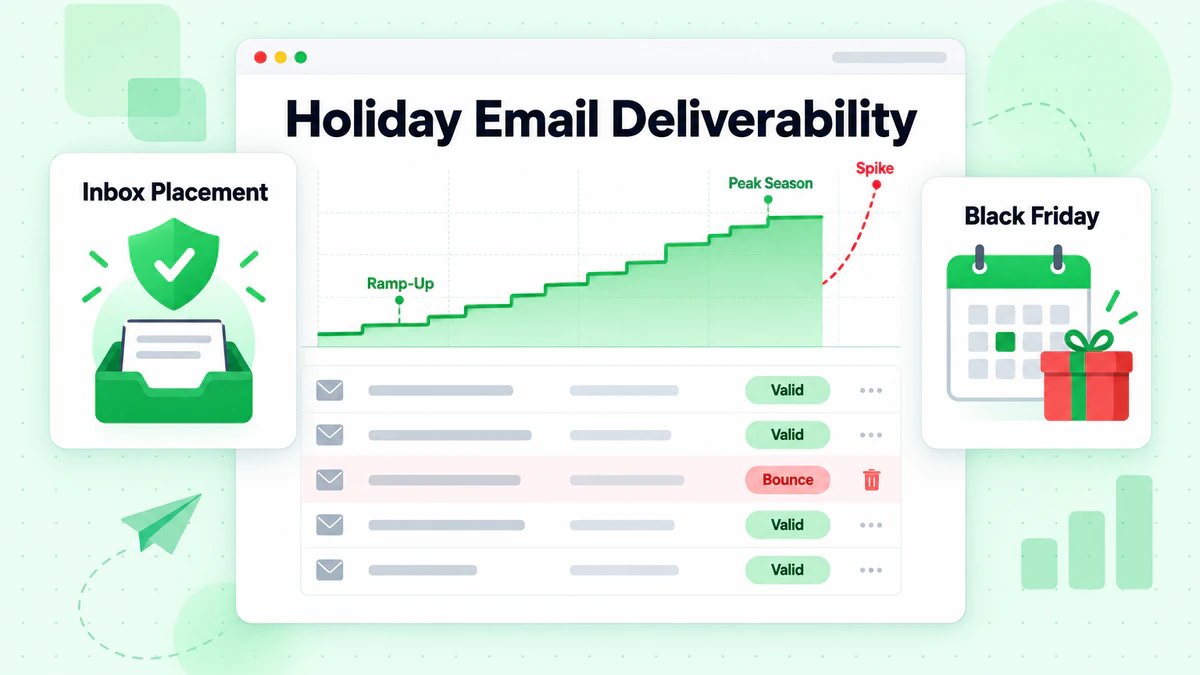
Volume Management
Gradual Ramp-Up: Don't suddenly send 5x your normal volume.
Pre-Season:
- Increase sends gradually
- Warm up 4-6 weeks before peak
- Establish new baseline
Peak Season:
- Monitor deliverability closely
- Watch complaint rates
- Quick response to issues
List Hygiene Before Holidays
Pre-Season Cleaning:
- Remove long-term non-openers
- Verify inactive addresses
- Suppress complainers
- Update preferences using segmentation best practices
Why It Matters: Holiday emails to bad addresses hurt deliverability for your entire list—right when it matters most. Following email list hygiene practices protects your sender reputation during critical campaign periods.
Monitoring During Campaigns
Watch For:
- Sudden open rate drops
- Increased bounce rates
- Spam complaint spikes
- Blocklist appearances
Quick Response:
- Pause campaigns if issues arise
- Segment to engaged users only
- Contact ESP if needed
Testing and Optimization
Improving seasonal performance.
What to Test
Subject Lines:
- Emoji vs. no emoji
- Discount in subject vs. not
- Urgency level
- Length
Send Times:
- Morning vs. afternoon vs. evening
- Weekday vs. weekend
- Multiple sends per day
Offers:
- Percentage off vs. dollar off
- Free shipping vs. discount
- Bundle vs. single item
Content:
- Long vs. short emails
- Product quantity
- Image style
Year-Over-Year Learning
Document Everything:
- What worked
- What failed
- Specific metrics
- Qualitative observations
Create a Holiday Playbook: Each year, update your playbook with:
- Best subject lines
- Optimal timing
- Winning segments
- Top-performing content
- Lessons learned
International Considerations
Global seasonal marketing.
Different Holidays, Different Dates
Examples:
- Chinese New Year (January/February)
- Diwali (October/November)
- Boxing Day (December 26, UK/Canada)
- Singles' Day (November 11, China)
Strategy:
- Know your audience geography
- Segment by region
- Localize content and timing
- Respect cultural sensitivities
Time Zone Management
Challenge: "Black Friday" starts at different times globally.
Solutions:
- Segment by time zone
- Stagger sends
- Use local times in content
- Extend sales periods
Common Seasonal Mistakes
Pitfalls to avoid.
Mistake 1: Starting Too Late
Problem: Competitors capture attention first. Fix: Plan earlier, start campaigns sooner.
Mistake 2: Over-Sending
Problem: Subscriber fatigue. Fix: Segment by engagement, vary content.
Mistake 3: Generic Messaging
Problem: Blend in with competitors. Fix: Unique angles, strong brand voice.
Mistake 4: Ignoring Mobile
Problem: Poor mobile experience. Fix: Mobile-first design, test thoroughly.
Mistake 5: Forgetting Post-Purchase
Problem: Missing retention opportunity. Fix: Post-purchase sequences, thank-you emails.
Mistake 6: No Contingency Plans
Problem: Technical issues during peak. Fix: Backup plans, team coverage, monitoring.
Mistake 7: Same Campaign Every Year
Problem: Subscribers know what's coming. Fix: Fresh approaches, new creative, different angles.
Seasonal Campaign Checklist
Planning Phase
- [ ] Annual calendar created
- [ ] Campaign goals set
- [ ] Budgets allocated
- [ ] Team assignments made
- [ ] Timeline established
Preparation Phase
- [ ] List cleaned and verified
- [ ] Segments prepared
- [ ] Creative developed
- [ ] Copy written and approved
- [ ] Technical setup complete
- [ ] Tests conducted
Execution Phase
- [ ] Emails scheduled
- [ ] Monitoring in place
- [ ] Team on standby
- [ ] Contingency plans ready
- [ ] Customer service prepared
Post-Campaign Phase
- [ ] Results analyzed
- [ ] Learnings documented
- [ ] Playbook updated
- [ ] Thank-you emails sent
- [ ] Next holiday planning begins
Data Quality for Seasonal Success
Why list health matters most during holidays.
The High-Stakes Environment
Holiday emails are your most valuable:
- Highest revenue potential
- Most competitive inbox
- Biggest opportunities
Invalid emails hurt most when stakes are highest:
- Wasted best offers
- Deliverability damage during critical period
- Missed revenue
Pre-Holiday Verification
Before Major Campaigns: Verify your list to ensure:
- Maximum deliverability
- Accurate metrics
- Every real subscriber reached
- No reputation damage
Timing: Verify 2-4 weeks before major holidays.
Conclusion
Seasonal and holiday email marketing offers predictable, high-value opportunities throughout the year. Success requires advance planning, thoughtful execution, and continuous optimization.
Key seasonal principles:
- Plan ahead: Start planning months in advance
- Know your calendar: Choose holidays that fit your business
- Segment strategically: Different audiences need different approaches
- Stand out creatively: Don't be just another holiday email
- Optimize deliverability: Clean lists before peak seasons
Holiday emails represent your biggest revenue opportunity—but only if they reach the inbox. Invalid addresses waste your best campaigns and hurt deliverability when it matters most. Use bulk email verification before major campaigns to ensure maximum reach.
Combine seasonal campaign strategies with email personalization and automation for even better results. Ready to ensure your holiday campaigns reach every valid subscriber? Start with BillionVerify to verify your list before your next seasonal campaign.