



Email marketing violations can result in significant financial penalties, reputational damage, and operational disruption. Understanding the consequences of non-compliance—through real enforcement cases—helps prioritize compliance efforts and avoid becoming the next cautionary tale. This guide examines actual penalty cases across major regulations, analyzes what went wrong, and provides practical guidance on avoiding similar fates.
Understanding Email Marketing Penalties
Before diving into cases, let's understand the penalty frameworks across major regulations.
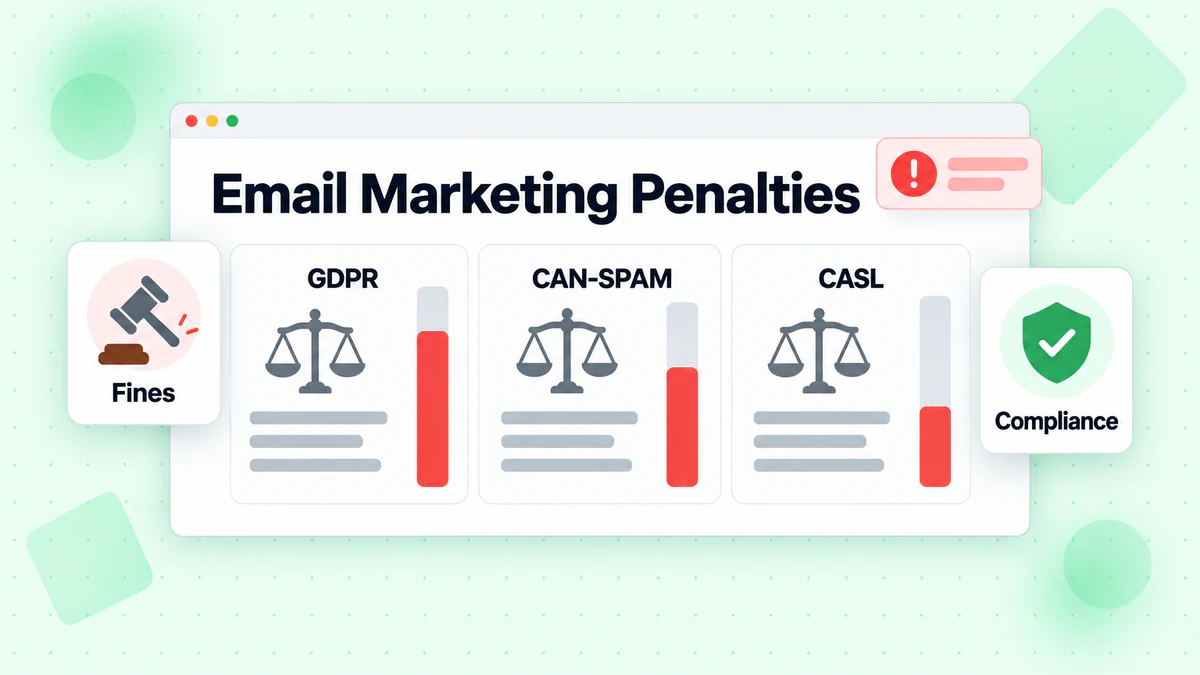
GDPR Penalty Structure
The General Data Protection Regulation has a two-tier penalty system:
Lower Tier (Up to €10 million or 2% of global annual turnover):
- Record-keeping failures
- Inadequate data protection measures
- Failure to notify breaches
- Processor violations
Higher Tier (Up to €20 million or 4% of global annual turnover):
- Consent violations
- Data subject rights violations
- Unlawful international transfers
- Non-compliance with supervisory authority orders
Factors Affecting Penalty Amount:
- Nature, gravity, and duration of infringement
- Intentional or negligent character
- Actions taken to mitigate damage
- Degree of responsibility
- Previous infringements
- Cooperation with authorities
- Categories of data affected
- How violation became known
- Technical and organizational measures in place
CAN-SPAM Penalties
The Controlling the Assault of Non-Solicited Pornography And Marketing Act provides:
Civil Penalties:
- Up to $51,744 per email violation
- Each separate email is a separate violation
- Aggravated penalties for certain practices
Criminal Penalties (for severe violations):
- Up to 5 years imprisonment
- For practices like harvesting, spoofing, or using botnets
Enforcement:
- FTC primary enforcement
- State Attorneys General can also bring actions
- ISPs can sue violators
CASL Penalties
Canada's Anti-Spam Legislation provides:
Administrative Monetary Penalties:
- Individuals: Up to $1 million CAD per violation
- Organizations: Up to $10 million CAD per violation
Personal Liability:
- Directors and officers can be personally liable
Private Right of Action:
- Individuals and organizations can sue (provisions delayed but may be activated)
CCPA Penalties
California Consumer Privacy Act provides:
Civil Penalties:
- Up to $2,500 per unintentional violation
- Up to $7,500 per intentional violation
Private Right of Action:
- For data breaches only
- $100-$750 per consumer per incident
- Or actual damages
Real GDPR Email Marketing Cases
These cases illustrate how GDPR is enforced for email marketing violations.
Case 1: Vodafone Spain (€8.15 million)
What Happened: Vodafone Spain sent marketing communications without proper consent and failed to honor opt-out requests.
Violations:
- Sending marketing to customers who hadn't consented
- Failing to process unsubscribe requests
- Continuing to contact customers after opt-out
- Inadequate consent documentation
Lessons:
- Consent must be documented and demonstrable
- Opt-out requests must be honored promptly
- Systems must ensure opted-out contacts aren't re-added
- Scale of violations multiplies penalties
Case 2: Sky Italia (€3.3 million)
What Happened: Sky Italia sent promotional emails and SMS without valid consent.
Violations:
- Marketing without consent
- Using data collected for other purposes for marketing
- Inadequate privacy notices
Lessons:
- Consent for one purpose doesn't extend to marketing
- Privacy notices must cover marketing specifically
- Purpose limitation applies strictly
Case 3: Ticketmaster UK (£1.25 million)
What Happened: Data breach affecting 9.4 million customers, including email addresses.
Violations:
- Inadequate security measures
- Failure to identify and address vulnerabilities
- Insufficient oversight of third-party suppliers
Lessons:
- Data protection includes security
- Third-party vendors are your responsibility
- Regular security assessments are essential
Case 4: Notebooksbilliger.de (€10.4 million)
What Happened: German electronics retailer unlawfully monitored employees and processed customer data improperly.
Violations:
- Excessive data processing
- Lack of proper legal basis
- Inadequate transparency
Lessons:
- Data minimization is required
- Every processing activity needs legal basis
- Transparency to data subjects is mandatory
Case 5: WhatsApp Ireland (€225 million)
What Happened: Facebook-owned WhatsApp failed to provide adequate transparency about data processing.
Violations:
- Insufficient transparency to users and non-users
- Inadequate privacy policy disclosures
- Unclear data sharing practices
Lessons:
- Privacy policies must be comprehensive
- Transparency applies to all data subjects
- Tech giants aren't immune to enforcement
Real CAN-SPAM Cases
These cases show how CAN-SPAM is enforced in the United States.
Case 1: Kristy Ross ($2 million)
What Happened: Mass spam campaign for mortgage refinancing.
Violations:
- Deceptive subject lines
- False header information
- Missing unsubscribe mechanism
- Missing physical address
Lessons:
- All CAN-SPAM requirements must be met
- Deceptive practices multiply penalties
- Individual defendants can face large judgments
Case 2: Orbit Electronics ($700,000)
What Happened: Spam campaign for electronic products.
Violations:
- Harvesting email addresses
- Deceptive routing information
- Deceptive subject lines
- No unsubscribe option
Lessons:
- Harvesting is specifically prohibited
- Multiple violations compound penalties
- Legitimate businesses aren't exempt
Case 3: Jumpstart Technologies ($900,000)
What Happened: Spam promoting college-related services.
Violations:
- Deceptive subject lines suggesting prior relationship
- Inadequate unsubscribe mechanism
- Continued emailing after opt-out
Lessons:
- "Re:" prefix when not a reply is deceptive
- Unsubscribe must be easy and functional
- Opt-out requests must be honored completely
Case 4: Michael Leavey ($695,000)
What Happened: Spam campaign for online pharmacy.
Violations:
- False header information
- Deceptive subject lines
- No physical address
- No unsubscribe
Lessons:
- Pharmaceutical spam draws attention
- Header falsification is taken seriously
- All required elements must be present
Real CASL Cases
These cases demonstrate Canada's strict enforcement.
Case 1: CompuFinder ($1.1 million)
What Happened: First major CASL enforcement action. CompuFinder sent commercial emails without consent.
Violations:
- Sending CEMs without consent
- Inadequate unsubscribe mechanism
- Continuing to send after unsubscribe
Lessons:
- CASL consent requirements are strict
- First violations are penalized significantly
- Unsubscribe must work properly
Case 2: Porter Airlines ($150,000)
What Happened: Porter Airlines sent promotional emails to customers without proper consent.
Violations:
- Relying on implied consent beyond expiration
- Inadequate consent documentation
- Sending after implied consent lapsed
Lessons:
- Implied consent expires—track it carefully
- Convert to express consent before expiration
- Even established companies face penalties
Case 3: Blackstone Learning ($640,000)
What Happened: Training company sent CEMs with misleading claims.
Violations:
- False or misleading representations
- Sending without proper consent
- Continuing after complaints
Lessons:
- Content must be truthful
- CASL covers deceptive practices
- Response to complaints matters
Case 4: Kellogg Canada ($60,000)
What Happened: Kellogg sent promotional emails without clear consent.
Violations:
- Unclear consent collection
- Bundled consent issues
- Inadequate documentation
Lessons:
- Even large brands face enforcement
- Consent must be clear and separate
- Documentation is essential
Analyzing What Goes Wrong
Across these cases, common themes emerge.
Consent Failures
Problem: Sending without proper consent or failing to document consent.
Causes:
- Purchased lists without verified consent
- Assuming prior relationship equals marketing consent
- Pre-checked opt-in boxes
- Bundled consent with terms of service
- Lost or inadequate consent records
Prevention:
- Use proper consent management processes
- Document consent comprehensively
- Don't rely on assumptions
- Implement double opt-in for stronger proof
Unsubscribe Failures
Problem: Not honoring opt-out requests or making unsubscribe difficult.
Causes:
- Slow processing (beyond 10 days)
- Technical failures
- Suppression lists not synced across systems
- Re-adding opted-out addresses from other sources
- Requiring login or excessive steps
Prevention:
- Automate unsubscribe processing
- Sync suppression lists in real-time
- Check suppression before every send
- Test unsubscribe regularly
Deceptive Practices
Problem: Misleading subject lines, sender information, or content.
Causes:
- Pressure for open rates leading to misleading subjects
- Using "Re:" when not a reply
- Unclear sender identification
- Promises in subject not delivered in content
Prevention:
- Train team on honest marketing
- Review subjects against content
- Accurate sender information
- Values-based marketing culture
Data Protection Failures
Problem: Inadequate security leading to breaches.
Causes:
- Weak access controls
- Third-party vulnerabilities
- Outdated systems
- Insufficient monitoring
Prevention:
- Implement email data protection measures
- Assess third-party security
- Regular security testing
- Incident response preparation
Documentation Failures
Problem: Unable to demonstrate compliance when challenged.
Causes:
- No consent records
- Missing processing records
- Undocumented policies
- Lost historical data
Prevention:
- Record consent details at collection
- Maintain processing records
- Document policies and procedures
- Backup compliance records
Calculating Your Risk
Understanding your potential exposure helps prioritize compliance.
GDPR Risk Assessment
Factors to Consider:
- Number of EU subscribers
- Types of data processed
- Processing purposes
- Current consent practices
- Security measures
- Third-party processors
Potential Exposure: If processing EU subscriber data without proper consent, consider:
- Number of affected individuals
- Duration of non-compliance
- Nature of violations
- Previous compliance history
CAN-SPAM Risk Assessment
Calculation:
- Emails sent × $51,744 maximum per violation
- Even small campaigns can mean millions in exposure
Example: 10,000 non-compliant emails × $51,744 = $517 million potential exposure
While maximum penalties aren't always assessed, the math demonstrates why compliance matters.
CASL Risk Assessment
Calculation:
- Each message can trigger up to $10 million penalty
- Volume × likelihood × penalty range
Example: Even a single campaign to 1,000 Canadian recipients without consent creates significant risk.
How to Avoid Penalties
Based on enforcement patterns, these practices reduce risk.
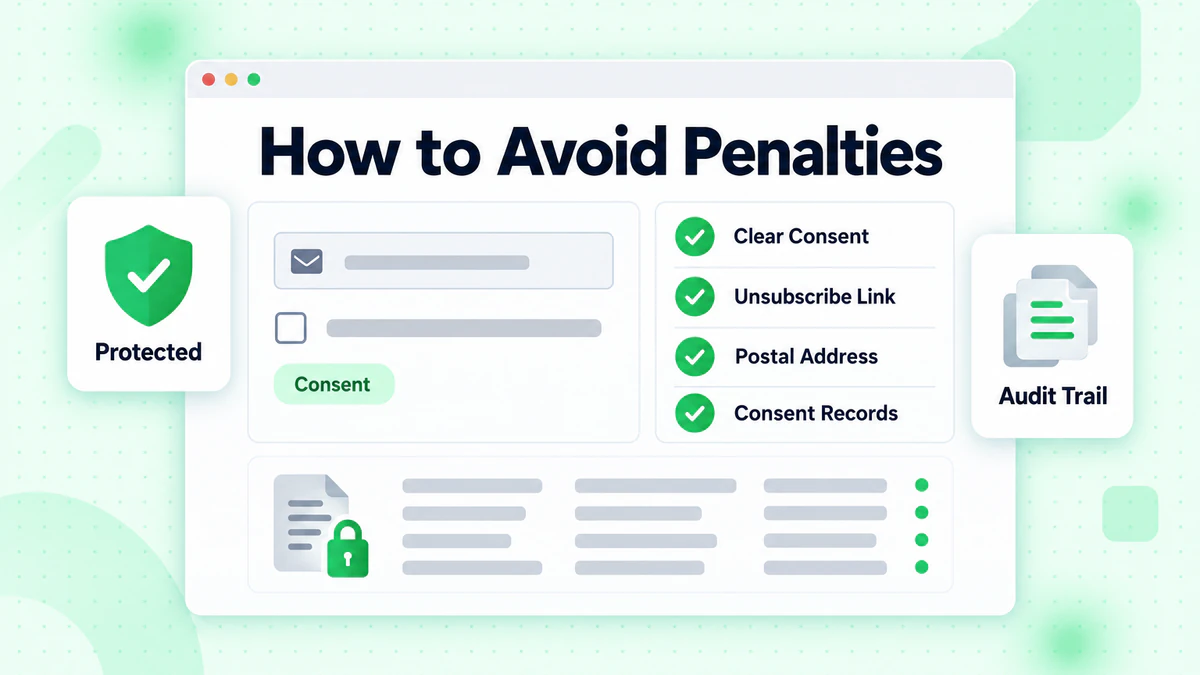
Build Compliant Consent Processes
Implement:
- Clear, specific consent language
- Unchecked consent boxes
- Separate marketing consent
- Comprehensive consent records
- Double opt-in verification
Resources:
Honor Opt-Outs Immediately
Implement:
- Automated unsubscribe processing
- Real-time suppression list sync
- Pre-send suppression checks
- Regular testing of opt-out flow
Maintain Honest Practices
Implement:
- Subject line/content alignment
- Accurate sender identification
- Truthful marketing claims
- Required footer elements
Protect Data Properly
Implement:
- Encryption for subscriber data
- Access controls and monitoring
- Vendor security assessment
- Incident response preparation
Document Everything
Implement:
- Consent records
- Processing records
- Policy documentation
- Training records
- Audit trails
Verify Email Lists
Implement: Email verification to maintain list quality:
- Verify at signup
- Regular bulk verification
- Remove invalid addresses
- Block disposable emails
Quality lists from BillionVerify support compliance by ensuring you're contacting valid, real subscribers.
What to Do If Investigated
If you face regulatory inquiry:
Immediate Steps
- Don't panic: Investigations aren't automatic penalties
- Preserve evidence: Don't delete relevant records
- Engage legal counsel: Get specialized advice
- Assess the situation: Understand what's being investigated
- Cooperate appropriately: Work with authorities within legal guidance
During Investigation
Demonstrate Good Faith:
- Show compliance efforts
- Provide requested documentation
- Cooperate with reasonable requests
- Implement improvements promptly
Mitigating Factors:
- Voluntary compliance efforts
- Cooperation with investigation
- Remediation actions taken
- Systems for preventing recurrence
After Resolution
Learn and Improve:
- Address identified issues
- Strengthen processes
- Update training
- Document changes
The Business Case for Compliance
Avoiding penalties is just one benefit of compliance.
Beyond Fines
Reputational Damage:
- Public enforcement actions
- Media coverage
- Customer trust erosion
- Partner concerns
Operational Disruption:
- Investigation time and resources
- System changes
- Process overhauls
- Staff distraction
Business Impact:
- Customer churn
- Partner terminations
- Market access limitations
- Investor concerns
Positive Returns
Compliant email marketing delivers:
- Higher engagement from consented subscribers
- Better deliverability from quality practices
- Stronger customer relationships
- Sustainable marketing programs
- Competitive advantage
Conclusion
Email marketing penalties are real, significant, and increasing. The cases examined show that regulators actively enforce email marketing laws against organizations of all sizes. The patterns are clear: consent failures, unsubscribe violations, deceptive practices, and data protection lapses all trigger enforcement.
Key Takeaways:
Penalties Are Substantial: GDPR fines reach millions of euros. CAN-SPAM can mean thousands per email. CASL penalties hit $10 million.
No One Is Immune: Large corporations, small businesses, and individuals all face enforcement.
Common Failures Repeat: Consent, unsubscribe, and deception issues appear across most cases.
Prevention Is Cheaper: Compliance costs far less than penalties plus remediation plus reputation damage.
Documentation Matters: Being able to demonstrate compliance can reduce or avoid penalties.
Quality Lists Help: Using email verification ensures you're contacting legitimate, consented subscribers.
The best protection against penalties is building compliant practices from the start. Invest in proper consent management, honor opt-outs immediately, practice honest marketing, protect data appropriately, and document your efforts. These practices not only avoid penalties but build more effective email marketing programs.
For comprehensive compliance guidance, see our email compliance guide. Ensure your subscriber lists contain valid addresses with BillionVerify's email verification service.