



Email newsletters are experiencing a renaissance. In an era of algorithm-driven feeds and declining organic reach, newsletters offer direct access to engaged audiences. This guide covers everything from building your first newsletter to growing it into a sustainable media property.
Why Newsletters Matter Now
Understanding the newsletter opportunity.
The Newsletter Renaissance
Why Now:
- Social media algorithms limit organic reach
- Audiences want curated, quality content
- Subscription economy mindset
- Newsletter success stories inspire creators
- Low barrier to entry, high potential
Newsletter Advantages:
- Direct relationship with readers
- No algorithm controlling distribution
- Portable audience (you own the list)
- Monetization flexibility
- Building authority in your space
Newsletter Business Models
Free + Advertising:
- Free content, revenue from sponsors
- Requires large audience for significant revenue
- Common model for media newsletters
Freemium:
- Free tier with limited content
- Premium tier with full access
- Balances growth with revenue
Paid Only:
- All content behind paywall
- Higher revenue per subscriber
- Slower growth, stronger commitment
Newsletter as Marketing:
- Newsletter supports core business
- Revenue from products/services, not newsletter directly
- Most common for businesses
Successful Newsletter Examples
Media/Content Newsletters:
- Morning Brew: Business news, entertaining format
- The Hustle: Tech/startup news, casual voice
- Stratechery: Deep tech analysis, premium subscription
Creator Newsletters:
- Individual experts building audiences
- Personal voice and perspective
- Often combined with other products
Business Newsletters:
- Companies providing value to audiences
- Soft sell approach to customer acquisition
- Thought leadership positioning
Defining Your Newsletter
Strategy foundations before launch.
Finding Your Niche
Questions to Answer:
- What unique perspective can you offer?
- What audience are you serving?
- What problem are you solving?
- How is this different from existing newsletters?
Niche Sweet Spot:
- Narrow enough to be specific
- Broad enough for sustainable content
- Something you can consistently produce
- Audience willing to subscribe
Examples:
- ❌ Too broad: "Business tips"
- ❌ Too narrow: "Marketing for left-handed dentists in Texas"
- ✅ Right size: "Growth strategies for SaaS startups"
Value Proposition
What readers get: Clearly articulate why someone should subscribe.
Value Proposition Formula: "[Newsletter Name] helps [audience] achieve [outcome] by [method]."
Example: "Growth Weekly helps SaaS founders grow faster by sharing one actionable growth tactic every Thursday."
Defining Your Voice
Voice Elements:
- Tone: Casual, professional, humorous, serious
- Perspective: Expert, peer, curious learner
- Format: Curated, original, mixed
- Length: Quick read, deep dive, comprehensive
Consistency Matters: Your voice should be recognizable. Readers should know it's you.
Newsletter Name and Branding
Naming Considerations:
- Memorable and easy to spell
- Reflects content or audience
- Available as domain/social handles
- Works well in email "From" field
Branding Elements:
- Logo/header design
- Color palette
- Typography style
- Consistent template
Newsletter Content Strategy
Creating content readers love.
Content Pillars
Define 3-5 Content Pillars: Core topics you'll consistently cover.
Example for Marketing Newsletter:
- Growth tactics and strategies
- Tool reviews and comparisons
- Case studies and breakdowns
- Industry news and trends
- Career/personal development
Content Formats
News Roundups: Curated selection of relevant news with commentary.
Original Essays: Deep-dive analysis or opinion pieces.
Interviews/Profiles: Q&As or features on interesting people.
How-To Guides: Tactical, actionable content.
Lists and Roundups: "5 ways to..." or "The best tools for..."
Case Studies: Detailed breakdowns of real examples.
Content Mix
Finding Balance:
- Mix formats to keep things fresh
- Maintain consistent value
- Balance curation with original content
Sample Mix:
- 40% Original analysis/essays
- 30% Curated news with commentary
- 20% Tactical how-to content
- 10% Community/Q&A features
Editorial Calendar
Planning Content:
- Map out content 2-4 weeks ahead
- Tie to relevant events/seasons
- Leave room for timely topics
- Maintain consistent themes
Calendar Elements:
- Publication dates
- Content topics/themes
- Content format
- Guest contributors (if applicable)
- Promotion plans
Newsletter Structure and Format
Designing effective newsletter issues.
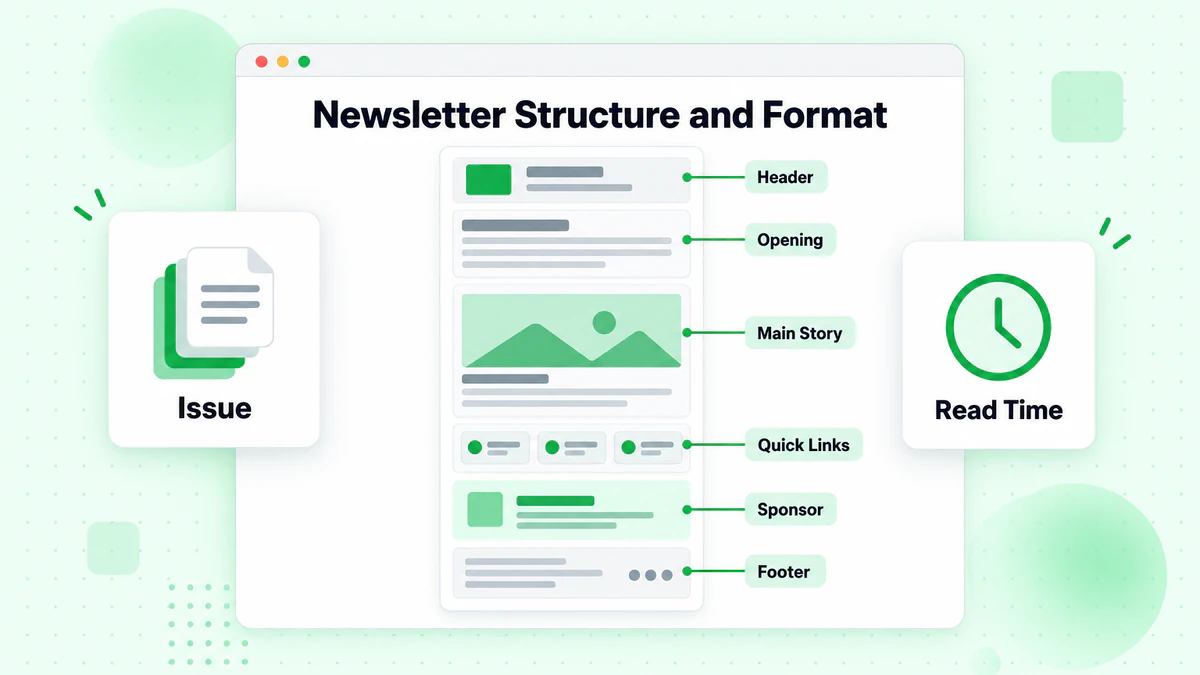
Newsletter Anatomy
Standard Structure:
- Header: Logo, issue number, date
- Opening: Hook or introduction
- Main Content: Primary value
- Secondary Sections: Additional content
- Footer: About, unsubscribe, social links
Opening Section
The Hook: First few lines determine whether people keep reading.
Effective Openings:
- Compelling question
- Surprising statistic
- Personal anecdote
- Timely observation
- Bold statement
Example:
Last week, I made a $50,000 mistake.

And it taught me something I wish I'd learned
years ago about hiring.

Here's what happened...
Main Content
Single Topic vs. Multiple Sections:
Single Topic (Deep Dive):
- One comprehensive piece
- 1,000-2,000+ words
- Detailed analysis
- Best for thought leadership
Multiple Sections (Digest):
- Several shorter items
- 200-500 words each
- Variety of topics
- Best for news/curation
Hybrid Approach:
- One main piece (500-1,000 words)
- 2-3 shorter supporting sections
- Balance of depth and variety
Section Design
Make Sections Scannable:
- Clear headings
- Short paragraphs
- Bullet points
- Bold key phrases
- Visual breaks
Visual Elements:
- Dividers between sections
- Consistent formatting
- Images when helpful
- Not too image-heavy
Length Considerations
Optimal Length Depends On:
- Content type (news vs. analysis)
- Audience expectations
- Frequency (daily should be shorter)
- Your voice and style
General Guidelines:
- Daily: 300-500 words
- 2-3x per week: 500-1,000 words
- Weekly: 1,000-2,000 words
- Monthly: Can go longer
Test and Learn: Try different lengths and monitor engagement.
Growing Your Newsletter
Strategies for subscriber acquisition.
Launch Strategy
Pre-Launch:
- Build landing page with value proposition
- Collect early subscribers (beta list)
- Create 2-3 issues before launch
- Build anticipation on social
Launch Day:
- Send first issue to early subscribers
- Announce on all channels
- Ask for shares and referrals
- Leverage personal network
Post-Launch:
- Consistent publishing schedule
- Continuous promotion
- Iterate based on feedback
- Focus on retention first
Organic Growth Tactics
Content-Based Growth:
- SEO-optimized landing page
- Archive issues publicly
- Create shareable content
- Guest posts referencing newsletter
Social Media Growth:
- Share excerpts on social
- Engage in relevant communities
- Build personal brand
- Twitter threads that drive signups
Cross-Promotion:
- Partner with similar newsletters
- Swap recommendations
- Guest appearances in other newsletters
- Collaborative content
Referral Programs:
- Reward readers for referrals
- Offer exclusive content/perks
- Make sharing easy
- Create referral milestones
Paid Growth
Newsletter Advertising:
- Sponsor similar newsletters
- Newsletter discovery platforms
- Targeted based on audience match
Social Media Ads:
- Facebook/Instagram ads
- Twitter ads
- LinkedIn ads (for B2B)
- Landing page focused
Content Marketing:
- Paid distribution of content
- Boosted posts
- Sponsored content
Growth Metrics
Key Metrics to Track:
- Subscriber count: Total active subscribers
- Growth rate: New subscribers per week/month
- Acquisition source: Where subscribers come from
- Cost per subscriber: For paid channels
Healthy Growth Benchmarks:
- 5-10% monthly growth: Good
- 10-20% monthly growth: Great
- 20%+ monthly growth: Exceptional
For deeper insights, check our email analytics and reporting guide.
Newsletter Engagement
Keeping readers engaged.
Open Rate Optimization
Subject Line Best Practices:
- Be specific about content
- Create curiosity
- Use numbers when relevant
- Consistent format builds expectation
- A/B test regularly
Learn advanced techniques in our email subject lines guide and email AB testing guide.
Subject Line Formulas:
- "[Topic]: [Insight]"
- "How [person/company] [achieved result]"
- "[Number] [things] about [topic]"
- "The [adjective] guide to [topic]"
Preheader Text:
- Extend the subject line
- Add context or tease content
- Don't repeat subject line
- Include key information
Click Rate Optimization
Drive Clicks By:
- Clear, compelling CTAs
- Relevant links within content
- "Read more" for expanded content
- Value behind the click
Internal vs. External Links:
- Archive links keep readers in your ecosystem
- External links curate value
- Balance both appropriately
Reader Engagement Tactics
Encourage Replies:
- Ask questions
- Request feedback
- Respond to replies personally
- Build relationships
Interactive Elements:
- Polls and surveys
- Q&A sections
- Reader submissions
- Community features
Consistent Value:
- Never send just to send
- Every issue should deliver value
- Quality over quantity always
Reducing Unsubscribes
Why Readers Leave:
- Content not relevant
- Too many emails
- Quality declined
- Inbox management
Retention Strategies:
- Consistent quality
- Clear expectations at signup
- Preference center (frequency options)
- Re-engagement before they leave
Engagement Benchmarks
| Metric | Average | Good | Excellent |
|---|---|---|---|
| Open Rate | 30-40% | 40-50% | 50%+ |
| Click Rate | 2-5% | 5-10% | 10%+ |
| Unsubscribe Rate | 0.5-1% | <0.5% | <0.2% |
| Reply Rate | 0.1% | 0.5% | 1%+ |
Newsletter Monetization
Turning your newsletter into revenue.
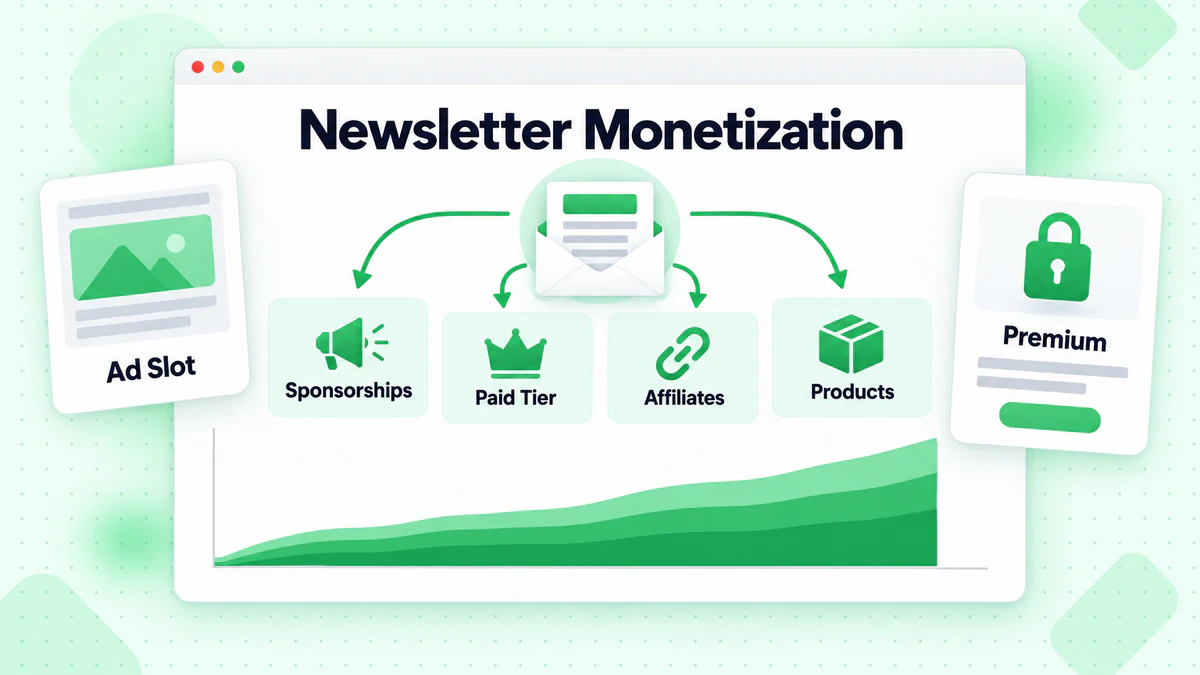
Sponsorships and Advertising
Sponsor Types:
- Dedicated sponsor (one per issue)
- Multiple sponsors (display style)
- Native content sponsors
- Classified ads section
Pricing Models:
- CPM (cost per thousand): $20-100+ depending on niche
- Flat fee per issue: Based on subscriber count
- Performance-based: Rare for newsletters
Finding Sponsors:
- Direct outreach to relevant brands
- Sponsor marketplaces (Swapstack, etc.)
- Inbound from brands
- Media kit and rate card
Sponsor Best Practices:
- Only relevant sponsors
- Clear sponsor labeling
- Maintain editorial integrity
- Limit sponsor quantity
Premium/Paid Subscriptions
Freemium Model:
Free Tier:
- Weekly edition
- Basic content
- Community access

Premium ($X/month):
- Daily deep dives
- Exclusive analysis
- Archive access
- Q&A access
- No sponsor ads
Pricing Considerations:
- $5-15/month for most newsletters
- Annual discount (20-40% off)
- Consider audience willingness to pay
- Test different price points
Free vs. Paid Content:
- Enough free to demonstrate value
- Enough paid to justify subscription
- Clear differentiation
Affiliate and Referral Revenue
Affiliate Marketing:
- Recommend products you genuinely use
- Disclose affiliate relationships
- Don't compromise recommendations for commission
- Choose relevant products
Affiliate Examples:
- Software tools (SaaS referrals)
- Books (Amazon associates)
- Courses and education
- Services and platforms
Products and Services
Information Products:
- Ebooks and guides
- Online courses
- Templates and resources
- Research reports
Services:
- Consulting
- Speaking
- Coaching
- Done-for-you services
Physical Products:
- Merchandise
- Books
- Physical tools
Monetization Timeline
Phase 1 (0-1,000 subscribers):
- Focus on growth and engagement
- No monetization pressure
- Build relationship with readers
- Test content formats
Phase 2 (1,000-10,000 subscribers):
- Begin sponsor outreach
- Test affiliate partnerships
- Consider premium tier
- Build monetization infrastructure
Phase 3 (10,000+ subscribers):
- Scale sponsorship program
- Launch premium subscription
- Create information products
- Diversify revenue streams
Newsletter Operations
Running your newsletter efficiently.
Publishing Workflow
Typical Workflow:
- Research/Ideation: Gather topics and ideas
- Outline: Structure the issue
- Write: Create content
- Edit: Review and refine
- Design: Format in email platform
- Test: Send test email, check links
- Schedule/Send: Publish
- Analyze: Review performance
Time Investment:
- Simple curated newsletter: 2-4 hours per issue
- Original content newsletter: 4-8+ hours per issue
- Daily newsletter: Streamlined process essential
Tools and Platforms
Email Service Providers:
- Substack: Free, built-in monetization
- ConvertKit: Creator-focused, powerful automation
- Mailchimp: Versatile, good free tier
- Beehiiv: Growing platform, good analytics
- Ghost: Self-hosted option, membership features
Supporting Tools:
- Writing: Google Docs, Notion, Hemingway
- Design: Canva, Figma
- Analytics: Platform analytics + Google Analytics
- Research: Feedly, Twitter lists, Google Alerts
Automation Opportunities
What to Automate:
- Welcome sequence for new subscribers
- Social media post scheduling
- Analytics reporting
- Subscriber tagging/segmentation
What Not to Automate:
- Core content creation
- Reader relationship building
- Editorial decisions
- Community engagement
Outsourcing Considerations
Tasks to Consider Outsourcing:
- Research and link gathering
- Editing and proofreading
- Design and formatting
- Social media promotion
- Analytics reporting
Keep In-House:
- Voice and editorial direction
- Key relationships
- Strategy decisions
- Unique insights
Newsletter Quality and Consistency
Maintaining excellence over time.
Quality Standards
Every Issue Should:
- Deliver on your value proposition
- Provide actionable value
- Be well-edited and error-free
- Respect reader's time
- Maintain your voice
Quality Checklist:
- [ ] Does this provide value?
- [ ] Is it well-written and edited?
- [ ] Are all links working?
- [ ] Does it match our brand?
- [ ] Would I forward this to a friend?
Consistency Beats Perfection
The Consistency Imperative:
- Readers expect regular delivery
- Consistency builds habit
- Missing issues damages trust
- Better to be consistent than perfect
Maintaining Schedule:
- Build buffer content
- Have backup plans
- Communicate if you'll miss
- Prioritize ruthlessly
Avoiding Burnout
Burnout Signs:
- Dreading writing
- Quality declining
- Missing deadlines
- Lost enthusiasm
Prevention Strategies:
- Realistic frequency commitment
- Content batching
- Guest content when needed
- Scheduled breaks (announced in advance)
Iteration and Improvement
Regular Review:
- Monthly: Review metrics and feedback
- Quarterly: Assess strategy and direction
- Annually: Major evaluation and planning
What to Iterate:
- Content formats and topics
- Design and structure
- Frequency and timing
- Monetization approaches
Advanced Newsletter Strategies
Taking your newsletter to the next level.
Segmentation
Segment By:
- Content interests
- Engagement level
- Subscriber source
- Purchase history
- Geographic location
Segmented Content:
- Personalized recommendations
- Interest-based content tracks
- Re-engagement for inactive
Multi-Format Content
Repurposing Newsletter Content:
- Twitter threads from key insights
- LinkedIn posts from sections
- Blog posts from deep dives
- Podcast episode topics
- Video content scripts
Cross-Channel Strategy:
- Newsletter as content hub
- Social drives new subscribers
- Podcast builds deeper connection
- All channels reinforce each other
Community Building
Community Elements:
- Reader discussions
- Private community (Discord, Slack)
- Events (virtual or in-person)
- Reader spotlights and contributions
Community Benefits:
- Deeper reader relationships
- Content ideas and feedback
- Word-of-mouth growth
- Premium tier value-add
Building a Media Company
Newsletter to Media Company:
- Multiple newsletter products
- Podcast network
- Events business
- Job board or marketplace
- Agency or services arm
Scaling Considerations:
- Team building
- Editorial standards
- Brand consistency
- Revenue diversification
Newsletter Metrics Dashboard
Key metrics to track regularly.
Growth Metrics
- Total subscribers
- Net subscriber growth (new minus unsubscribes)
- Growth rate (% change)
- Subscriber acquisition by source
- Cost per subscriber (paid channels)
Engagement Metrics
- Open rate (by issue and rolling average)
- Click rate
- Reply rate
- Forward/share rate
- Time spent reading (if trackable)
Monetization Metrics
- Revenue per issue
- Revenue per subscriber
- Sponsor retention rate
- Premium conversion rate
- Customer lifetime value
Health Metrics
- Unsubscribe rate
- Spam complaint rate
- Bounce rate
- List growth vs. list decay
Common Newsletter Mistakes
Avoid these pitfalls.
Mistake 1: Inconsistent Publishing
Problem: Irregular schedule confuses readers. Fix: Set realistic frequency and stick to it.
Mistake 2: No Clear Value Proposition
Problem: Readers don't know why to subscribe. Fix: Articulate specific value in signup and every issue.
Mistake 3: Too Promotional
Problem: Every email is selling something. Fix: Prioritize value. Sales should be secondary.
Mistake 4: Ignoring Reader Feedback
Problem: Not listening to what readers want. Fix: Actively solicit and respond to feedback.
Mistake 5: Neglecting List Hygiene
Problem: Invalid emails, low engagement dragging metrics. Fix: Regular verification using bulk email verification and engagement-based cleaning with proper email list hygiene practices.
Mistake 6: No Personality
Problem: Generic content that could be from anyone. Fix: Inject your unique voice and perspective.
Newsletter Launch Checklist
Before you launch.
Foundation
- [ ] Clear niche and value proposition
- [ ] Newsletter name and branding
- [ ] Email platform selected
- [ ] Landing page created
- [ ] Welcome email written
Content
- [ ] First 3 issues drafted
- [ ] Content pillars defined
- [ ] Editorial calendar planned
- [ ] Content templates created
Technical
- [ ] Email deliverability configured (SPF, DKIM)
- [ ] Links and tracking working
- [ ] Mobile design tested
- [ ] Unsubscribe process working
Growth
- [ ] Launch promotion plan
- [ ] Initial subscriber target
- [ ] Social media announcements scheduled
- [ ] Personal network outreach planned
Data Quality for Newsletters
Invalid subscribers hurt newsletter performance.
Newsletter Impact
Deliverability: Invalid emails cause bounces that damage sender reputation, affecting delivery to valid subscribers. Understand email deliverability and reduce bounce rates.
Metrics Accuracy: Invalid emails distort open rates and engagement metrics, making it harder to assess true performance.
Cost: Most platforms charge by subscriber count. Don't pay for invalid addresses.
Engagement: Clean lists have higher engagement rates, better sponsor value, and more accurate analytics.
Verification Strategy
At Signup: Real-time verification catches typos and invalid addresses immediately using email verification.
Regular Cleaning: Quarterly verification of full list removes addresses that have become invalid. Implement email list cleaning as a regular practice.
Engagement-Based Cleaning: Remove subscribers who haven't engaged in 6-12 months after re-engagement attempts. Maintain email list hygiene for optimal deliverability.
Conclusion
Building a successful newsletter takes time, consistency, and genuine value creation. But for those who commit, newsletters offer a direct relationship with an engaged audience—an increasingly rare and valuable asset.
Key principles for newsletter success:
- Value first: Every issue must earn the reader's attention
- Consistency always: Predictable schedule builds habits
- Voice matters: Be distinctively you
- Grow sustainably: Quality subscribers over vanity metrics
- Monetize thoughtfully: Don't compromise reader trust
Your newsletter's foundation is a healthy subscriber list. Invalid emails mean poor deliverability, skewed metrics, and wasted resources.
Ready to ensure your newsletter reaches real subscribers? Start with BillionVerify to verify emails at signup and maintain a clean, engaged list.