



Every email marketing manager knows the frustration of messages landing in spam or being ignored by subscribers. For mid-sized SaaS teams, keeping lists both clean and confidential is key to better engagement and deliverability. A well-organized email list makes it easier to reach your true audience and avoid sender reputation pitfalls. This guide offers practical steps to help you audit, verify, segment, and maintain contact lists for consistent, high-impact campaign results.
Quick Summary
| Key Point | Explanation |
|---|---|
| 1. Audit and Organize Your Email Lists | Conduct regular audits to remove duplicates, verify validity, and segment contacts effectively. |
| 2. Integrate Email Verification Tools | Use automation to constantly validate email addresses, enhancing list quality and sender reputation. |
| 3. Segment Your Contact Database | Create meaningful segments based on demographics and engagement to improve targeted communication efforts. |
| 4. Remove Invalid and High-Risk Emails | Eliminate harmful email addresses to protect your sender reputation and improve campaign effectiveness. |
| 5. Monitor Performance Regularly | Track key metrics like delivery rates and engagement to ensure ongoing list health and adapt strategies accordingly. |
Step 1: Audit and Organize Your Existing Email Lists
Conducting a comprehensive email list audit is critical for maintaining high deliverability and engagement rates. Your goal is to systematically review, clean, and organize your email database to ensure maximum effectiveness.
Start by performing a detailed contact list management assessment. This process involves multiple key steps:
- Export your entire current email list
- Remove duplicate email addresses
- Verify email address validity
- Segment contacts by engagement levels
- Flag and remove consistently inactive subscribers
To streamline your audit, use a structured approach. Sort your contacts into clear categories like active subscribers, low engagement contacts, and potential removal candidates. Pay special attention to email addresses that have bounced multiple times or shown zero interaction in the past six months.
Here's a quick summary of common email list categories and their business impact:
| List Category | Typical Characteristics | Business Impact |
|---|---|---|
| Active Subscribers | Frequently engage and click | Higher deliverability rates |
| Low Engagement Contacts | Rarely open or interact | Can lower sender reputation |
| Potential Removal | No interaction for months | Risk of high bounce rates |
| High-Risk Addresses | Suspicious domains, frequent bounces | Threat to campaign integrity |
A well-organized email list is your strongest asset in maintaining high deliverability rates and targeting the right audience.
Prioritize quality over quantity. It's better to have a smaller, more engaged list than a large database filled with invalid or unresponsive email addresses. Regularly cleaning your list helps maintain your sender reputation and improves overall email marketing performance.
Pro Tip: Consider using automated email verification tools that can help you quickly identify and remove invalid email addresses from your list.
Step 2: Integrate Email Verification Tools for Accuracy
Maintaining an accurate email list requires more than manual checks. The strategic integration of email verification tools can dramatically improve your list's quality and overall marketing performance.
Start by selecting a verification tool that offers comprehensive identity verification capabilities. These tools help authenticate email addresses, reduce invalid contacts, and prevent potential spam infiltration. The verification process typically involves several critical steps:
- Connect your email database to the verification platform
- Run a comprehensive email validation scan
- Identify and remove invalid, risky, or fake email addresses
- Generate detailed reports on email list health
- Automate ongoing verification processes
The right verification tool will help you detect and eliminate problematic email addresses before they impact your sender reputation. Look for solutions that offer real-time verification, checking email addresses at the point of collection and providing continuous list maintenance.
Effective email verification is not just about cleaning lists - it's about protecting your sender reputation and ensuring maximum campaign effectiveness.
Implementing these tools requires careful consideration of your specific marketing needs. Choose a platform that integrates seamlessly with your existing email marketing infrastructure and provides detailed analytics to help you understand your list's quality.
Pro Tip: Schedule automated email list verification checks at least quarterly to maintain optimal list hygiene and prevent gradual data degradation.
Compare manual vs. automated email verification approaches:
| Approach | Efficiency | Accuracy | Recommended For |
|---|---|---|---|
| Manual Review | Time-consuming | May miss invalid emails | Small, infrequent updates |
| Automated Tools | Fast, scalable | High, real-time | Large, dynamic lists |
Step 3: Segment and Update Your Contact Database
Effective email list management goes beyond simple contact storage - it requires strategic segmentation and continuous updates to maintain relevance and engagement. Your goal is to transform your contact database into a dynamic, targeted resource that drives meaningful communication.
Start by managing your contact list with precision, focusing on creating meaningful segments that reflect your audience's characteristics and behaviors. Developing a robust segmentation strategy involves several key approaches:
- Categorize contacts by demographic information
- Group subscribers based on engagement levels
- Create segments by industry or job role
- Track interaction history with previous campaigns
- Identify and prioritize high-value contacts
Utilize additional resources like open government datasets to enrich your segmentation strategy. These databases can provide valuable insights into demographic patterns, helping you create more nuanced and targeted contact groups. Dynamic segmentation allows you to adapt your communication approach based on real-time contact behavior and characteristics.
Effective segmentation transforms your email list from a static collection of addresses into a powerful, responsive communication tool.
Regularly review and update your segments to ensure they remain accurate and relevant. This ongoing maintenance prevents list stagnation and helps maintain high engagement rates across your email campaigns.

Pro Tip: Implement an automated quarterly review process that reassesses contact segments and removes consistently inactive subscribers to maintain list quality.
Step 4: Remove Invalid and High-Risk Email Addresses
Pruning invalid and high-risk email addresses is crucial for maintaining a healthy email list and protecting your sender reputation. Your objective is to systematically identify and eliminate potentially harmful contacts that could compromise your email marketing effectiveness.
Begin by analyzing email addresses against authoritative blocklists to identify potential security risks. This comprehensive approach involves several strategic actions:
- Identify and remove permanently bounced email addresses
- Flag and eliminate suspicious or disposable email accounts
- Check against known spam and blacklisted IP databases
- Remove email addresses with repeated delivery failures
- Validate domain authenticity for each email contact
Pay special attention to old or unused email accounts that pose significant security vulnerabilities. High-risk email addresses can potentially damage your sender reputation and reduce overall campaign performance. Look for indicators such as consistent bounces, zero engagement, or suspicious domain patterns.
Removing invalid email addresses is not just about cleaning your list - it's about protecting your email marketing ecosystem and maintaining communication integrity.
Implement a systematic approach to email list hygiene that goes beyond simple deletion. Consider creating a quarantine process for potentially risky email addresses, allowing for additional verification before permanent removal.
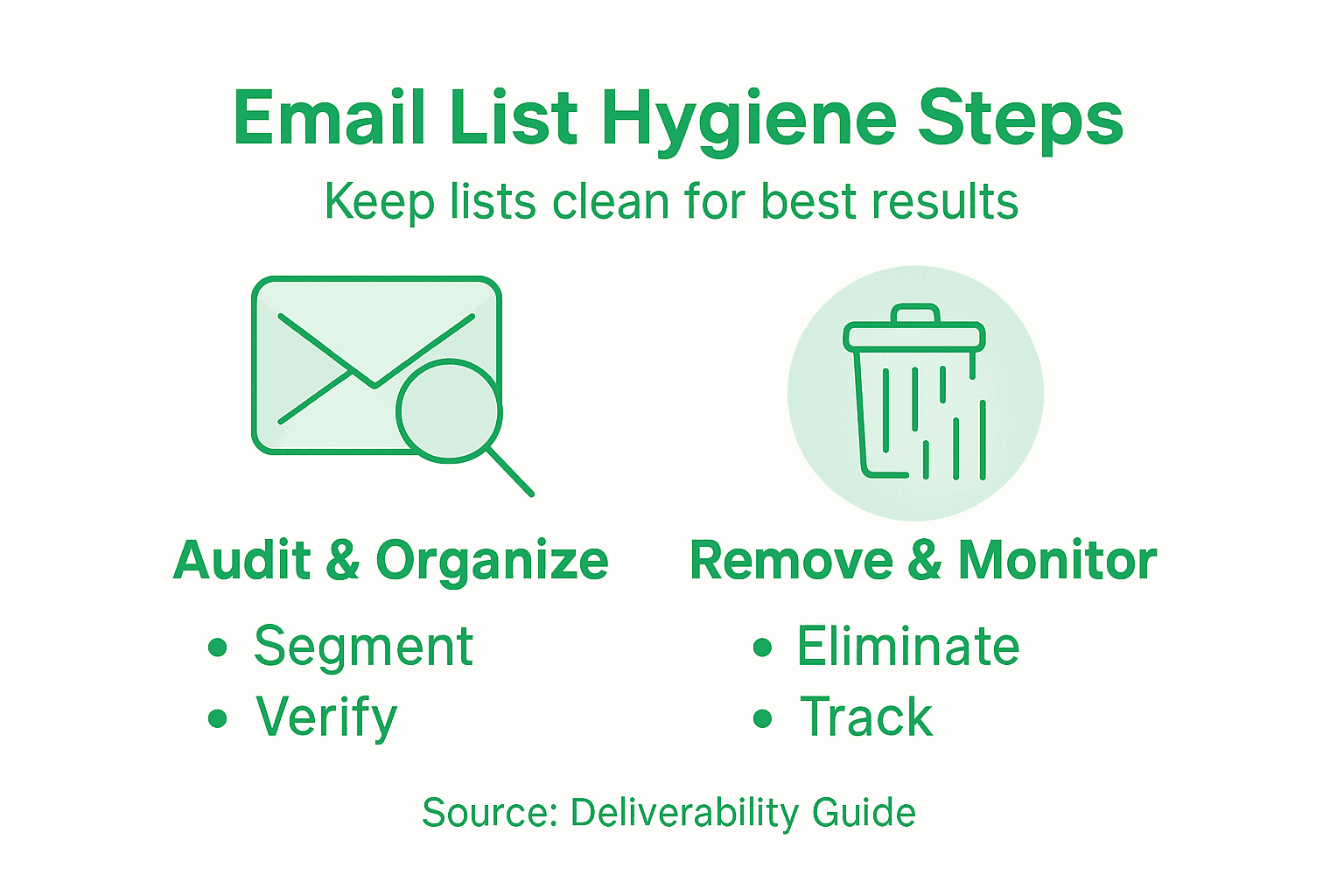
Pro Tip: Develop an automated risk scoring system that continuously monitors and flags potentially problematic email addresses, reducing manual review time and improving list quality.
Step 5: Monitor Performance and Maintain List Quality
Maintaining an effective email list requires continuous performance monitoring and strategic quality management. Your goal is to develop a systematic approach that ensures ongoing list health and maximizes email marketing effectiveness.
Implement performance management frameworks to track critical email list metrics. This comprehensive monitoring strategy involves analyzing several key performance indicators:
- Track email delivery rates
- Measure subscriber engagement levels
- Monitor bounce rates
- Analyze click-through and open rates
- Identify trends in subscriber behavior
Utilize advanced quality tracking methods that go beyond surface-level metrics. By implementing consistent quality indicators, you can develop a nuanced understanding of your email list's performance. Pay close attention to subtle shifts in subscriber interactions that might signal broader trends or potential issues.
Effective performance monitoring transforms your email list from a static database into a dynamic, responsive communication channel.
Establish a routine review process that allows you to make data-driven decisions. Regular assessment helps you proactively address potential problems before they impact your overall email marketing performance.
Pro Tip: Create a quarterly performance dashboard that visualizes key metrics, enabling quick identification of trends and immediate action on list quality improvements.
Boost Your Email Deliverability with Precision Verification
Managing your email list effectively is the cornerstone of achieving high deliverability and engagement. The article highlights crucial challenges like removing invalid addresses, segmenting contacts, and maintaining list quality to protect your sender reputation. These pain points demand a reliable solution that automates email verification while offering deep insights into list health.
BillionVerify is designed to address these exact needs with a real-time email verification API boasting 99.9% accuracy, bulk email list cleaning tailored for marketing campaigns, and advanced features such as disposable email detection and role-based email identification. Imagine eliminating risky contacts and automating ongoing verification to protect your email marketing efforts effortlessly.
Ready to transform your email list management strategy and ensure every campaign reaches a clean, engaged audience? Discover how our bulk email list cleaning and verification tools can safeguard your sender reputation today. Don’t wait to improve your email marketing performance—visit BillionVerify now and take control of your email deliverability.
Frequently Asked Questions
How can I effectively audit my email list for better deliverability?
To audit your email list effectively, export your entire current email list, remove duplicates, and verify email address validity. Then, segment your contacts into categories based on engagement levels, such as active subscribers and potential removal candidates, to maintain a clean database over time.
What steps should I take to integrate email verification tools?
Start by selecting an email verification tool that offers comprehensive verification capabilities. Connect it to your email database, run a validation scan, and remove any invalid or risky email addresses to enhance your list's accuracy and deliverability.
How can I segment my email list for improved engagement?
Segment your email list by categorizing contacts based on demographic information, engagement levels, and interaction history. Regularly update these segments to ensure they remain relevant and adjust your communication strategies accordingly, aiming for at least a quarterly review of your segments.
What should I do with invalid or high-risk email addresses?
Identify and remove invalid and high-risk email addresses from your list to protect your sender reputation. Regularly analyze your email addresses for bounces and suspicious activity, and implement a quarantine process for risky emails to validate them before removal.
How often should I monitor my email list performance?
Monitor your email list performance at least quarterly by tracking key metrics such as delivery rates, bounce rates, and engagement levels. Implement a routine review process to proactively address any issues and maintain high quality in your email marketing efforts.
What are the benefits of maintaining a clean email list?
Maintaining a clean email list ensures higher deliverability rates, better engagement with your audience, and overall improved email marketing performance. By regularly auditing and verifying your list, you can reduce bounce rates and enhance your sender reputation.