


Your team is busy all day, but the pipeline still feels foggy. SDRs are sending sequences, AEs are running demos, managers are asking for forecast updates, and nobody can say with confidence why one deal moves in a week while another sits untouched for a month.
That usually isn't a talent problem. It's a system problem. When teams don't define their sales cycle clearly, follow-up becomes inconsistent, handoffs get messy, and forecasting turns into educated guesswork. Bad contact data makes it worse because reps spend time chasing people who were never reachable in the first place.
The practical answer starts with one question: What is a sales cycle? It's the structure that turns scattered selling activity into something measurable. Once the stages are clear, teams can see where deals stall, where qualification breaks down, and where data hygiene is slowing everything at the top of the funnel.
What Is a Sales Cycle and Why Does It Matter
A sales cycle is the full journey from first contact to closed deal. That matters because once a team treats selling as a time-bound journey instead of a series of isolated tasks, it can manage conversion, pacing, and forecast quality with much more discipline.
A lot of teams confuse the sales cycle with the sales process. Keep them separate. The sales cycle is the set of stages a deal passes through. The sales process is how reps execute inside those stages, including discovery methods, qualification questions, follow-up timing, and proposal handling.
That distinction isn't academic. It's operational. If your stage map is clean but reps qualify badly, deals still clog the pipeline. If your reps are skilled but the stage definitions are vague, your CRM fills up with opportunities that all mean different things to different people.
Research summarized by Salesforce found that 57% of sales professionals say the sales cycle is getting longer, which makes clear stage control more important, not less, according to Zendesk's sales statistics summary.
Practical rule: If two reps can use the same stage name to describe two very different deal realities, the stage isn't defined well enough.
New SDRs and AEs typically encounter difficulty. They think the job is to generate activity. In practice, the job is to move qualified opportunities through a controlled system. Activity matters, but only if the activity fits the stage and the buyer's position.
Teams that manage car sales leads effectively often do this well because they understand that lead handling, follow-up timing, and stage discipline all shape conversion. The same principle applies in SaaS, agencies, professional services, and B2B outbound.
For outbound teams, the cycle also starts earlier than many people think. It starts with data quality. If prospecting feeds junk into the system, every downstream metric gets distorted. That's why clean prospect entry and funnel alignment matter just as much as messaging, and it's one reason an email marketing funnel strategy should connect closely with the way sales defines and advances opportunities.
The 7 Stages of a Modern Sales Cycle
A 7-stage sales cycle often works best because it gives enough detail to identify real bottlenecks without making the pipeline unusably complex. Each stage acts as a decision gate. That lets sales leaders inspect where deals slow down and coach the right behavior instead of telling reps to "push harder."
According to Monday.com's sales cycle explanation, a standard sales cycle is commonly modeled as a 7-stage pipeline, and the value is that each stage creates a decision gate teams can use to track throughput and spot stalls.
The 7 sales cycle stages at a glance
| Stage | Primary Goal | Key Activities | Typical Owner |
|---|---|---|---|
| Prospecting | Build a relevant target list | Research accounts, source contacts, verify data, segment lists | SDR, RevOps, Marketing |
| Connecting | Start real conversations | Cold email, calls, social outreach, first replies | SDR |
| Qualifying | Determine fit and urgency | Discovery questions, budget and need checks, stakeholder mapping | SDR, AE |
| Presenting | Show relevant value | Demo, solution walkthrough, tailored use case discussion | AE |
| Resolving objections | Remove buying friction | Handle risk concerns, timing issues, procurement pushback | AE |
| Closing | Secure commitment | Proposal review, approval flow, final terms, signature | AE, Sales Manager |
| Following up | Protect momentum after the decision point | Re-engagement, next-step scheduling, nurture for delayed deals | AE, Customer Success, Marketing |
How each stage works in practice
Prospecting is where teams decide whether they'll work with an advantage or waste. This stage is not just list building. It's account selection, contact selection, and data validation. If the list is poorly targeted or full of invalid emails, the rest of the cycle starts with friction.
Connecting is the first live test of your targeting and messaging. The goal isn't to dump information into someone's inbox. The goal is to get a response from the right person with enough context to open a sales conversation.
Qualifying is where many pipelines subtly falter. Reps often move deals forward because the prospect replied, attended a call, or seemed interested. That's not qualification. Qualification means the opportunity is worth AE time and has a plausible path to a decision.
A weak qualification stage doesn't just create bad opportunities. It creates misleading forecasts.
Presenting should be tied to the buyer's problem, not to the product tour your team likes to give. Good AEs don't present everything. They present the parts that map directly to the prospect's stated priorities, constraints, and desired outcome.
Resolving objections is separate from presenting for a reason. A demo can create interest, but objections reveal risk. Legal review, integration concerns, timing, internal alignment, and pricing tension all show up here. Reps who treat objections as resistance usually miss what the buyer needs to move forward.
Closing is less dramatic than people think. In healthy cycles, closing is mostly confirmation that the prior stages were done correctly. When closing becomes chaotic, the root cause usually sits earlier in the cycle.
Following up matters because not every qualified deal closes on the first timeline discussed. Some are delayed, reprioritized, or redirected internally. A strong lead nurturing email guide helps keep those deals warm without forcing AEs to manually rebuild momentum from scratch every time.
How to Map and Measure Your Sales Cycle in a CRM
A CRM doesn't fix a messy sales cycle by itself. It only makes the mess visible. The fix comes from translating your real sales motion into stage definitions that reps can use consistently.
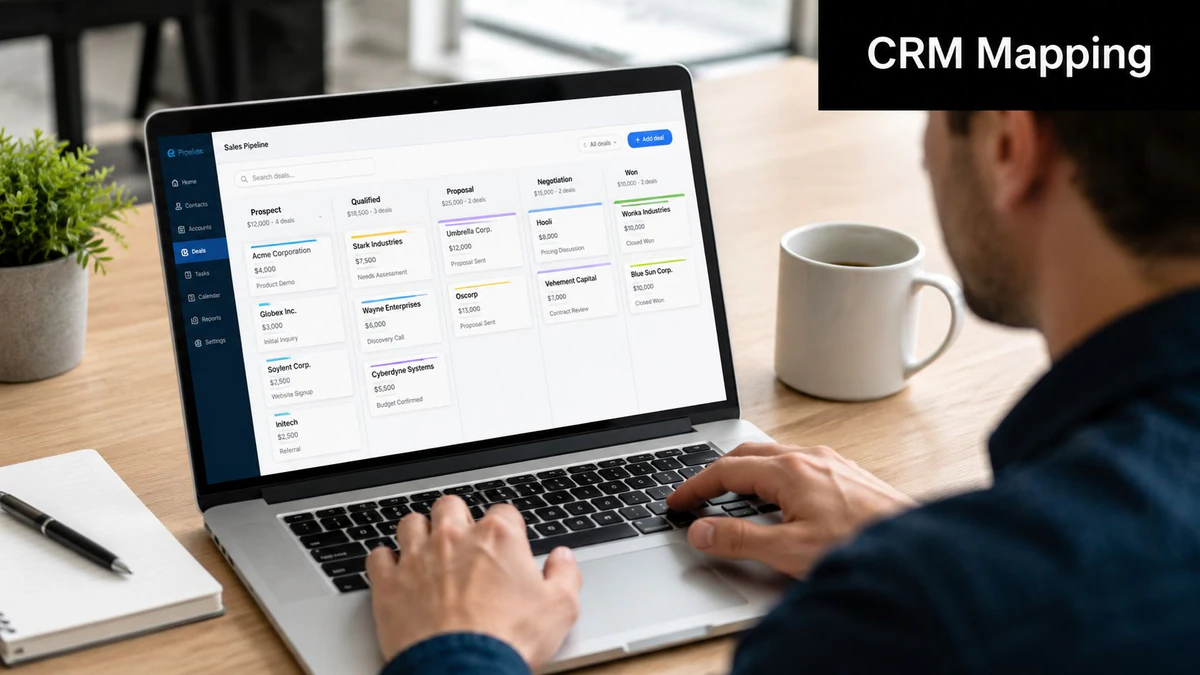
The first step is simple. Map your pipeline stages to how deals move in your business, not to a generic CRM template. If your team uses discovery, solution review, procurement, and legal as real decision points, the CRM should reflect those gates clearly enough that managers can inspect them.
The second step is harder and more important. Every stage needs entry criteria and exit criteria. Without that, reps promote opportunities based on optimism. With clear rules, stage movement becomes a shared operational language.
Build stages with entry and exit rules
For example, a deal shouldn't enter qualification just because someone answered an email. It should enter qualification because the rep confirmed the contact is relevant, the problem is real, and there is a reason to continue. A deal shouldn't move to proposal just because a deck was sent. It should move because the buyer asked for commercial next steps or agreed on a defined evaluation path.
Use short rules like these:
- Entry rule: The minimum evidence required to move a deal in.
- Exit rule: The proof that the stage goal was met.
- Owner rule: Who is accountable for advancing it.
- Timeout rule: When stale deals should be recycled, downgraded, or closed out.
The average B2B sales cycle is around 84 days, according to DealHub's sales statistics reference. That benchmark doesn't tell you how long your cycle should be. It tells you why your own timing data matters. If your team can't explain why one stage absorbs most of that time, forecast risk is already building.
A useful example outside SaaS is this RealEstateCRM sales cycle guidance, which shows how CRM structure supports follow-up discipline when deals involve multiple steps and inconsistent buyer timing.
Measure movement, not just volume
Most dashboards overemphasize top-line counts. Opportunity volume is useful, but it won't tell you why deals slow down. Measure the movement between stages instead.
Track at least these operational views:
- Stage-to-stage conversion: Which transitions are healthy and which ones leak.
- Stage timing: How long opportunities sit before the next meaningful action.
- Reopen and recycle patterns: Which deals come back repeatedly without real progress.
- Reason codes: Why opportunities are lost, delayed, or stuck.
The best CRM pipelines don't just store opportunities. They force clarity.
A clean CRM also depends on clean contact data. If bad email addresses and duplicate records enter the system unchecked, stage reporting degrades fast. That's where a tighter connection between CRM design and list hygiene pays off, especially when teams use CRM integration for email marketing and engagement workflows.
A quick walkthrough can help teams see what good pipeline tracking looks like:
Sales Cycle Examples Across Different Industries
The 7-stage model is useful because it's flexible. The stages stay recognizable, but the pace, ownership, and proof required at each gate change by industry.
High-velocity SaaS
In a high-velocity SaaS motion, the cycle is usually compressed. Prospecting is often supported by product-led signals, inbound forms, trial activity, or automated outbound. Connecting happens quickly, often across email and product usage triggers. Qualification is tight because reps can't afford long discovery on low-intent accounts.
Presentations are shorter and more use-case specific. Objections focus on setup effort, internal priority, and fit. Closing may happen through self-serve upgrade, light commercial review, or a short AE-assisted process. Following up is heavily automated because many deals are delayed by timing, not by total lack of interest.
Enterprise software
Enterprise cycles are slower and more political. Prospecting involves account research, org mapping, and identifying multiple stakeholders. Connecting may require coordinated outreach to several people across functions. Qualification goes beyond need and budget. Reps need to understand internal ownership, procurement risk, security review, and executive sponsorship.
Presentations often expand into workshops, customized demos, or proof-of-concept discussions. Objections are broader because more teams are involved. Legal, compliance, implementation scope, and change management can all affect the buying motion. Closing becomes a sequence of approvals rather than a single decision.
What matters here isn't speed for its own sake. It is control. Enterprise teams win when they can keep momentum without skipping the internal buying realities.
Service businesses and local sales
Agencies, consultancies, and local businesses often sit between these two models. The sales cycle is usually relationship-heavy and depends on responsiveness. Prospecting and connecting may rely on referrals, outbound, or inbound lead capture. Qualification needs to screen for budget fit, urgency, and service scope before expert time gets pulled into proposals.
In these businesses, presenting is often a mix of expertise, credibility, and commercial fit. Objections tend to center on timing, trust, and expected outcomes. Closing may require less procurement complexity than enterprise software, but it still depends on follow-up discipline and good contact data.
The lesson across industries is straightforward. Don't copy another company's exact pipeline. Keep the stage logic, then adapt the requirements to your buying environment, deal complexity, and handoff model.
How to Shorten Your Sales Cycle with Clean Data
The effort to shorten the sales cycle often centers on the middle stages. This involves rewriting discovery questions, tweaking demos, or pushing reps to follow up faster. Those changes can help, but they don't fix the earliest source of drag. Bad prospect data slows the cycle before the first real conversation even starts.
Bad data slows the first two stages first
When SDRs work from poor lists, they lose time in ways that are easy to underestimate. They write to invalid inboxes. They chase role accounts that won't engage. They get replies from the wrong people or no replies at all because the contact record was flawed from the start.
That creates downstream damage. Reps waste touches on unreachable prospects. Managers misread list quality as rep underperformance. AEs inherit weaker meetings because the early outreach never reached the intended buyer consistently.
The operational problem isn't just bounce risk. It is decision quality. If prospecting inputs are unreliable, the entire cycle gets noisier. Qualification takes longer because reps start from weaker conversations. Forecast confidence drops because the top of funnel produced lower-signal opportunities.
Good sales teams don't treat list hygiene as an admin task. They treat it as cycle management.
Where email verification fits
Email verification earns its place in the process. Before contacts enter outbound sequences or the CRM, teams should check whether addresses are valid, disposable, role-based, or otherwise risky for outreach. That doesn't replace targeting. It makes targeting usable.
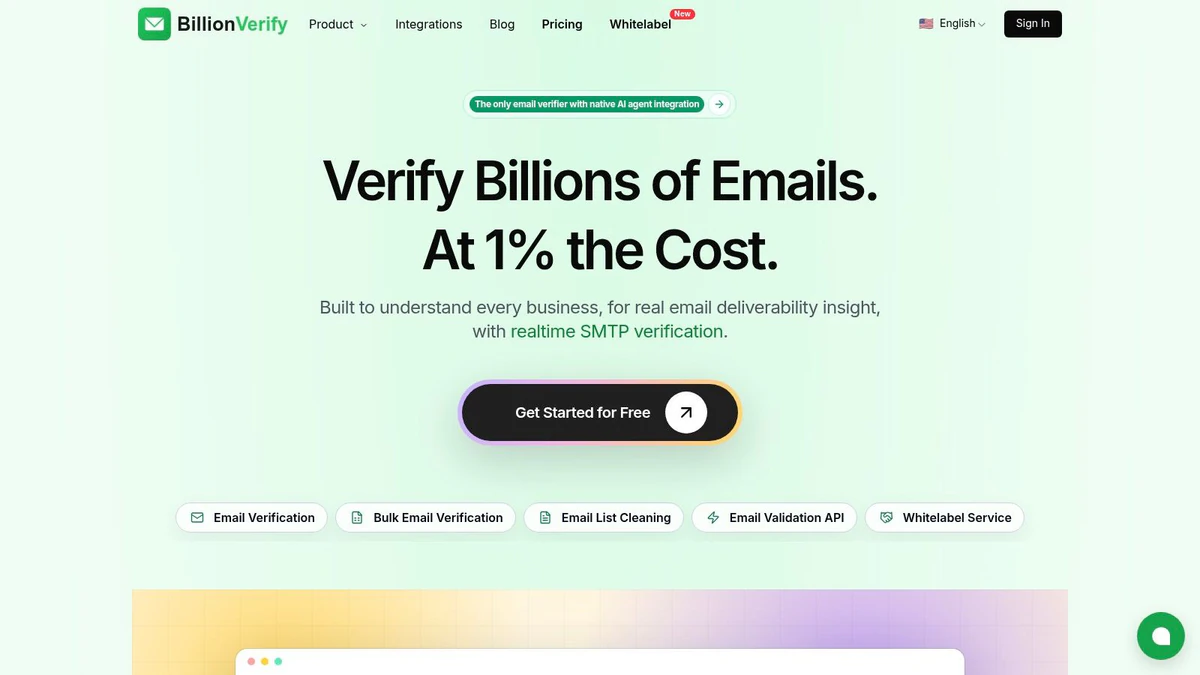
For sales ops, there are two practical uses. Bulk cleaning helps before campaigns, list imports, and account enrichment projects. Real-time verification APIs help when contacts are captured through forms, lead sources, or internal workflows so bad records don't spread through the system.
BillionVerify is a professional email verification service built to solve one problem: bad email data costs businesses money. In a sales cycle context, that matters most in prospecting and connecting, where cleaner records improve list readiness and reduce wasted outreach effort.
Clean data also supports deliverability. If teams keep sending to invalid or low-quality addresses, mailbox performance suffers and valid prospects may never see the message. That means a data hygiene mistake at the top of funnel can subtly reduce the output of a strong sequence.
Use verification in these moments:
- Before outbound launches: Clean purchased, enriched, or aggregated lists before SDRs touch them.
- At form capture: Verify addresses before they enter nurture or demo request workflows.
- Before CRM syncs: Stop bad records from duplicating across systems.
- Before reactivation campaigns: Recheck older lists that may have degraded over time.
For teams reviewing vendors or internal policy, an email list cleaning service guide is a practical place to understand how list hygiene supports both sales activity and sender reputation.
What works is simple. Validate contact quality early, then let reps spend their time on reachable buyers. What doesn't work is asking the team to overcome bad data with more hustle.
Advanced Strategies for Sales Cycle Optimization
Once the top of funnel is clean, cycle optimization becomes a management discipline. Teams get the best results when they improve qualification, execution standards, and automation together instead of treating each one as a separate project.

A sales cycle is the journey from first contact to a closed deal, and treating it as a full time-bound journey lets teams measure conversion, find bottlenecks, and forecast more predictably, as explained in HubSpot's sales cycle definition.
Tighten qualification before you speed up outreach
A common mistake is scaling activity before tightening deal standards. More meetings won't help if AEs are working opportunities that should have been disqualified earlier.
Use a qualification framework your team will adhere to. BANT, MEDDPICC, or a simpler internal model can work. The point isn't which acronym you choose. The point is that every AE should test for fit, buying path, urgency, and stakeholder alignment with similar rigor.
Effective qualification habits usually include:
- Defined disqualification triggers: Reps should know when to stop pursuing a weak opportunity.
- Stakeholder mapping: Multi-threading reduces late-stage surprises.
- Mutual next steps: Every live deal needs a concrete action owned by both sides.
Standardize what good execution looks like
Playbooks shorten the cycle when they remove rep-to-rep variation in important moments. Discovery call guides, objection handling notes, proposal checklists, and stage exit templates all reduce slippage.
Automation helps when it supports rep judgment instead of replacing it. Lead scoring can prioritize follow-up. Reminder sequences can keep stalled deals warm. Post-demo nurture can keep buyers engaged while internal review happens. A useful email automation guide can help teams build these touches without turning every follow-up into manual work.
If you want a faster cycle, define what "ready to advance" means at each stage and coach to that standard every week.
The strongest sales organizations do three things consistently. They protect data quality at entry. They enforce qualification discipline before expensive AE time is committed. They standardize execution so pipeline movement is driven by evidence, not rep optimism.
Turning Your Sales Cycle into a Competitive Advantage
A sales cycle isn't just a description of how deals move. It's a control system. When the stages are clear, the CRM reflects reality, and the prospect data is clean from the start, sales leaders can manage momentum with far more precision.
That changes how teams operate. SDRs spend less time on bad contacts. AEs inherit better opportunities. Managers coach from stage evidence instead of anecdotes. Forecasts improve because pipeline movement means the same thing across the team.
The practical edge comes from discipline. Define the cycle. Set stage criteria. Protect prospect data before it enters outbound and CRM workflows. Then keep refining the system as buyer behavior changes.
Teams that do that don't just close deals more cleanly. They build a revenue engine that's easier to trust, easier to scale, and harder for slower competitors to match.
If your team wants a cleaner start to prospecting and fewer wasted touches at the top of funnel, BillionVerify is worth evaluating as part of your sales ops stack. It helps teams verify email data before bad records distort outreach, CRM quality, and the rest of the sales cycle.