



Struggling with falling inbox rates and unexplained engagement drops can leave any Email Marketing Manager frustrated when trying to reach decision-makers across North America, Europe, or Asia. Deliverability issues often start with overlooked basics like list hygiene, real-time validation, and smart domain management. This guide delivers clear steps to help you protect brand reputation, keep your campaigns compliant, and maintain a high-quality, engaged audience that consistently receives and interacts with your emails.
Quick Summary
| Key Point | Explanation |
|---|---|
| 1. Clean Your Email List Regularly | Remove invalid and outdated addresses to enhance deliverability and engagement. This protects your sender reputation and boosts campaign performance. |
| 2. Use Real-Time Verification Tools | Implement API-based verification during signup to prevent invalid emails from entering your database, ensuring high-quality contacts from the start. |
| 3. Segment Your Sending Domains | Create dedicated subdomains for different email types and implement authentication protocols to manage your sender reputation effectively. |
| 4. Continuously Monitor Deliverability Metrics | Track delivery rates, bounce rates, and spam complaints to proactively address issues impacting your sender reputation and campaign effectiveness. |
| 5. Test and Refine Campaigns Regularly | Conduct A/B testing on various elements to gather insights and iteratively improve email engagement and conversion rates. |
Step 1: Prepare and Clean Your Email List
Cleaning your email list is a critical first step in building a high-performing email marketing workflow that ensures strong deliverability and engagement. By systematically removing invalid, outdated, and unresponsive email addresses, you protect your sender reputation and dramatically improve campaign performance.
The process of email list cleaning involves several strategic steps. Start by identifying and eliminating problematic email addresses through these key methods:
- Remove hard bounces from previous campaigns
- Delete duplicate email addresses
- Eliminate known spam trap emails
- Filter out role-based email accounts like info@, support@, sales@
Many marketers underestimate the impact of list hygiene. Essential email list cleaning tips can help reduce bounce rates, increase open rates, and maintain compliance with email regulations like GDPR and CAN-SPAM.

To effectively clean your list, consider using both manual and automated verification techniques. Manual review helps catch nuanced issues, while automated tools provide rapid, comprehensive scanning. Segment your list into active, inactive, and potentially risky email addresses to prioritize your cleaning efforts.
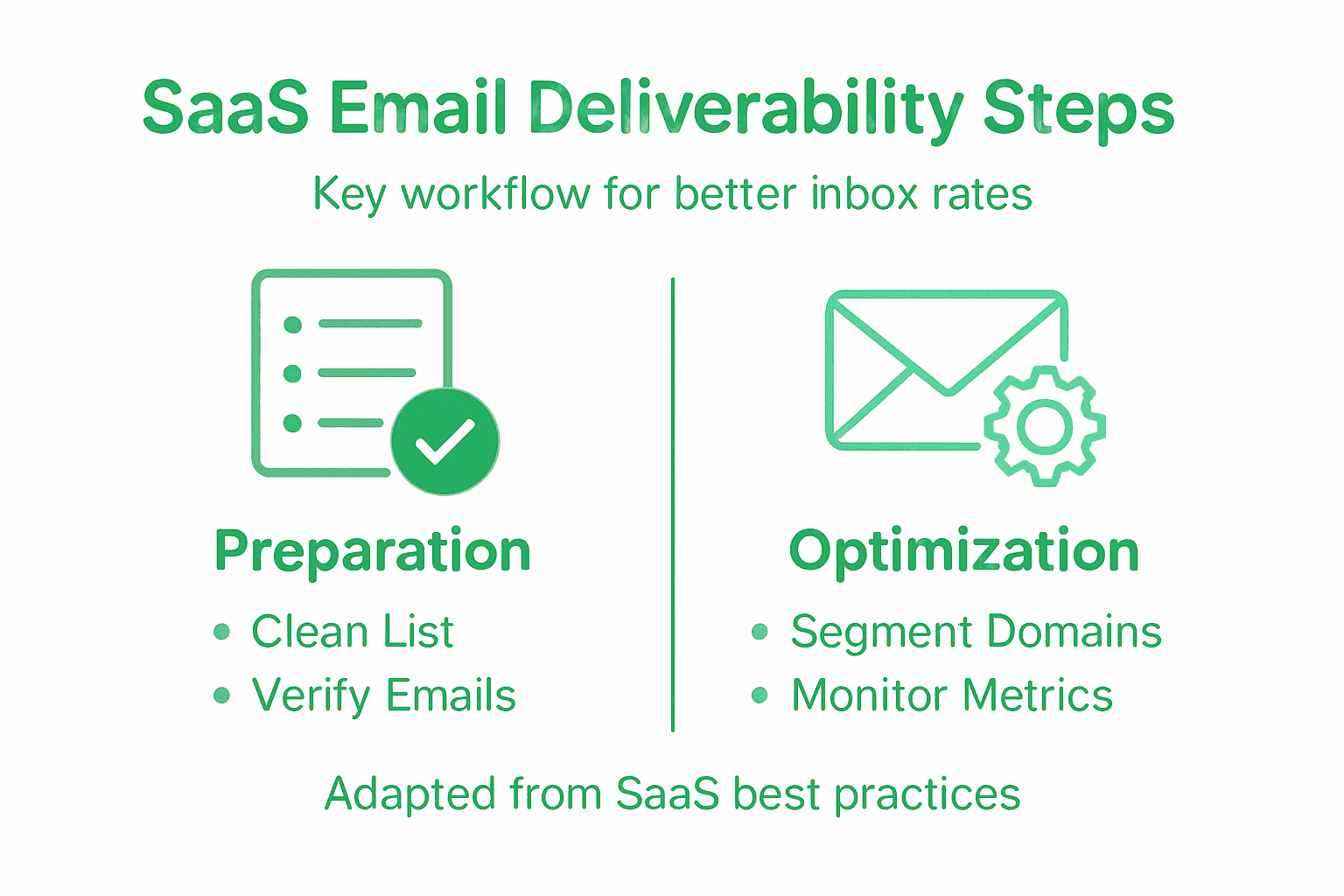
Here's a comparison of manual vs automated email list cleaning methods for better decision-making:
| Cleaning Method | Advantages | Challenges | Best Used When |
|---|---|---|---|
| Manual Review | Detects nuanced issues | Time-consuming, prone to human error | Small, high-value lists |
| Automated Tools | Fast, scalable, thorough | May miss complex cases | Large or frequently updated lists |
A clean email list isn't just about numbers - it's about maintaining a high-quality, engaged audience that genuinely wants to hear from your brand.
Pro Tip: Run a comprehensive email verification check at least quarterly to maintain list health and prevent deliverability issues.
Step 2: Integrate Real-Time Verification Tools
Integrating real-time email verification tools transforms your email marketing workflow by preventing invalid addresses from entering your database at the moment of signup. This strategic approach ensures you capture only high-quality email contacts from the start.
To successfully implement real-time verification, follow these essential steps:
- Choose an API-based verification service with high accuracy rates
- Configure the verification tool to integrate with your signup forms
- Set up instant validation triggers during user registration
- Define automatic response protocols for invalid email addresses
Real-time email validation techniques help businesses catch problematic email addresses immediately, preventing bad data from contaminating your marketing databases. These tools work seamlessly at the point of entry, providing instant verification without disrupting user experience.
The integration process typically involves technical configuration with your existing systems. Most verification APIs offer straightforward documentation and code snippets for popular platforms, making implementation relatively straightforward for development teams.
Real-time email verification is not just a technical solution - it's a strategic approach to maintaining the quality and reliability of your communication channels.
Pro Tip: Test your real-time verification integration thoroughly in a staging environment before deploying to production to ensure smooth performance.
Step 3: Segment and Optimize Sending Domains
Optimizing sending domains is a critical strategy for maintaining high email deliverability and protecting your brand's sender reputation. By strategically segmenting your email sending infrastructure, you create a robust system that isolates potential reputation risks and maximizes inbox placement rates.
To effectively segment and optimize your sending domains, consider these key approaches:
- Create dedicated subdomains for different email types
- Implement domain authentication protocols like SPF, DKIM, and DMARC
- Separate marketing and transactional email domains
- Monitor individual domain reputations consistently
Domain sending strategies help businesses protect their core brand domains from potential deliverability issues. By using specific subdomains for different communication types, you can manage reputation more granularly and minimize potential negative impacts.
The technical implementation involves working closely with your email infrastructure team to correctly configure DNS settings, authenticate domains, and establish clear sending protocols. This approach allows for more precise tracking and management of your email sending performance across different communication channels.
Effective domain segmentation is not just a technical exercise - it's a strategic approach to maintaining trust with email providers and your recipients.
Pro Tip: Rotate IP addresses periodically within your segmented domains to further enhance your overall sender reputation and deliverability performance.
Step 4: Monitor Deliverability Metrics Continuously
Continuous monitoring of email deliverability metrics is crucial for maintaining and improving your email marketing performance. By tracking key indicators, you can quickly identify and address potential issues before they significantly impact your sender reputation and campaign effectiveness.
To effectively monitor your email deliverability, focus on these critical metrics:
- Track delivery and bounce rates
- Monitor spam complaint percentages
- Analyze open and click-through rates
- Review unsubscribe rates consistently
- Compare performance against industry benchmarks
Deliverability performance tracking provides insights into campaign health and helps you understand long-term trends in your email marketing efforts. By establishing a consistent monitoring routine, you can detect subtle changes that might indicate underlying problems with your email strategy.
Utilize specialized tools like Google Postmaster Tools and dedicated deliverability reporting platforms to gain comprehensive insights. These resources offer detailed analytics that go beyond basic email metrics, providing granular data about your sending reputation, inbox placement rates, and potential technical issues.
To help prioritize deliverability metrics, here's an overview of key indicators and their strategic impact:
| Metric | What It Measures | Business Impact |
|---|---|---|
| Delivery Rate | % emails reaching inbox | Indicates total reach |
| Bounce Rate | % emails not delivered | Signals list quality issues |
| Spam Complaints | % marked as spam | Directly affects sender reputation |
| Open Rate | % recipients opening | Reflects message relevance |
| Click-Through Rate | % links clicked | Gauges engagement and interest |
| Unsubscribe Rate | % opting out | Reveals audience satisfaction |
Consistent monitoring is not just about tracking numbers - it's about understanding the story behind your email performance and proactively protecting your sender reputation.
Pro Tip: Set up automated weekly reports and create alert triggers for sudden changes in key deliverability metrics to enable rapid response and optimization.
Step 5: Test and Refine Email Campaigns
Testing and refining email campaigns is a critical strategy for maximizing engagement and conversion rates. By systematically evaluating different elements of your email communication, you can uncover insights that transform average campaigns into high-performing marketing initiatives.
To effectively test and improve your email campaigns, focus on these key strategies:
- Conduct A/B tests on subject lines
- Experiment with different send times
- Evaluate design and layout variations
- Test call-to-action placement and wording
- Compare personalization approaches
Email campaign testing techniques enable marketers to scientifically validate which elements resonate most with their audience. This iterative approach allows you to make data-driven decisions that incrementally improve your email performance.
Implement a structured testing methodology where you change only one variable at a time to ensure clear, actionable insights. Statistical significance is key - collect enough data to make confident decisions about which variations truly impact your email performance. Track metrics like open rates, click-through rates, and conversion rates to understand the real impact of your tests.
Effective email testing is not about finding a perfect template, but about continuous learning and adaptation to your audience's evolving preferences.
Pro Tip: Create a testing calendar that systematically rotates different email elements, ensuring you're always gathering insights and improving your campaign performance.
Enhance Your Email Deliverability with Precision Verification Solutions
The article highlights the crucial challenge SaaS businesses face in maintaining clean email lists and optimizing their email deliverability workflow. Key pain points such as removing invalid emails, integrating real-time verification, and continuously monitoring metrics directly impact your sender reputation and campaign success. Avoid the frustration of punishments from ISPs by ensuring your data is accurate and up to date with trusted verification methods.
BillionVerify offers a powerful solution tailored to these exact needs. Our real-time email verification API provides industry-leading 99.9 percent accuracy to catch invalid addresses at signup. Combine it with our bulk email list cleaning tools to eliminate hard bounces, role-based accounts, and disposable emails before they harm your campaigns. By integrating these verified processes, you improve your sender reputation and deliverability immediately.

Don’t let poor list hygiene hold back your SaaS email marketing success. Visit BillionVerify today to discover how you can protect your sender reputation, increase engagement, and build lasting customer trust with clean, high-quality email lists that drive results.
Frequently Asked Questions
How can I clean my email list to improve deliverability?
To clean your email list effectively, remove hard bounces, delete duplicate addresses, and filter out role-based accounts. By doing this, you can enhance your sender reputation and improve open rates within 30 days.
What steps should I take to integrate real-time verification for my email signups?
Choose a reliable API-based verification service and configure it to work with your signup forms. Setting up instant validation during registration helps ensure you only capture high-quality email contacts from the start.
How do I segment my sending domains to maintain a good email reputation?
To segment your sending domains, create dedicated subdomains for different email types and implement authentication protocols. This approach helps isolate any reputation risks while maximizing your inbox placement rates by monitoring individual domain performance regularly.
What key metrics should I monitor to assess my email deliverability?
Track delivery rates, bounce rates, spam complaint percentages, open rates, click-through rates, and unsubscribe rates. By analyzing these metrics regularly, you can identify issues early and adapt your strategy to improve overall email performance.
How can I test my email campaigns for maximum engagement?
Conduct A/B tests on different elements such as subject lines and call-to-action placement. By testing one variable at a time, you can collect data to make informed decisions that improve your open and click-through rates significantly over time.