



Every email marketer knows the frustration when carefully crafted campaigns never reach their destination. Email bounces are far more than random hiccups—they signal systematic communication breakdowns that directly threaten campaign performance and sender reputation. Misunderstanding or ignoring these signals can lead to wasted resources and damaged credibility. By breaking down common misconceptions about bounces and outlining clear management strategies, you can ensure your messages reach the right inboxes and drive real results.
Key Takeaways
| Point | Details |
|---|---|
| Email Bounces Impact Campaign Effectiveness | Hard and soft bounces can significantly degrade sender reputation and overall deliverability, affecting marketing strategies. |
| Proactive Bounce Management | Implementing real-time email verification and maintaining email list hygiene can minimize bounce rates and improve ROI. |
| Distinguishing Bounce Types | Understanding the differences between hard and soft bounces is essential for appropriate management and response strategies. |
| Strategic Monitoring is Key | Regularly track bounce rates and adapt strategies to ensure effective email communications and optimize performance metrics. |
Email Bounce Defined and Common Misconceptions
An email bounce occurs when an email cannot be successfully delivered to the recipient's mail server and is returned to the original sender. These undeliverable messages represent a critical challenge in B2B marketing communication, directly impacting campaign effectiveness and sender reputation.
Email bounces are typically categorized into two primary types:
Hard Bounces: Permanent delivery failures caused by:
- Invalid or non-existent email addresses
- Blocked domains
- Recipient email server permanently rejecting messages
Soft Bounces: Temporary delivery interruptions resulting from:
- Full mailboxes
- Temporary server issues
- Exceeded message size limits
Contrary to common misconceptions, email bounces are not simply random technical glitches. They represent systematic communication breakdowns that can significantly undermine marketing strategies. Proven email verification methods can help businesses proactively manage and minimize these challenges.
Many marketers mistakenly believe that a few email bounces are inconsequential. However, high bounce rates can trigger serious consequences:
- Decreased sender reputation
- Potential blacklisting by email service providers
- Reduced overall email deliverability
- Wasted marketing resources
- Inaccurate campaign performance metrics
Understanding these nuances is crucial for maintaining a robust email marketing infrastructure. Successful B2B communication demands meticulous email list management and continuous verification.
Pro tip: Regularly clean your email lists and implement real-time email verification to prevent bounce-related performance degradation.
Understanding Hard vs. Soft Bounces
In the world of email marketing, understanding the nuanced differences between hard bounces and soft bounces is crucial for maintaining effective communication channels. These two types of email delivery failures represent distinct challenges that require tailored management strategies for B2B marketing professionals.
Hard bounces are permanent delivery failures that occur due to fundamental, unresolvable issues with an email address or recipient domain. Permanent email delivery failures typically manifest through several critical scenarios:
- Non-existent email addresses
- Permanently blocked domains
- Invalid email syntax
- Recipient domains that do not exist
- Email addresses that have been deliberately disabled
Soft bounces, conversely, represent temporary delivery interruptions that might potentially be resolved with subsequent sending attempts. Common causes of soft bounces include:
- Temporarily full mailboxes
- Recipient server experiencing temporary downtime
- Exceeded message size limits
- Temporary network connectivity issues
- Recipient email server temporarily rejecting messages
Critically, hard bounces demand immediate removal from mailing lists, while soft bounces require strategic monitoring and potential retry mechanisms.
The implications of mishandling these bounce types can be substantial for B2B marketing campaigns. Soft bounces versus hard bounces represent more than mere technical nuisances - they directly impact sender reputation, email deliverability, and overall marketing communication effectiveness.
Marketing teams must implement rigorous processes to distinguish and manage these bounce types:
- Immediately remove email addresses generating hard bounces
- Monitor soft bounce rates for persistent issues
- Implement automated list cleaning protocols
- Use advanced email verification technologies
- Maintain comprehensive bounce tracking systems
Pro tip: Develop a systematic approach to categorize and respond to different bounce types, treating hard bounces as permanent disqualifications and soft bounces as temporary communication challenges.
Here's a comparison of hard bounces and soft bounces, highlighting their key characteristics and recommended actions:
| Bounce Type | Permanence | Typical Causes | Best Response |
|---|---|---|---|
| Hard Bounce | Permanent failure | Invalid address, non-existent domain | Immediate removal from list |
| Soft Bounce | Temporary interruption | Full mailbox, server downtime | Retry and monitor |
Top Causes of Email Bounces in Campaigns
Email marketing success hinges on understanding and mitigating the primary causes of email bounces. These technical interruptions can significantly undermine campaign performance and sender reputation, making proactive management essential for B2B communication strategies.
Email bounce rate analysis reveals several critical factors that contribute to delivery failures:
Invalid Email Addresses
- Mistyped contact information
- Outdated or abandoned email accounts
- Fake or deliberately misleading email entries
Domain-Related Issues
- Non-existent email domains
- Permanently blocked sender domains
- Incorrect domain configurations
Technical Infrastructure Problems
- Recipient server limitations
- Temporary network connectivity disruptions
- Mailbox storage capacity constraints
Preventing email bounces requires a comprehensive approach that combines technological solutions with strategic list management techniques.
Spam filters represent another significant challenge in email deliverability. These automated gatekeepers evaluate multiple factors to determine whether an incoming message should reach the recipient's inbox. Triggers that increase bounce probability include:
- Suspicious sender authentication
- Content containing spam-like language
- Inconsistent sending patterns
- High complaint rates from previous campaigns
- Lack of proper email authentication protocols
B2B marketers must recognize that email bounces are not random occurrences but systematic communication breakdowns. Implementing robust verification processes, maintaining clean email lists, and understanding technical nuances can dramatically reduce bounce rates and improve overall campaign effectiveness.

Pro tip: Conduct regular email list hygiene audits and implement real-time verification mechanisms to proactively eliminate potential bounce sources.
How Bounces Affect Deliverability and ROI
Email marketing performance is intricately linked to bounce rates, with even minor delivery issues potentially derailing entire campaign strategies. Sender reputation emerges as a critical metric that directly influences an organization's ability to reach target audiences effectively.
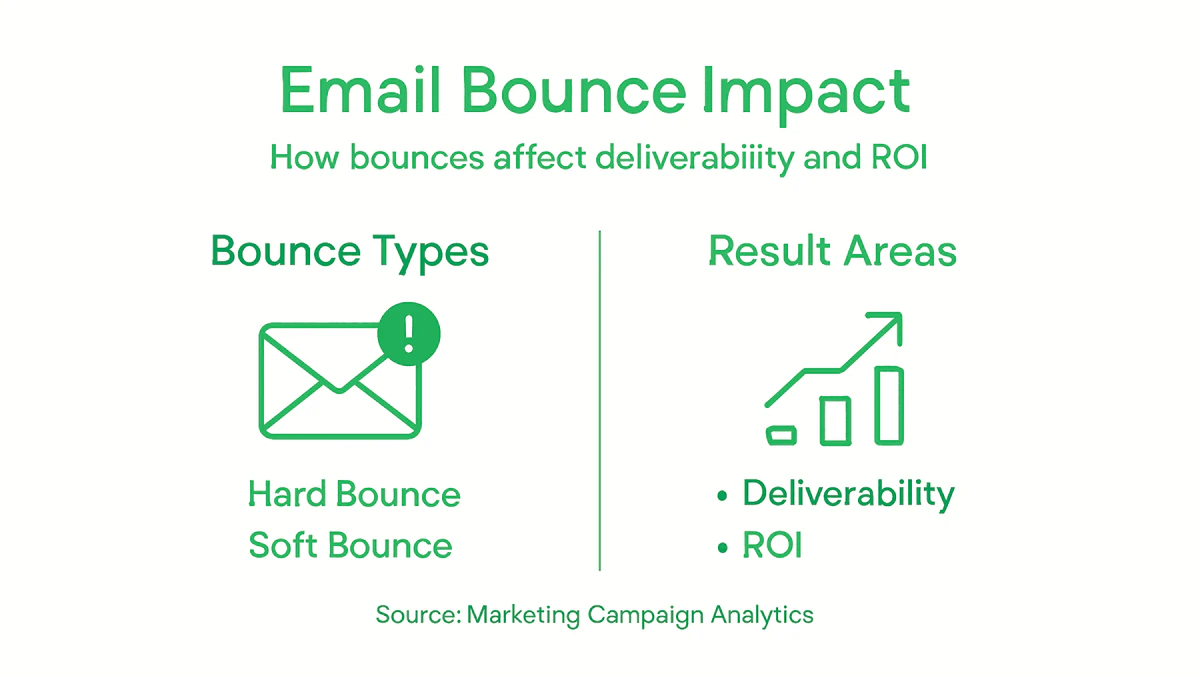
Email deliverability impact demonstrates how bounces systematically erode marketing communication channels. Internet Service Providers (ISPs) and Email Service Providers (ESPs) utilize sophisticated algorithms that continuously evaluate sender performance.
The cascading consequences of high bounce rates include:
Reputation Degradation
- Reduced inbox placement rates
- Increased likelihood of spam folder routing
- Potential permanent domain blacklisting
Financial Performance Impacts
- Decreased marketing campaign effectiveness
- Lower engagement and conversion rates
- Increased customer acquisition costs
Operational Challenges
- Compromised communication infrastructure
- Higher marketing technology expenses
- Reduced overall email marketing ROI
High bounce rates are not just technical problems - they represent significant strategic business challenges that directly impact revenue generation.
ESPs track bounce metrics meticulously, with hard bounces carrying particularly severe consequences. These permanent delivery failures signal fundamental issues with email list quality and can trigger immediate reputation penalties. Soft bounces, while less damaging, still contribute to a cumulative negative assessment of sender credibility.
Marketers must recognize that each bounce represents more than a missed communication opportunity. They are actionable signals that demand immediate strategic intervention:
- Implement real-time email verification
- Conduct regular list hygiene assessments
- Monitor bounce rate trends consistently
- Develop sophisticated re-engagement strategies
- Maintain transparent communication practices
Pro tip: Treat email bounce rates as critical business intelligence, transforming them from passive metrics into proactive strategic insights for continuous marketing optimization.
Preventing and Managing Email Bounces Effectively
Mitigating email bounces requires a strategic, multi-layered approach that combines technological solutions with proactive list management techniques. Successful B2B marketers understand that preventing bounces is not just about technical configurations, but about creating a comprehensive email communication ecosystem.
Email delivery best practices emphasize the importance of systematic email list maintenance and authentication protocols. Domain authentication emerges as a critical first line of defense against delivery failures.
Key strategies for reducing email bounces include:
List Hygiene Practices
- Conduct regular email address validation
- Remove consistently unresponsive contacts
- Implement double opt-in processes
Technical Authentication Methods
Proactive Monitoring Techniques
- Track bounce rates consistently
- Analyze bounce type distributions
- Segment problematic email addresses
Effective bounce management transforms email communication from a potential liability into a strategic marketing advantage.
Email marketers must develop sophisticated approaches to distinguish between different bounce types and respond accordingly. Hard bounces demand immediate removal from mailing lists, while soft bounces require nuanced monitoring and potential re-engagement strategies.
Successful bounce prevention involves a comprehensive approach:
- Validate email addresses before initial contact
- Maintain updated contact information
- Use reputable email verification tools
- Implement automated list cleaning protocols
- Create clear unsubscribe mechanisms
Pro tip: Develop a dynamic email list management strategy that treats each bounce as an opportunity to refine and improve your communication infrastructure.
The table below summarizes advanced strategies for managing email bounces and their direct business benefits:
| Strategy | Description | Business Impact |
|---|---|---|
| Real-time verification | Check emails before sending | Fewer bounces, improved ROI |
| Automated list cleaning | Remove invalid addresses regularly | Higher deliverability |
| Double opt-in process | Confirm subscribers at sign-up | Increased list quality |
| Bounce monitoring | Track and analyze bounce types | Early issue detection |
Take Control of Email Bounces and Boost Your B2B Marketing Success
Email bounces are more than just temporary setbacks they are a major obstacle that threatens your sender reputation and reduces the return on your marketing investments. As the article highlights understanding the difference between hard and soft bounces and addressing the causes like invalid addresses and technical issues is key to maintaining a healthy email list and achieving consistent campaign results.

Discover how BillionVerify can empower your team with real-time email verification and precise list cleaning solutions designed to eliminate hard bounces before you hit send. With features such as disposable email detection and role-based email identification you can ensure your messages land where they matter most. Take the first step toward transforming your email deliverability and see measurable improvements now by visiting BillionVerify and exploring our real-time verification API and bulk cleaning tools. Do not let avoidable bounces undermine your marketing success start optimizing your email strategy today.
Frequently Asked Questions
What is an email bounce in B2B marketing?
An email bounce occurs when an email cannot be delivered to the recipient's mail server and is returned to the sender. Bounces can significantly impact campaign effectiveness and sender reputation.
What are the different types of email bounces?
There are two main types of email bounces: hard bounces, which are permanent failures due to invalid email addresses or blocked domains, and soft bounces, which are temporary issues like full mailboxes or server downtime.
How do email bounces affect sender reputation and deliverability?
High bounce rates can lead to decreased sender reputation, resulting in lower inbox placement rates, increased chances of being flagged as spam, and potential blacklisting by email service providers.
What strategies can be implemented to prevent email bounces?
To prevent email bounces, regularly clean your email lists, implement real-time email verification, use double opt-in processes for subscribers, and maintain proper domain authentication protocols.