


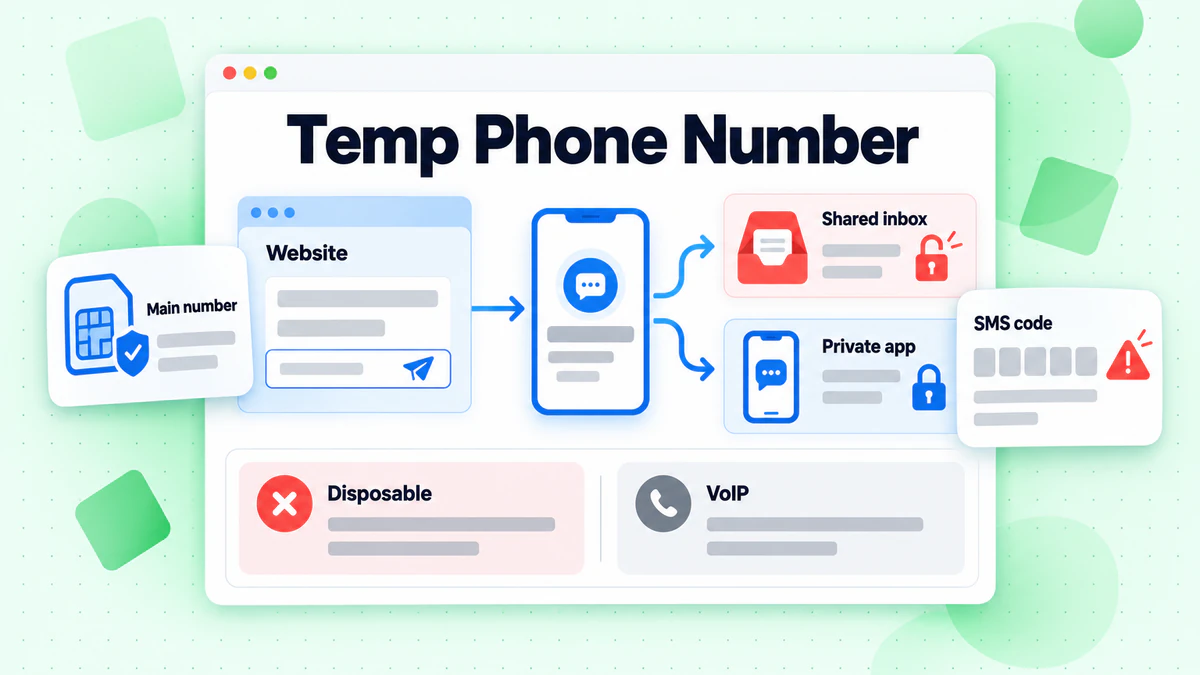
A temp phone number is a number you use for a short spell, or for a single job, in place of your main SIM. It can receive an SMS code. Some are open to all on a website. Others are private lines you rent.
This guide explains how each kind of temp phone number works and what it cannot do. It covers why websites often turn virtual numbers away and what goes wrong with public ones. It does not explain how to avoid any website's checks. Service details come from each service's own pages, read in October 2026. BillionVerify does not sell numbers. We build verification tools for phones and email addresses.
Key facts (checked October 2026):
- Twilio's Lookup docs separate VoIP numbers into two types, and give Google Voice as the example of the one needing no physical device.
- ReceiveSMS tells visitors to treat anything sent to its shared numbers as open to everyone and short-lived.
- Google's help article for Voice says setup begins with a code sent to a phone you already hold.
- Twilio's phone numbers page puts a US local number at $1.15 per month.
- NIST SP 800-63B-4 tells verifiers to weigh risk indicators, including SIM change and number porting, before sending a code by phone.
- BillionVerify's phone validator runs without signup, and its page says live service status is outside what it can see.
What a Temp Phone Number Is
The idea is simple. A website asks for a phone number and sends an SMS code. A temp phone number is the number you hand over when you want your own SIM kept apart from that website.
The same thing has many names. ReceiveSMS calls its numbers a temporary phone number or a disposable phone number. Quackr says "temporary phone numbers for verification". Burner calls itself a second phone number app. A burner phone number usually means one of these.
Two types cover most of what you will find.
Shared Numbers on a Web Page
A shared number is listed on a page anyone can open. Visitors read each SMS that arrives. ReceiveSMS describes the flow as picking a number and reading the incoming SMS in real time, with no signup.
Quackr also lists free numbers and says it refreshes them every month. Everyone sees the same inbox, so a code meant for you can be read by strangers.
Private Virtual Numbers
A virtual phone number lives with a provider, not on a SIM card. A private one belongs to one account. The provider assigns it to you, and its SMS arrive in an app that only you open. Burner and Hushed sell secondary numbers. Google Voice offers a number for calls, texts and voicemail transcripts. Sonetel and Twilio rent business numbers.
These cost money or need an account. In return, nobody else reads your SMS. Burner says you stay in control because you can switch or remove a number, and its page shows a "Delete line" button.
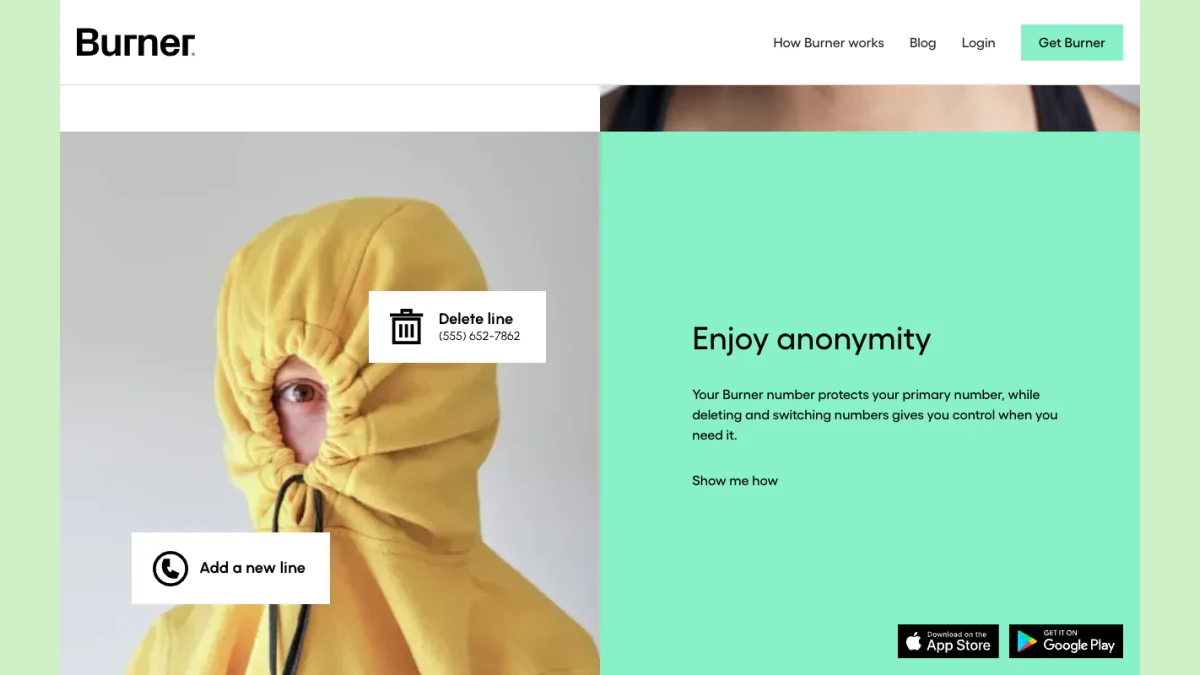
Screenshot: the Burner home page section on anonymity.
How a Temp Phone Number Receives SMS
A virtual phone number is still an address on the telephone network. A provider holds it and routes each incoming SMS to a place you can read. For a private number, that place is an app. For a shared one, it is a page on the web.
The sender does not care who reads the message. The website texts its code to whatever number you typed. Whoever can see that inbox sees the digits.
Some services need a real phone first. Google tells you to make sure your phone is on and can get texts, because Voice checks it during setup. Twilio works differently. It says you can provision numbers by API or in its console.
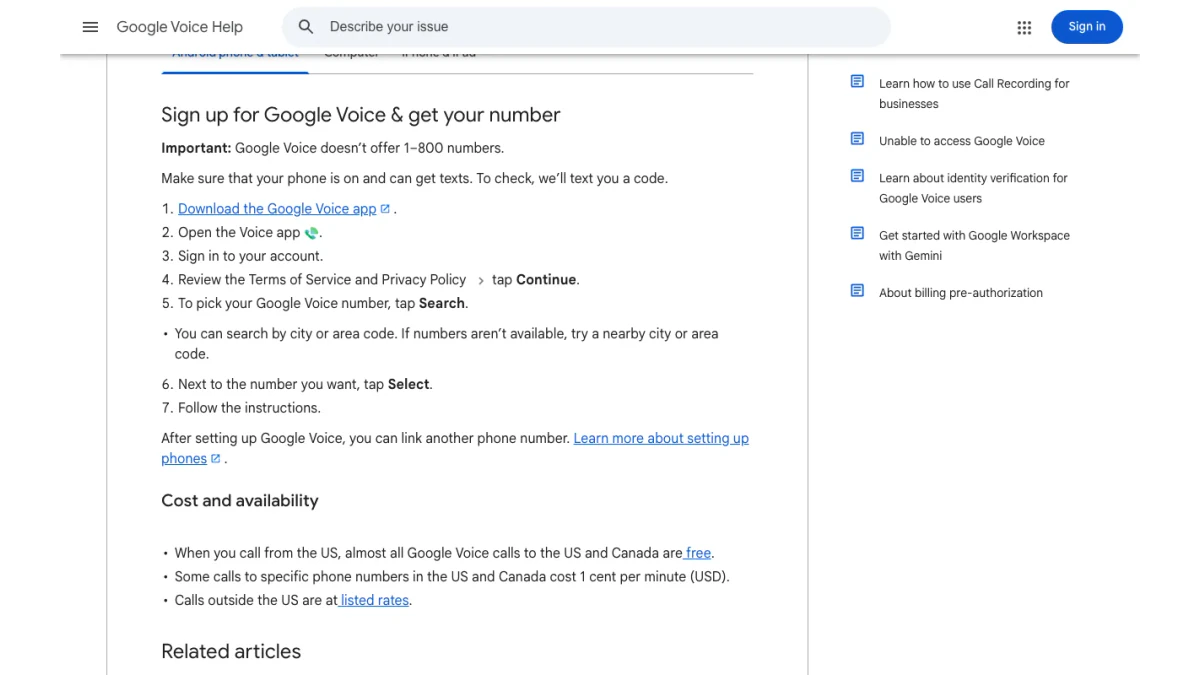
Screenshot: Google's help article on setting up Voice.
Temp Phone Numbers Compared: Shared, Private and Business
This table of temp numbers quotes each service as it read this month. We did not test any number or send any message.
| Service | Type | Who reads the SMS | Fact from its own site |
|---|---|---|---|
| ReceiveSMS | Shared | Everyone | Free, no registration; numbers can be recycled or rate-limited |
| Quackr (free list) | Shared | Everyone | Free numbers refreshed every month |
| Quackr (paid) | Private | Only the buyer | Plans list a "Non-VOIP" number |
| Burner | Private | Only the user | App for a second number; delete or switch it |
| Hushed | Private | Only the user | Secondary numbers for texting and calling |
| Google Voice | Private | Only the user | Voicemail transcripts and spam blocking; setup checks your phone |
| Sonetel | Business | Only the user | From $1.79 per month; SMS works on some number types |
| Twilio | Business | Only the user | $1.15 a month for a US local number; API provisioning |
Why Many Websites Refuse Virtual Numbers
A website that sends a code wants to reach one real person. It can learn a lot about a number before it sends anything.
How a Website Reads the Line Type
Every number has a type. Twilio's docs list the values a lookup can return: landline, mobile, fixed VoIP, non-fixed VoIP, personal, toll free, premium and more.
They say a mobile number generally can receive SMS and a landline generally cannot. They describe the second VoIP type as a virtual number obtained online with no physical device, citing Google Voice and Enflick. So a lookup can label a virtual phone number before any SMS goes out. The website then decides what to do with that label.
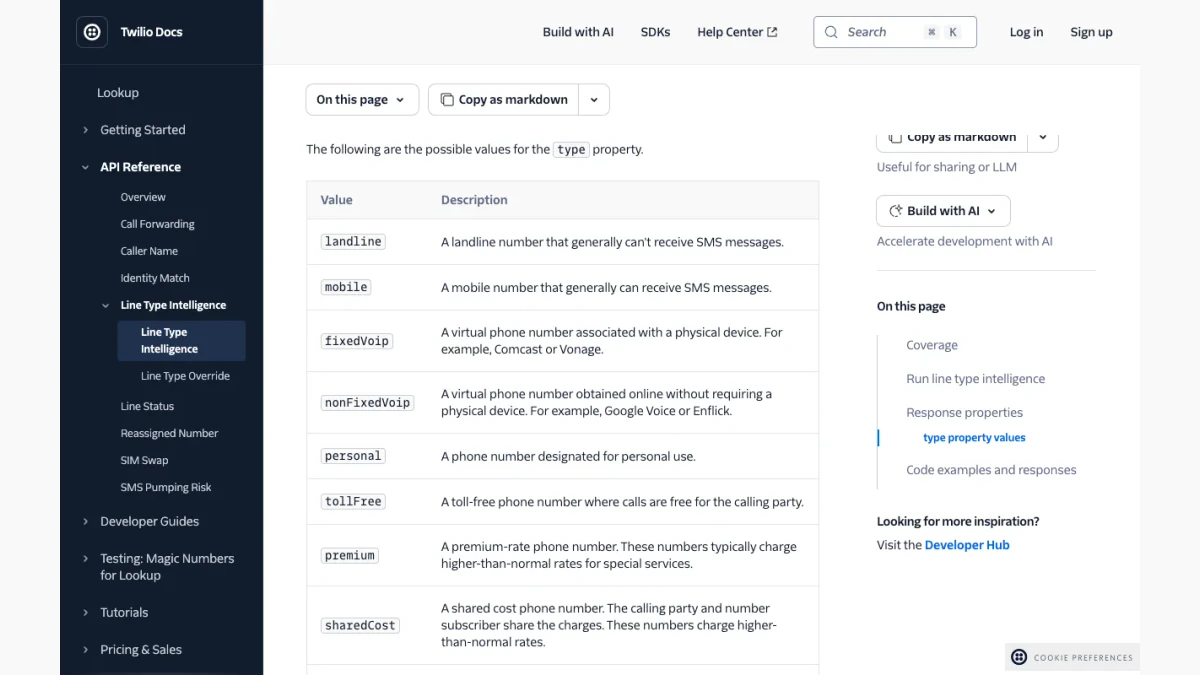
Screenshot: the Twilio documentation page on line types.
What a Website Is Protecting
Websites have practical reasons to care:
- Repeat trials. One person can claim many free accounts with many numbers.
- Fraud on the phone network. Twilio publishes an SMS Pumping Risk Score for spotting numbers tied to that fraud.
- Account takeover. NIST says a SIM change is one sign to weigh before the phone network carries a code.
What a Rejection Means
A rejection is the website's own rule, not a fault in your temporary phone number. The honest answer is to use a SIM you control or a sign-up route the website offers. This guide does not cover ways around such checks.
Risks of a Temp Phone Number
Most problems with a temporary phone number for verification come from one fact. You do not fully control the number.
Strangers Can Read the Code
A disposable phone number on an open page is readable by everyone. ReceiveSMS says messages to its numbers are not private. It warns against using them for banking, government portals and health services.
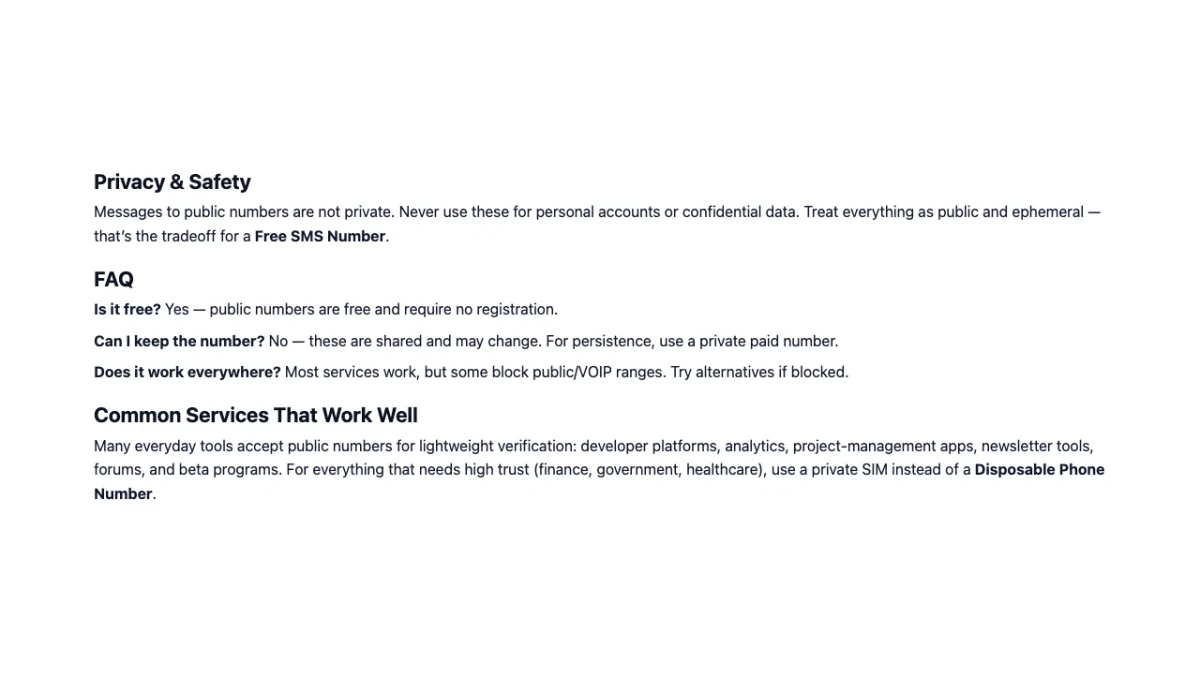
Screenshot: the ReceiveSMS privacy and safety section.
The Number May Not Stay Yours
ReceiveSMS answers "Can I keep the number?" with no. A paid number stops working when the payments stop. Numbers also move between owners. Twilio's Lookup docs include a Reassigned Number check for that reason.
Account Recovery Can Fail
Many websites text reset codes to the number on file. When that number is gone, the reset goes nowhere. Google's Voice help has an article called "Protect your verification code". The same care fits any temp phone number.
Legitimate Uses of a Temp Phone Number
Not every disposable phone number is about hiding. These come from the services' own pages:
- Testing. ReceiveSMS lists QA, prototyping and testing of SMS flows across countries.
- Keeping your main number out of view. Hushed lists selling items, online dating and shopping. Burner says its number protects your primary one.
- A second business line. Sonetel rings numbers in its app, with no second SIM.
- Travel. Hushed suggests a local number for the country you visit.
Safer Choices When a Website Asks for a Number
Pick a temp number by how long you will keep the account.
- A short, low-stakes test. A public number is the weakest option. Assume everyone can read the code.
- An account you will keep. ReceiveSMS itself says paid numbers suit two-factor authentication, banking and accounts kept for months or years.
- An email-only sign-up. Take it when offered and skip the phone step.
Check Phone Numbers and Emails on Your Own Forms
If you run a website, you face the other side of this. Your forms receive virtual phone numbers and throwaway addresses. Check both before you act on them.
The BillionVerify phone number validator checks whether a number is valid for its country and reports the line type: mobile, fixed, VoIP, toll-free or premium. It also returns the E.164 form. The page offers 20 free validations per IP each day, with no signup.
The same page lists what it cannot do. It cannot tell whether a number is in service, and it cannot name the owner. Line type is a best effort, so treat it as one signal and not as a hard gate.
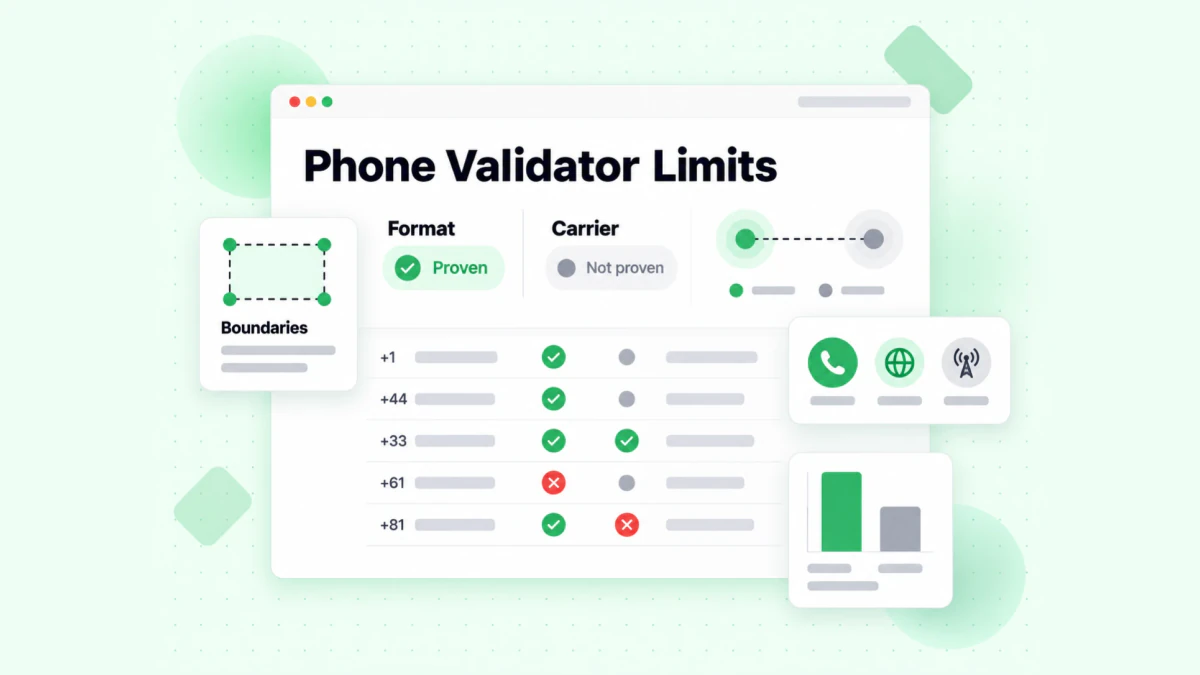
The validator proves format and country. Carrier and ownership stay outside what it can prove.
For email, the free disposable email detection tool shows whether an address comes from a throwaway service. Our guide to what temp mail is covers that side, and the 10 minute mail alternatives comparison lines up the timed inboxes. To see the mail setup behind a sender, try a reverse email lookup.
A BillionVerify account gets 20 free credits on each day you use it, up to 600 a month, and they never expire. Unknown email results cost nothing. Servers sit in France (EU), and a data processing agreement can be signed.
FAQs
What is a temp phone number?
A temp phone number is a phone number used for a short time, or a single purpose, instead of your main line. It can be a public number open to all or a private virtual number from a provider.
Is there a free temp phone number?
Yes. A public number can cost nothing, and ReceiveSMS states that its numbers need no registration. Everyone can read the messages, so they suit only low-stakes tests.
How does a temporary phone number for verification work?
A temporary phone number for verification receives the SMS that a website sends. The website texts a code to the number. The service then shows that message in an app or on a page.
Can a website reject a virtual phone number for verification?
A virtual phone number for verification can be refused when a lookup labels it as VoIP. Twilio's docs treat its two VoIP values as separate types. The rule belongs to each website.
Is a disposable phone number safe?
A disposable phone number is safe only for things you can afford to lose. ReceiveSMS warns that anyone can read its inbox. A private number keeps the SMS inside one account.
Can you receive SMS online with a number that lasts?
A public number for receive SMS online does not last. According to ReceiveSMS, such numbers are shared and may change. For long-term use, it points to a paid private number.
Does BillionVerify provide temporary phone numbers?
No. BillionVerify does not rent numbers or receive any SMS for you. It offers a phone validator and a disposable email check for people who run forms.