



Every marketing manager knows the frustration of seeing well-crafted campaigns land in the spam folder or miss their targets completely. For mid-sized B2B SaaS companies, ignoring email hygiene does more than drain resources—it puts sender reputation and campaign effectiveness at risk. By focusing on clean, verified lists and proactive removal of invalid or unengaged addresses, you can protect deliverability and maintain a direct line to decision-makers in key regions, whether in the United States, Canada, or the United Kingdom.
Key Takeaways
| Point | Details |
|---|---|
| Email Hygiene is Essential | Maintaining a clean email list is crucial for effective marketing communication and overall campaign success. |
| Identify and Remove Contaminants | Regularly audit your lists to remove fake, disposable, or inactive email addresses to enhance engagement. |
| Monitor Deliverability Metrics | Clean email lists improve sender reputation and reduce bounce rates, ensuring better campaign performance. |
| Automate List Maintenance | Implement automated tools for ongoing verification and cleaning to maintain high-quality contact databases. |
Defining Email Hygiene for Marketers
Email hygiene represents a critical strategic process for modern marketing professionals seeking to optimize their email communication and campaign effectiveness. At its core, email hygiene involves maintaining a clean and healthy email list through systematic management and verification of contact information.
The fundamental goal of email hygiene extends beyond simple list maintenance. It encompasses several key objectives that directly impact marketing performance:
- Removing invalid or inactive email addresses
- Identifying and eliminating potentially harmful contacts
- Reducing email bounce rates
- Improving overall sender reputation
- Enhancing email deliverability metrics
Marketing teams must recognize that an unclean email list can severely damage their communication strategy. Invalid email addresses not only waste resources but can trigger spam filters, potentially blocking future communications. Each unverified contact represents a potential risk to your marketing infrastructure.
The process of maintaining email hygiene involves several strategic practices. Marketers should regularly audit their contact lists, utilizing advanced verification tools to:
- Detect and remove duplicate entries
- Validate email address formats
- Check domain and mailbox existence
- Screen for disposable or temporary email addresses
- Analyze engagement metrics
Pro tip: Implement a quarterly email list cleaning protocol to ensure consistent list health and maximize marketing campaign performance.
Common Types of Email List Contaminants
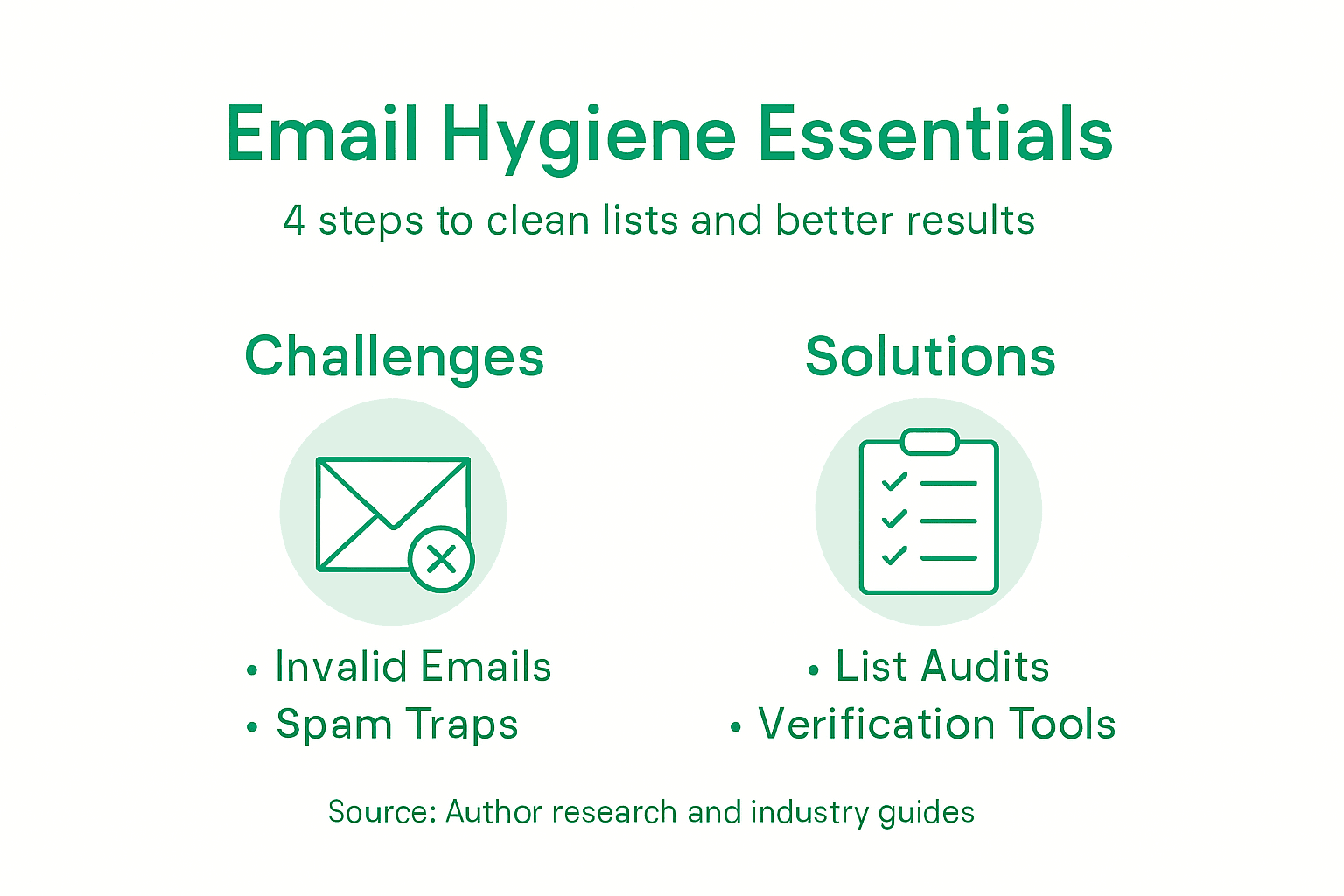
Email marketing professionals must be vigilant about the various contaminants that can compromise their contact lists. Poor list management often results in multiple harmful contact types that can significantly damage marketing performance and sender reputation.
The most common email list contaminants include:
- Fake email addresses: Deliberately false or randomly generated contacts
- Spam traps: Hidden email addresses designed to catch unethical marketers
- Disposable email addresses: Temporary accounts created for one-time use
- Role-based emails: Generic addresses like info@company.com or support@organization.com
- Inactive subscriber accounts: Email addresses that have not engaged with content for extended periods
These contaminants pose significant risks to email marketing campaigns. Fake and invalid addresses can trigger spam filters, reduce deliverability rates, and potentially get your entire domain blacklisted. Each invalid contact represents not just a wasted marketing effort, but a potential threat to your overall email infrastructure.

Here's a quick reference for recognizing and preventing major email list contaminants:
| Contaminant Type | Impact on Campaigns | Prevention Strategy |
|---|---|---|
| Fake Email Addresses | Increased bounces; low engagement | Use real-time validation tools |
| Spam Traps | Sender reputation damage; blacklisting | Employ list cleaning solutions |
| Disposable Addresses | Short-term contacts; deliverability risk | Restrict sign-up using such domains |
| Role-Based Emails | Low personalization; poor relevance | Filter during onboarding |
| Inactive Subscribers | Reduced engagement metrics | Run re-engagement campaigns |
Understanding the specific characteristics of these contaminants helps marketers develop more sophisticated email list management strategies:
- Identify patterns in invalid email submissions
- Implement robust email verification processes
- Create strict signup validation protocols
- Regularly audit and clean contact lists
- Set clear engagement thresholds for subscriber retention
Maintaining a clean email list is not just a best practice—it's a critical component of successful digital marketing strategy.
Pro tip: Develop an automated quarterly email list cleaning workflow to proactively remove potential contaminants and maintain high-quality contact databases.
How Email Hygiene Improves Deliverability
Email deliverability is the critical lifeline of any digital marketing strategy, and email hygiene plays a fundamental role in maintaining this essential communication channel. Marketing professionals must understand that clean email lists directly impact their ability to reach target audiences effectively.
The key mechanisms by which email hygiene enhances deliverability include:
- Reducing bounce rates
- Minimizing spam filter triggers
- Improving sender reputation scores
- Maintaining engagement metrics
- Preventing domain blacklisting
Email service providers and internet service providers continuously monitor sender behavior, creating complex algorithms that assess the quality of email communications. Invalid or inactive email addresses can significantly damage these crucial reputation scores, potentially blocking future marketing efforts across entire domains.
Successful email deliverability requires a comprehensive approach to list management:
- Regularly validate email addresses
- Remove consistently unengaged subscribers
- Implement double opt-in processes
- Monitor bounce and complaint rates
- Segment lists based on engagement levels
Clean email lists are not just a technical requirement—they are a strategic asset for digital marketing success.
Pro tip: Conduct monthly email list hygiene audits to proactively identify and remove potential deliverability obstacles before they impact campaign performance.
Techniques and Tools for List Maintenance
Marketing professionals require sophisticated strategies for maintaining email lists, and effective list maintenance involves comprehensive verification and cleaning techniques. Successful email list management goes beyond simple data collection, demanding proactive and systematic approaches to ensure list quality.
Key techniques for maintaining a healthy email list include:
- Implementing real-time email verification
- Conducting regular list audits
- Removing hard bounce addresses
- Tracking subscriber engagement levels
- Segmenting lists based on interaction history
- Establishing clear re-engagement protocols
Technological solutions play a crucial role in email list maintenance. Modern verification tools provide advanced capabilities that go beyond basic email format checks. These sophisticated platforms can detect temporary email addresses, validate domain existence, and assess the overall risk associated with specific email contacts.
The table below summarizes leading email hygiene tools and their unique benefits for marketers:
| Tool Category | Sample Feature | Business Benefit |
|---|---|---|
| Real-Time Verification | Immediate error detection | Prevents list contamination early |
| Automated Cleaning | Recurring scheduled checks | Maintains list quality over time |
| Engagement Analytics | Track opens/clicks rates | Identifies disengaged contacts |
| Domain Validation | Check domain authenticity | Reduces fake email submissions |
Successful list maintenance requires a strategic approach:
- Select robust email verification platforms
- Create automated cleaning workflows
- Establish minimum engagement thresholds
- Develop re-engagement campaign strategies
- Monitor list health metrics consistently
Effective email list maintenance is not just about removing bad contacts—it's about cultivating a high-quality, responsive communication channel.
Pro tip: Integrate automated email verification tools into your marketing workflow to continuously monitor and maintain list quality without manual intervention.
Risks of Poor Email Hygiene in B2B Campaigns
B2B marketing professionals face significant challenges when email list hygiene is neglected, and maintaining clean email lists becomes critical for sustainable business communication. Poor email hygiene can transform a promising marketing strategy into a potential business liability.
The most devastating risks associated with inadequate email list maintenance include:
- Dramatic reduction in email deliverability rates
- Substantial damage to sender reputation
- Increased likelihood of domain blacklisting
- Higher marketing communication costs
- Potential legal and compliance violations
- Decreased overall campaign performance
- Erosion of customer trust
B2B marketers must understand that each invalid or unengaged email address represents more than just a wasted communication attempt. These contaminated contacts can trigger sophisticated spam detection algorithms, potentially causing long-term damage to an organization's digital communication infrastructure.
The potential consequences of poor email hygiene extend beyond immediate marketing metrics:
- Permanent damage to brand credibility
- Significant financial losses from ineffective campaigns
- Reduced trust from potential business partners
- Compromised data security and privacy
- Potential violations of email marketing regulations
Poor email list management is not just a technical issue—it's a strategic business risk that can undermine entire marketing efforts.
Pro tip: Implement a quarterly comprehensive email list audit to proactively identify and mitigate potential risks before they impact your B2B marketing performance.
Enhance Your Email Hygiene with BillionVerify for Marketing Success
Maintaining clean and healthy email lists is essential to overcoming the challenges of invalid addresses, spam traps, and inactive subscribers discussed in the article. BillionVerify offers powerful solutions designed to tackle these pain points by providing real-time email verification, detecting disposable and role-based emails, and delivering detailed reports to help marketers protect their sender reputation and boost deliverability. By implementing these proven email hygiene practices, you take control of your campaign performance and safeguard your brand’s credibility.
Take the next step toward flawless email marketing. Visit BillionVerify today to explore our real-time email verification API and bulk email list cleaning services. Start your free trial now to experience how precise verification and automated list maintenance can transform your B2B campaigns. Clean lists mean greater engagement and higher ROI—don’t wait to secure your email hygiene advantage.
Frequently Asked Questions
What is email hygiene in marketing?
Email hygiene refers to the process of maintaining a clean and effective email list by regularly verifying and managing contact information to ensure that invalid or inactive addresses are removed.
Why is maintaining email hygiene important for campaign success?
Maintaining email hygiene is crucial for campaign success as it reduces bounce rates, minimizes the chances of triggering spam filters, improves sender reputation, and enhances overall email deliverability, leading to more effective communications.
How often should I perform email hygiene practices?
It is recommended to conduct email hygiene practices at least quarterly, but implementing monthly audits can be more effective in identifying and removing potential contaminants from your email list promptly.
What tools can help with email list maintenance?
Various tools can aid in email list maintenance, including real-time verification tools, automated cleaning solutions, and engagement analytics features that help track subscriber activity and maintain a high-quality email list.