


A public records search finds information that government offices must make available. Court records, criminal records, property records and many licenses are public records. Most of them can be searched for free or for a small fee at the office that keeps them. The hard part is knowing where each record lives.
This guide explains what public records are and which court records are open. It shows how to run a court records search for free, including federal cases on PACER. It also covers criminal records, sealed cases and the legal limits on using what you find. Finally, it shows how a BeenVerified public records search pulls many sources into one report.
We are not affiliated with BeenVerified. BillionVerify is an email verification service. Every BeenVerified fact below comes from its own website, checked in October 2026. Government facts come from official .gov pages, linked in place. For an overview of the company, start with our BeenVerified guide.
Key facts (checked October 2026):
- PACER, the federal courts' online system, charges 10 cents per page with a $3.00 cap per document, per the official fee schedule.
- PACER waives the bill for any quarter in which a user spends $30 or less.
- The PACER Case Locator refreshes once a day, and most federal cases filed before 1999 exist only on paper.
- The Freedom of Information Act lets anyone request records from federal agencies, as explained on FOIA.gov.
- BeenVerified's Court Records tab searches by person, case number, party name or court in a single box.
- The FCRA does not let anyone use BeenVerified results to vet tenants or staff, since BeenVerified is not a regulated screening firm.
What Are Public Records?
Public records are government files that anyone may see. BeenVerified's own guide to public records calls the term "a broad one." It covers "any information that is contained within an official reporting of facts available to the general public."
Some public records are easy to reach. A listed phone number is one example. Others need a formal request. BeenVerified notes that some data is "only accessible with an open-records request."
Not every government record counts among public records. Laws decide what can be released and how it is stored. Personal privacy, ongoing investigations and national security all limit access.
What public records can include
BeenVerified lists what an individual's public record may hold:
- Name, aliases and marital status.
- Current and former addresses and phone numbers.
- Birth date, age and family members.
- Arrest history and conviction history.
- Business ties, work history and professional licenses.
- Property records and tax records.
- Litigation history and driver records.
- Sex offender registration.
- Political party affiliation.
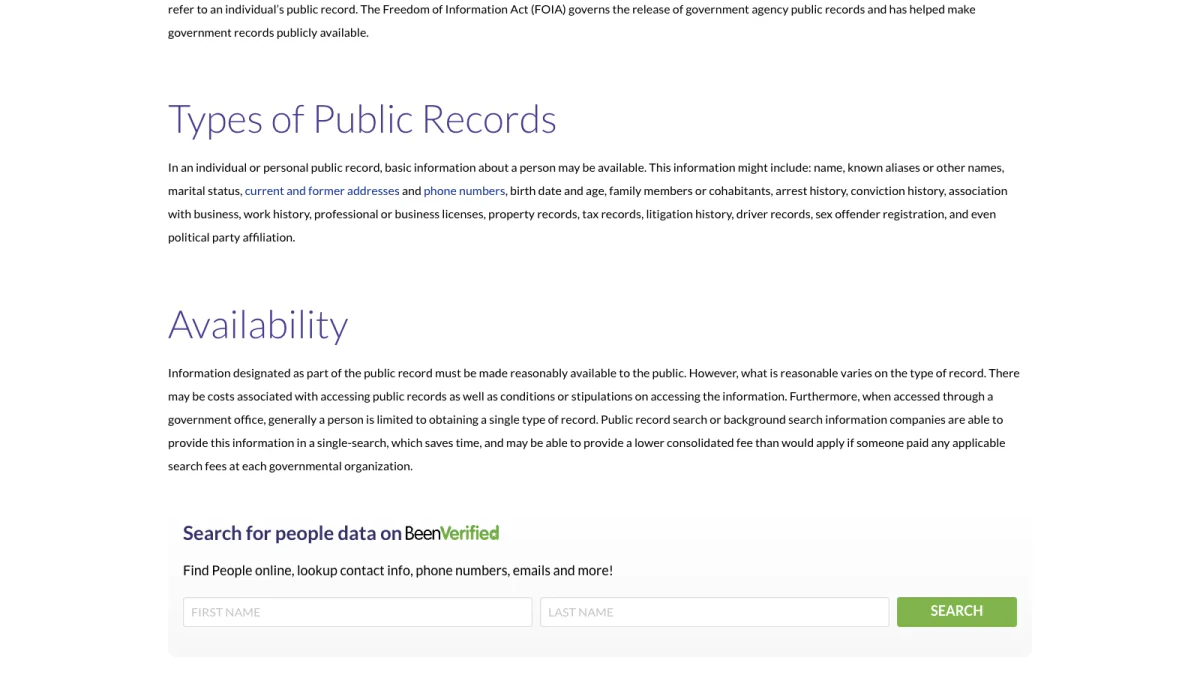
Screenshot: "Types of Public Records" and "Availability" on BeenVerified's public records guide.
Who keeps public records
No single office holds all public records. Counties keep deeds, marriage records and local court files. States run court systems, sex offender lists and licensing boards. Federal courts and agencies keep their own files. That spread is why a public records search often means several stops.
Federal records and FOIA
The Freedom of Information Act covers records held by federal agencies. Per FOIA.gov, the law has given the public "the right to request access to records from any federal agency" since 1967. Agencies must release records unless one of nine exemptions applies. Those exemptions protect things like "personal privacy, national security, and law enforcement."
A FOIA request has "no initial fee," per the FOIA.gov FAQ. Some requests can still carry search or copy fees. You can set a limit on what you will pay.
How to Do a Public Records Search With BeenVerified
BeenVerified puts court records on its homepage. A dedicated tab sits next to People, Phone, Email and the other search types. Its headline asks, "What can a legal record reveal?"
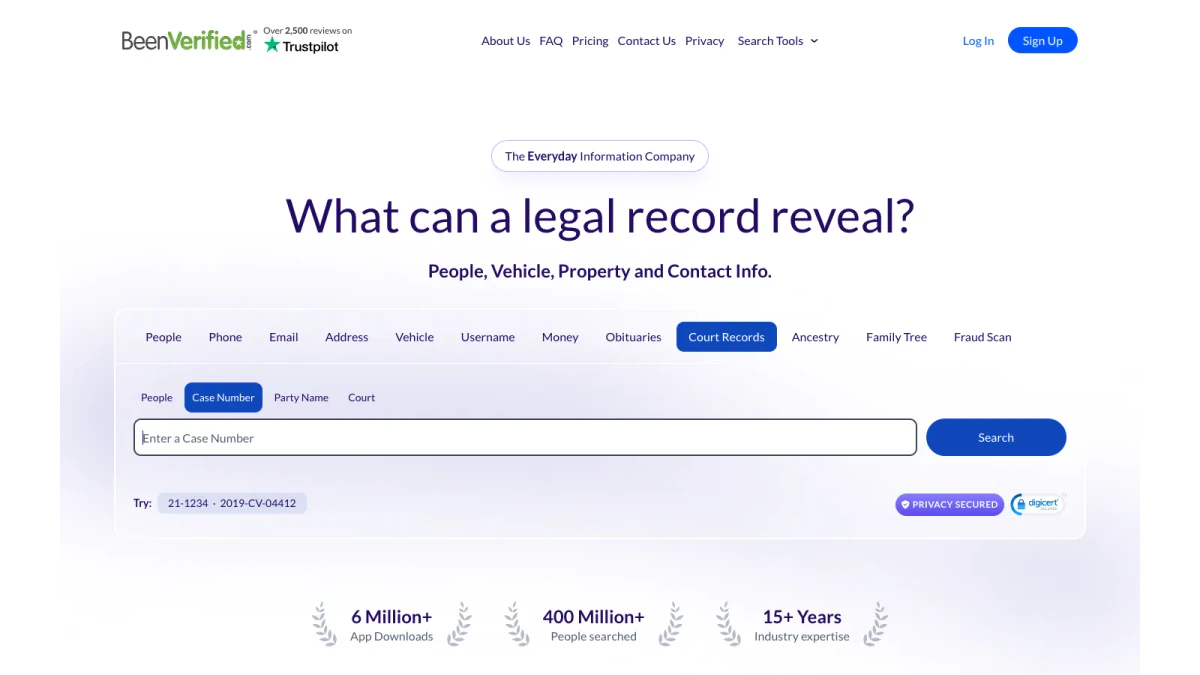
Screenshot: BeenVerified's court search with Case Number selected.
Step 1: Open the Court Records tab
Go to beenverified.com. Click the court tab in the row of search types. Four small buttons appear under the tabs.
Step 2: Pick a search mode
The court tab offers four modes:
| Mode | What you enter | Best for |
|---|---|---|
| People | A person's name | Cases tied to one person |
| Case Number | A case number, such as 2019-CV-04412 | A case you already know |
| Party Name | A party to a case | Lawsuits naming a business or person |
| Court | A court | Cases filed in one court |
The search box shows example inputs. Its docket hints read "21-1234" and "2019-CV-04412."
Step 3: Run the search
Type what you know and press Search on BeenVerified. A BeenVerified public records search returns possible matches. Narrow them with location and age.
Step 4: Open the report
Full BeenVerified reports need a membership or the $1 trial. In October 2026, BeenVerified's pricing listed $36.89 a month, or $23.98 a month on a 3 month plan. All plans share the same features. Check current pricing before you join.
Step 5: Confirm the record at the source
A BeenVerified report points you to a record. The court or office that keeps it has the official copy. Before you rely on a result, check it with that court.
What BeenVerified Public Records Search Results Show
BeenVerified does not create records. BeenVerified gathers records from many sources and links them to a person, phone or address. Its public records tools say you can search "phone, address, email, criminal and arrest records." You can also look up "lien and bankruptcy records."
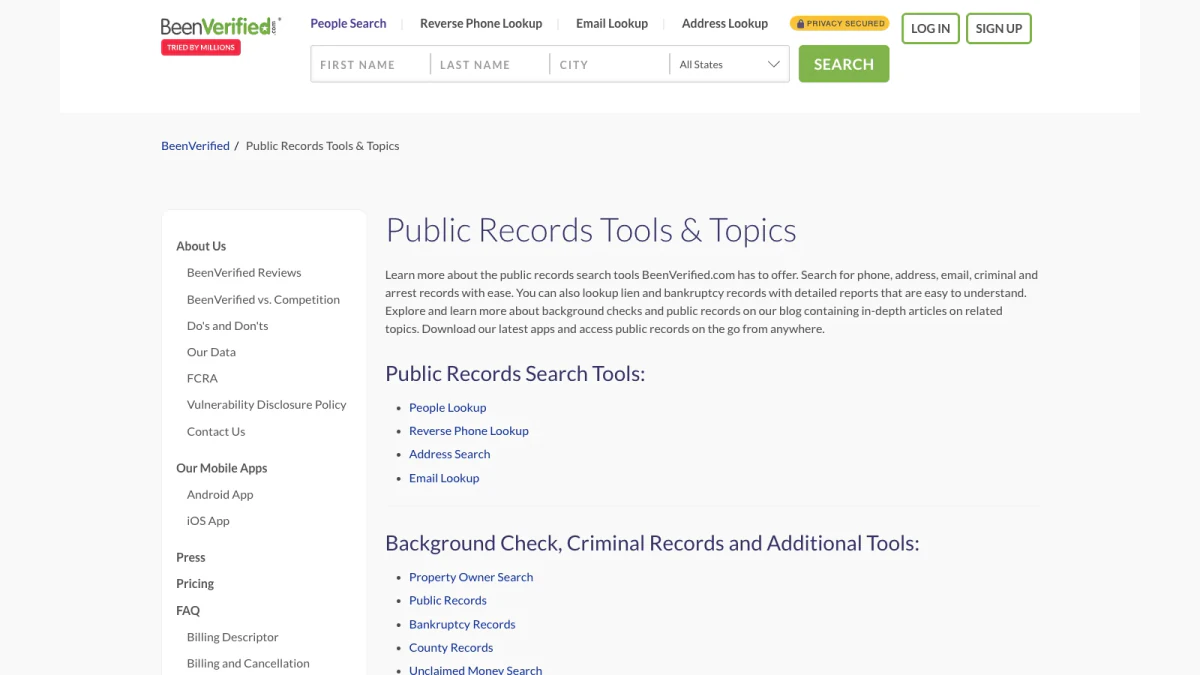
Screenshot: BeenVerified's Public Records Tools & Topics.
Its public records tools list includes:
- People lookup, reverse phone lookup, address search and email lookup.
- Property owner search and county records.
- Bankruptcy records.
- Voter registration records.
- Unclaimed money search.
- Username search and VIN number search.
- White pages reverse lookup.
BeenVerified results come back as possible matches, not certified copies. The site footer says reports are "not necessarily 100% accurate, complete or up to date." It adds that "some municipalities and jurisdictions are slow to report and digitize their data."
Why people use a records search service
BeenVerified explains the value in its own guide. A government office usually gives "a single type of record." A records company can "provide this information in a single-search, which saves time." It "may be able to provide a lower consolidated fee" than paying each office.
That is the real trade-off with public records. Official sources are often free or cheap, one record at a time. A BeenVerified public records search costs a membership but gathers many sources in one report.
Free Public Records Search Options
You can do a free public records search for many record types. Start here before you pay for a report. A free public records search covers more ground than most people expect.
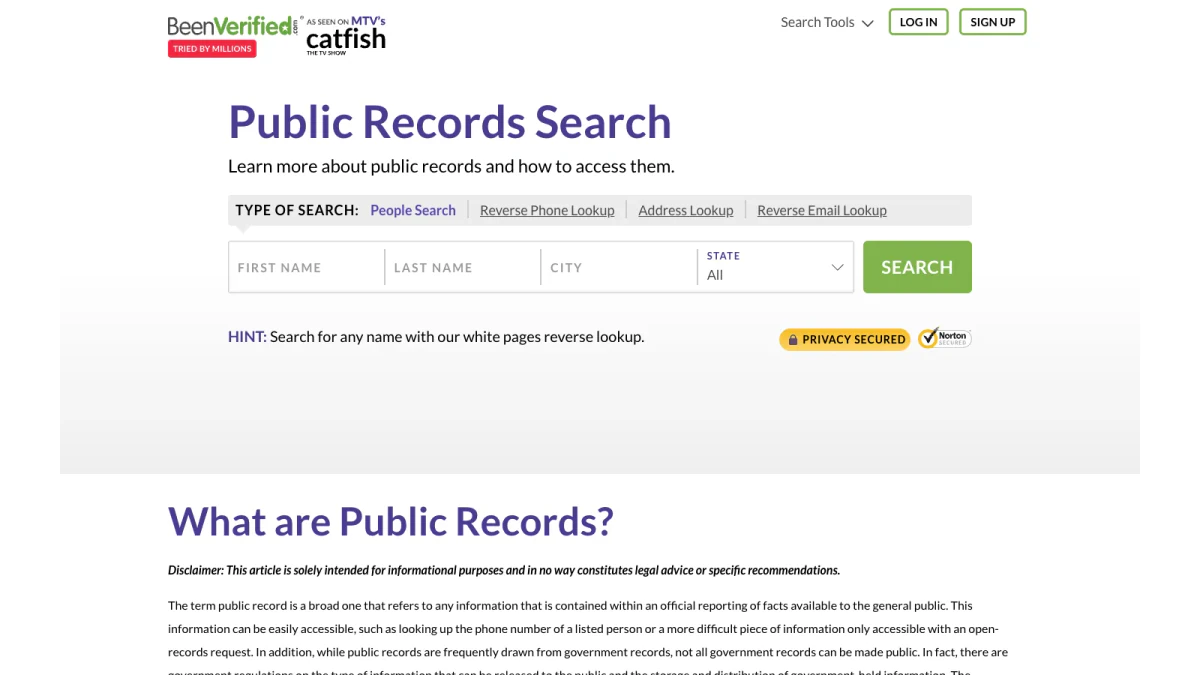
Screenshot: the top of BeenVerified's public records search page.
County and state court portals
State and county courts keep most case files. Many states run an online case search. Others want you to call or visit the clerk. California, for example, offers a Find my court tool. You enter a ZIP code or city to find nearby court locations. The clerk there can tell you how to view files.
A state court records search portal usually lets you look up a name or a docket number. Coverage varies a lot. Some portals show civil cases only. Some hide older files. Some charge for copies. Check each court's own help page.
Tips for any state court records search:
- Search the county first. Most criminal and civil cases start at county level.
- Try name variants. Courts index names as filed, with typos and all.
- Note the docket number. It is the fastest way back to a file.
- Ask the clerk. Clerks can explain fees and what is not online.
Federal courts: PACER
Federal cases live in PACER, short for Public Access to Court Electronic Records. Any federal court records search starts there. Per uscourts.gov, PACER "allows anyone with an account to search and locate appellate, district, and bankruptcy court case and docket information."
A PACER federal court records search works like this:
- Register for a PACER account.
- Use the PACER Case Locator if you don't know the court. It runs nationwide searches.
- Log into the specific court's system if you know where the case was filed.
- Open the docket and the documents you need.
The PACER Case Locator "updates at midnight each day." Most cases from before 1999 exist on paper only. Paper files sit at the court or at a Federal Records Center.
What PACER costs
Federal filings are cheap to read. The rules, per PACER's fee page and uscourts.gov:
| Item | Cost |
|---|---|
| Viewing a document online | 10 cents per page |
| Cap per document | $3.00 |
| Quarterly bill under $30 | Waived |
| Court opinions | Free |
| Viewing files at the courthouse | Free |
| Printing at a courthouse terminal | Same per-page rate |
| Retrieving a file from a Federal Records Center | $64 |
So light users often pay nothing. A free public court records search is realistic for most people who need a few federal filings.
Offender registries
The National Sex Offender Public Website, or NSOPW, searches state, territory and tribal registries at once. It is free. BeenVerified also lists registry data among public record types.
Property and county records
Deeds, mortgages and property tax records sit with county offices. Many counties post an online search. Look for the county assessor or recorder site. Our guide to BeenVerified address lookup covers property searches in more depth.
When free tools are enough
A free public records search works well when you need one record from one place. Federal cases, registry checks and single property deeds all fit. Paid reports help when you need a wide view across many places. Use free official tools first. A free public records search on government sites costs nothing but time. Pay when the trail runs across several states.
What Court Records Are Public
Courts are open by default, so most of their files are too. Courts are open so the public can watch how justice works. Still, some files are closed or partly hidden.
Usually public:
- Case numbers, party names and filing dates.
- Dockets, the list of filings in a case.
- Judgments and many court opinions.
- Most civil lawsuits and most criminal case files.
Often limited or closed:
- Juvenile cases.
- Many family law details, such as child custody files.
- Records a judge has sealed.
- Personal data that court rules require filers to redact.
Rules differ by state and by court. When a court records search shows a case but no documents, the file may be limited. The clerk can say what you are allowed to see.
Criminal Records vs Civil Records
Court records split into two big groups. Knowing which one you need saves time.
Criminal records
Criminal records come from cases the government brings. Most counties offer a criminal records search through the clerk. They can show arrests, charges, pleas, convictions and sentences. Arrest records may also sit with police, not courts. An arrest is not a conviction. Many charges are dropped or end in acquittal.
A criminal records search at the courthouse shows the full history of each charge. A criminal record search through a people search site may combine court data with other sources. Either way, check the final outcome of each case before you draw a conclusion.
Civil records
Civil records come from disputes between people or businesses. Think lawsuits over money, contracts, evictions and injuries. Divorce and probate are civil too. Civil records show who sued whom, over what, and how it ended.
Traffic records
Traffic cases often sit in their own courts or in county systems. BeenVerified includes "criminal & traffic records" in every plan. Your state's motor vehicle office keeps official driving records too.
Which one do you need?
| You want to know | Look in |
|---|---|
| Whether someone was convicted of a crime | Criminal court records |
| Whether a company has been sued | Civil court records |
| Whether someone filed for bankruptcy | Federal bankruptcy court, via PACER |
| Whether a landlord evicted tenants | Civil or housing court records |
| A driving history | Traffic court or state records |
Sealed and Expunged Records
Some criminal records leave public view. Two common terms describe this:
- Sealed: the record still exists, but the public cannot see it.
- Expunged: the record is treated as if it never happened, where state law allows.
The rules vary a lot by state. California is a good example. Its court self-help guide says "true expungement does not exist in California." It adds that "there may be options to clean your record depending on your situation."
For a public records search, this means two things. First, a clean result does not prove someone never faced charges. Second, a people search site may still show old data that a court has sealed. If you find a record you believe is sealed, don't rely on it. Ask the court.
Public Records Search by Name
A public records search by name is the most common way to start. It also returns the most false matches. Here is a simple order to follow when all you have is a name.
Start with public court records search tools
Most states run a state court records search portal on their judiciary website. Search the name there, county by county if needed. A public court records search on a state site shows case numbers, parties and filing dates. Many states let you do this at no cost.
Add federal cases
Next, run a PACER federal court records search. The Case Locator checks every federal court at once. A federal court records search catches bankruptcies and federal crimes that a state portal misses.
Run a criminal records search
A criminal records search returns charges filed in that court system. Read each case to the end. Look for the disposition: dismissed, acquitted or convicted. Only the disposition tells you how the case ended.
Compare with a paid report
BeenVerified public records search results can tie those cases to addresses, relatives and phone numbers. That helps you confirm the right person. Use the report as a map. Then go back to the court for the official record.
A free public court records search checklist
- The full name, a birth year and every past city.
- Each county court website in those places.
- Your state judiciary website.
- PACER for federal cases.
- NSOPW for registry checks.
Tips for a Better Public Records Search
Good input and careful reading make any public records search more useful.
- Use full legal names. Courts index cases by the name used in filings.
- Add a birth year or age. It separates people who share a name.
- Search every county the person lived in. Records stay where the case was filed. A state court records search may not cover every county.
- Read the outcome, not just the charge. Many cases end without a conviction.
- Check dates. Old records may be out of date or since sealed.
- Keep notes. Write down case numbers, courts and dates as you go.
Common mistakes
- Treating a name match as proof. Two people can share a name and a city.
- Assuming one state's portal covers the whole country. It doesn't.
- Paying for a report before trying a free criminal records search or court lookup.
- Forgetting federal courts. Bankruptcy and federal crimes sit in PACER.
Limits and Legal Use
Public records are open, but not unlimited. The law sets rules on how some of them can be used.
BeenVerified is not a consumer reporting agency under the Fair Credit Reporting Act (FCRA). Its FCRA notice bans using its data for decisions about employment, housing, credit, insurance or education. That rule covers the court data in its reports too. You can read the legal definition in 15 U.S.C. § 1681a.
For hiring or tenant screening, use a screening firm that follows the FCRA. Our guide to the BeenVerified background check explains the difference in more detail.
A few more limits:
- Don't harass. A record is not a license to contact or shame someone.
- Don't treat a report as evidence. BeenVerified says its data "must not be solely relied upon for legal purposes."
- Respect sealed records. Courts seal records for a reason.
Public Records for Business Due Diligence
Many people check public records before a business deal. Is the company real? Has it been sued? Did the owner file for bankruptcy? Public records answer those questions.
Public records cover the company. Check the contact details too. A business that looks clean on paper can still give you a fake email or phone line. Fraudsters often borrow a real company name and pair it with their own inbox.
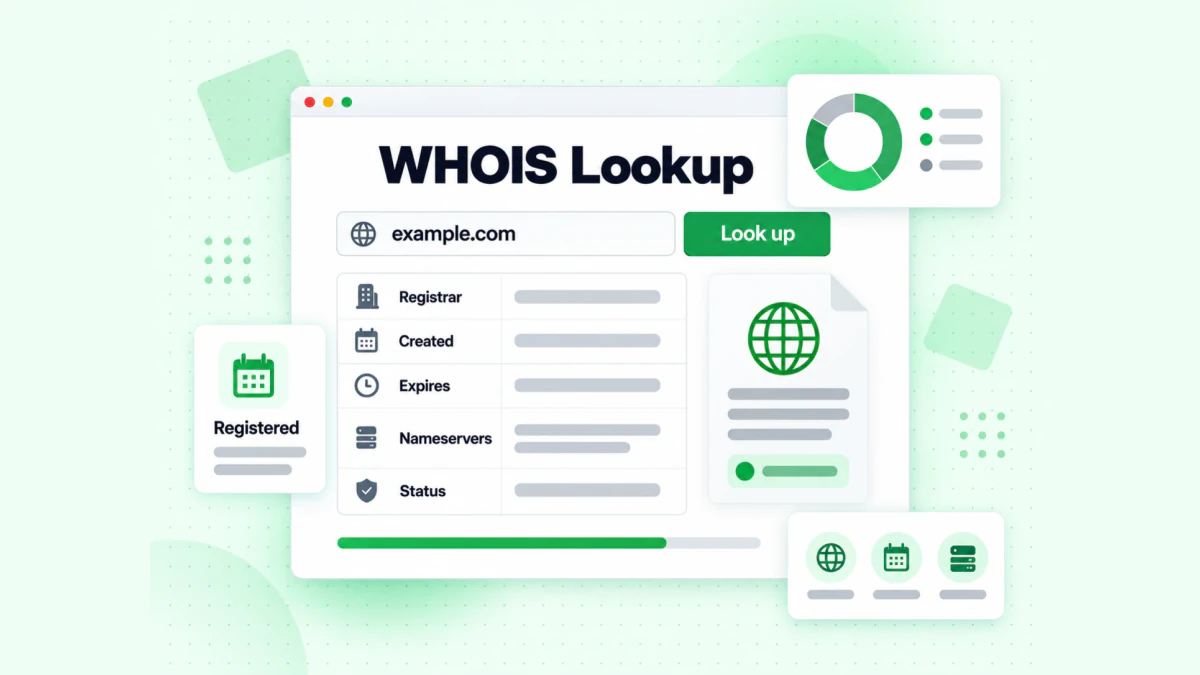
The BillionVerify WHOIS lookup reads a domain's registration record.
Three quick checks help:
- Check the domain. Our free WHOIS domain lookup shows the registrar, creation and expiry dates, nameservers and status. A domain created last week deserves a closer look.
- Check the inbox. Our free reverse email lookup reads the domain, organisation, mail routing and any public profile behind an address. It uses public signals only.
- Check the phone. Our free phone number validator shows whether a number is valid for its country and its line type. It also returns the E.164 format.
Before you send contracts or invoices, verify the email address with BillionVerify. It checks syntax, domain, MX records and the mailbox itself. It reports catch-all, disposable and role addresses as their own results. You get 20 free credits every day you use your account, up to 600 a month. They never expire, and unknown results are free.
FAQs
What are public records?
Public records are files that government offices must share with anyone. Think court cases, arrests, deeds and licenses. Some sit online. Others need a visit or a written request.
How do I do a free public records search?
A free public records search starts at the office that keeps the record. Local court websites cover most cases. PACER covers federal ones. Use NSOPW for offender registries. Many of these are free or cost a few cents per page.
Are court records public?
Yes, court records are public in most cases. Juvenile cases, some family law files and sealed cases are limited. The court clerk can tell you what is open.
How do I search federal court records?
You search federal cases through a PACER account and its nationwide Case Locator. You pay a dime a page, up to $3 a document, and light quarterly use is free.
What is the difference between criminal records and civil records?
A criminal case is the state against a person. A civil case is a private dispute, such as a lawsuit over money or an eviction.
Can I do a criminal records search with only a name?
Yes, most court portals and BeenVerified's court tab accept a name. A public records search by name works best with a city and an age range added.
Does a BeenVerified public records search show sealed records?
A BeenVerified public records search should not show sealed records, but old data can linger in any database. Treat a sealed record as unavailable. If you think a result is wrong, check with the court.
Can I use public records to screen a tenant or employee?
Public records from BeenVerified are off limits for tenant or employee screening. BeenVerified is outside the FCRA rules for screening firms. Use an FCRA-compliant screening firm for those decisions.
What does BeenVerified add to a free public records search?
BeenVerified adds convenience to a free public records search. One search covers many offices at once. Going to each office costs less per record but takes longer.