



TL;DR:
- Choosing the right platform depends on automation depth, integrations, deliverability, analytics, pricing, and data privacy.
- Klaviyo dominates e-commerce with advanced flows, while ActiveCampaign and Customer.io are preferred for SaaS with behavioral needs.
- Prioritize clean data, workflow audits, and automated flows over feature count to maximize ROI.
Choosing the right email automation platform is one of the most consequential decisions an e-commerce or SaaS marketing team can make. With dozens of tools competing for your budget, each promising higher open rates, smarter segmentation, and seamless integrations, the selection process can feel paralyzing even for seasoned professionals. The stakes are real: the platform you choose shapes your entire customer journey, from welcome sequences to post-purchase flows and churn prevention. This guide cuts through the noise by providing a structured framework for evaluation, detailed platform comparisons, and scenario-based recommendations grounded in performance data.
Key Takeaways
| Point | Details |
|---|---|
| Choose based on needs | Select an email automation platform that aligns with your business model, campaign complexity, and preferred integrations. |
| Flows outperform campaigns | Automated flows yield significantly higher engagement and revenue than single campaign sends. |
| Pricing and features vary | Platform costs and advanced functionality differ widely—balance capability with your team's resources and goals. |
| Deliverability is crucial | Success depends on deliverability and data hygiene as much as automation sophistication. |
How to evaluate email automation platforms
Before comparing specific tools, it helps to establish a consistent evaluation framework. Not every platform excels at the same things, and the right choice depends heavily on your business model, tech stack, and growth stage.
The most critical criteria to assess include:
- Automation depth: Can the platform handle conditional logic, multi-branch flows, and event-triggered sequences without requiring developer support?
- Integrations: Does it connect natively with your e-commerce platform, CRM, and data warehouse?
- Deliverability infrastructure: Does the platform actively monitor sender reputation, offer dedicated IPs, and provide inbox placement reporting?
- Analytics and attribution: Can you track revenue per recipient (RPR), flow-level performance, and segment-level conversion rates?
- Pricing scalability: Does the cost model stay reasonable as your list grows beyond 50,000 or 100,000 contacts?
- Data privacy compliance: Is the platform GDPR and CAN-SPAM compliant, with clear data retention policies?
E-commerce teams typically prioritize pre-built flows for cart abandonment, browse abandonment, and post-purchase sequences, while SaaS teams lean toward behavioral event-based triggers tied to product usage. These are fundamentally different automation philosophies, and email platform selection should reflect that distinction from the start.
One often-overlooked benchmark: flows outperform campaigns across virtually every industry measured, meaning teams that automate seven or more behavioral flows consistently generate more revenue per contact than those relying on broadcast sends.
Pro Tip: Before signing a contract, request a sandbox environment and test your most complex automation scenario. If the platform struggles with your edge cases in a trial, it will struggle in production.
Examples of top email automation platforms
With evaluation criteria established, here are the platforms that consistently deliver measurable results for e-commerce and SaaS marketing teams in 2026.
Klaviyo is the dominant choice for e-commerce. Its flow builder is purpose-built for retail behavior, with native integrations for Shopify, WooCommerce, and BigCommerce. According to Klaviyo's own benchmarks, the platform generates 41% of revenue from just 5.3% of sends, driven by high-performing automated flows with industry-leading RPR. For a deeper breakdown, the Klaviyo review covers its segmentation engine and pricing tiers in detail.
ActiveCampaign is the go-to for SaaS companies and SMBs that need advanced CRM functionality alongside automation. It supports 900+ integrations and offers a visual automation builder capable of handling complex conditional logic. See the ActiveCampaign review for a full feature walkthrough.
Customer.io targets developer-friendly SaaS teams. It supports multi-channel messaging across email, SMS, push, and in-app notifications, with event-based triggers that connect directly to your product data layer.
Omnisend and Drip both focus on e-commerce automation with pre-built flows and affordable pricing, making them strong options for brands that want fast setup without heavy configuration.
HubSpot offers an all-in-one solution with deep CRM sync. For teams that want marketing, sales, and service data unified in one platform, HubSpot email marketing capabilities are hard to match, though the pricing reflects that breadth.
"The best automation platform is not the one with the most features. It is the one your team will actually use consistently and correctly."
Pro Tip: If your team lacks dedicated developers, prioritize platforms with a visual flow builder and pre-built templates. Speed to deployment often matters more than raw feature depth.
Comparison of leading platforms: Features and pricing
To make the decision clearer, here is a side-by-side comparison of the six platforms across the dimensions that most directly affect marketing outcomes.

| Platform | Best for | Automation depth | Key integrations | Starting price | Native channels |
|---|---|---|---|---|---|
| Klaviyo | E-commerce | Advanced flows | Shopify, WooCommerce | Free up to 500 contacts | Email, SMS |
| ActiveCampaign | SaaS, SMBs | Complex logic, CRM | 900+ apps | ~$15/mo | Email, SMS, CRM |
| Customer.io | SaaS, developers | Event-based, multi-channel | Segment, custom APIs | ~$100/mo | Email, SMS, push, in-app |
| Omnisend | Small e-commerce | Pre-built flows | Shopify, BigCommerce | Free tier available | Email, SMS, push |
| Drip | Shopify stores | Revenue attribution | Shopify, WooCommerce | ~$39/mo | Email, SMS |
| HubSpot | Enterprise, all-in-one | CRM-driven workflows | 1,000+ apps | Free CRM, paid tiers | Email, SMS, ads |
Several performance-level distinctions are worth highlighting:
- Klaviyo's automated flows deliver up to 18x higher RPR than one-off campaign sends, making flow investment a clear priority.
- For budget-conscious teams, Omnisend is roughly 30 to 50% more affordable than Klaviyo for lists around 10,000 subscribers, with comparable e-commerce flow templates.
- Customer.io starts at $100 per month but provides multi-channel flexibility and advanced segmentation that SaaS teams with complex behavioral data will find difficult to replicate elsewhere.
Exploring the full range of email automation tools available in 2026 can help you identify which platforms align with your specific stack before committing to a trial. For teams still building their automation strategy from scratch, the email automation guide provides a strong foundational reference.
Situational recommendations: Which platform fits your needs?
With the comparison laid out, here is how to match each platform to your specific business scenario.
E-commerce brands with established Shopify or WooCommerce stores: Klaviyo is the strongest default choice. Its pre-built flows, native integrations, and revenue attribution reporting are purpose-built for retail. Omnisend is the better option if budget is a constraint or your list is under 10,000 contacts.
SaaS companies focused on retention and activation: ActiveCampaign and Customer.io are the clear leaders. ActiveCampaign suits teams that want a visual builder with CRM depth, while Customer.io fits engineering-led teams that want to pipe product events directly into messaging logic.
Shopify-centric stores with a focus on revenue tracking: Drip's revenue attribution model and tight Shopify integration make it a practical choice for stores that want clear ROI reporting without the complexity of Klaviyo.
Enterprise teams needing a unified platform: HubSpot's all-in-one architecture, with 1,000+ integrations and a built-in CRM, is the most scalable option for organizations that want marketing, sales, and service data in one place.
Teams prioritizing personalization at scale: Regardless of platform, personalization strategies that leverage behavioral segmentation and dynamic content consistently outperform static campaigns across all tools.
E-commerce professionals favor Klaviyo and Omnisend for their native integrations and pre-built flows, while SaaS teams prefer ActiveCampaign and Customer.io for the behavioral depth required to support complex product-led growth models.
The single most impactful decision you can make, regardless of which platform you choose, is to prioritize automated flows over broadcast campaigns. The revenue difference is not marginal. It is structural.
What most guides miss about email automation platform selection
Most platform comparison guides focus almost entirely on feature lists and pricing tiers. That framing misses the variables that actually determine long-term ROI.
The most common failure pattern we see is teams selecting a platform with impressive automation capabilities, then quietly watching performance erode because their contact list is full of invalid addresses, spam traps, and role-based emails. No automation logic, however sophisticated, can compensate for a list that damages sender reputation. Inbox placement drops, engagement rates fall, and the platform gets blamed for a problem that originated in data quality.
Simpler, well-maintained automation flows consistently outperform elaborate setups built on dirty data. A five-step welcome series sent to a verified, engaged list will generate more revenue than a 20-branch conditional flow sent to a list that has never been audited.
The teams that sustain strong email performance over time invest in three things: clean data practices, regular workflow audits, and scenario-based flow design that reflects actual customer behavior. Reviewing the full landscape of best automation tools is valuable, but it should always be paired with an honest assessment of your data hygiene practices.
Supercharge your campaigns with verified deliverability
Once you have selected the right automation platform, the next variable that determines campaign success is the quality of the contacts you are sending to. Even the most advanced flow architecture cannot recover ROI lost to high bounce rates, spam trap hits, or blacklisting events.
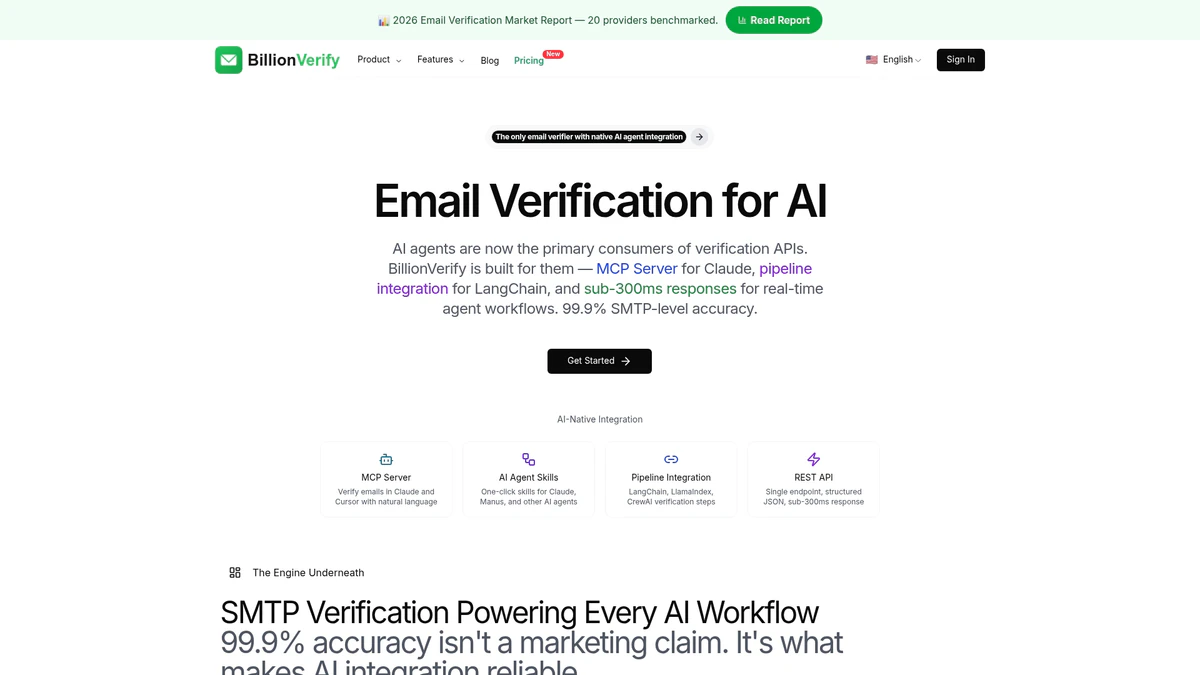
BillionVerify provides enterprise-grade email verification that removes invalid addresses, disposable emails, catch-all domains, and spam traps before they damage your sender reputation. With real-time verification, bulk processing for large lists, and API integration with over 20 major email platforms, BillionVerify ensures that every contact in your automation flows is a deliverable, engagement-ready address. Start verifying your list today and protect the ROI your automation platform is built to generate.
Frequently asked questions
What is the difference between campaign emails and automation flows?
Campaign emails are one-off sends to a defined list, while automation flows are triggered by specific subscriber actions or behaviors. Flows generate up to 18x higher RPR than standard campaigns, making them the higher-priority investment for revenue-focused teams.
Which email automation platform is best for small e-commerce brands?
Omnisend is the strongest choice for small e-commerce brands due to its pre-built flows, multi-channel capabilities, and competitive pricing. Omnisend is more affordable than Klaviyo for smaller lists, making it accessible without sacrificing core automation features.
Do I need developer skills to use Customer.io?
Customer.io is highly flexible but typically requires developer involvement for advanced event-based automations. Developer setup is needed to connect product event data, though basic campaigns can be managed by marketers.
How do integrations affect platform choice?
Integrations determine how cleanly a platform connects to your existing stack, directly affecting the quality and depth of your automation triggers and personalization. ActiveCampaign's 900+ integrations make it especially well-suited for teams with complex or multi-tool environments.
Are automation platforms worth the investment for SaaS companies?
Yes. SaaS companies benefit significantly from platforms like ActiveCampaign and Customer.io, which support behavioral, event-driven messaging tied to product usage. Customer.io specializes in behavioral messaging that drives activation, retention, and expansion revenue across the customer lifecycle.