


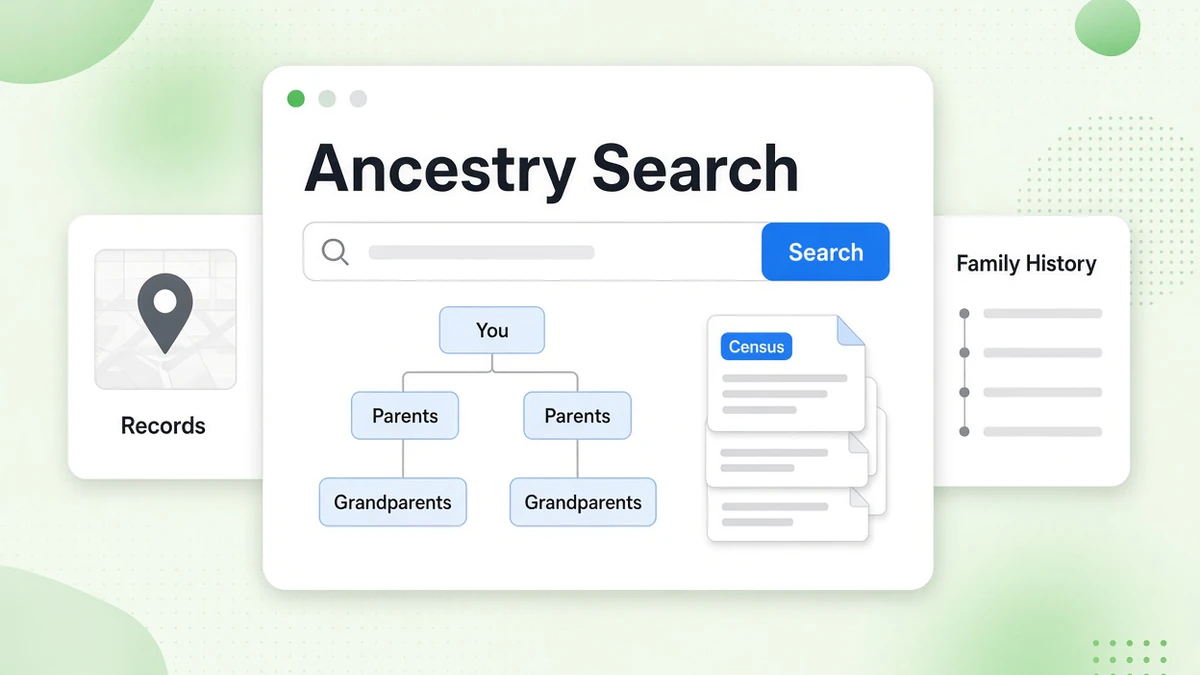
An ancestry search is how you find the people you descend from. You start with one name. Then you trace your ancestry back, one generation after another. BeenVerified offers an ancestry search on its homepage. Free genealogy sites and government archives cover much of the same ancestry at no cost.
This guide explains how a BeenVerified ancestry search works and what sources it draws on. It also covers the free ancestry search options genealogists rely on. Facts about BeenVerified come from its own site, checked in October 2026. Facts about public archives come from the US National Archives (NARA) and other official sources.
We are not affiliated with BeenVerified. BillionVerify is an email verification service. Ancestry research often ends with a message to a newly found cousin. At the end, we show how to check that contact before you reach out.
Key facts (checked October 2026):
- The first US federal census dates to 1790, and a new one follows each decade, according to the National Archives (NARA).
- US census returns stay closed for 72 years, so the 1950 Census is the newest one the public can view, and NARA released it on April 1, 2022.
- Federal military files before 1912 are at NARA, while newer ones are kept at a separate personnel center in Missouri.
- The BeenVerified Ancestry tab needs only a first and last name to start a search.
- BeenVerified's genealogy page also points to two British record sets, which do not cover American ancestors.
What Is Genealogy?
Genealogy is the study of family lines. It answers who your ancestors were, where they lived and how they link to you. An ancestry search is the hands-on part of genealogy. It means looking up documents about one specific ancestor.
BeenVerified gives its own definition. It calls a genealogy search "the process of researching and tracing your family's history and ancestry." It adds that the work "involves collecting information about your ancestors, such as names, dates, and significant life events."
Genealogy vs family history
The two terms overlap. Genealogy focuses on names, dates and links. Family history adds the stories: jobs, moves, wars and daily life. Good family history rests on good genealogy. Most people start with genealogy. Many end up writing family history.
Ancestry search vs family tree
A family tree is the chart you build. An ancestry search supplies the facts that fill it. This guide covers that research side. Our guide to building a family tree with BeenVerified covers the chart itself.
Why people trace their ancestry
Reasons vary. Genealogy draws people for many reasons. Some want to know where a surname came from. Some want medical history. Others plan a trip to an ancestral town. Many simply want to know their ancestry before older relatives are gone.
How to Do an Ancestry Search With BeenVerified
BeenVerified puts its ancestry search in the homepage search box. The Ancestry tab has its own headline: "What's your family's story?"
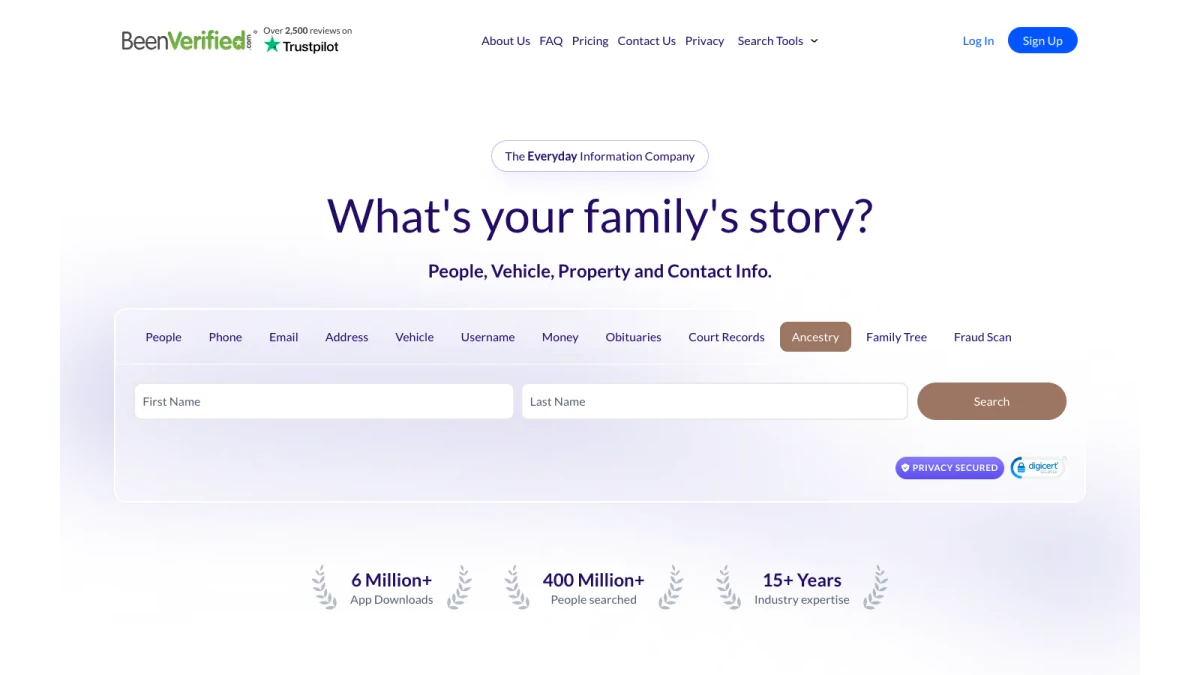
Screenshot: the Ancestry tab on the BeenVerified homepage.
Step 1: Open the Ancestry tab
Go to beenverified.com. Click Ancestry in the row of tabs. The box asks for a first name and a last name.
Step 2: Start with someone you know
Enter a parent or grandparent first. Recent ancestry is easier to match. Each confirmed ancestor gives you names and places for the next step back in your ancestry.
Step 3: Add a location
BeenVerified's genealogy page also asks for a city and state. It notes that "providing a location can help us narrow down your search." Use the place where the person lived longest.
Step 4: Pick the right match
Common names return many people. Compare birth years, places and relatives. Move on only when the details line up.
Step 5: Open the BeenVerified ancestry search results
You need a membership or the $1 trial to open BeenVerified ancestry search results. In October 2026, BeenVerified listed $36.89 per month for one month. Its offers page listed a 7-day trial for $1, then $32.89 per month. Our guide on whether BeenVerified is free explains the trial terms.
Ancestry search by name
A BeenVerified ancestry search by name always works the same way. You type a first and last name. You narrow by place. For a common surname, an ancestry search by name needs extra clues: a middle name, a spouse or a birth year. Without them, you may follow the wrong ancestor for weeks.
What the BeenVerified Ancestry Search Covers
BeenVerified's genealogy search page promises "billions of ancestor profiles, photographs, and historical documents." It lists several groups of family history sources.
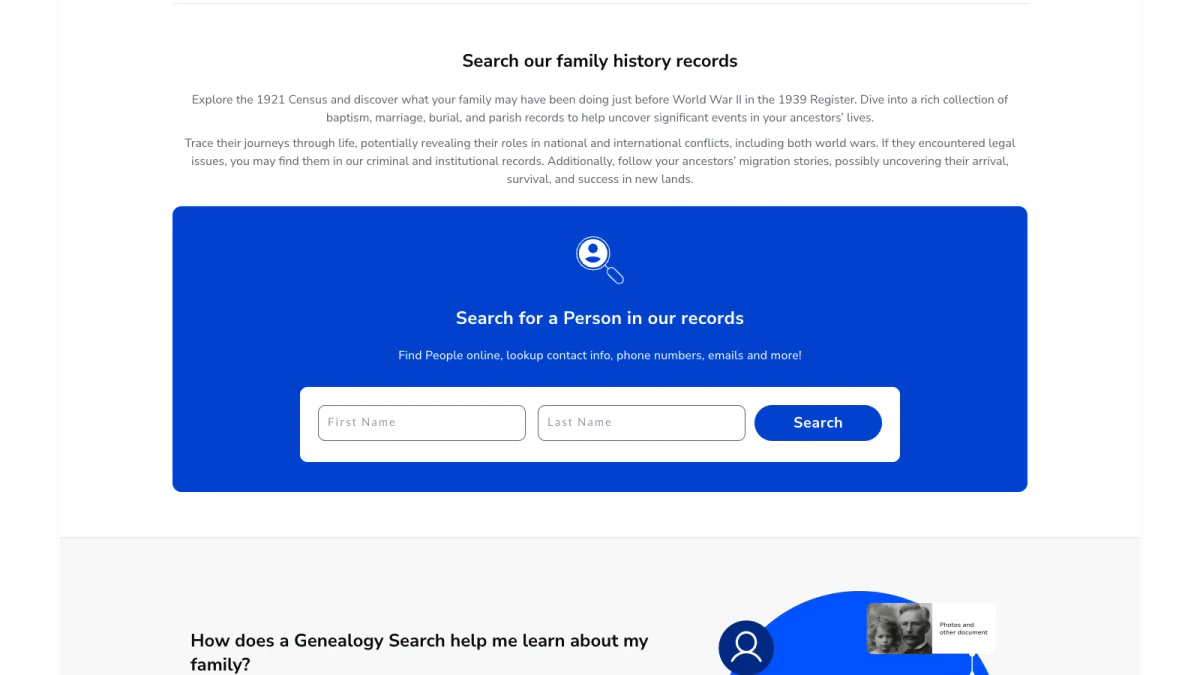
Screenshot: "Search our family history records" on beenverified.com.
Census and register lists
The page invites you to "explore the 1921 Census." It also mentions "the 1939 Register." Both come from England and Wales, not the US. The UK National Archives describes the 1939 Register as "a snapshot of the civilian population of England and Wales just after the outbreak of the Second World War." So these lists help most when your ancestry includes British roots.
Church books
BeenVerified lists "baptism, marriage, burial, and parish records." Parish books often predate civil registration. They can reach back further than any census.
Military service
The page says sources may reveal an ancestor's "roles in national and international conflicts, including both world wars."
Courts and institutions
If an ancestor "encountered legal issues," the page says, "you may find them in our criminal and institutional records."
Migration
BeenVerified also points to "migration stories." These can show an ancestor's "arrival, survival, and success in new lands."
How the search helps
BeenVerified says a genealogy search can provide "names, dates, places of birth, marriage, and death." It also names "DNA matching" as one of the tools genealogists use.
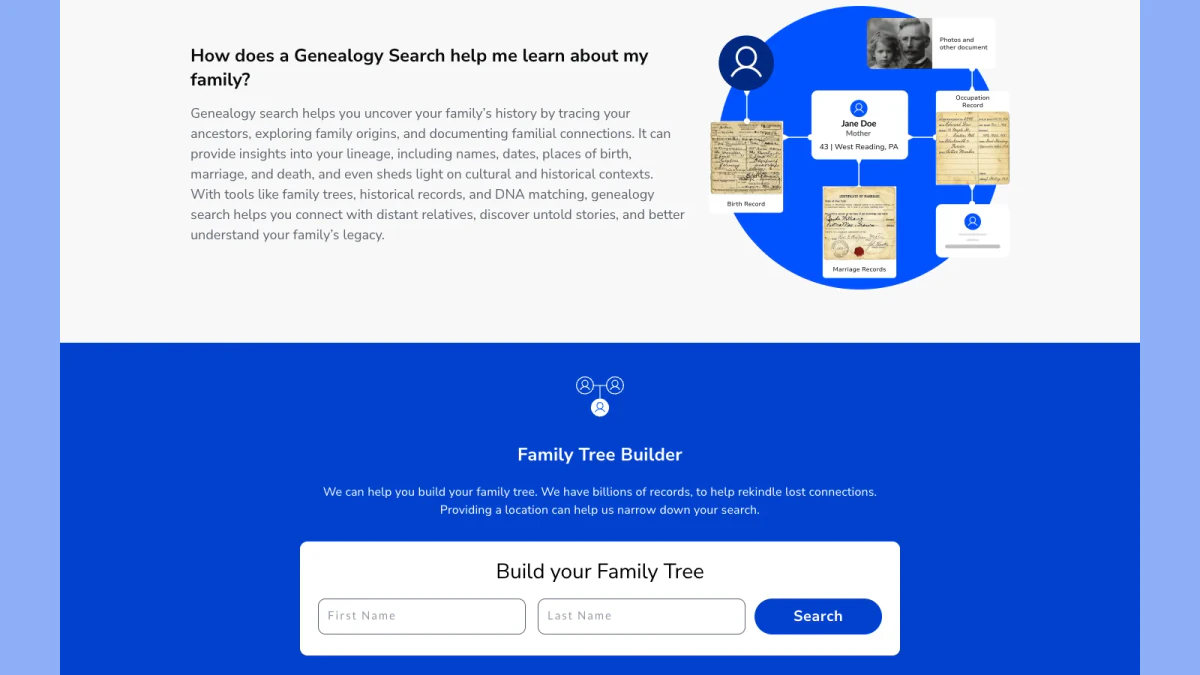
Screenshot: "How does a Genealogy Search help me learn about my family?" on beenverified.com.
Free Ancestry Search Options
You do not need to pay to start. A free ancestry search can take you back several generations. These free ancestry search tools are where most genealogists begin.
US census records
Census records are the backbone of American genealogy. The NARA census page explains the basics. The first federal census was taken in 1790. It has been taken every ten years since.
There is a delay. "Because of a 72-year restriction on access to the Census, the most recent year available is 1950." The 1950 Census was released on April 1, 2022. NARA says it is "available free of charge."
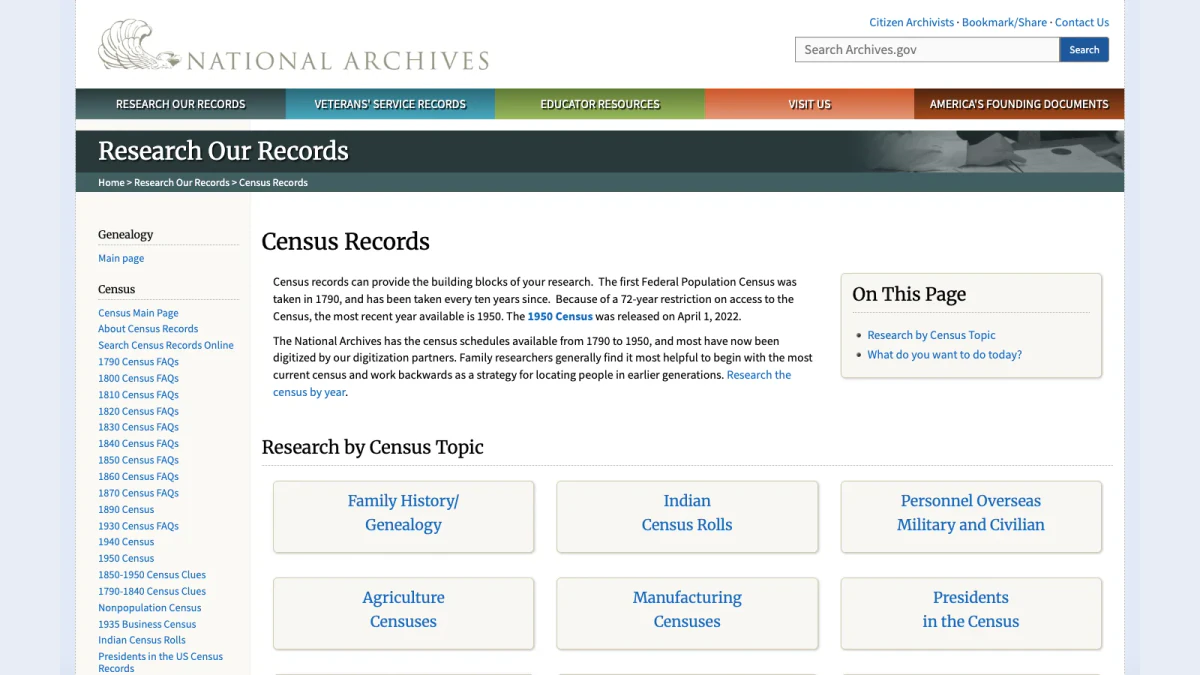
Screenshot: Census Records at the US National Archives.
NARA also gives a tip. Researchers "find it most helpful to begin with the most current census and work backwards." Start in 1950. Then step back to 1940, 1930 and earlier.
NARA genealogy resources
NARA runs a genealogy hub for family historians. It is honest about one limit. Its own search box "will not help you find information on a specific person." Instead, it points you to guides and digitized collections.
Immigration files
NARA holds immigrant records "from the late 1700s through the early 2000s." Some are online. Many are "only available in paper or microfilm format at NARA locations."
Military files
Federal military service records from "the Revolutionary War to 1912" sit at NARA. Files from World War I to the present are held at the National Military Personnel Records Center in St. Louis.
Vital records
Birth, marriage, divorce and death certificates come from states, not the federal government. The CDC keeps a state-by-state guide: Where to Write for Vital Records. Each state sets its own fees and access rules.
Library of Congress
The Library of Congress publishes free genealogy research guides. They point to newspapers, local histories and other collections.
Best Free Genealogy Sites
Many people look for the best free genealogy sites before they pay for anything. Searchers who type "find my ancestors free" usually land on these sites. Here is how free genealogy sites compare by role.
| Source | Good for | Cost |
|---|---|---|
| NARA | Census, immigration and military files | Free online; some only on site |
| 1950 Census website | The newest US census you can view | Free |
| FamilySearch | Shared family trees and indexes | Free, per its own site title |
| State vital records offices | Birth, marriage and death certificates | Fees vary by state |
| Library of Congress | Newspapers and local histories | Free guides |
| BeenVerified | Many source types in one ancestry search | Paid membership or $1 trial |
FamilySearch describes itself with the words "Free Genealogy Archives." Ancestry.com is the best-known paid genealogy site. Both often appear in ancestry search results next to government archives.
Best free genealogy sites compared
The best free genealogy sites compared side by side differ by depth. NARA is the deepest for US federal sources. FamilySearch is the widest for shared trees. State offices are the only source for many certificates. Use all three before you call your ancestry search finished.
When free genealogy sites are enough
Free genealogy sites cover most US ancestry up to 1950. They work well when you know names and places. They are slower when sources are scattered across states.
When a paid service helps
A paid service can save time. It pulls many source types into one place. Pay when you hit a wall, not on day one. A BeenVerified ancestry search is one option at that stage.
Find My Ancestors: A Simple Plan
Many people type "find my ancestors" into Google and stall. This plan keeps the work moving.
- Write down what you know. Names, birth years and towns of parents and grandparents.
- Ask older relatives. One phone call can save weeks.
- Search the 1950 Census. Find your grandparents' household.
- Work backwards. Use each census to find the generation before.
- Add vital records. Order certificates to confirm dates.
- Check church and military files. They fill gaps between census years.
- Try a paid ancestry search. Use it when free sources stall.
Find my ancestors free
Want to find my ancestors free? The census and state indexes are the best start. Most families can trace three or four generations this way. To find my ancestors for free past 1850, add church books and land deeds.
Find my ancestors free on government sites
Most government sites let you find my ancestors free of charge. Type the surname, then filter by state and decade. Write down every spelling you see.
How to find your ancestors faster
Look up one person at a time. Confirm each fact with two sources. Keep a genealogy log of every source you check, even empty ones. It stops you from repeating work.
Ancestry Search by Last Name
Many people start an ancestry search by last name alone. A surname is a strong clue. It can also mislead you.
What a surname tells you
A surname often points to a region, a trade or a parent's first name. Some ancestry is easy to place this way. A rare surname may cluster in one county for centuries. A common one tells you very little on its own.
How to run an ancestry search by last name
Pick one state and one decade. An ancestry search by last name works best in that narrow window. Pull every household with that surname. Then compare first names across generations. Families often reused the same first names. Those patterns help you link one household to the next.
Free ancestry search tools for surnames
Free ancestry search tools handle surnames well. A free ancestry search by name on the 1950 Census site is a good first step. FamilySearch indexes millions of family names. A free ancestry search by state on county websites can add deeds and wills. Try these free ancestry search tools before any paid service.
When the surname changed
Surnames shift. Immigrants simplified spellings. Clerks guessed. Some families adopted a new name entirely. If your ancestry search stops cold in one decade, look for a spelling change. Read the name aloud and try every way a clerk might have written it.
Reading ancestry search results
BeenVerified ancestry search results and free indexes both list many people with the same surname. Sort them by place first, then by age. Discard anyone who lived too far away. What is left is a short list worth a closer look.
Free ancestry search vs paid search
A free ancestry search is slower but costs nothing. A paid service gathers sources in one place. Most genealogy researchers mix the two. They run a free ancestry search for every ancestor first. They switch to a paid tool only for the hard cases.
Tips for Better Ancestry Search Results
Small habits make every ancestry search more accurate.
- Try spelling variants. Clerks wrote names as they heard them.
- Look by household. A family together is easier to spot than one person.
- Use maiden names. Women often appear under a birth name in early lists.
- Watch boundaries. County lines moved. A town may sit in a new county today.
- Note ages carefully. Ages drift by a year or two between census years.
- Save sources. Record where each fact came from.
- Begin for free. Try a free ancestry search by name before any paid tool.
Family History Search Mistakes to Avoid
A family history search goes wrong in predictable ways.
Merging two people
Two men with one name in one county can merge into one ancestor. Check wives, children and ages before you link them.
Trusting one tree
Shared online trees copy each other. One early error can spread to hundreds of trees. Treat any tree as a lead, not proof.
Skipping local archives
Many documents never went online. County courthouses, churches and local libraries still hold originals.
Ignoring DNA limits
DNA tests point to living relatives. They do not name ancestors by themselves. Pair any match with paper evidence.
Stopping at one source
A family history search needs more than one source per fact. A census age, a death certificate and a gravestone may all disagree. Note each one.
Limits and Legal Use
An ancestry search on BeenVerified is a research tool. BeenVerified's footer says its data "is not necessarily 100% accurate, complete or up to date." Old documents can be faded, misread or mis-indexed.
BeenVerified is also not a consumer reporting agency under the Fair Credit Reporting Act. Its FCRA notice bans using its data for jobs, housing, credit or insurance decisions. Genealogy is a personal use. Keep it that way.
Be careful with living relatives. Details about living people are private. Share them only with consent.
Census Records by Decade
Each census asked different questions. That shapes what you can learn about your ancestry.
| Census | Why it helps |
|---|---|
| 1950 | Newest available; free to view |
| 1940 | Shows where people lived five years earlier |
| 1930 and 1920 | Ask for year of immigration and citizenship |
| 1900 to 1910 | Strong for immigrant arrival years |
| 1850 to 1880 | Name every household member |
| 1790 to 1840 | Name only the head of household |
Use the census guides at NARA for the exact questions in each year. Census records also list occupations, which can hint at old trades and towns.
Family History Search for Immigrant Ancestors
Immigrant ancestors often need a family history search across two countries.
Start in the US
Find the immigrant in the census first. Census records from 1900 to 1930 asked for the year of arrival. That year narrows the hunt for passenger lists and naturalization papers.
Then look abroad
Sources from the old country use other languages and alphabets. Look for the original spelling of the surname. Church books there often go back centuries.
Use the right archive
US sources sit in American archives. British sources, like the 1939 Register, sit with the UK National Archives. Match the archive to the country of your ancestry.
From Ancestry Search to Living Relatives
An ancestry search often turns up living cousins. Reaching out is the natural next step. Do it carefully.
Check the phone number first
Contact details go stale. Before you call, run the number through our free phone number validator. It shows whether a number is valid for its country and its line type.
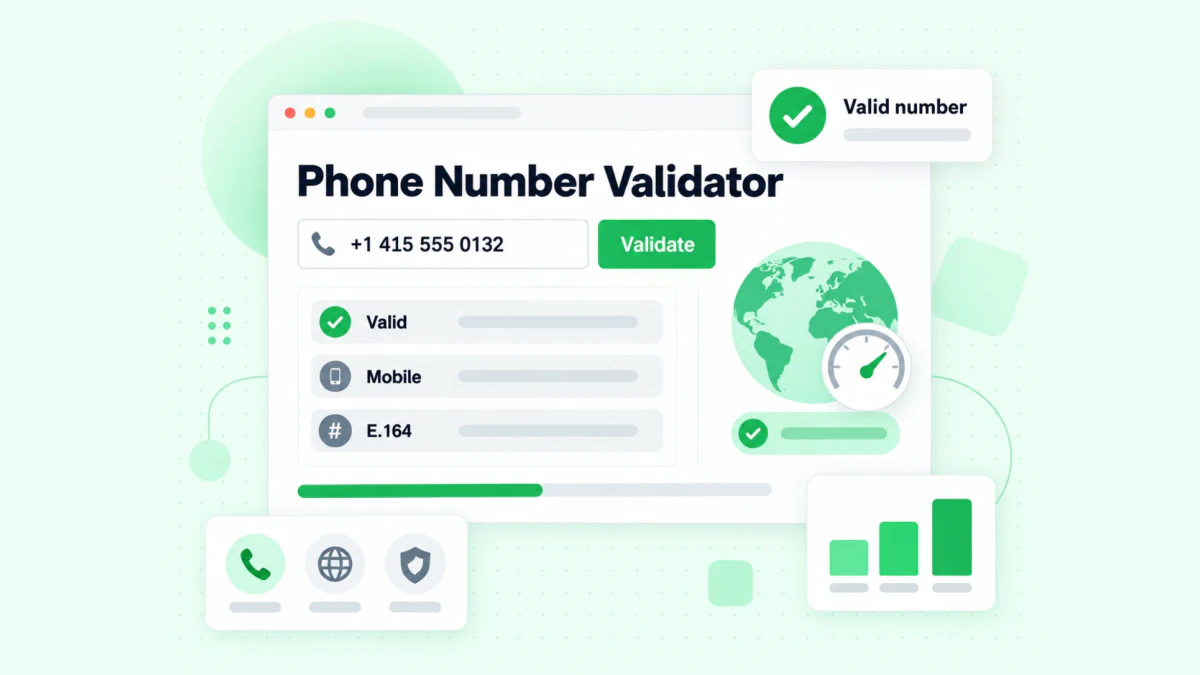
The BillionVerify phone number validator.
Check the email before you write
Emails die faster than phone numbers. People change jobs and drop old accounts. Want context on an address first? Our reverse email lookup reads the domain, mail routing and any public profile. It uses public signals only.
To know whether an inbox still accepts mail, verify it with BillionVerify. It checks syntax, domain, MX records and the mailbox itself. You get 20 free credits each day you use your account, up to 600 a month. They never expire. Unknown results are free.
Write a short first message
Say who you are and how you are related. Offer to share the family history you have found. Mention one shared ancestor by name. Keep it short and friendly.
Related Guides
For a full overview of the service, read what BeenVerified is and how it works. To trace a recent death, see our obituary search guide.
FAQs
What is an ancestry search?
An ancestry search is the hunt for documents about your ancestors. You begin with a known relative and work backwards through the generations.
What is genealogy?
Genealogy is the study of family lines. It records names, dates and places that link you to past generations.
Is there a free ancestry search?
Yes, free ancestry search tools include NARA's census pages up to 1950. Free genealogy sites like FamilySearch add shared trees and indexes.
How do I do an ancestry search on BeenVerified?
A BeenVerified ancestry search starts from the Ancestry tab on the homepage. Enter a first and last name. Paid access unlocks the BeenVerified ancestry search results.
Can I run a BeenVerified ancestry search by name only?
Yes, a BeenVerified ancestry search by name asks for just two fields: given name and surname. Adding a city and state cuts the list of matches. The BeenVerified ancestry search results then show fewer, closer people. For common names, add a birth year to your notes and compare it with each result.
Is genealogy research worth doing myself?
Yes, genealogy research is worth doing yourself for most families. Genealogy rewards patience more than money. Free census pages, state indexes and church books carry most US ancestry back to the 1800s. A paid ancestry tool mainly saves time on the hardest links.
What sources does the BeenVerified ancestry search use?
BeenVerified lists census and register lists, church books, military service, court and institutional files, and migration sources.
Why do US census records stop at 1950?
US census records are closed for 72 years. The 1950 Census opened on April 1, 2022.
What are the best free genealogy sites?
The best free genealogy sites include NARA, the 1950 Census website, FamilySearch, state vital records offices and the Library of Congress guides.
How can I find my ancestors for free?
You can find your ancestors for free by starting with the 1950 Census. Work backwards through earlier census years. Then add state certificates and church books.
Are the 1921 Census and the 1939 Register US sources?
No, the 1921 Census and the 1939 Register are British record sets that cover England and Wales. They help most with British ancestry.
Can I use an ancestry search for a background check?
No, BeenVerified bans FCRA uses such as hiring or tenant screening. Keep an ancestry search to personal family research.
How do I contact a relative I found?
Verify a newly found relative's phone number and email first. Then send a short note that names a shared ancestor.