



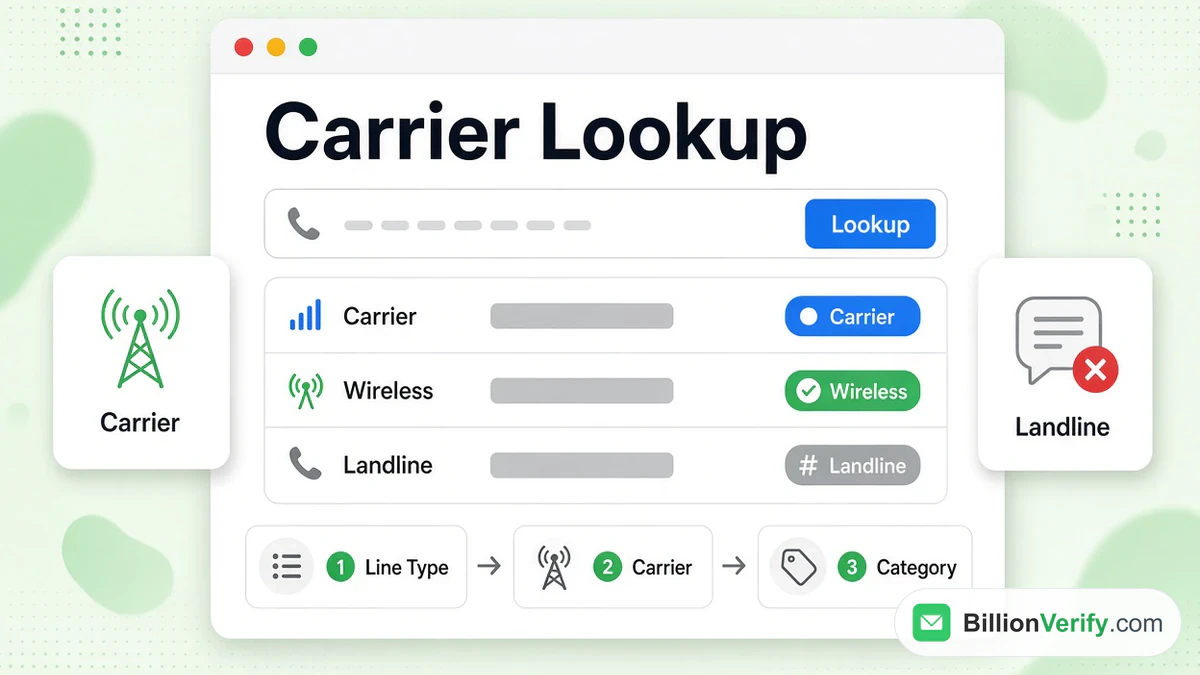
A carrier lookup takes a phone number and names the carrier that serves it. Most tools also say whether the number is mobile, landline or internet-based, which hints at whether it can get text messages. The answer is easy to over-trust, because it comes from stored data and not from the network itself. This guide covers what a phone carrier lookup returns, why results go stale, and how to check many numbers at once.
We are not affiliated with the companies named here. BillionVerify is an email verification service with a free validator for phone numbers. Facts about other companies come from their own pages.
Key facts (checked November 2026):
- Whitepages says its free phone-search page reports if a number is wireless, landline or VoIP, plus the most recent carrier on file.
- Twilio's Line Type Intelligence returns a carrier name, a category and mobile network codes, and covers numbers worldwide.
- Twilio defines landlines as unable to receive texts in general, and cell numbers as able to.
- Google's libphonenumber project says its data lists the carrier a range was first assigned to, never the current one.
- The FCC says a simple port generally must finish within a single business day.
- BillionVerify's tool for phone numbers checks the format and the country, reports the line category, and returns E.164.
What a Carrier Lookup Shows
A carrier lookup answers two questions about a number. The first is who runs it: Verizon, AT&T, T-Mobile or another operator. The second is what the number is, whether wireless, wired or internet-based. Some tools add a third field, the country and network codes that identify the operator.
Whitepages describes its free tool on the reverse phone page. You get the same category answer plus "the last known provider", with Sprint, Google Voice and other major U.S. carriers as examples. The words "last known" are honest, because the page reports what its data says, not what the network says right now.
The fields you get back
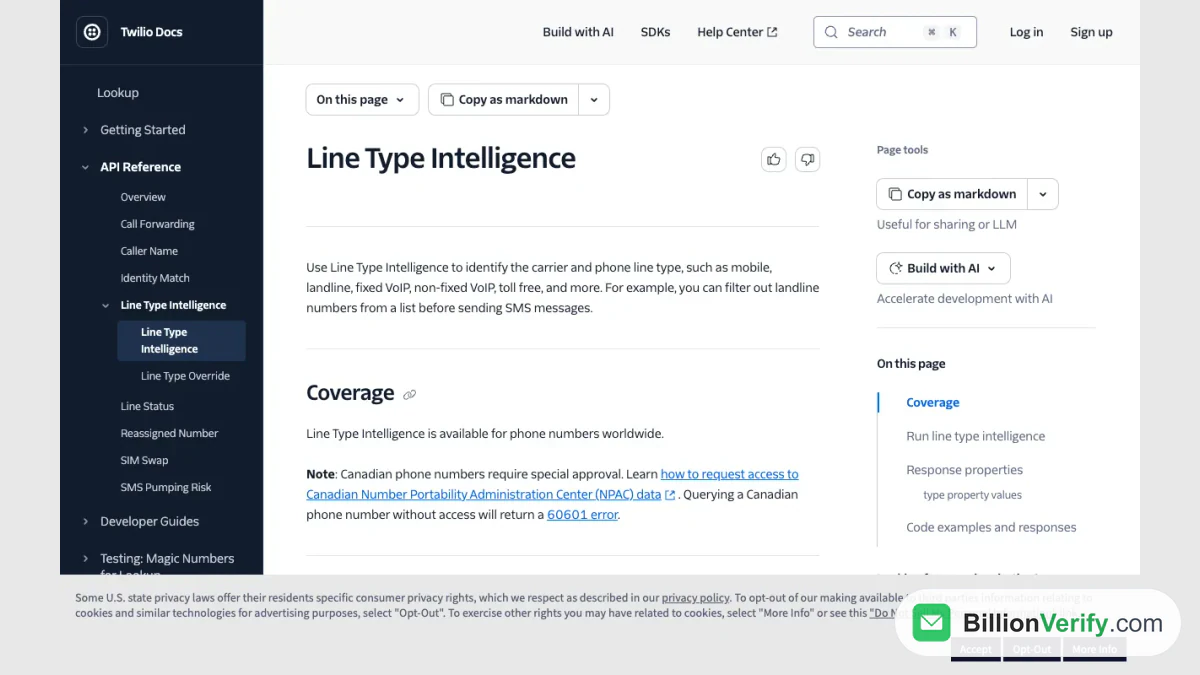
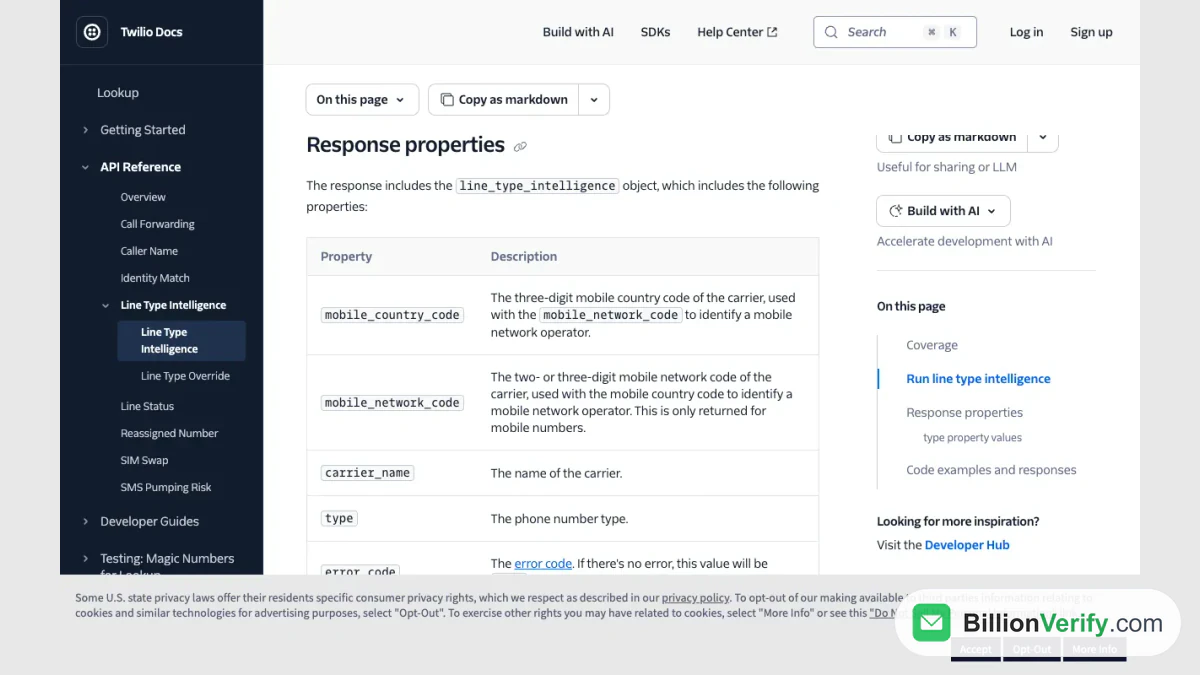
Twilio documents the business-grade version. A response holds a line_type_intelligence object with carrier_name, type, mobile_country_code and mobile_network_code. The network code comes back only for mobile numbers, and the carrier fields are null for some categories, such as toll-free, premium and voicemail. The documented values are landline, mobile, fixedVoip, nonFixedVoip, personal, tollFree, premium, sharedCost, uan, voicemail, pager and unknown.
Screenshot: Twilio's documentation page, which lists the fields and categories a response can contain.
Mobile, landline and VoIP in plain terms
Two categories matter most day to day. Per Twilio's definitions, a mobile can generally receive texts and a landline generally cannot. VoIP comes in two forms. A fixed one is tied to a physical device, and Twilio names Comcast and Vonage as examples. A non-fixed one is virtual, obtained online with no device behind it, and Google Voice is the example given.
Free Carrier Lookup: What the Free Tools Cover
A free carrier lookup is easy to find because carrier data is a by-product of how numbers are allocated. Several directories show the operator and category with no account. Whitepages folds the check into its search by phone, and it lists the networks it covers, including Verizon Wireless, US Cellular and several prepaid brands.
Free tools share three limits. They handle one entry at a time, they rely on stored data that can lag behind the network, and they rarely show the owner, since a name is the paid part. A handful of numbers is fine for a free page. Thousands call for the bulk route below. To see what the no-cost pages reveal beyond the carrier, read our free reverse phone lookup guide.
Why a Carrier Result Can Be Wrong
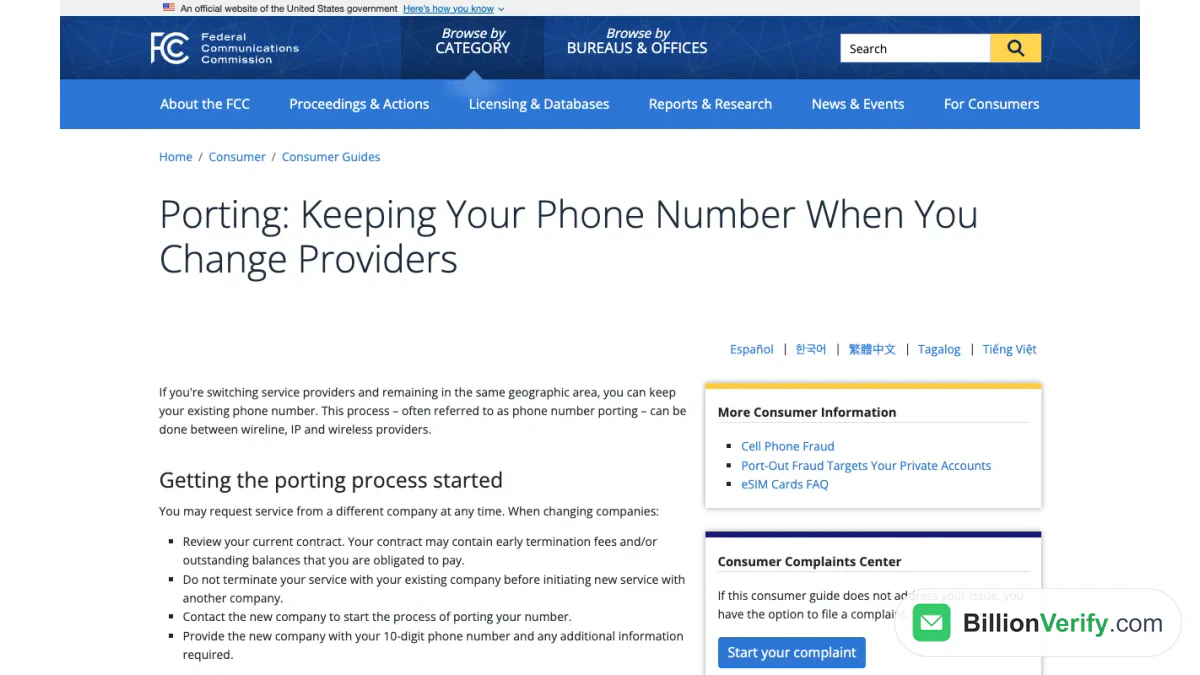
The biggest source of error is portability. In the United States, a customer can keep a phone number when switching providers. The FCC guide says that "once you request service from a new company, your old company cannot refuse to port your number, even if you owe money for an outstanding balance or termination fee." Companies may charge a porting fee, and you can ask whether it can be waived.
Porting is common, and it changes who serves the digits without changing them. A source built on the original allocation names the wrong company after a port. Google's documentation is blunt about this: "We do not provide data about the current carrier of a phone number, only the original carrier who is assigned the corresponding range."
How long a port takes
According to the FCC, a simple port, meaning one that involves no more than a single line, must generally be processed in one business day. Moving from wireline to wireless may take a few days. During that window the data can lag, so a recent switch is a reason to expect a stale answer.
Prepaid and reseller brands
Resellers and prepaid brands add another layer. Whitepages notes that Cricket Wireless is a prepaid service on AT&T and Virgin Mobile is a prepaid service on T-Mobile. A page might show the host network, the brand or either, so compare two sources if the exact brand matters.
Phone Number Carrier Lookup vs Validation
A phone number carrier lookup and a validation check both examine a number, and they answer different questions. The lookup asks which carrier serves it, now or originally. A validator asks if the digits can exist in the country's numbering plan, and in what format.
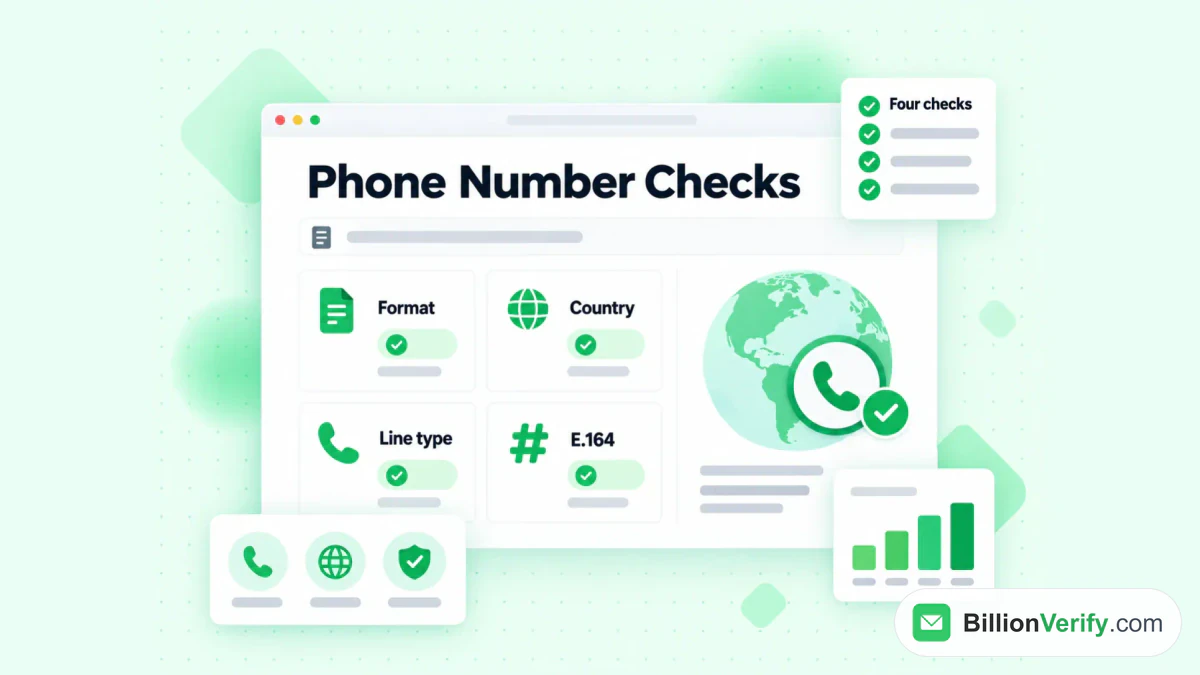
Our free phone number validator confirms the format and country, labels the line and returns the E.164 form. That makes it a quick first pass, because digits that fail it need no further work. It does not name a carrier or an owner, and it cannot say who answers the phone. The graphic below shows the four checks.
Why Marketers and Support Teams Check the Category
Support teams and marketers use the category field more than the carrier name. Three tasks depend on it.
- Text messaging. Landlines can't take SMS, so a text campaign should skip them. Sending to one wastes money and shows up as a failed delivery.
- Call routing. Mobiles and desk phones suggest different times to call and different ways to reach a person.
- Fraud checks. A signup that uses a virtual VoIP line is not necessarily fake, but it is a signal to weigh against other evidence.
Check Carriers in Bulk
One-off pages do not scale. For a list of numbers, use an API or a service that accepts a file. Twilio notes that its product supports every country, that Canadian numbers require special approval, and that error 60601 comes back without access. Other vendors publish their own coverage notes, so read them before you buy.
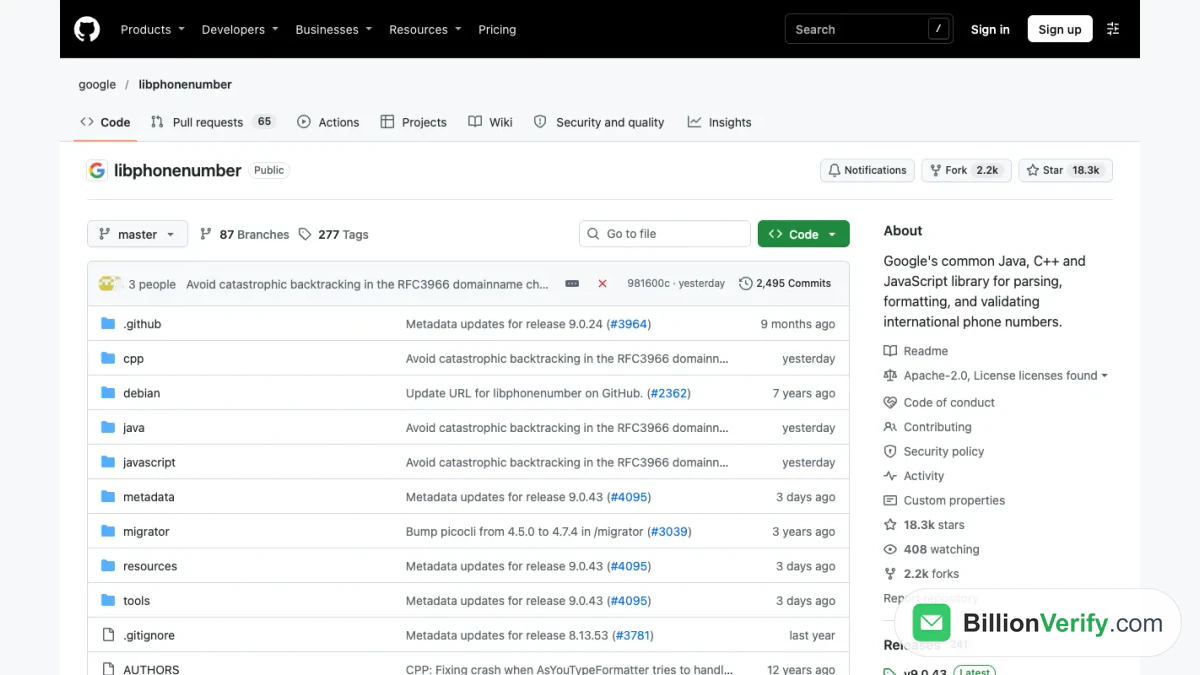
Libraries are another route. Google's project includes a PhoneNumberToCarrierMapper, a geocoder for location and a time zone mapper. It is open source and carries the original-carrier caveat above, so use it for a quick label and not for a decision that depends on today's network.
Screenshot: The libphonenumber project page on GitHub, which describes its carrier, geocoder and time zone mappers.
Verify first, enrich second
Cleaning a list before you enrich it saves money. Drop the entries that fail validation, then look up the rest. The same principle holds for email: verify an address before you dig into its owner. Our reverse email lookup reads the domain, organization and mail routing behind an address from public signals.
Porting Your Own Number
The porting rules also protect you. The FCC recommends that you keep your existing service active until the new one starts, and that you contact the new company to begin the port. It also lists limits: moving to a new geographic area may mean you cannot keep a number, and some rural wireline providers have waivers that restrict porting.
Screenshot: The FCC's consumer guide on porting, which explains how to keep your phone number when you change providers.
Use the Result Responsibly
The output describes a line, not a person. It says nothing about identity, so do not use it to guess who someone is. For identity questions, read whose number is this, and for unwanted calls, read who called me. People-search results are also limited by law: Spokeo's terms and ZabaSearch's notice both bar using their information for employment, housing, credit or insurance decisions.
Screenshot: A lower part of the same Twilio page, with the definitions and the coverage notes.
FAQs
How do I run a phone carrier lookup?
Enter the full ten-digit number into a lookup page and read the result. Free directories show both without an account. For a large list, reach for an API or a library instead.
What is a free carrier lookup?
It is a no-cost page that reveals the operator and the kind of line behind a number. Whitepages includes one in its people-search tools. These pages work on a single entry and may trail the network once a number moves.
Can a phone number carrier lookup tell me who owns the number?
No. It shows the carrier and the category, not the owner. Owner details come from other data, and for personal mobiles they usually sit behind a paywall.
Why does the result show the wrong company?
The number may have been ported. People keep their numbers when they change providers, and some sources read the original allocation. Google's library documentation warns that it reflects only the first assignment.
Can I tell a landline from a mobile?
Yes, through the category field. Twilio treats a landline as generally unable to take SMS and a mobile as generally able to. Some entries are VoIP, either fixed or non-fixed.
Does the category show if a number accepts texts?
It gives a strong hint. VoIP and the special categories vary, so test a sample before you build a campaign.
How long does porting a number take?
Simple ports are generally done within one working day, per the FCC, while a switch from wired to wireless service can need several days.
Is there a bulk phone carrier lookup?
Yes, through APIs and libraries. Twilio's API handles numbers in any country, with special approval for Canada, and the Google library is free. Validate and clean the list first, then enrich what remains.
How do I check that a number is valid first?
Use a validator. It checks the digits against the country's rules, adds the category, and gives back the E.164 form. Anything that fails does not need a carrier check.
Watch: How to Validate a Phone Number: Free Phone Number Validator
Watch: Free Reverse Email Lookup: What It Shows and What It Can't
Read next: Property Owner Lookup: How to Find Who Owns a Property
Read next: Truecaller Reverse Phone Lookup: How It Works and Its Limits