



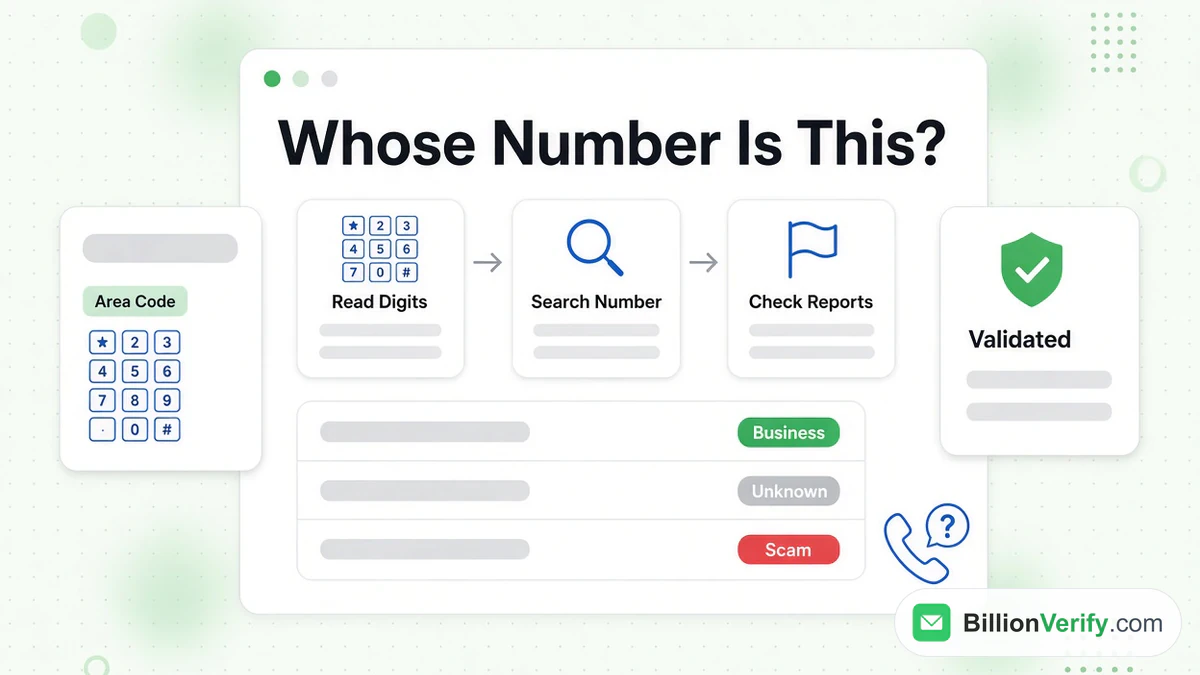
Whose number is this? Who does this phone number belong to? You can often find who owns this phone number in a few minutes without paying: look for it online, check what your carrier says, try a caller ID app or open a directory. No single method is complete, so this guide ranks seven of them by effort and explains what each can miss. It also covers what to do when nothing turns up.
We are not affiliated with the companies named here. BillionVerify is an email verification service with a free validator for phone numbers. Facts about other companies come from their own pages, checked in November 2026.
Key facts (checked November 2026):
- Whitepages says its reverse lookup covers more than 260 million U.S. phone numbers and shows carrier, line type and spam risk for free.
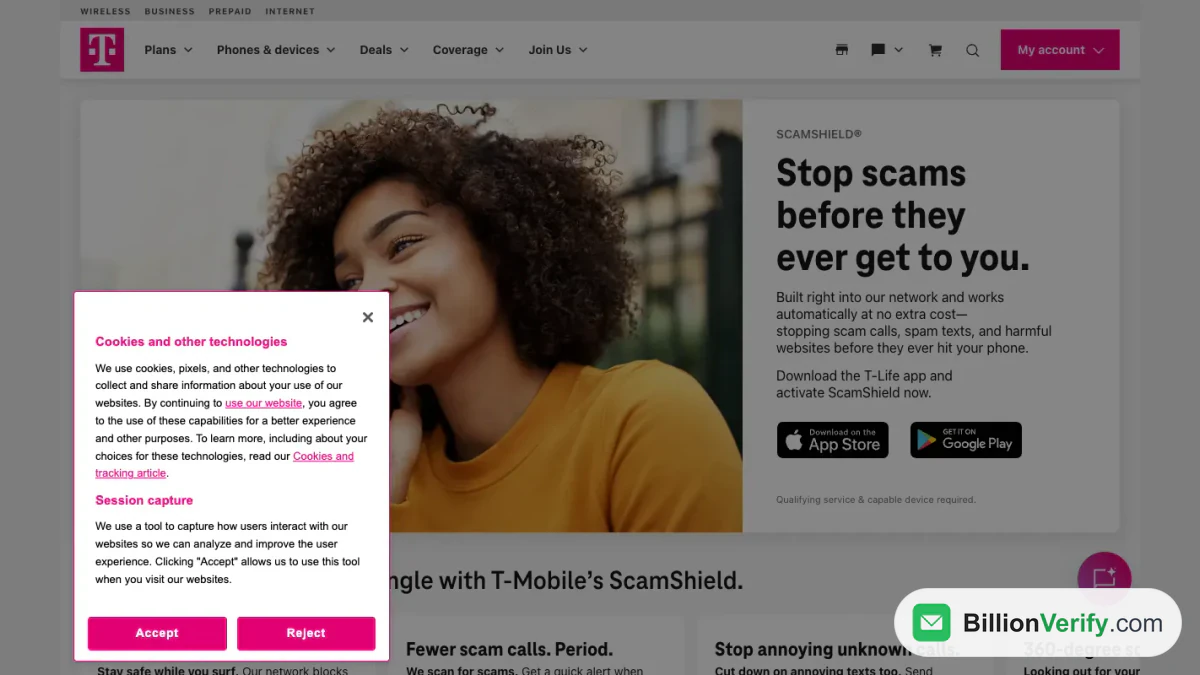
- T-Mobile says ScamShield works at no extra cost, and that its Premium add-on costs $4 a month per line and includes a reverse lookup.
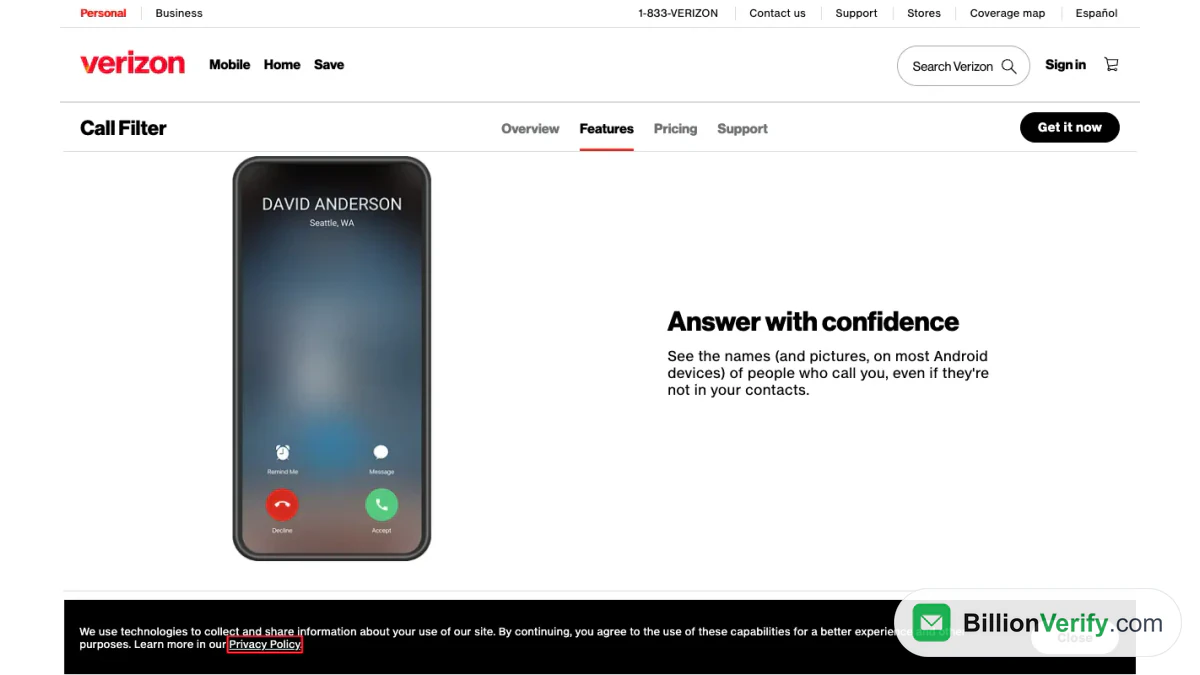
- Verizon says Call Filter is free in its basic form, and that the Plus version starts at $3.99 per line and adds Caller Name ID and spam lookup.
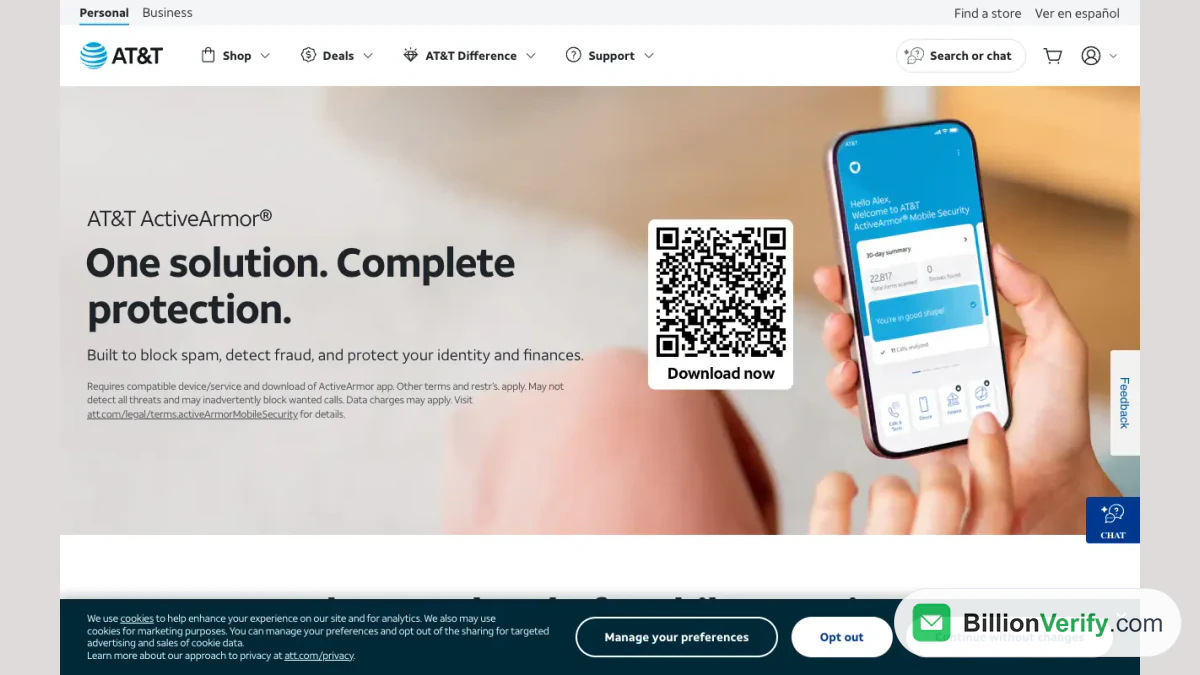
- AT&T says ActiveArmor is free with every wireless plan and includes spam and fraud call blocking.
- Google's Phone app help says Call Screen can answer a call for you and save a transcript on your phone.
- Google's libphonenumber project says it gives only the original carrier of a number, not the current one.
Start With What the Number Itself Tells You
Before you search anything, read the digits. A ten-digit U.S. number has an area code that shows where it was first issued. It is only a hint, because owners keep their number when they move. A ring from a 212 number can reach a phone in Texas.
The shape also matters. Short codes, toll-free prefixes and country codes you do not recognize each point to a different kind of sender. Such a prefix usually belongs to a business. An international prefix on a ring you did not expect deserves caution.
Next, ask how the number reached you before you decide whose phone number is this. A missed ring, a voicemail, a text and a message in a chat app are different cases. Whitepages notes that people also use reverse lookups for unfamiliar contacts that appear in apps such as WhatsApp, Facebook Messenger, Instagram or Snapchat. A sender who texted first is a different problem from one who rang at 3 a.m.
Seven Ways to Find Out Who Owns a Phone Number
The methods below run from fastest to slowest. Try them in order and stop when you have an answer you trust.
1. Search the digits
Put the number in a search engine in two formats, such as 555-123-4567 and 555.123.4567. You will often find company sites, local listings and complaint pages. Many unknown owners are businesses that publish their details, so this single step solves a large share of cases. If all you find is complaints, you have your answer.
2. Read your carrier's label
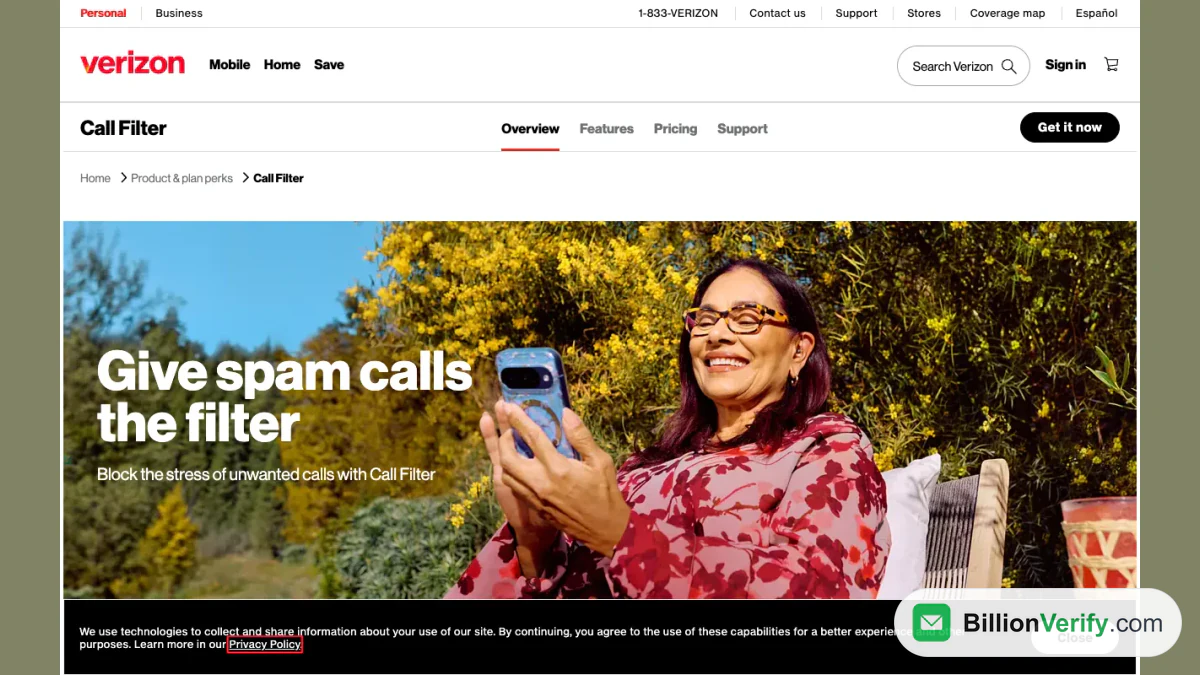
Networks screen traffic and label the senders they suspect. Verizon's page adds that you can report spam, and T-Mobile notes that ScamShield warns you when something looks suspicious. The labels are warnings, and a missing label does not mean a sender is safe. AT&T admits that its tool "may not detect all threats and may inadvertently block wanted calls." Checking a sender you do not recognise? Try Is this email legit? for a quick read on the address.
Screenshot: Verizon's page for its spam tool, with detection and the paid Plus tier for caller name ID.
3. Let the phone screen it
Google's help article describes Call Screen. It lets you find out who is ringing and why before you answer, and it keeps a transcript of the screening on your phone. Automatic screening runs on Pixel phones in Australia, Canada, Ireland, the UK and the US, and manual screening reaches more countries. The article also warns that "Not all spam calls and robocalls can be detected." This method works on the next ring, not the last one.
4. Use a caller ID app
Apps such as Truecaller build their results from user contributions and other sources. Truecaller states on its home page that more than 500 million people use it each month, and its privacy policy lists the address book among the information it may collect. These apps can label a business or an owner quickly, and the same crowdsourced approach is their weakness. Our Truecaller reverse phone lookup guide explains how the data is built.
5. Open a reverse directory
A reverse directory is the classic phone number owner lookup: it starts from the number and returns what it knows about the owner. Whitepages lists the owner's details for most landlines and business lines at no cost, alongside carrier and risk fields, while its Premium tier adds the full identity for every number. Our guide to a free reverse phone lookup shows what each field means. To see a single tool's workflow, read how BeenVerified handles number lookups.
6. Check the carrier and line type
Knowing whether a number is mobile, landline or VoIP narrows the field. Twilio's documentation describes a kind of VoIP number as a virtual number obtained online with no physical device, which is easy to get and says little about the owner. Our carrier lookup guide explains what such a check can and cannot prove.
7. Ask the caller to prove it
If a caller claims to be from a bank, an agency or a delivery company, do not trust what your screen shows. Hang up and dial the number printed on your card, your bill or the organization's own website. This is the sole method that works against a spoofed number, because it ignores the displayed digits completely.
Whose Phone Number Is This: A Business or a Person?
The answer changes how much you can learn. A business is easy to identify: it is often listed in directories and on the company's site. A personal mobile is harder. There is no public directory of mobile subscribers, so a phone number owner lookup relies on other sources, and those sit behind a paywall in most services.
Whitepages draws the same boundary. It treats the owner's name and address as available at no charge for most landlines and shop lines, and the full identity behind every number as a Premium feature. If a basic search finds a company, treat it as a good lead. If you find nothing, that is not a sign the number is fake.
Who Owns This Phone Number When the Trail Is Cold?
Sometimes you find nothing at all. A number can be new, recycled or private, and the owner stays hidden. A few steps still help.
- Wait for a voicemail. A real caller leaves a message with a name and a reason. A scammer often hangs up.
- Search again later. Directories refresh on their own schedule, and scam reports accumulate over days.
- Look at the pattern. A sender that rings at the same hour every day and never leaves a message is almost always automated.
- Do not ring back. Returning an unknown ring can confirm that your line is active, and Whitepages adds that it can lead to more spam.
When the owner is someone you need to reach for a legitimate reason, ask a mutual contact to pass your message instead.
Who Does This Phone Number Belong To When It Is Spoofed?
A spoofed number shows digits that the sender does not own. A lookup then describes the wrong party, or nobody. Whitepages observes that callers often spoof local numbers to bypass caution, so the display alone is not reliable. That is why step seven matters: it does not depend on the displayed digits.
If a ring fits a known scam pattern, such as a request for gift cards, a demand for payment or a warning about your account, end it. You can report scams to the FTC through ReportFraud.ftc.gov. For a fuller walkthrough of what to do after an unknown ring, read who called me.
Screenshot: T-Mobile's ScamShield page, which lists no-cost scam protections and the Premium reverse-lookup add-on.
Using a Lookup Responsibly
A phone number owner lookup is a research tool. It is not proof of identity, and it is not a way to judge anyone.
The Fair Credit Reporting Act limits how people-search results can be used. Spokeo's terms, for example, bar using its information to decide employment or housing eligibility, and ZabaSearch's notice says its site must not be used for credit, insurance, employment or housing decisions. Do not use a lookup to vet a tenant or a candidate. Do not use it to pursue someone who does not want contact. If the contact is legitimate, a short, polite message is enough.
Validate a Number Before You Dial It
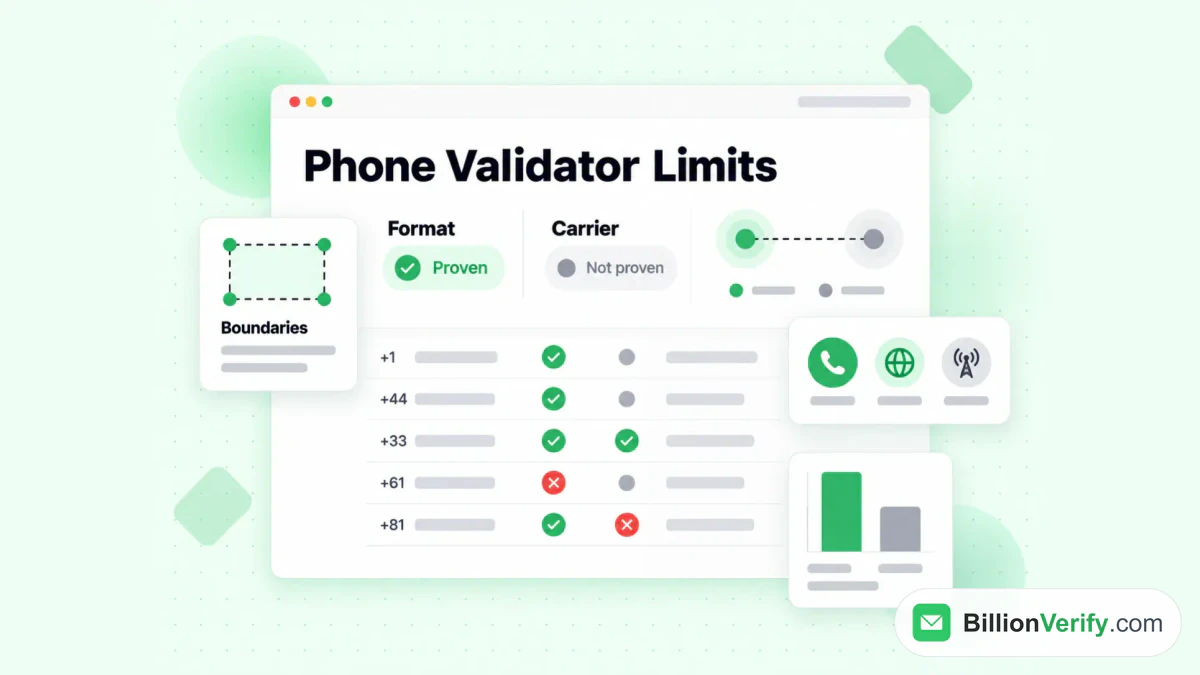
If you collect numbers in forms, spreadsheets or lead lists, check them before you dial. Our free phone number validator checks how a number is written and which country it belongs to, then reports the line type and returns the E.164 format. It cannot say who owns a number, and it does not claim to. What it does is remove typos and impossible digits so your team does not waste time. The graphic below shows the limits that tool is built around: format is proven, carrier is not.
The email side of contact work follows the same rule. Before you write to an address you found, run it through our reverse email lookup, which reads the domain and mail routing from public signals. To go from a name to a person, see people finder.
Screenshot: AT&T's ActiveArmor page, which lists fraud and spam blocking at no charge with every wireless plan.
Screenshot: a lower section of Verizon's page, with its list of identification and spam features.
FAQs
How do I find out whose number this is for free?
Search for the number, check your carrier's warning label and try a no-cost directory. Whitepages lists carrier details and a risk rating at no charge. If the owner matters, a landline or business is more likely to show one than a personal mobile.
Who is this number that keeps ringing me?
Look it up online and in a directory, then find out whether your carrier flagged it. If it leaves no voicemail and rings at set times, it is probably automated. Block it and report it if it looks like a scam.
Whose phone number is this if it only sent a text?
Treat it the same way as a ring. Look the number up first, and do not click links in the message. If the text claims to be from an organization, contact that organization through its own published number.
Who owns this phone number if the lookup shows nothing?
It may be a private mobile, a new line or a recycled line. Services show less for mobiles, and spoofed displays lead nowhere. Let it reach voicemail, search again later and avoid dialing back.
Is a phone number owner lookup ever fully free?
Sometimes. Whitepages exposes a name and street address for most landline and shop numbers, but a complete identity behind a personal mobile is rare without paying.
Who does this phone number belong to if the display is false?
Probably not to the owner your screen suggests. A spoofed display points a lookup at the wrong target, so rely on the organization's published number instead of the one that rang you.
Is it safe to return an unknown call?
Usually not. Returning it can show that your line is live, and some callers use premium-rate lines or spoofed displays. Look it up first, and use the organization's published number if the sender claimed to be from one.
Does the owner know I looked up their number?
Directories generally do not notify the owner. Rules differ by service, so read its terms. Ringing or texting the number, of course, reveals that you have them.
Can I use a lookup to screen a tenant or an employee?
No. Spokeo's terms and ZabaSearch's notice both bar using their information for decisions on jobs, housing, loans or coverage. Those uses fall under federal consumer-reporting law, so use a compliant screening service.
How can I check that a phone number is valid?
Use a validator. It confirms the structure and country, labels the kind of line and gives the E.164 form. It does not identify the owner, so combine it with a lookup when identity matters.
Watch: How to Validate a Phone Number: Free Phone Number Validator
Watch: Free Reverse Email Lookup: What It Shows and What It Can't