



ZoomInfo vs RocketReach is a common shortlist for sales and recruiting teams. Both sell business contact data. Both let you look up a person, pull a work address or a direct dial, and push the record into a CRM. The real gap sits in how each one is built and sold. Not sure where to source contacts? Compare review sites vs B2B databases for prospecting before you commit.
Here is the short answer. ZoomInfo is the larger sales and marketing platform, with buying signals, AI agents and quote-based plans. RocketReach is the simpler lookup tool, with public prices and a self-serve sign-up. ZoomInfo or RocketReach is less a question of which is better and more a question of team size, buying style and what you need beyond a name and an inbox.
This guide compares the two across eight areas: coverage, pricing, cost per contact, free plans, integrations, compliance, AI and fit. Every fact comes from the vendors' own websites, as listed on each site in October 2026. We are not affiliated with either company. BillionVerify is an email verification service, and the last section shows how to check an export from either tool before you send. Comparing providers? See the side-by-side BillionVerify vs Reoon comparison.
Key facts (checked October 2026):
- ZoomInfo's homepage cites 100M+ companies, while RocketReach's API page cites 700M contacts, so each leads on a different count.
- RocketReach publishes its plans, starting with Essentials at $399 a year, while ZoomInfo asks buyers to request pricing.
- ZoomInfo's credit rules treat every export of a person or a firm as one credit.
- ZoomInfo Lite is a permanent free plan with no credit card, and a free RocketReach account includes five lookups.
- RocketReach lists MCP and API access on all three of its self-serve plans.
- BillionVerify does not charge for unknown results, and it lets you re-check a list within 24 hours for free.
ZoomInfo vs RocketReach at a Glance
| ZoomInfo | RocketReach | |
|---|---|---|
| Founded | 2007, Vancouver, Washington | 2015 |
| Stated people coverage | 500M+ contacts (homepage) | 700M contacts (API page) |
| Stated company coverage | 100M+ companies (homepage) | 60M companies (same page) |
| Public pricing | No, request pricing | Yes, from $399 yearly |
| Free option | Lite edition, plus a trial | 5 lookups |
| Phone numbers | From the Professional plan | Pro and Ultimate plans |
| Native CRM links | Salesforce, HubSpot, Microsoft Dynamics 365 | Five, led by Salesforce and HubSpot |
| Security badges | Three, plus TRUSTe marks | Two |
| G2 score shown on site | 4.5/5, 12,823 reviews | 4.5/5 |
Each row comes from the vendor's site. The G2 numbers are the ones each company shows on its site, not our count. The rest of this review quotes the source for every row.
Who Makes Each Tool
The two companies come from different places. Their history explains much of the split.
ZoomInfo
ZoomInfo Technologies was founded in 2007. It is headquartered in Vancouver, Washington, and trades on the Nasdaq under the ticker GTM. Its annual report shows 2025 revenue of $1,249.5 million. The pricing section of its site says it is "Trusted by 35,000+ fast-growing companies worldwide." The homepage calls ZoomInfo "the AI platform for go-to-market teams."
ZoomInfo sells more than a database. Paid plans cover sales, marketing and talent. The sales line starts at ZoomInfo Professional and climbs through the Copilot tiers. Our ZoomInfo guide walks through the full product line.
RocketReach
RocketReach says on its About Us page that it was "founded in 2015." It calls itself "a leading Lead and Sales Intelligence platform." Its homepage promises "Verified Contact Data. Real Results." and adds "Trusted by 95% of S&P 500."
RocketReach contact data is the core product, a search engine for business contacts. Outreach tools, an API and a browser extension sit around that search. Our RocketReach guide covers each product in turn.
Contact Data Coverage: ZoomInfo vs RocketReach
Coverage is the first thing most buyers check. The two vendors count different things, so the headline numbers do not line up.
How big each database says it is
RocketReach's developer page says: "Tap into the data for 700M contacts and 60M companies." Its homepage lists "700M profiles and 60M companies captured worldwide," and says the API holds 4.5B records.
ZoomInfo gives two answers. Its homepage FAQ says the platform combines "verified data on 500M+ contacts and 100M+ companies." Its ZoomInfo Sales product page says users get "420M+ global contacts including 120M+ direct dials and 145M+ companies." Both pages are ZoomInfo's own, and they do not match. The first counts the whole platform. The second describes one product.
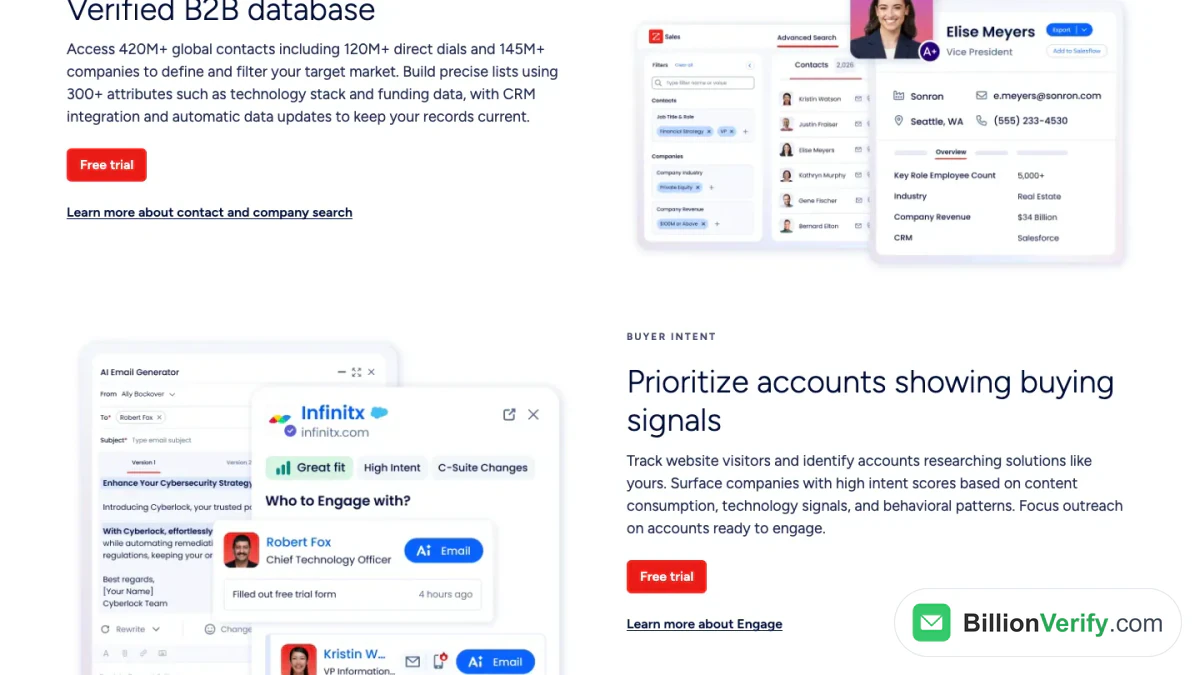
Screenshot: the ZoomInfo Sales page and its verified B2B database section, saved by the Internet Archive on October 15, 2026.
On paper, RocketReach lists more people and ZoomInfo lists more companies. A headline count is not the same as a match rate in your market, though. The useful test is a sample of your own target accounts in each tool.
Where the contact data comes from
RocketReach names five source types on its Contact Database page: licensed datasets, public information, human-verified data, a data sharing cooperative, and proprietary data sources and email algorithms. Some RocketReach records include inferred addresses, and its privacy policy says it may infer a work address "based on common formats used at a particular company."
ZoomInfo's homepage FAQ says it builds records "from public web sources and company websites, SEC and regulatory filings, job postings, and a contributory network of business professionals." It adds that "AI handles deduplication, and 300+ human researchers verify records."
Both models mix public sources with shared contributions. In both, some addresses are matched and some are inferred. That is why the check at the end of this guide matters.
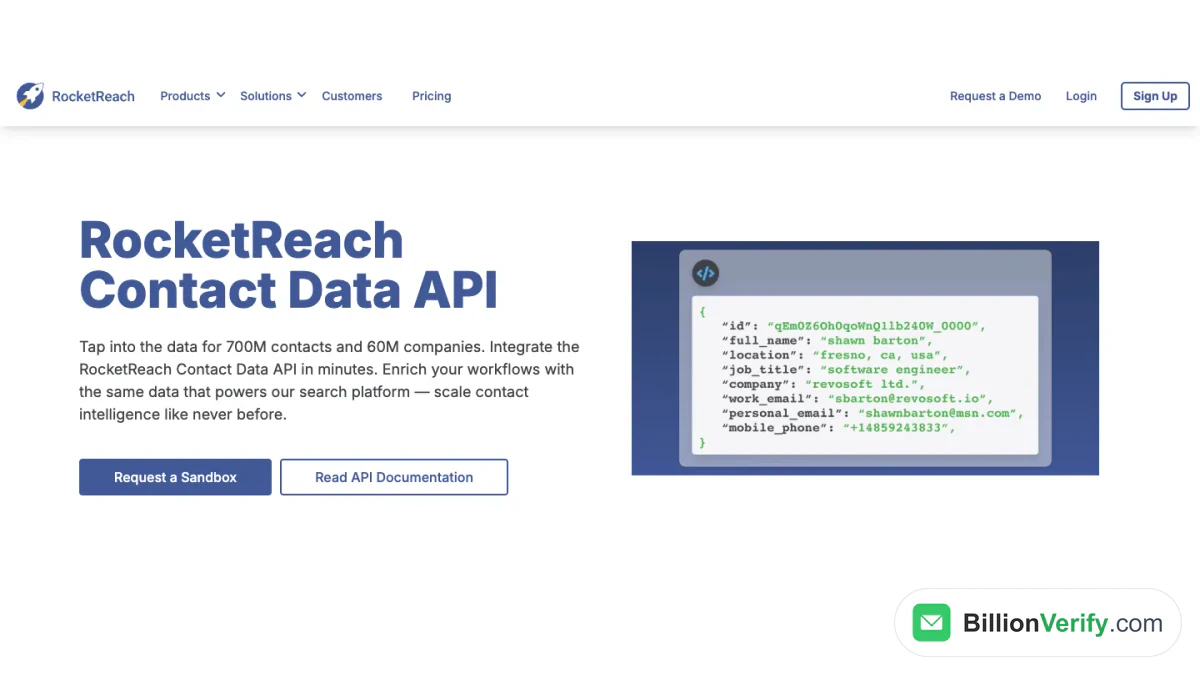
Screenshot: a sample record from the RocketReach API page, as the Internet Archive saved it on October 1, 2026.
Signals on top of contact data
ZoomInfo puts buyer intent, website visitors, champion tracking and job posting changes in its Copilot plans. Its Enterprise tier adds real-time intent, earnings call signals and custom intent.
RocketReach offers intent too, but only on its top plan. Its intent product comes through a partnership with Intentsify and covers "35,000+ intent topics." Ultimate also adds healthcare data. For signals, ZoomInfo offers the wider range, and RocketReach keeps it narrower.
ZoomInfo, RocketReach Profile Lookup: Finding One Person
Most reps start with a single lookup, not a list. The profile lookup flow shows how each tool feels day to day.
RocketReach centers on it. You search by name, company, title or location, open a profile and reveal the work email or phone. The pricing page lists 50+ search filters. It also promises that "a lookup is used if we find and verify email or phone, otherwise it is refunded."
ZoomInfo starts from the company side. A ZoomInfo company profile can carry org charts, technographics and intent. Its homepage invites visitors to test its People Search and Company Search directories, and its footer links to Verify Profile Data. Inside the platform, a person's profile lookup sits next to those company fields and CRM data.
Each vendor gives you a Chrome extension. RocketReach's extension is built for the moment you spot "a prospect on a social network" or a company site. ZoomInfo lists a Chrome extension and mobile app in the Professional plan. Pick the one your team will open every morning.
ZoomInfo vs RocketReach Pricing
ZoomInfo vs RocketReach pricing is where the two differ most of all. RocketReach publishes a table. ZoomInfo asks you to talk to sales.
ZoomInfo pricing
ZoomInfo does not publish pricing. Its site shows three sales plans: ZoomInfo Professional, Copilot Advanced and Copilot Enterprise. Each has a "Start free trial" button, and a "Get Pricing" form sits at the top. No dollar amounts appear.
The FAQ below the plans explains what drives a quote. It names "Features and functionality," "Number of licenses" and "Credit usage." It adds that the cost of credits "is based on the depth of information a customer requires." Integrations "typically have a base cost to use and install and require a minimum purchase of bulk credits."
The homepage frames it a little differently. It describes ZoomInfo as "free to start with consumption credits based on usage" and says it "doesn't charge by fixed seat tiers." In short, a ZoomInfo quote depends on your plan, your users and your credit volume.
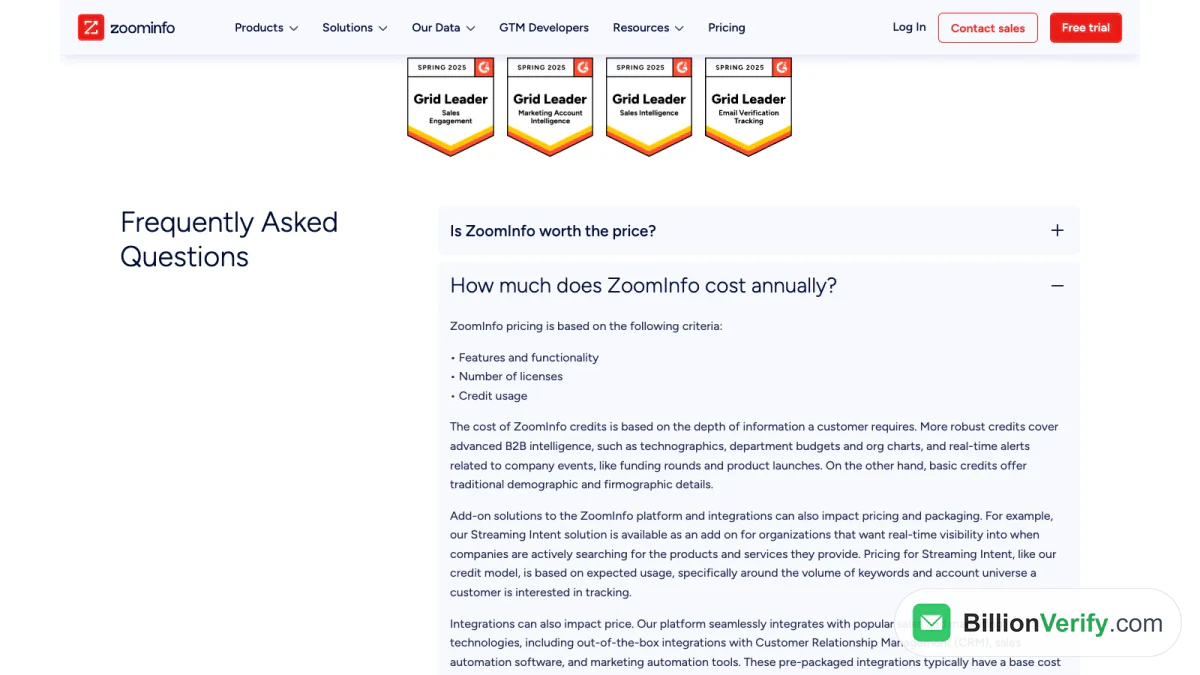
Screenshot: the FAQ on ZoomInfo's pricing page as it stood on October 17, 2026.
RocketReach pricing
RocketReach lists every self-serve plan on its pricing page. On October 14, 2026, it showed these prices per month when billed annually.
| Plan | Per month | Billed yearly | Data | Exports a year |
|---|---|---|---|---|
| Essentials | $33 | $399 | Email only | 1,200 |
| Pro | $75 | $899 | Email and phone | 3,600 |
| Ultimate | $142 | $1,699 | Email and phone | 20,000 |
Yearly billing lists unlimited lookups, and exports are the cap. Monthly billing caps lookups at 100, 250 or 1,000 a month. Team plans "start at $6K annually." You can cancel from the account page, and cancellation "takes effect the following term."
All three tiers list "MCP & API access." Pro adds CRM connectors, and Ultimate adds Salesforce custom mapping, intent data and healthcare data.
What Does Each Contact Cost?
ZoomInfo vs RocketReach pricing is hard to compare when one side has no list. A better yardstick is what you pay for each person you export. Here is what each vendor's own pages let you work out.
What RocketReach costs per export
On yearly billing, divide the plan price by its export cap. This is our arithmetic from the listed numbers, not a RocketReach figure.
- Essentials: $399 for 1,200 exports, about 33 cents each.
- Pro: $899 for 3,600 exports, about 25 cents each.
- Ultimate: $1,699 for 20,000 exports, about 8.5 cents each.
That math assumes you use the whole cap. Unused exports raise the real price, and revealed lookups are not always the ones you export.
What ZoomInfo costs per export
ZoomInfo's pricing FAQ defines the unit. ZoomInfo credits "represent the consumption (export) of a professional or company profile from the ZoomInfo platform." It adds that "each export costs one credit." A credit is used only when someone exports a profile to a CSV file or an application.
ZoomInfo leaves the credit price off its site, so the pricing per contact cannot come from public sources. You need the quote. Ask the ZoomInfo rep five questions:
- What is the total contract price for the term?
- How many credits are included each month?
- Does a company profile use the same credits as a person profile?
- Do unused credits roll over?
- Does each CRM integration require its own minimum credit purchase?
Divide the contract value by the profiles those credits can export, and you have a unit price you can set beside RocketReach's.
The price of a reachable contact
The number that matters most is what each reachable person costs. A record you pay for but cannot reach is pure cost. Say you export 500 contacts for $125 and 50 bounce. You paid $125 for 450 good addresses. The same math applies to either vendor, so count the deliverable rows, not the exported ones.
Free Plans and Trials
Each vendor lets you start without paying. The two tiers work in different ways.
ZoomInfo Lite and the trial
ZoomInfo Lite never expires. The homepage says it "requires no credit card and no commitment." You can also start a trial of the full platform from any plan card. Developers can try ZoomInfo data through GTM.AI, which lists "1,000 data + 1,000 AI credits free."
RocketReach starter account
RocketReach's FAQ says: "Free accounts have access to 5 free lookups with no credit card required." After that you need a paid plan, and you can upgrade, downgrade or cancel at any time.
Neither starter tier suits a full outbound program. Lite gives you a taste of the ZoomInfo database. Five lookups let you test the RocketReach record layout. Run your own sample before you pay for either one.
Integrations and Data Flow
Each vendor connects to the CRMs most revenue teams use. The depth and the cost differ.
ZoomInfo's homepage says it "integrates natively with Salesforce, HubSpot, and Microsoft Dynamics 365, plus 120+ sales engagement, marketing automation, and data warehouse tools." Its directory showed 185 integrations in a copy saved on October 6, 2026. The Professional plan includes CRM integrations, and Copilot Advanced adds export to Outreach or Salesloft.
RocketReach's integrations page lists Salesforce, HubSpot, Outreach, Salesloft and Bullhorn, plus Zapier for custom workflows. Bullhorn is a recruiting system, which fits RocketReach's recruiting users.
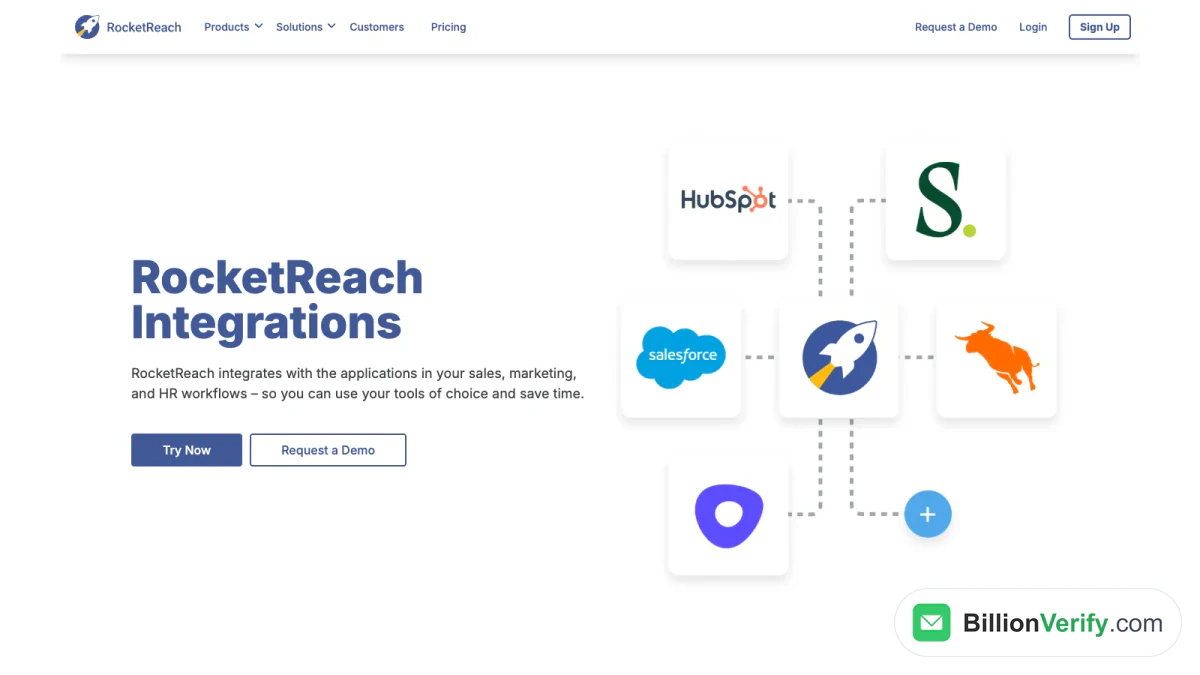
Screenshot: RocketReach's integrations page, saved on October 12, 2026.
LinkedIn, ZoomInfo, RocketReach: One Workflow
Many teams research on LinkedIn first. A LinkedIn profile gives a name, a title and an employer, but it does not give an email address. A LinkedIn, ZoomInfo, RocketReach data integration usually works the same way for both tools. You find the person, run a lookup, then sync the RocketReach contact data or the ZoomInfo record to the CRM.
LinkedIn is the starting point for the research, and the contact tool supplies the reach.
API and MCP access
Each vendor offers an API and an MCP server. RocketReach's developer page lists endpoints for People Data, Company Data, phone lookup, NPI and Firmographic data. Its MCP page says each lookup "draws from the RocketReach account and credits you already have."
ZoomInfo's route for developers is GTM.AI, which adds a CLI. Its docs say that "your subscription determines which API scopes and endpoints you can access, and rate limits apply."
Compliance and Privacy
Contact profiles describe real people, so privacy law applies to both tools. Each vendor publishes its stance.
ZoomInfo says it "processes professional contact data under GDPR's legitimate-interest basis, honors data subject rights." Its homepage lists ISO 27001, ISO 27701 and SOC 2 Type II, along with TRUSTe GDPR and TRUSTe CCPA marks. The Trust Center holds the details, and the footer links to "Your Privacy" and a "Do Not Sell or Share My Personal Information" page.
RocketReach publishes a security page that claims a SOC audit and the same ISO security standard. Its privacy policy says "The entity maintaining this website is a data broker under Texas law." It names VeraSafe as its representative for the EU and UK. A remove-profile form and a "Do Not Sell or Share My Info" tool handle opt-outs. Our is RocketReach legit guide covers the company's court records and broker status.
ZoomInfo carries one extra standard, ISO 27701, which covers privacy management. For a buyer with a tough audit, that badge can matter. For most small teams, either set clears a basic review.
Vendor compliance does not cover your own sending. Under the FTC's CAN-SPAM guide and GDPR, you still need honest headers and an opt-out in every cold message.
AI Features
Each vendor now leads with AI, but the AI sits in different places.
ZoomInfo Copilot is the "AI sales agent" in its menu. Copilot Advanced adds AI account prioritization and AI-generated talking points. Copilot Enterprise adds AI account summaries and chat. ZoomInfo GTM Studio builds workflows that run on buying signals.
RocketReach's homepage promises AI-powered recommendations and an AI writer inside Messages. Its plan table lists an AI Email Writer and Autopilot, with active Autopilot jobs running from 5 on Essentials to 25 on Ultimate. In short, ZoomInfo AI sits on a large signal layer, and RocketReach AI sits inside the daily work of writing and sending.
What Reddit Says About RocketReach vs ZoomInfo
Many buyers add a forum name to the query, as in "RocketReach vs ZoomInfo Reddit." Forum threads can be useful, but they are anecdotes. Any RocketReach vs ZoomInfo thread reflects one buyer's plan, region and job title. Check the date of the thread and which plan the writer used.
Review sites work the same way. Each vendor shows its G2 score on its own site, and the score does not tell you whether the data fits your market. Run the 50-account test below instead.
When ZoomInfo Fits Better
Based on what each vendor states, ZoomInfo tends to fit when five traits apply.
- You sell to large accounts. ZoomInfo covers more companies on paper, and enterprise sellers often need many people inside one account.
- You run on intent signals. Signals such as buyer intent and earnings calls come with the Copilot plans.
- You want one platform. Its plans span prospecting, campaigns and hiring.
- You face a tough vendor audit. ISO 27701 and TRUSTe come on top of the common badges.
- You want a rep to shape the contract. A quote can fit credits, users and add-ons to your motion.
When RocketReach Fits Better
RocketReach wins on other terms.
- You need a price today. The full price list is public.
- You mostly look up individuals. Search, extension and lookup refunds cover that job.
- You recruit. The Bullhorn connector and personal email options suit recruiters.
- You are a small team. Essentials starts at $399 on annual billing.
- You want developer tools in every tier. Essentials, Pro and Ultimate all include them.
For most startups, ZoomInfo or RocketReach comes down to these two lists. RocketReach is easier to buy, and ZoomInfo goes deeper once the budget is there.
Which Is Better: ZoomInfo or RocketReach?
So which one should you pick? The answer depends on team size, budget and sales motion.
| If your team... | Lean toward |
|---|---|
| Sells to enterprise accounts with long cycles | ZoomInfo |
| Needs a tool live this week without a contract | RocketReach |
| Relies on intent and website visitor signals | ZoomInfo |
| Mostly looks up one person at a time | RocketReach |
| Has a procurement team and a security review | ZoomInfo |
| Recruits as well as sells | RocketReach |
Some teams use both. They buy ZoomInfo for account research and RocketReach seats for quick lookups. If you do that, watch for duplicate profiles when two tools sync into one CRM. The right pick is whichever your reps will open every day.
ZoomInfo, Apollo, RocketReach: Contact Intelligence Compared
ZoomInfo vs RocketReach is not the only match buyers run. Many shortlists for contact intelligence also include Apollo.io, so buyers often test ZoomInfo, RocketReach and Apollo.io side by side. A full ZoomInfo, Apollo, RocketReach contact intelligence review adds a third source and a third price model. Our ZoomInfo vs Apollo guide covers the Apollo side.
Whichever tools you test, use one sample. Pick 50 target accounts. Look them up in each product. Count how many people you get and what each costs. That small test tells you more than any headline database size. It is the fairest trial you can run, whichever vendors make your list.
Verify Exports From Either Tool
Whatever the verdict, every database of business contact data ages. People change jobs, and companies change domains. An address that was right at the last update may bounce today. That holds for ZoomInfo and for RocketReach alike.
Bounces hurt more than one campaign. A high bounce rate damages your sender reputation, and future mail lands in spam.
Before you send, check the export:
- Export the list as a CSV from ZoomInfo or RocketReach.
- Upload it to an email verifier and let it check syntax, domain, MX and the mailbox.
- Keep the deliverable rows. Remove undeliverable ones.
- Handle catch-all domains with care. A catch-all domain accepts any address, so the mailbox cannot be confirmed.
- Re-import the clean list into your sequence tool.
BillionVerify checks lists from both tools. Our pages on ZoomInfo email verification and RocketReach email verification show the steps for each export. BillionVerify reports catch-all, role, disposable and unknown results as separate groups. Unknown results cost nothing, and re-checking within 24 hours is free. You get 20 free credits every day you use your account, up to 600 a month, with no card required. For one address at a time, BillionVerify's free checker gives a live SMTP result without an account.
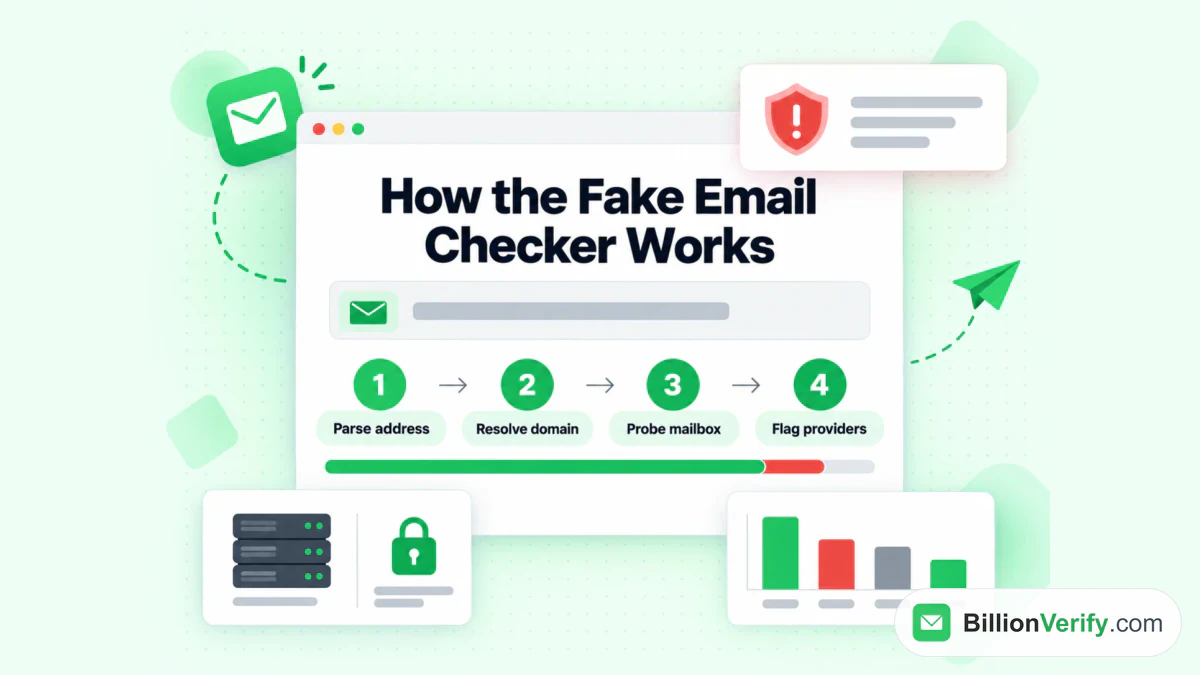
BillionVerify runs four steps on each address: parse, resolve the domain, probe the mailbox and flag providers.
Two free tools help with single checks. A reverse email lookup shows the domain, organization and public signals behind an address. A phone number validator checks whether a direct dial from either vendor is valid for its country and shows the line type.
Frequently Asked Questions
Is ZoomInfo better than RocketReach?
ZoomInfo suits larger sales teams that want signals, AI agents and a quote shaped to their needs, while RocketReach suits smaller teams that want public prices and quick lookups. Run a short test with real target names before you sign.
Is RocketReach cheaper than ZoomInfo?
RocketReach is usually the cheaper entry point, because its paid plans start at $399 a year and its pricing is public. ZoomInfo quotes each deal, so compare the full contract value, not a seat price.
How does ZoomInfo vs RocketReach pricing work?
ZoomInfo prices by feature set, seat count and credit volume, and each export uses one credit. RocketReach prices by plan, with yearly export caps of 1,200, 3,600 and 20,000.
Which has more contacts, ZoomInfo or RocketReach?
RocketReach counts more people, and ZoomInfo counts more companies. Match rates for your own market can differ from both totals.
Do ZoomInfo and RocketReach both have a free option?
Yes, ZoomInfo offers Lite and a trial, and RocketReach offers an account with five lookups.
Does RocketReach or ZoomInfo have an API?
Yes, RocketReach and ZoomInfo each offer developer access and MCP support. RocketReach includes it in all three tiers, and ZoomInfo offers GTM.AI.
Do ZoomInfo and RocketReach work with LinkedIn?
RocketReach and ZoomInfo both fit a LinkedIn research workflow, because LinkedIn gives names and titles while the contact tools supply a work address or direct dial. Each vendor offers a Chrome extension for lookups while you browse.
Which is better for recruiting, ZoomInfo or RocketReach?
RocketReach pairs Bullhorn with personal email lookups, which suit recruiters. ZoomInfo sells ZoomInfo Talent as a separate recruiting product.
Are both vendors GDPR compliant?
ZoomInfo relies on legitimate interest for professional contacts and lists TRUSTe certifications, while RocketReach names VeraSafe as its EU and UK representative. You still need your own lawful basis for each campaign.
Should I add Apollo to a ZoomInfo or RocketReach test?
Yes, many buyers add Apollo.io as a third source. A ZoomInfo, Apollo, RocketReach contact intelligence test runs the same 50 accounts through each platform, so the results line up.
Should I verify emails from ZoomInfo or RocketReach?
Emails exported from ZoomInfo or RocketReach should be verified before a campaign, because people change jobs between database updates. A verifier removes undeliverable addresses and flags catch-all domains, which protects your sender reputation.
Watch: How to Validate a Phone Number: Free Phone Number Validator